
A garden path is one of the most inviting elements of any outdoor space. It provides direction and structure, leading us from one area to another. However, if you’ve ever walked along a garden path and felt that it lacked something special, you’re not alone.
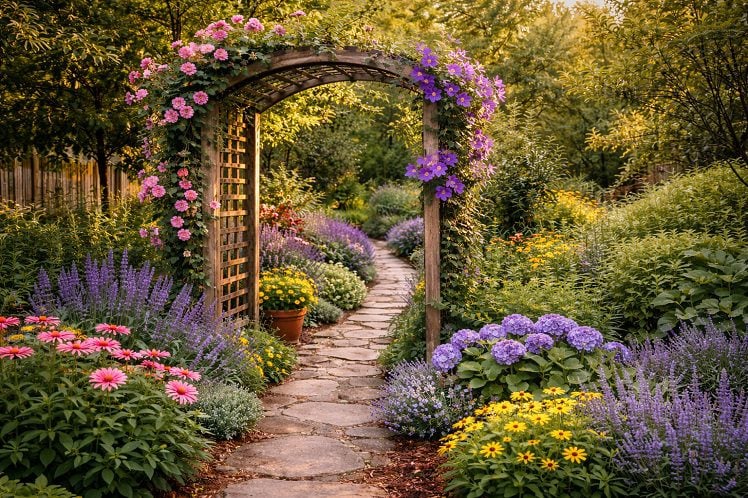
While paths are functional, adding a trellis along them can dramatically elevate the space. A trellis is a simple yet transformative feature that adds vertical interest, frames the path beautifully, and turns a basic walkway into a memorable experience.
Why a Trellis Works So Well Along a Path?
When planning a garden, it’s easy to focus only on the ground-level elements, such as plants, flowers, and pathways. However, the use of vertical space is often overlooked.
This is where a trellis comes in. A trellis along a garden path introduces height, creating a more dynamic and layered visual experience.
When you add a trellis to a path, it creates a sense of enclosure and privacy, making the space feel more intimate. It also introduces a vertical dimension that ground-level plants alone can’t achieve.
A trellis offers a defined structure and guides your eye upward, drawing attention to the plants growing along it and encouraging a slower, more deliberate walk.
From my own experience, I’ve found that even a simple arch-shaped trellis can completely change the way a path feels. The addition of a trellis shifts the focus from the ground to the air, making the path feel more like an experience, not just a functional route.
If you use multiple trellises along a winding path, it can create a sense of progression, leading you from one area of the garden to another, making the journey feel more like a discovery.
Choosing the Right Spot for Your Trellis
Now that you know why a trellis works well along a garden path, the next step is deciding where to place it. Trellises are best placed along areas of the path where people naturally slow down. This could be near a curve, an intersection, or a transition between different parts of the garden, such as from a seating area to a garden bed.
When selecting a location, think about how the path is used. If the path is straight and leads directly to another area of the garden, adding a trellis could provide a welcome focal point that breaks up the monotony of the path.
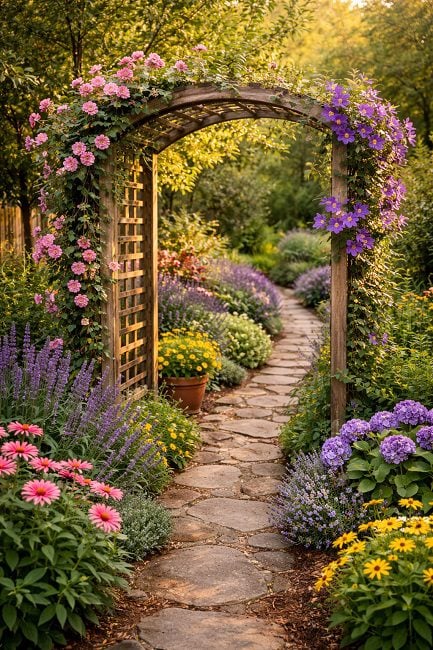
On the other hand, if the path is winding, you could place multiple trellises at different intervals to create a gradual reveal. In my garden, I placed a trellis near the entrance of my path, and it immediately gave the space a more intentional, welcoming feel.
You’ll also want to consider how the trellis will fit within the overall layout of your garden. If there are already established plants along the path, positioning the trellis nearby can help it feel like a natural part of the landscape.
The trellis should frame the path without feeling like an added-on feature, blending seamlessly into the rest of your garden’s design.
Climbing Plants That Suit a Path Trellis
The beauty of a trellis lies not just in the structure itself but in the plants that climb it. I personally love adding flowering vines to my trellises, as they add color, texture, and fragrance to the space.
When choosing climbing plants, consider how they will grow and whether they’ll complement each other.
Some of the best climbing plants for a trellis along a garden path include:
1. Climbing Roses
These are classic choices for garden paths. They provide structure and long-lasting blooms, making them a great option if you want a romantic, timeless look.
Their large, fragrant flowers are perfect for softening the edges of a path and adding some elegance.
2. Clematis
Another excellent option, clematis is known for its vibrant blooms, which come in a wide variety of colors. Clematis vines pair well with other climbing plants, creating an abundance of color without overwhelming the space.
The flowers also tend to bloom in the spring and summer, adding seasonal interest.
3. Honeysuckle
This is a great plant if you want both fragrance and visual appeal. Honeysuckle is known for its sweet-smelling flowers and attracts pollinators like bees and hummingbirds.
It’s a lovely addition to a garden path because it adds not only beauty but also a pleasant scent.
4. Jasmine
If you prefer a softer, more delicate coverage, jasmine is a perfect choice. It offers a lovely scent and gentle coverage, making it ideal for those who want a more understated yet beautiful appearance.
When selecting plants for your trellis, consider the growth habits of each plant. Some vines are more aggressive and can take over the space if not properly maintained. I’ve learned to combine plants with complementary growth habits to keep the trellis balanced as it fills in.
Building a Trellis That Holds Up Over Time
Now that you’ve selected your spot and plants, it’s time to build the trellis. The structure should be durable enough to support the weight of mature plants, so it’s important to build it properly.
1. Freestanding Wooden or Metal Trellis
I recommend using a freestanding wooden or metal trellis along the path. This type of trellis will allow the plants to grow naturally without the need for extra support.
You can buy pre-made trellises or build your own from materials like untreated wood or galvanized metal. I used a simple wooden trellis for my garden, which blends well with the natural surroundings.
2. Secure the Posts
The posts of the trellis should be set securely in the ground to support the weight of the plants. Use compacted gravel or concrete to keep the posts stable and prevent them from shifting over time.
The last thing you want is for the trellis to lean or fall under the weight of the plants.
3. Strength Over Decoration
While decorative details are important, the strength and proportion of the trellis matter most. A sturdy structure will ensure that the trellis can support the plants as they grow.
I kept my trellis simple yet sturdy, which has allowed it to stand up to years of growth.
Planting and Training Vines
Once your trellis is in place, it’s time to plant your climbers. The key to a successful trellis garden is training the vines to grow properly. Here’s how I planted and trained my vines:
1. Plant Away from the Base:
o give the vines room to grow and establish their roots, I planted them slightly away from the base of the trellis. This allows the roots to spread out and ensures the plants won’t become too crowded.
2. Early Training
When the vines are young, I use soft ties or gentle weaving to guide the plants as they grow. Early training helps the plants grow in a way that supports the structure and ensures even coverage.
I found that it’s best to guide the vines in the direction I want them to grow, preventing them from pulling the structure off balance.
How This Changes the Path Experience?
Without a trellis, a garden path is simply a functional route from one place to another. However, once you add a trellis, the path becomes an experience in itself.
The vertical elements of the trellis, combined with the flowers and foliage, create a sense of immersion that encourages you to slow down and enjoy the beauty around you.
As I walk along my trellis-lined path, I’m not just moving through my garden—I’m experiencing it in a new way.
With each passing season, the plants growing on the trellis change, creating different experiences as you walk through the garden. In the spring, the flowers bloom, filling the air with fragrance.
In the summer, the vines provide shade and cool the path. In the fall, the foliage turns color, giving the path a fresh look. Over time, the trellis and plants become an integrated part of the landscape, adding character and depth to the garden.
Long-Term Benefits
One of the best things about adding a trellis to your garden path is that it requires minimal upkeep once the plants are established. As the plants mature, the trellis will provide shade, structure, and beauty throughout the year.
The only maintenance needed is occasional pruning to keep the plants tidy and ensure that the path remains open and inviting.
Over time, the trellis becomes a permanent feature of the garden. It’s no longer just a decorative addition but a functional part of the landscape that adds depth and dimension to the space.
It blends seamlessly with the rest of the garden and enhances the overall aesthetic of your outdoor space.
Conclusion
Adding a trellis along a garden path is a simple yet powerful way to transform the space, creating vertical interest, texture, and beauty. It adds a sense of flow and rhythm to the path while providing a safe and supported environment for climbing plants.
Whether you choose flowering vines or fragrant climbers, a trellis creates an immersive experience that enhances the enjoyment of your garden.
From my personal experience, I can say that a trellis has completely changed the way I experience my garden path. It’s not just a route from one place to another—it’s now a feature of the garden that’s filled with beauty, fragrance, and life.
If you’re looking to make your garden path feel more intentional and inviting, I highly recommend adding a trellis. It’s a small investment that will bring years of enjoyment and aesthetic value to your outdoor space.


