Even whale mothers seem to need a break sometimes. Scientists studying southern right whales have discovered a fascinating possible reason why some mothers float upside down while caring for their calves.
At first, the behavior looked unusual and difficult to explain. After researchers reviewed hours of drone footage, however, they noticed an important pattern.
The upside-down position appeared only among nursing mothers, and it seemed to affect how long their calves could feed.
I find this discovery especially interesting because it shows how much effort whale mothers put into raising their young. Their calm movements on the surface may look effortless, but motherhood requires an enormous amount of energy.
Since southern right whale mothers do not eat while caring for their newborn calves, every feeding session matters.
Floating belly-up may be one simple way for them to protect their remaining energy.
Researchers Noticed a Surprising Nursing Pattern
Scientists have studied southern right whales for years, but some of their behaviors are still difficult to understand. One of the most puzzling sights was a mother floating upside down while her calf remained nearby.
Researchers wanted to know whether this position was related to resting, playing, avoiding attention, or something else entirely.
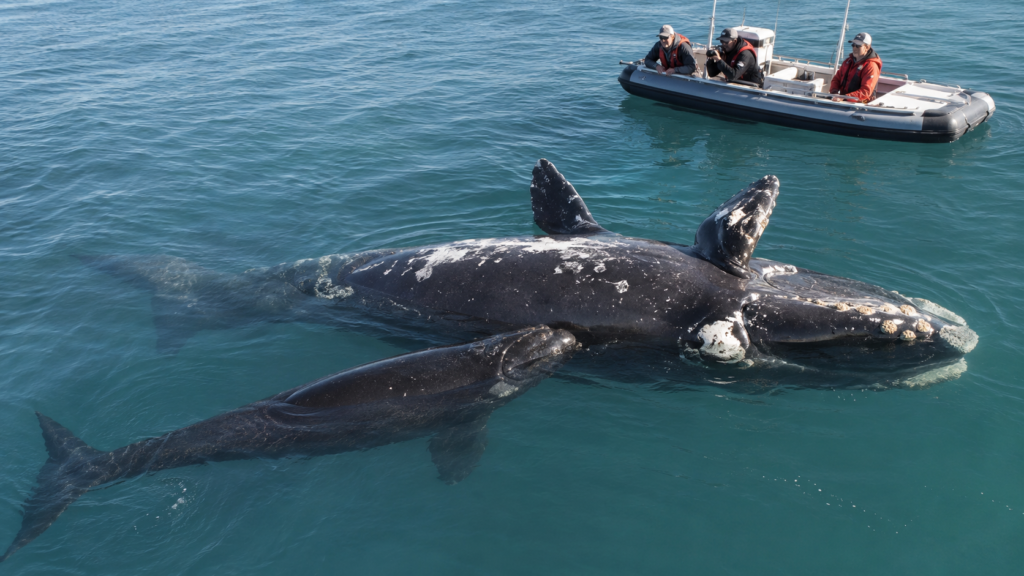
To investigate, they examined hours of aerial footage recorded by drones. Watching whales from above allowed them to observe the animals without getting too close or disturbing them. It also gave researchers a clearer view of how mothers and calves positioned their bodies during nursing.
The footage revealed that the upside-down behavior was only seen in mothers that were nursing.
Even more importantly, researchers found that calves spent less time feeding when their mothers remained belly-up for longer periods.
This connection suggests that the position is not random. It may be a deliberate way for the mother to make nursing more difficult for a short time.
I think this is a useful reminder that animal behavior often has a practical purpose, even when it initially looks strange to us. A simple change in body position may help a whale mother manage when and how long her calf feeds.
Whale Mothers Survive for Months Without Eating
Raising a southern right whale calf is physically demanding. During the breeding and nursing season, mothers rely almost entirely on energy stored in their bodies.
They do not regularly leave their calves to search for food, which means they can go for months without eating a proper meal.
During this period, a mother may lose around one-quarter of her body weight. That is a significant amount, even for an animal as large as a whale.
Much of that energy goes into producing rich milk that helps her calf grow quickly and develop enough strength for migration.
Whale milk is extremely high in fat and nutrients. A calf needs this energy because it must build a thick layer of blubber, learn to swim efficiently, and prepare for life in colder waters.
Frequent nursing is therefore essential for the calf, but every feeding session draws more energy from the mother. This creates a difficult balance.
The mother must provide enough milk for her baby while also protecting her own health and energy reserves.
When I think about the situation from the mother’s perspective, the upside-down position makes sense. She cannot simply walk away or leave her calf with another adult.
Changing her body position may be one of the few ways she can create a brief pause.
Floating Belly-Up May Help Control Feeding
The researchers believe that floating upside down may temporarily limit the calf’s access to its mother’s milk.
A southern right whale calf normally nurses by positioning itself beneath or beside the mother. When the mother rolls onto her back, reaching the mammary area may become more difficult.
This does not necessarily mean the mother is rejecting her calf. Instead, she may be controlling the length or frequency of nursing sessions.
A short break could allow her to rest, reduce energy loss, or prevent the calf from feeding continuously.
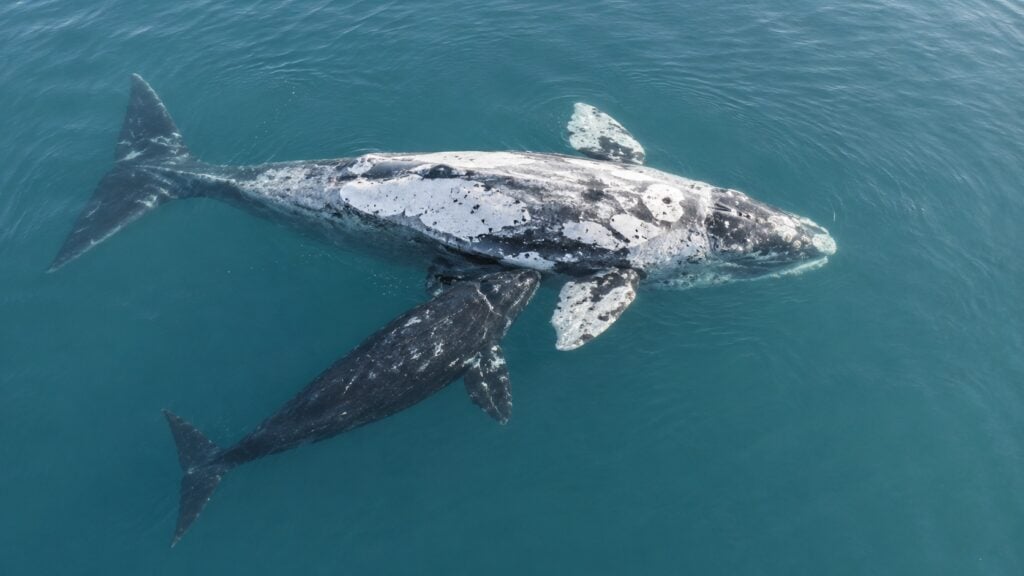
I see it as a form of energy management rather than refusal.
The calf still receives care, protection, and plenty of opportunities to nurse. The mother is simply setting a physical boundary when she needs to conserve strength.
Researchers also observed that the longer mothers remained upside down, the less time their calves spent nursing.
Although more studies may be needed to understand every detail, this pattern strongly supports the idea that the behavior helps regulate feeding. It is a quiet but effective strategy. There is no aggressive movement and no need for the mother to swim away.
She simply turns over and creates a natural pause.
Drone Footage Is Changing Whale Research
Studying whales in the ocean is never easy. They spend much of their lives underwater, travel across enormous distances, and cannot be observed as closely as animals on land.
In the past, researchers often relied on observations made from boats, shorelines, or aircraft.
Drone technology has made it possible to study whales from a new perspective. Researchers can record detailed footage from above while maintaining a safer distance. They can observe body positions, interactions, swimming patterns, and nursing behavior that may be difficult to see from the water.
In this case, hours of drone recordings allowed scientists to compare the behavior of different mothers and calves.
Without that wider view, the connection between upside-down floating and reduced nursing time might have remained unnoticed. I appreciate how this technology helps researchers learn more without heavily interfering with the animals.
Responsible drone research can reveal small but meaningful details about family life in the ocean.
It also reminds me that scientific discoveries are not always dramatic. Sometimes, progress comes from patiently watching ordinary behavior and noticing a pattern that others may have overlooked.
What This Behavior Teaches Us About Whale Motherhood?
Southern right whale mothers are deeply involved in their calves’ early development. They protect them, guide them through the water, help them practice important movements, and provide the milk they need to survive.
This care requires patience, strength, and a huge physical sacrifice.
The upside-down behavior adds another layer to our understanding of whale motherhood. It suggests that mothers may actively manage their energy while continuing to care for their young.

I do not think we should describe the behavior as selfish or uncaring. Conserving energy is necessary for both mother and calf. A mother that becomes too weak may struggle to complete migration, avoid danger, or continue producing enough milk.
By taking short breaks from nursing, she may actually improve the chances that both of them remain healthy. This is something I often keep in mind when learning about wildlife.
Rest is not the opposite of care. In many situations, rest makes long-term care possible.
Simple Ways We Can Support Whale Conservation
Most of us will never study southern right whales from a research boat, but we can still support their survival. Learning about their behavior is a good first step because people are more likely to protect animals they understand.
I recommend following reputable marine research organizations and sharing accurate information about whales. Avoid spreading dramatic claims without checking the original research.
Clear and responsible information helps people understand the real challenges marine animals face.
When joining whale-watching tours, choose operators that respect distance rules and avoid chasing or surrounding whales. Mothers with calves need space, especially during nursing and resting periods.
Reducing plastic waste can also help protect marine environments. Reusable bags, bottles, and containers may seem like small changes, but they reduce the amount of waste that can enter rivers and oceans.
Supporting stronger protections for breeding areas, migration routes, and feeding grounds is equally important.
Southern right whales depend on several habitats throughout the year, and disruption in one location can affect their entire life cycle.
A Small Movement with an Important Meaning
A whale mother floating upside down may not look like a major scientific discovery. However, the behavior gives researchers a valuable glimpse into how these enormous animals balance nursing, rest, and survival.
For me, that is what makes the finding so engaging. It turns a strange-looking position into a meaningful survival strategy. The mother is not simply drifting without purpose.
She may be creating a brief nursing break so she can conserve the energy needed to continue raising her calf.
Southern right whale mothers invest an incredible amount of their own bodies into their babies. They fast for months, produce nutrient-rich milk, protect vulnerable calves, and prepare them for long migrations.
If turning upside down gives them a moment to recover, it may be one of the smartest tools available to them. Even in the ocean, motherhood requires balance.
Sometimes caring for a baby means feeding it, protecting it, and staying close. At other times, it may simply mean knowing when to turn over and take a short break.