Coming home after several days away usually means unpacking bags, checking the mail, and returning to a familiar routine. For Mimmy Stranger, however, the surprise waiting in her bathroom was far more unusual.
A pigeon had gathered twigs and leaves, built a nest inside her makeup bag, and laid two eggs on a shelf.
Instead of panicking or trying to remove the unexpected visitor, the 30-year-old animal lover from Bedford decided to let the bird stay. She named her Pidgey and jokingly announced that she was preparing to become a grandmother to twins.
I find this story charming because it shows how quickly wildlife can adapt to the spaces humans create.
It also reminds me that when an animal chooses an inconvenient place to raise its young, patience is often safer and kinder than immediate intervention.
An Unexpected Guest Moves Into the Bathroom
Mimmy had spent a few days visiting her mother before returning home. When she entered her bathroom, she noticed leaves, twigs, and other nesting materials scattered across the floor.
Looking upward, she found a pigeon sitting comfortably inside a makeup bag on a shelf. The bird had already completed a nest and laid two eggs. The entire structure had apparently been built in only a few days.
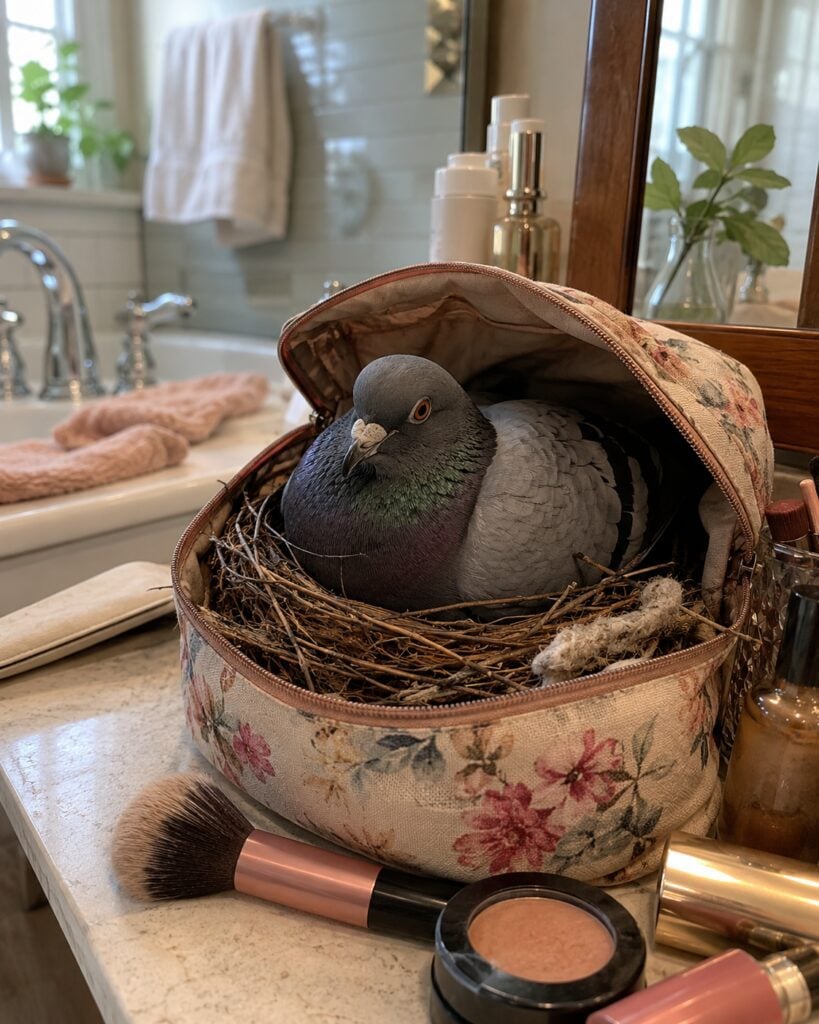
Makeup products and bottles surrounded the nest, turning an ordinary storage shelf into a temporary bird nursery.
Mimmy believes the pigeon may have entered through an open window. Once inside, the bird found a high, sheltered location that appeared safe from predators, bad weather, and human disturbance.
From a pigeon’s perspective, the choice makes sense. Shelves, balconies, window ledges, roof spaces, and building corners can resemble the protected rocky ledges pigeons naturally use for nesting.
I might see a makeup bag, but Pidgey probably saw a secure bowl-shaped space in a quiet, elevated location.
Pidgey Quickly Became Part of the Family
Finding a wild bird in the bathroom could easily make someone anxious. There may be concerns about mess, hygiene, noise, or how long the animal will remain inside.
Mimmy, however, chose compassion.
She said she loves animals and wants the pigeon and her chicks to have a fair chance. The pair now seem to share what Mimmy describes as an unspoken agreement. She can enter the bathroom without Pidgey flying away, while the pigeon remains focused on protecting and warming her eggs.
Mimmy plans to wait until the chicks hatch before choosing names for them. She has also accepted that part of her bathroom will be unavailable for a while. What I appreciate most is that she did not treat the bird like an unwanted object that could simply be moved.
She recognized that Pidgey was caring for developing lives and needed stability. Her response shows that coexistence does not always require a perfect situation.
Sometimes it simply requires giving another living creature enough space to complete an important stage of its life.
Why Pigeons Choose Strange Nesting Places?
Pigeons are highly adaptable birds, which is one reason they are found in cities around the world. They often live close to people and use buildings as replacements for natural cliffs and rocky surfaces.
Unlike many garden birds that create detailed, carefully woven nests, pigeons are known for building simple platforms made from twigs, leaves, and other available materials.
Their nests may look unfinished or unstable to us, but they can still provide enough support for eggs and chicks.
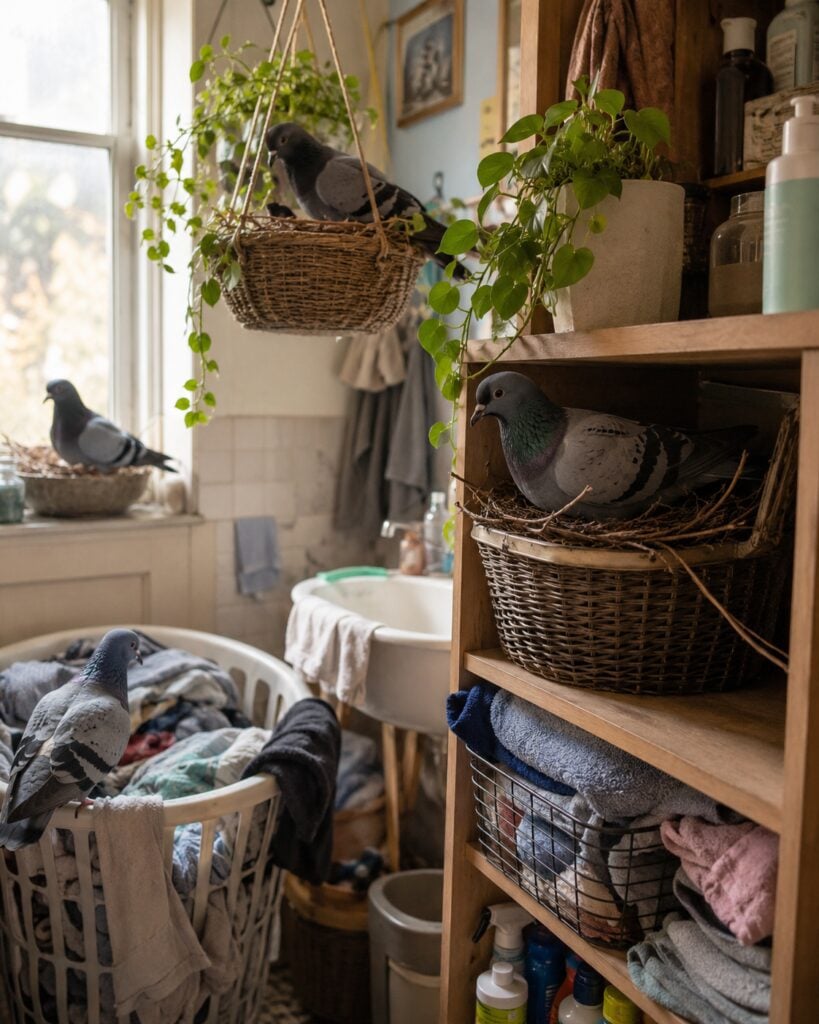
Pigeons also commonly reuse nesting places if they believe the location is safe.
A makeup bag may seem like an unusual choice, but its soft sides and enclosed shape may have helped hold the nesting material together. The high shelf also offered protection from movement on the floor.
This is a useful reminder that wildlife does not understand the purpose humans assign to objects. A flowerpot can become a nest. A shed can become a shelter.
A bag can become a nursery. When I leave windows open, especially during nesting season, I now understand why it is worth checking rooms, shelves, and quiet corners regularly.
Why the Nest Should Not Be Moved?
Once a bird has laid eggs, the situation becomes more sensitive. Moving the nest, touching the eggs, or repeatedly disturbing the parent can put the entire nesting attempt at risk.
According to the Royal Society for the Protection of Birds, active bird nests are legally protected in the United Kingdom.
People should allow the chicks to leave before removing a nest or blocking the entrance being used by the birds. This means Mimmy is not only being compassionate by leaving Pidgey alone. She is also following responsible wildlife guidance.
The safest approach is usually to keep the area calm, reduce unnecessary activity, and avoid handling the nest. Pets and young children should also be kept away.
My practical tip is to observe from a respectful distance rather than checking the eggs repeatedly. A parent bird may tolerate some normal movement, but constant attention can create unnecessary stress.
I would also avoid feeding the pigeon directly beside the nest unless a wildlife professional recommends it.
Food can attract other birds, rodents, or predators and may make the nesting area less safe.
Keeping the Space Safe and Clean
Allowing a pigeon to remain indoors does create practical challenges. Birds produce droppings, shed feathers, and may carry nesting material across the room.
However, the area can be managed without disturbing the nest. A protective sheet, newspaper, or washable covering can be placed on the floor beneath the shelf as long as it does not require approaching the bird too closely.
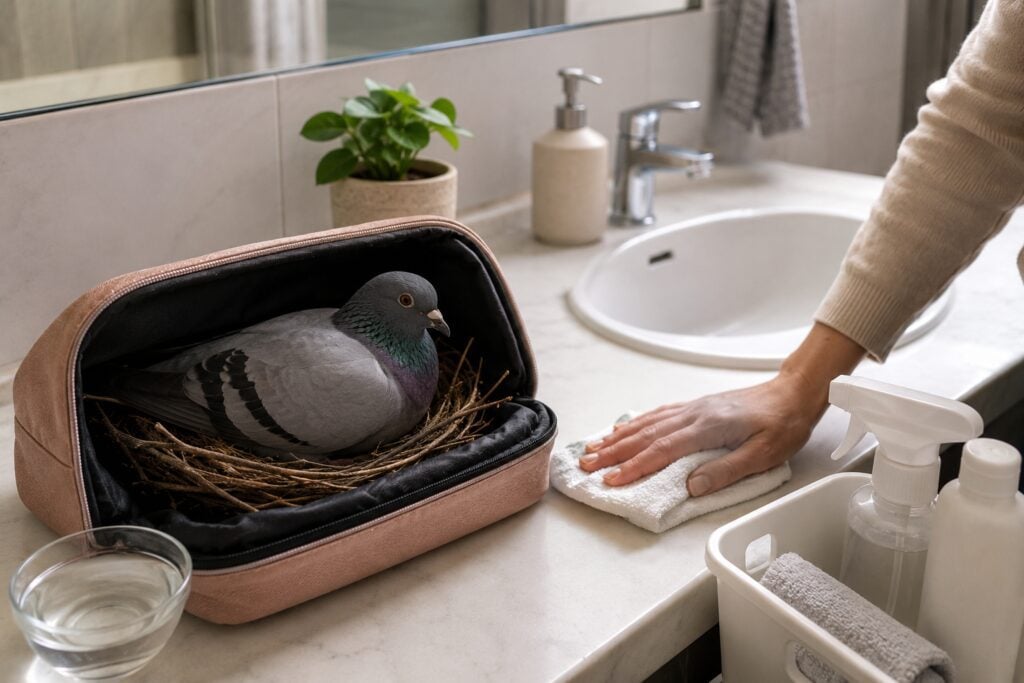
Good ventilation may also help, but windows and doors should be managed carefully so the parent can continue entering and leaving safely.
I would avoid using strong sprays, perfumes, bleach, or aerosol products near the nest. Birds have sensitive respiratory systems, and harsh chemicals could affect both the adult and the chicks.
After the young birds have left, the area can be cleaned thoroughly while wearing gloves. Hands should always be washed after handling surfaces near bird droppings or nesting material.
Anyone who is uncertain should contact a local wildlife rescue organization or bird charity for advice rather than attempting to relocate the family alone.
What Happens After the Eggs Hatch?
If the eggs hatch successfully, the chicks will remain dependent on their parents for food and warmth. Young pigeons usually stay inside the nest until they are surprisingly large and well feathered. This is why many people rarely see baby pigeons.
By the time they leave the nest, they often look similar to adults, although they may be smaller and less confident.
Both pigeon parents usually help raise the young. They feed the chicks a nutrient-rich substance known as crop milk before gradually introducing other food.
The bathroom may become busier once the chicks hatch, especially if both parents move in and out. Mimmy may need to continue sharing the space until the young birds are strong enough to leave.
Her plan to wait patiently is the safest one.
Once the nest is no longer active, she can clean the shelf and block the entrance to prevent another bird from using the same location.
A Small Story With a Meaningful Lesson
Pidgey’s unusual nesting choice has created inconvenience, but it has also brought unexpected joy into Mimmy’s home. A makeup bag that once held beauty products is now protecting two developing birds.
I think the story resonates because Mimmy chose curiosity and kindness instead of frustration. She understood that the pigeon was not trying to damage her belongings.
Pidgey was simply searching for a place where her eggs could survive.
Wildlife encounters are not always convenient, and not every animal can safely remain inside a home. Still, our first response does not have to be fear or removal.
Sometimes the best thing we can do is pause, understand what is happening, and seek proper advice before taking action.
For now, Pidgey remains settled on her bathroom shelf, while Mimmy waits for the arrival of her unexpected twins.
It may not be the family arrangement she expected, but it has certainly become one she will never forget.
A Bedford woman finds a pigeon nesting in her makeup bag and lets her protect two eggs, offering a sweet lesson in urban wildlife care.