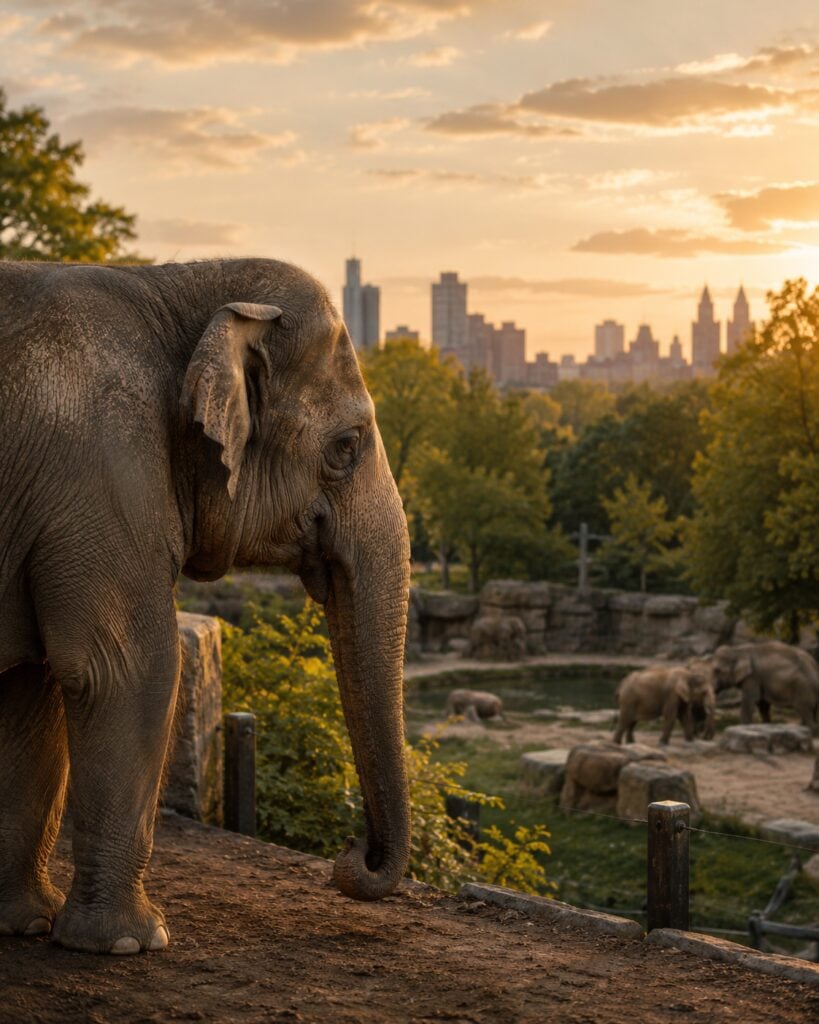
For more than 50 years, Patty has lived at the Bronx Zoo while generations of visitors watched her grow from a young elephant into one of New York’s most familiar animals. Now, at 57 years old, she may be approaching the biggest change of her life.
Following the death of her longtime companion Happy, Patty is the last elephant living at the Bronx Zoo and the only elephant remaining in any New York City zoo.
Officials are now considering whether she should stay in the home she has known since 1973 or move to a 3,000-acre elephant sanctuary in Tennessee.
I find this decision both hopeful and heartbreaking. A sanctuary could give Patty more space and the chance to interact with other elephants. At the same time, moving an elderly animal away from familiar caregivers and routines carries serious risks.
The Bronx Zoo Is Considering a Historic Move
The Bronx Zoo has confirmed that it is evaluating a possible transfer to The Elephant Sanctuary in Hohenwald, Tennessee. The sanctuary provides lifelong care for retired elephants across thousands of acres of forests, fields, ponds, and protected habitats.
Zoo officials are not treating the decision as a simple choice between a small zoo enclosure and a large sanctuary.
They are studying Patty’s health, personality, social history, and ability to adapt to an unfamiliar place.
Members of the Bronx Zoo’s elephant care team have already visited Tennessee to inspect the sanctuary and meet the people who would care for Patty. Interim zoo director Craig Piper has said the goal is to determine whether the possible benefits would be greater than the risks.
I think this careful approach is important.
Animal welfare decisions should not be made because one option sounds better in public. They should be based on the needs of the individual animal.
Moving an Elderly Elephant Is Not Simple
From the outside, relocating Patty may sound straightforward. She is alone, elephants are social, and a large sanctuary already has other elephants. However, the journey itself could be physically and emotionally demanding.
Patty has lived in the same environment for more than half a century.
She knows the buildings, sounds, routines, and caregivers around her. Some staff members have cared for her for decades and can recognize very small changes in her movement, eating habits, or mood.
Before Patty could travel, she would need voluntary training to become comfortable entering a transport crate. This preparation could take a year or longer.
The purpose would be to reduce fear and allow her to participate willingly instead of being forced into an unfamiliar space.
Transporting a 57-year-old elephant across several states would also require veterinary planning, rest stops, temperature control, emergency procedures, and constant observation.
My personal takeaway is that major changes should be introduced gradually, especially for elderly animals.
Patience is not a delay when safety is involved. It is part of responsible care.
Why Elephant Companionship Matters?
Elephants are among the most socially complex animals on Earth. Female Asian elephants naturally live in family groups where they communicate, protect one another, share knowledge, and build relationships that can last for decades.
This is one reason many animal welfare experts are concerned about Patty living alone.
The Association of Zoos and Aquariums generally recommends that female elephants have opportunities to live with other elephants because social interaction can support their emotional and behavioral well-being.
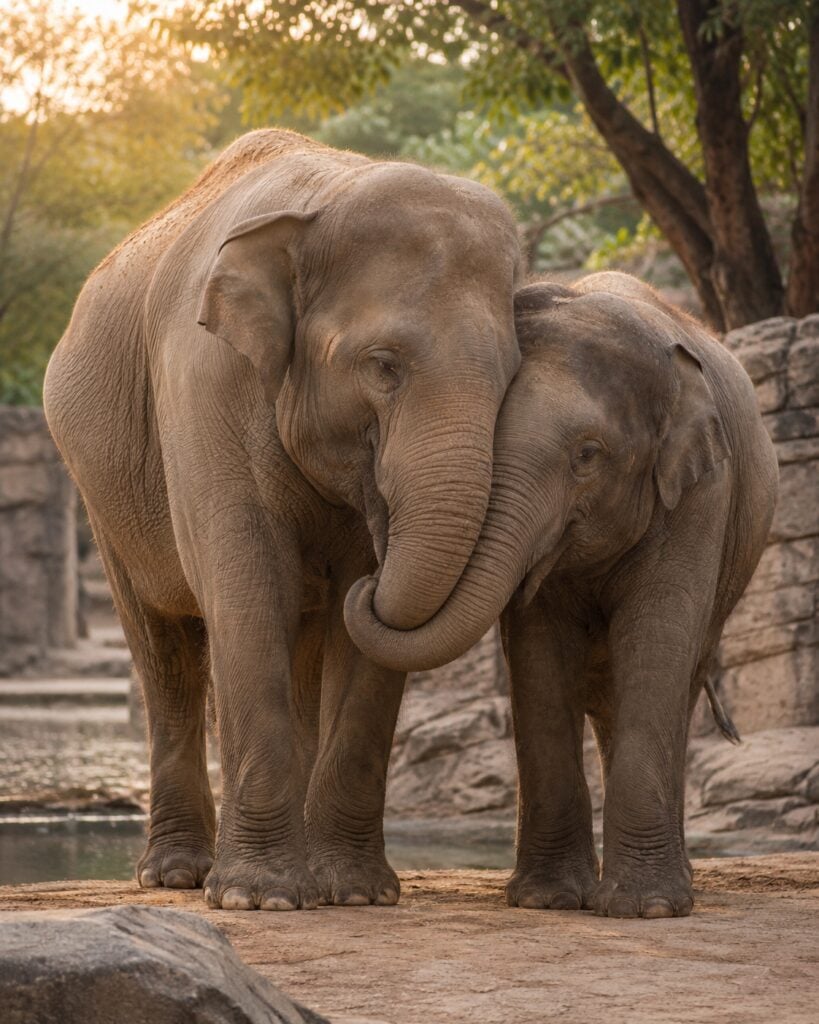
The Tennessee sanctuary may offer Patty the chance to hear, smell, see, and possibly interact with other elephants.
Even if she did not immediately join a group, simply being near members of her own species could provide stimulation that human caregivers cannot fully replace.
However, companionship is not guaranteed. Older elephants may struggle to form new relationships, and some sanctuary residents must remain separated because of medical needs or personality conflicts.
This reminds me that good animal care cannot rely on one rule for every individual. Social animals need companionship, but that companionship must be introduced carefully and safely.
Happy’s Death Changed Patty’s Future
The discussion became urgent after Happy died in late May following serious health problems related to old age. She had severe arthritis, declining organ function, and inoperable uterine tumors.
Happy was much more than a famous zoo elephant.
She became an important symbol in the animal rights movement after the Nonhuman Rights Project filed a legal case arguing that she should have a legal right to bodily liberty.
The case reached New York’s highest court in 2022. The court ruled that habeas corpus, a legal protection used to challenge unlawful human detention, did not apply to Happy.
Although the case failed, it created a much larger debate about intelligence, captivity, and whether highly advanced animals should receive stronger legal protections.
I believe Happy’s legacy is not limited to the courtroom.
Her story encouraged people to think more deeply about the difference between keeping an animal alive and giving that animal the best possible life.
Happy Helped Prove Elephant Self-Awareness
Happy also played a major role in scientific research. In a famous mirror experiment, researchers placed a visible mark on her head where she could only see it through a mirror.
Happy repeatedly touched the mark on her own body, suggesting that she understood the reflection was herself.
This made her the first elephant confirmed to pass the mirror self-recognition test.
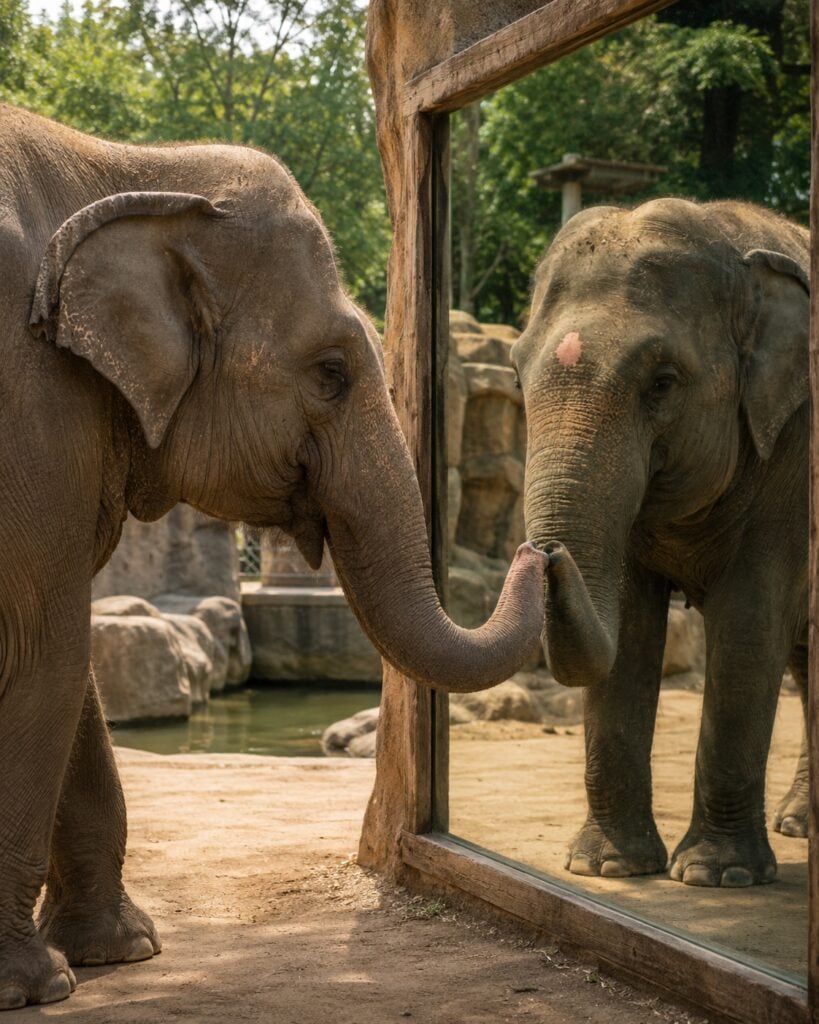
The ability is considered an important sign of advanced cognition because most animals react to a mirror as though they are seeing another individual. Patty also participated in the research, although she did not formally pass the test.
She still showed interest in her reflection and displayed self-directed behavior around the mirror.
Knowing this makes Patty’s future feel even more significant to me.
We are not simply discussing where to place a zoo attraction. We are talking about the final years of an intelligent animal with memories, preferences, relationships, and an individual personality.
The End of an Era at the Bronx Zoo
Elephants have been part of the Bronx Zoo for more than a century. They once lived near the historic Elephant House and later moved into the larger Wild Asia exhibit, where visitors could see them from the monorail.
However, the Wildlife Conservation Society announced in 2006 that it would not bring in new elephants after the existing herd was gone. The organization decided to direct more resources toward protecting elephants in the wild.
This means Patty will be the final elephant in the zoo’s long history, whether she stays in New York or eventually moves to Tennessee.
Other zoos have made similar decisions.
Some have closed elephant exhibits and relocated aging animals to sanctuaries where they may have access to more space and potential companionship.
I understand why this transition can be emotional for visitors.
Many people grew up seeing elephants at local zoos. Still, childhood memories should not be more important than the changing knowledge we now have about animal welfare.
What I Hope Happens Next?
I do not think Patty’s future should be decided by public pressure alone. I also do not believe familiarity should automatically outweigh the benefits of space and companionship.
The right decision should come from veterinary evidence, behavioral observation, transport assessments, and a realistic understanding of what Patty would experience after arriving at the sanctuary.
If she is healthy enough to travel and likely to benefit from the move, I hope she receives the chance to explore a larger environment and live near other elephants.
If experts determine the journey would place her in serious danger, remaining with trusted caregivers may be the kinder option.
For anyone supporting captive animals, my advice is to look beyond emotional headlines. Learn about the animal’s age, medical needs, social behavior, enclosure quality, and long-term care plan.
Responsible advocacy should focus on evidence rather than assuming every sanctuary move or zoo stay is automatically right.
Patty’s story represents more than the closing of an elephant exhibit. It reflects a wider change in how we understand intelligent animals and our responsibility toward them.
Whatever the Bronx Zoo decides, I hope Patty’s comfort, dignity, and quality of life remain at the center of every conversation.