
Water is a homeowner’s best friend when it’s in the pipes and its worst enemy when it’s against the walls. For years, I watched my house endure the elements, oblivious to the fact that every rainstorm was a slow-motion disaster for my foundation.
It took a crumbling exterior and a muddy yard for me to realize that “letting your house drink the rain” isn’t a poetic metaphor; it’s a financial nightmare.
Here is how I transformed a water-logged disaster into a dry, beautiful sanctuary!!
Identifying the Silent Damage
The first step in any home restoration project is admitting that you have a problem, and my house was practically screaming for help. I remember standing in my yard after a particularly heavy April downpour, looking at the corner of my home and feeling a pit in my stomach.

What I saw wasn’t just a “wet house”; it was a structural SOS.
- Overflowing Gutter Stains: I noticed dark, vertical streaks running down the stucco. These weren’t just dirt; they were the “tears” of a gutter system that was completely overwhelmed and clogged.
- Water-Stained Stucco: The moisture wasn’t just on the surface. It was soaking into the material, turning the crisp beige into a damp, sickly grey.
- Stress Fractures: I found spiderweb cracks snaking out from the window corners. Water was getting behind the finish, freezing, expanding, and literally pushing my walls apart.
- The Foundation Swamp: At the base of the wall, the stucco was actually peeling away in chunks. The soil was so saturated that it looked like a chocolate milkshake, pooling right against the concrete footer.
If you see these signs, you aren’t just looking at a cosmetic issue. You are looking at a home that is losing its structural integrity one drop at a time.
Poor Drainage and Negative Grading
Understanding why the water was staying put became my primary mission before I even picked up a paintbrush. It’s easy to blame the rain, but the real villain in my story was the physics of my landscape.
I realized that the ground around my house had settled over the years, creating what experts call “negative grading.”
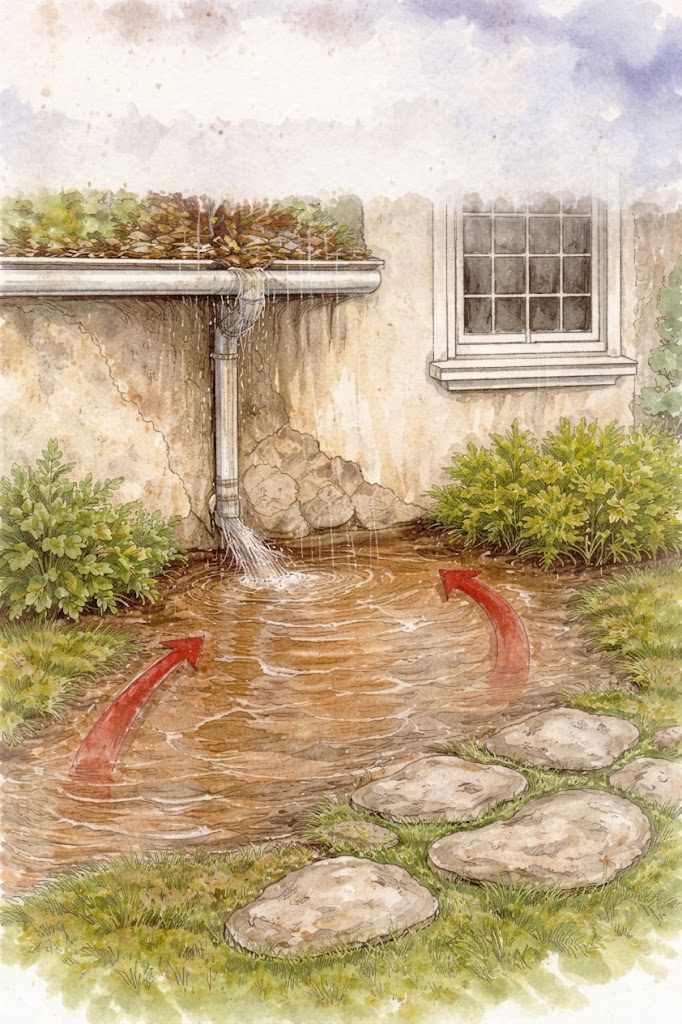
Instead of the land sloping away from the house to carry water toward the street or a storm drain, the landscape sloped toward the foundation. Every gallon of water that hit my roof was being delivered directly to my basement walls by my own downspouts.
My downspouts were stubby, dumping water just inches from the wall. This created a “flooded and muddy landscape” that stayed soggy for days, inviting mold, rot, and even pests like termites who love damp wood.
Diverting the Deluge
Once I identified that the water had nowhere to go, I knew that patching the cracks was useless unless I fixed the flow. My strategy shifted from “repair” to “diversion.”
I needed to ensure that once the water hit my roof, it followed a strictly controlled path far away from the structure.
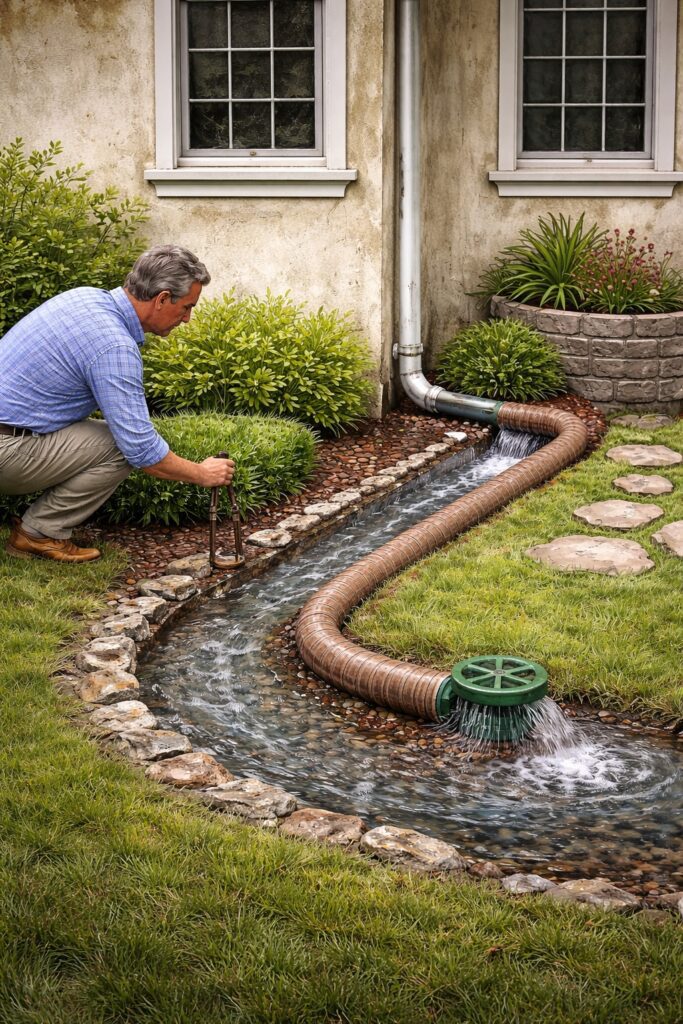
I started with the gutters. I cleaned them out, but more importantly, I re-pitched them so they actually flowed toward the downspouts. Then came the “Hidden Drain” system.
Instead of letting the water splash onto the ground, I installed underground piping. B
y connecting the downspouts directly to a buried PVC line, I could move the water 20 feet away from the house to a lower part of the property where it could safely soak into the ground without touching my foundation.
Stucco and Casing Restoration
With the water flow finally under control, it was time to address the physical trauma my house had endured during its “drinking” phase. Repairing water-damaged stucco is not as simple as slapping on some new mud; it requires a surgical approach to ensure the rot doesn’t return.
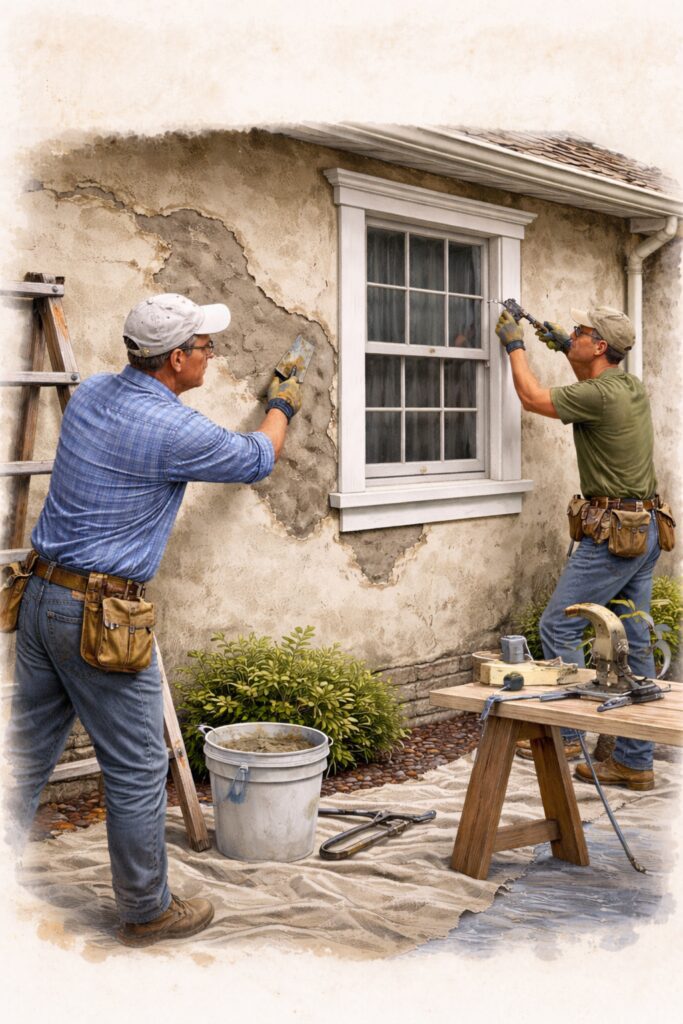
I had to chip away the “Water Damaged Stucco” until I hit solid, dry material. I treated the underlying structure for any signs of mold and then applied a multi-coat stucco patch.
I also realized my window casings were part of the problem.
The old ones were flat and allowed water to sit on the ledge. I installed “New Window Casings” with a slight outward pitch and a “drip edge” on the bottom.
This small architectural detail ensures that rain drips off the edge of the casing and falls to the ground, rather than running back toward the wall.
Landscapes that Work
The most rewarding part of this journey was realizing that drainage solutions don’t have to look like industrial plumbing. I wanted my home to be dry, but I also wanted it to be the envy of the neighborhood.
This is where the “New Planters and Pavers” came into play.

I built a tiered retaining wall using stone blocks. This served two purposes: it looked beautiful, and it allowed me to manually level the ground, effectively fixing the “Landscape Slopes Toward Foundation” issue.
Behind that wall, I filled the area with well-draining soil and gravel.
To top it off, I added:
- Hardscaping: I laid down flagstone pavers set in gravel. This prevents the “muddy landscape” look and allows some water to permeate the ground while keeping the surface clean and walkable.
- Strategic Planting: I chose shrubs and flowers that could handle a bit of moisture but placed them in raised beds to keep the root mass above the old flood zone.
- Aesthetics: I added “New Paint” and outdoor lighting. The paint wasn’t just for looks; it was a high-quality elastomeric coating that acts as a waterproof barrier for the stucco.
Prevention is Cheaper than Cure
Looking back at the “Before” and “After,” the difference is more than just visual; it’s the peace of mind I feel every time it starts to thunder. I used to pace the hallways during a storm, wondering if my basement was taking on water or if my walls were soaking it up like a sponge.
Now, I watch the rain hit the roof and disappear into the “Hidden Drain” system with a sense of triumph.
If you are a homeowner, don’t wait for the “Stress Fractures” to appear. Check your gutters today. Walk around your house during a rainstorm and see where the puddles form. If the land is sloping toward your walls, grab a shovel or call a professional.
Investing in proper drainage and grading is the single most important thing you can do to protect your biggest investment. Your house should be a shelter from the rain, not a vessel for it.
The beauty of the “New Paint” and the “New Window Casings” is only possible because the foundation is finally dry.
My house has stopped drinking the rain, and for the first time in years, it’s finally thriving.


