If you’re a tomato lover like me, you know the joy of harvesting a fresh, juicy tomato from your garden. However, anyone who has grown tomatoes knows that they can sometimes be tricky.
One of the most common problems I’ve faced is blossom end rot; that ugly black spot on the bottom of the tomato. But, over the years, I’ve discovered a surprisingly simple trick to prevent this and boost growth: burying an egg when you plant your tomatoes.
It may sound odd, but this old gardening tip is one of the best-kept secrets I’ve used in my garden.
Why Bury an Egg When Planting Tomatoes?
When I first heard about burying eggs for tomatoes, I was skeptical. But after trying it, I can honestly say it works wonders. The idea is simple: you place an egg directly in the soil when you plant your tomato seedlings.
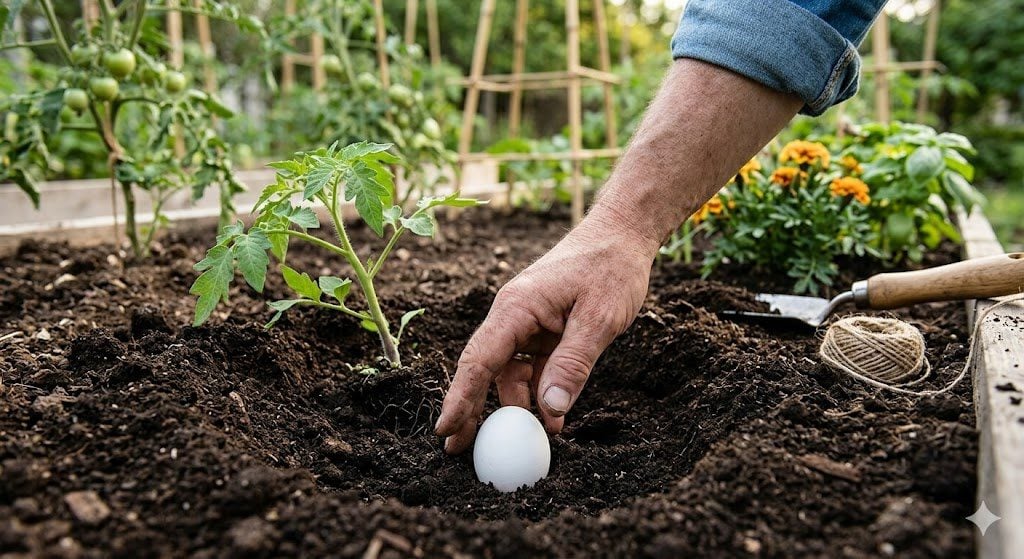
The egg provides nutrients like calcium and phosphorus, which are essential for the healthy growth of tomatoes. It also helps with one of the most common tomato problems: blossom end rot.
What’s inside the egg?
Eggs are a powerhouse of nutrients. The shell is packed with calcium, which tomatoes need for cell wall development. Without enough calcium, the plant’s cells begin to break down, leading to blossom end rot.
By burying an egg, you’re giving your tomato plants a slow-release calcium supplement that helps them thrive all season.
The egg also provides nitrogen and phosphorus, two key nutrients that support plant growth. These nutrients help the tomatoes grow strong and healthy, leading to a bigger and more bountiful harvest.
Nutrients and Protection for Your Tomatoes
When you plant an egg under your tomatoes, it acts as a natural fertilizer, slowly breaking down and releasing nutrients directly to the plant’s roots. The calcium from the egg shell is particularly effective in preventing blossom end rot.
This common problem occurs when tomatoes don’t get enough calcium, and it can ruin an otherwise perfect crop.

I’ve found that this trick helps my tomatoes stay healthy throughout the growing season. The nutrients from the egg feed the plant gradually, promoting strong root development and helping the plant resist diseases and pests.
Plus, the crushed egg shell provides a protective barrier against digging animals, like squirrels or raccoons, which may be tempted to dig around your tomato plants.
How to Plant Tomatoes with an Egg (Step-by-Step Guide)

Now that you understand why it works, here’s how you can plant tomatoes using this simple, yet effective technique.
Step 1: Prepare the Soil
Start by choosing a sunny spot in your garden. Tomatoes love sunlight, so find an area that gets at least six hours of sun each day. Loosen the soil around the planting hole to ensure it’s easy for the tomato roots to spread.
Step 2: Crack an Egg
Take a raw egg (no need to cook it) and gently crack it into the planting hole. If you’re worried about pests, you can crush the shell a bit before burying it to deter animals.
Step 3: Plant Your Tomato Seedling
Place your tomato seedling on top of the egg, ensuring the roots are spread out nicely. Then, cover the egg and roots with soil, packing it gently around the plant.
Step 4: Water the Plant
Once the plant is in the ground, water it well. The egg will start breaking down gradually, providing nutrients to your tomato plant. Keep watering as usual and watch your tomato plant grow strong.
Step 5: Maintain the Plant
As your tomato plant grows, continue to water it regularly and make sure it’s getting enough sunlight. You’ll start to see the benefits of the egg beneath the soil; healthier plants and fewer issues with blossom end rot.
Why It Prevents Blossom End Rot?
Blossom end rot occurs when tomatoes don’t get enough calcium. This problem is more common in areas where the soil is low in calcium or when there are rapid changes in moisture levels.
Tomatoes need calcium for proper cell wall formation, and when they don’t get enough of it, their fruit can begin to rot from the bottom.

By burying an egg when you plant your tomatoes, you’re directly addressing the calcium deficiency issue. The egg’s calcium-rich shell breaks down slowly in the soil, providing the plant with a steady supply throughout the growing season.
This slow release of calcium is ideal for the plant, allowing it to take up the nutrient as needed without overwhelming the plant.
The phosphorus and nitrogen in the egg shell further contribute to healthy plant growth. Nitrogen promotes leaf and stem growth, while phosphorus supports strong root development and flower production.
Together, these nutrients create a perfect environment for your tomato plant to grow and thrive.
Tips for Maximizing Your Tomato Harvest with Eggs

If you want to get the most out of this egg trick, here are a few additional tips I’ve found helpful:
1. Use One Egg Per Plant
It’s best to plant one egg per tomato plant. This ensures that each plant gets the nutrients it needs without overcrowding the soil.
2. Add Organic Matter
Before planting, enrich the soil with compost or organic matter. This improves soil structure and drainage, ensuring your tomato plants have the best possible growing conditions.
3. Mulch Around Your Tomatoes
After planting, add a layer of mulch around the base of your tomato plants. This helps retain moisture and keeps the soil temperature stable, which is essential for healthy tomato growth.
4. Rotate Crops
If you’ve planted tomatoes in the same spot year after year, consider rotating your crops. Planting tomatoes in the same soil repeatedly can lead to nutrient depletion and increase the risk of soil-borne diseases.
Rotating your crops helps maintain soil health.
A Simple Trick for Thriving Tomatoes
Burying an egg when planting tomatoes is a simple, natural way to boost your garden’s success. I’ve found that it’s one of the easiest gardening tricks to implement, and the results speak for themselves.
Not only does it provide essential nutrients like calcium, nitrogen, and phosphorus, but it also helps protect your plants from pests and blossom end rot.
Give it a try in your garden this year, your tomatoes will thank you!