I still remember the first time I saw an earwig in my garden. It was hiding under a flower pot, and those small pincers at the back instantly made me uncomfortable.
Like many people, I had heard myths about earwigs crawling into ears, and that alone made me want to get rid of them immediately.
But over time, as I spent more hours observing my garden closely, my perspective completely changed. I realized that earwigs are not the harmful pests I once thought they were.
In fact, they play an important role in maintaining a healthy garden ecosystem.
What Is a Garden Earwig?
When I first started learning about earwigs, I realized how little I actually knew about them. The common garden earwig, scientifically known as Forficula auricularia, is a small insect that is often misunderstood.
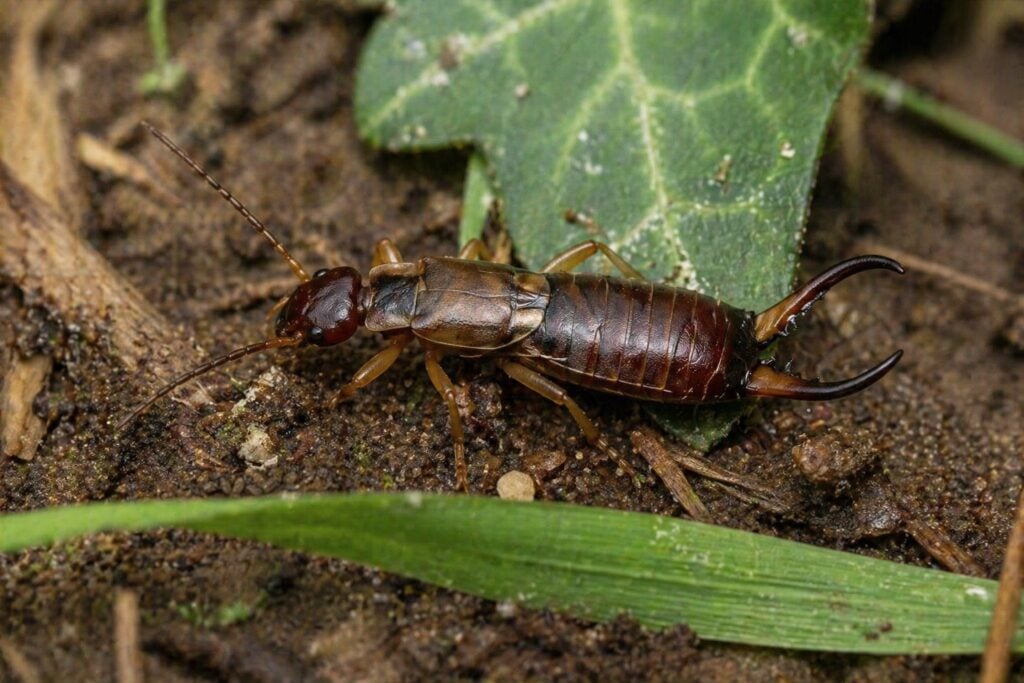
It has a long, flat body with a reddish brown color and a pair of curved pincers at the back called cerci. These pincers are what most people notice first, and they are often the reason people feel uneasy.
However, earwigs are not aggressive toward humans. They are shy, nocturnal creatures that prefer to stay hidden during the day.
Most of the time, you will only see them when you move objects like pots, stones, or garden debris.
Understanding what they are is the first step to changing how we see them.
Understanding the Cerci and Their Real Purpose
When I saw those pincers for the first time, I assumed they were dangerous. But after observing them more closely, I learned that their purpose is quite different from what most people think.
The cerci are mainly used for defense and mating. Male earwigs have more curved pincers, while females have straighter ones.
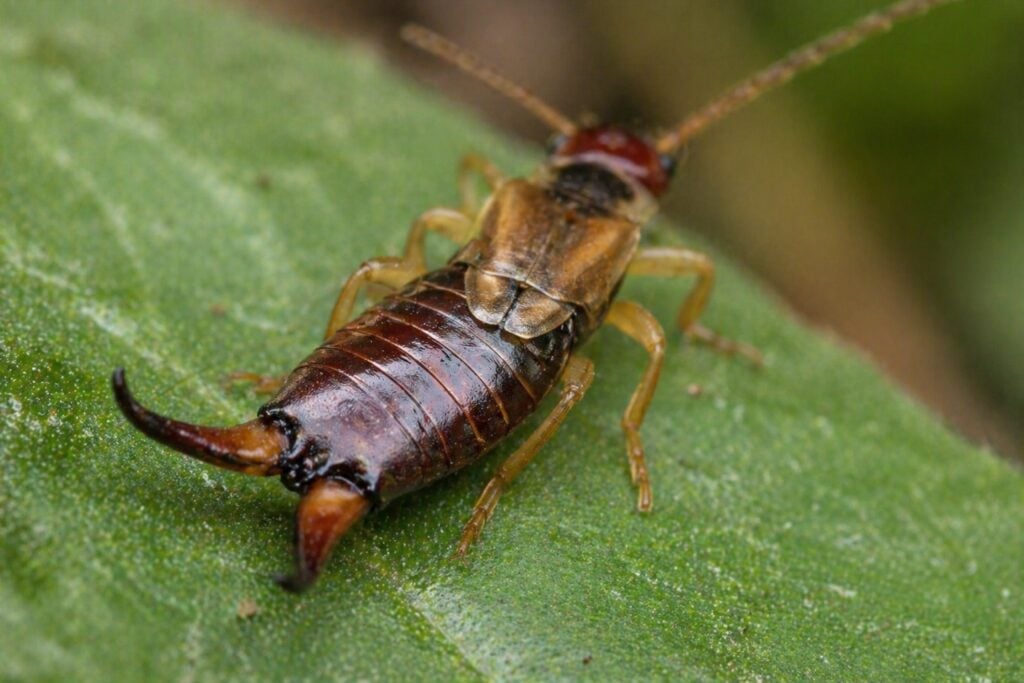
These pincers help them interact with each other rather than harm humans.
I even tested this by gently placing one on my hand. It did not try to pinch me at all. Instead, it simply tried to find a way to escape. That moment helped me realize that earwigs are far less threatening than their appearance suggests.
Once I understood their true purpose, my fear started to disappear.
What Earwigs Eat and Why It Matters?
One of the most important things I discovered about earwigs is their diet. This is where they start to become valuable in the garden.
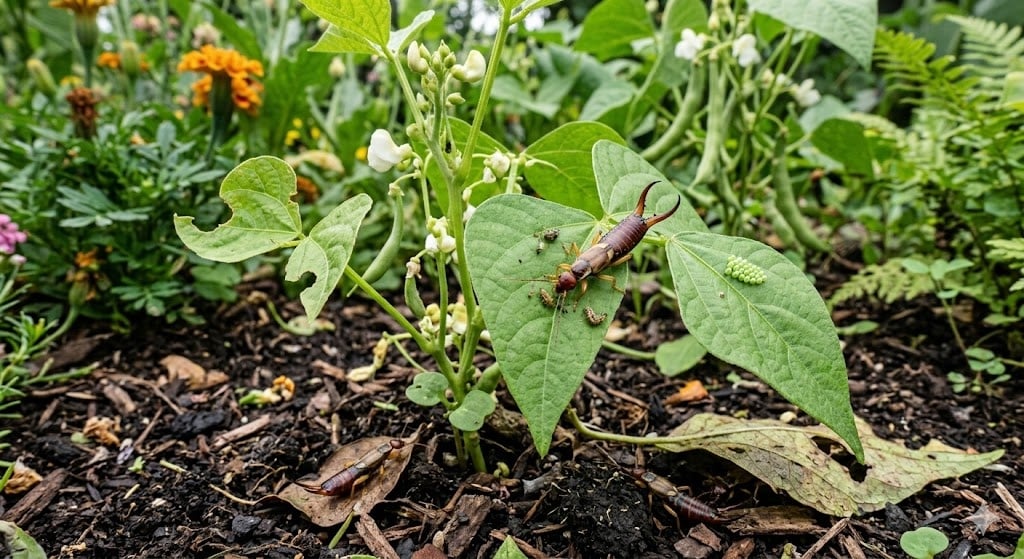
Earwigs are omnivores. They eat a mix of plant material and small insects. Their diet includes aphids, larvae, pest eggs, and even decaying organic matter.
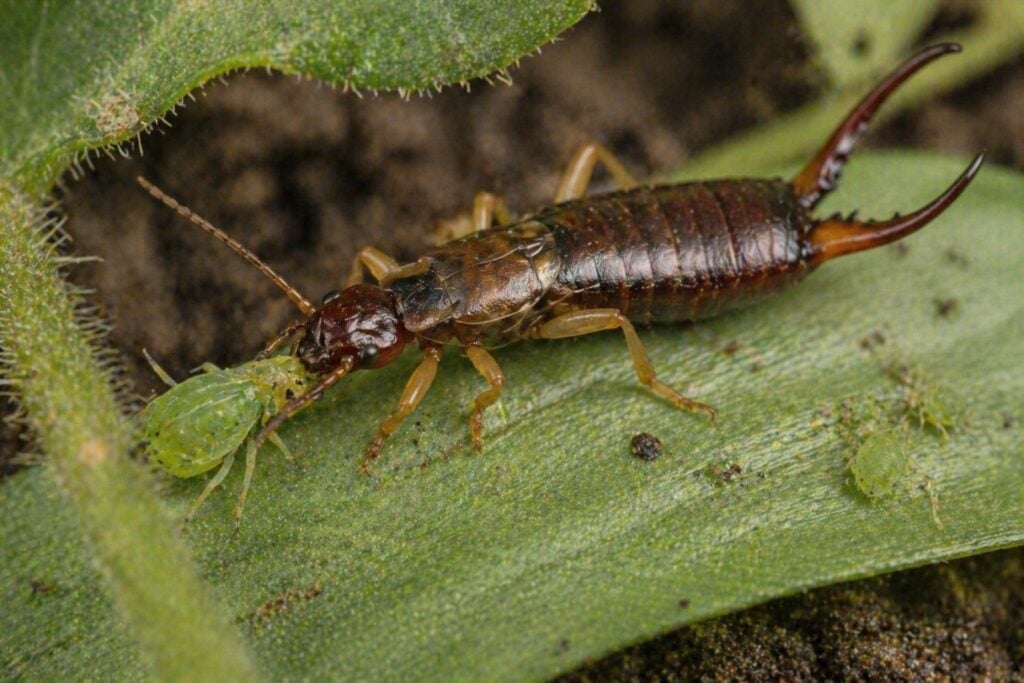
I noticed a significant reduction in aphids on some of my plants where earwigs were present. This made me realize that they were actually helping control pest populations naturally.
Of course, they can sometimes nibble on soft plant tissues, especially when food is scarce. But in my experience, the benefits often outweigh the minor damage.
They are not perfect, but they are far from being purely harmful.
Their Nocturnal Behavior and Hidden Lifestyle
One thing that fascinated me about earwigs is how rarely we actually see them. This is because they are nocturnal.
During the day, they hide in dark, moist places such as under pots, in cracks, beneath bark, or in soil. At night, they come out to feed and explore.
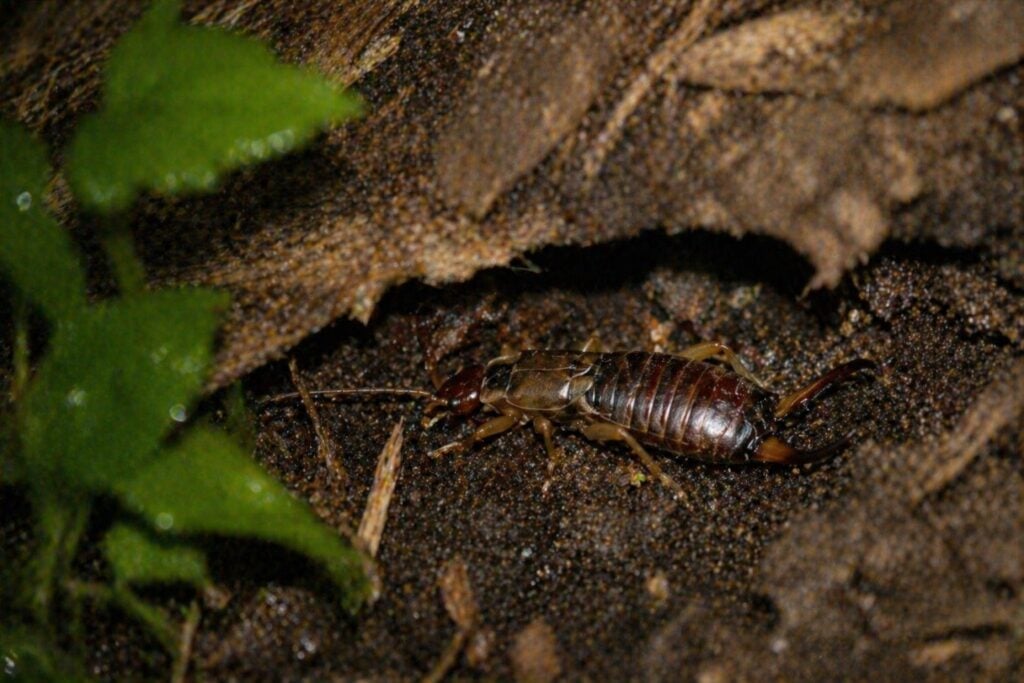
I started checking my garden after sunset, and that is when I truly saw their activity. It gave me a new perspective on how much life exists in the garden that we usually miss.
Their hidden lifestyle is one of the reasons they are often misunderstood. We only see them occasionally, and usually in moments that make them seem unwelcome.
But in reality, they are quietly working behind the scenes.
The Surprising Parental Care of Earwigs
This is the part that changed my opinion the most. I never expected an insect like this to show such behavior.
Female earwigs are known for their parental care, which is rare among insects. They clean, protect, and guard their eggs until they hatch.
I once carefully observed a small cluster of eggs under a pot. The mother stayed close, constantly moving and adjusting them. It was a level of care I did not expect from such a small creature.
Seeing this made me appreciate them in a completely different way. It reminded me that even the smallest creatures can have complex and fascinating behaviors.
Where Earwigs Live in the Garden?
After spending more time observing them, I started noticing patterns in where earwigs prefer to stay. They love dark, damp environments. You will often find them under flower pots, inside mulch, beneath rocks, or in the cracks of wooden structures.
In my garden, I found the highest number of earwigs in areas that were shaded and slightly moist.
These conditions provide the perfect shelter for them during the day.
Understanding their habitat helped me decide how to manage them. Instead of trying to eliminate them, I learned how to control where they stay.
Are Earwigs Good or Bad for Your Garden?
This is the question I asked myself many times. The answer, based on my experience, is that they are both beneficial and occasionally problematic.
On the positive side, they help control pests like aphids and larvae.
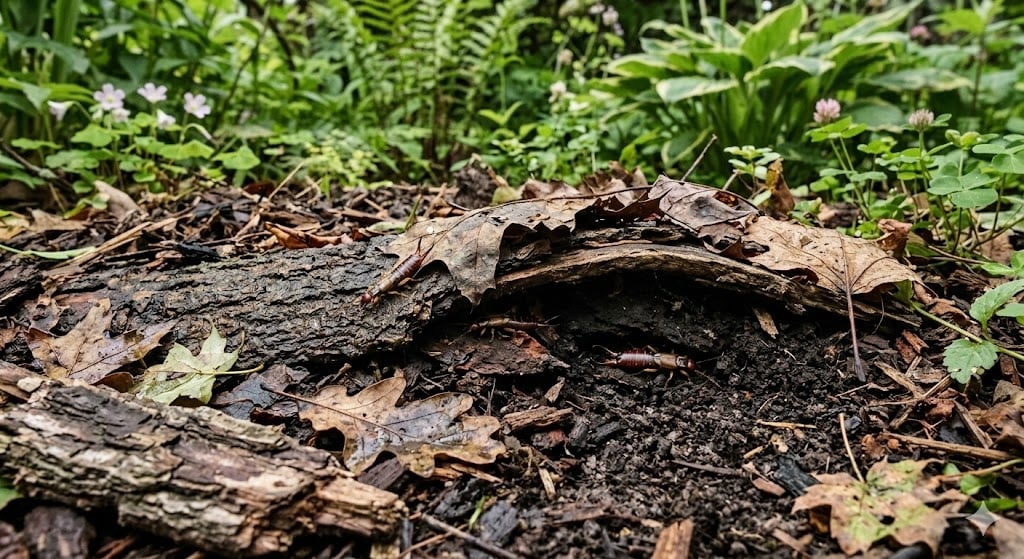
They also contribute to breaking down organic matter, which supports soil health.
On the negative side, they may feed on tender plants, especially young seedlings or soft fruits.
In my garden, I learned to accept a balanced view. I allow earwigs to exist, but I monitor their population. If they become too many, I take gentle steps to manage them rather than eliminate them completely.
Balance is the key.
Simple Ways I Manage Earwigs Naturally
Over time, I developed a simple approach to managing earwigs without harming them or disrupting the ecosystem. I reduce excessive moisture in areas where they gather too much.
I also move pots occasionally to prevent them from creating permanent hiding spots.
Sometimes, I create simple traps using rolled newspaper or small containers. This allows me to relocate them rather than kill them. The goal for me is not to remove them entirely, but to keep their population in check while still benefiting from their presence.
Common Myths About Earwigs
Before I understood earwigs, I believed many of the common myths. The most popular one is that they crawl into human ears.
From everything I have learned and experienced, this is not true. Earwigs do not seek out humans, and they certainly do not target ears. They prefer dark, damp environments, not people.
The myth likely comes from their name rather than their behavior.
Letting go of these misconceptions helped me see them more clearly and appreciate their role in the garden.
Learning to See the Value in Small Creatures
Looking back, I am glad I took the time to understand earwigs instead of reacting out of fear. They are not the pests I once believed them to be. They are part of a larger system that keeps the garden balanced and healthy.
While they may not be perfect, they contribute more than they harm.
Now, when I find one under a pot, I do not panic. I simply observe, appreciate, and let it continue doing its quiet work.
Sometimes, the most misunderstood creatures turn out to be the most valuable ones.