I used to look at the blank walls in my garden as wasted space. They felt cold, lifeless, and honestly, a bit depressing. But everything changed when I discovered the power of climbing plants.
Instead of seeing a wall as a limitation, I started seeing it as an opportunity to create something alive, textured, and beautiful.
Climbing plants are not just decorative. They can soften harsh structures, add privacy, regulate temperature, and even attract pollinators.
What I learned over time is that the secret to success is not just picking a plant with pretty flowers, but understanding how it climbs and attaches itself. That single insight completely changed the way I design my garden.
Understanding Climbing Mechanisms Before You Choose
When I first started, I made the mistake of choosing plants based only on appearance. I quickly realized that not all climbers behave the same way, and some need support while others do not.
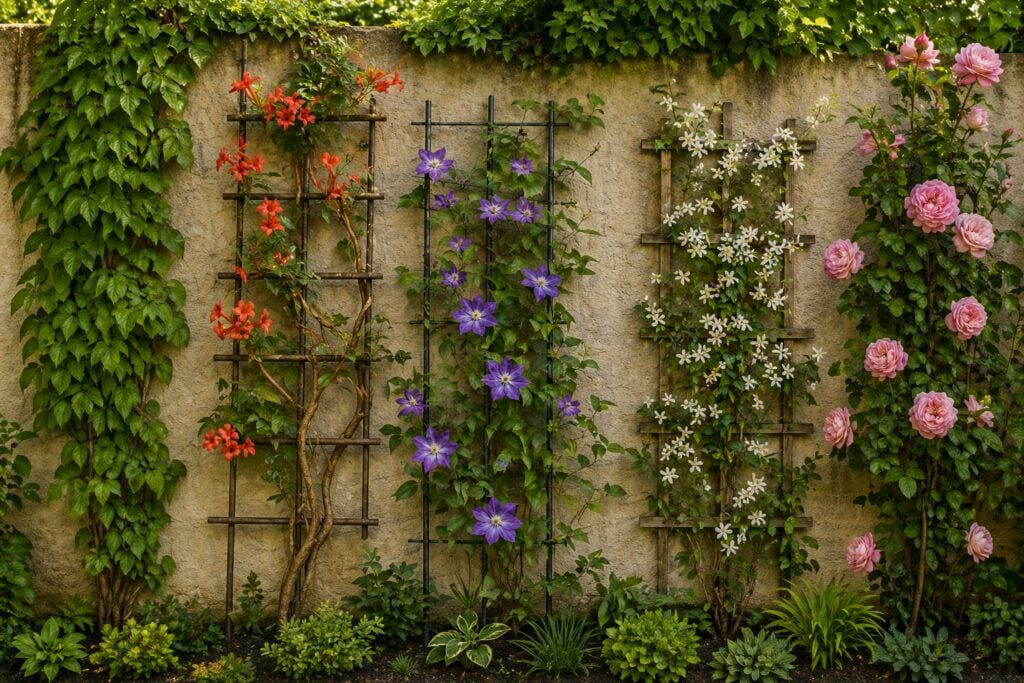
There are several main climbing mechanisms, and understanding them helps you match the plant to your wall or structure.
Some plants use adhesive tendrils or rootlets that allow them to cling directly to surfaces. Others rely on twining stems that wrap around supports. There are also plants that use petioles, or leaf stems, to grip onto wires or trellises.
And then there are climbers that need manual tying because they cannot attach themselves naturally.
Once I understood this, everything became easier. I stopped fighting the plant’s natural behavior and started working with it.
Self Clinging Climbers for Effortless Coverage
One of the easiest ways I found to cover a wall is by using self clinging climbers. These plants attach themselves directly to surfaces without needing additional support.
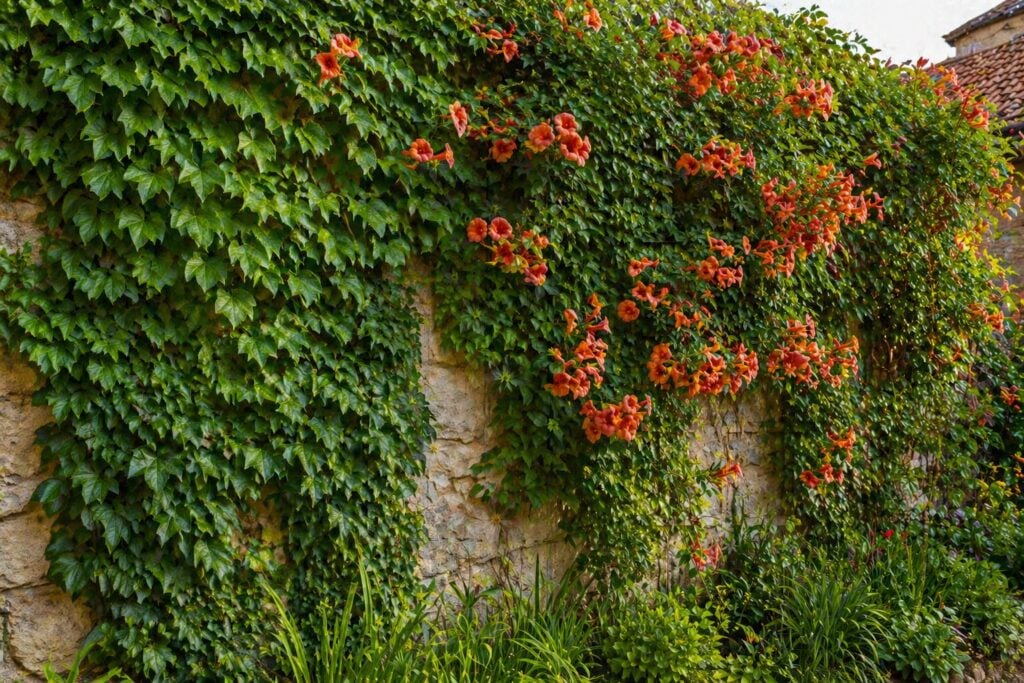
Virginia creeper is one of my favorites. It uses adhesive discs to cling tightly to walls, creating a dense, dramatic display.
In autumn, the leaves turn a deep red, which adds a stunning seasonal effect.
What I love most is how low maintenance it is once established.
Another great option is trumpet vine. It uses aerial rootlets to attach itself and produces bold, trumpet shaped flowers that attract hummingbirds and butterflies.
It grows quickly, which makes it perfect if you want fast results.
However, I always remind myself that these plants can be vigorous. I make sure to plant them where they have enough space to grow without becoming overwhelming.
Twining Climbers That Need Support Structures
I quickly learned that some climbers prefer to wrap themselves around something rather than stick to a wall. These are called twining climbers, and they need a structure like a trellis, wire, or pergola.
Honeysuckle is a classic example. Its stems twist around supports, creating a soft, romantic look.
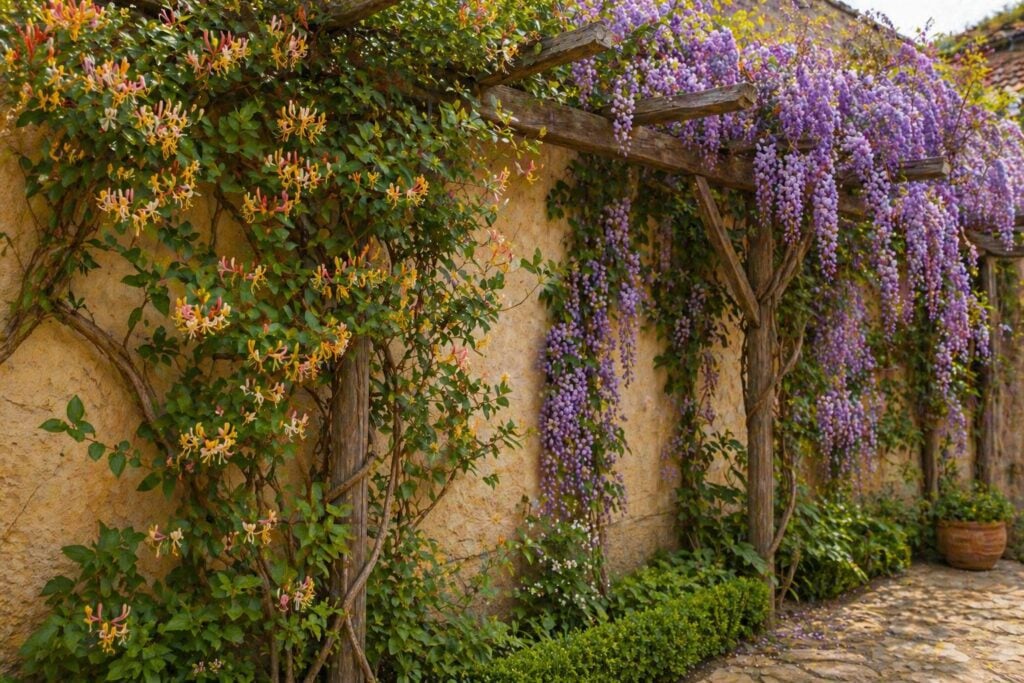
The fragrance alone makes it worth planting, especially in the evening when the scent becomes stronger.
Wisteria is another favorite of mine, but it requires strong support. Its woody stems can become quite heavy over time. When I installed a pergola for it, I made sure it was sturdy enough to handle the weight.
The cascading purple flowers create a breathtaking effect that feels almost magical.
Using twining climbers taught me the importance of planning ahead. The right support system makes all the difference.
Climbers That Use Tendrils and Petioles
Some plants have a more delicate way of climbing. Instead of wrapping thick stems, they use tendrils or leaf stems to grip onto supports.
Clematis is one of the best examples. It uses its petioles to cling onto wires or thin structures.
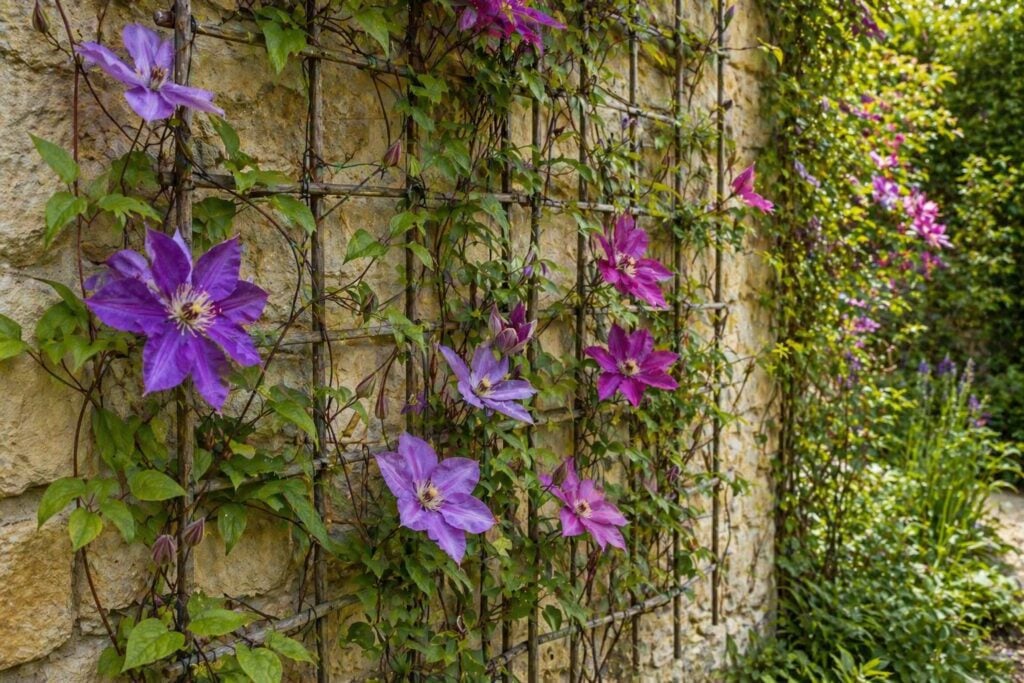
I like to pair it with a simple trellis, which allows the plant to climb freely while showcasing its beautiful flowers.
Jasmine also falls into this category. It needs a trellis or lattice to grow properly, but once it does, it creates a lush, fragrant wall of greenery. I often place it near seating areas so I can enjoy its scent.
These types of climbers are perfect when you want a more refined and controlled look. They are less aggressive and easier to manage compared to self clinging varieties.
Climbers That Require Manual Training
Not all climbing plants are naturally equipped to attach themselves. Some need a little help, and I used to avoid them because I thought they would be too much work.
Now, they are some of my favorites.
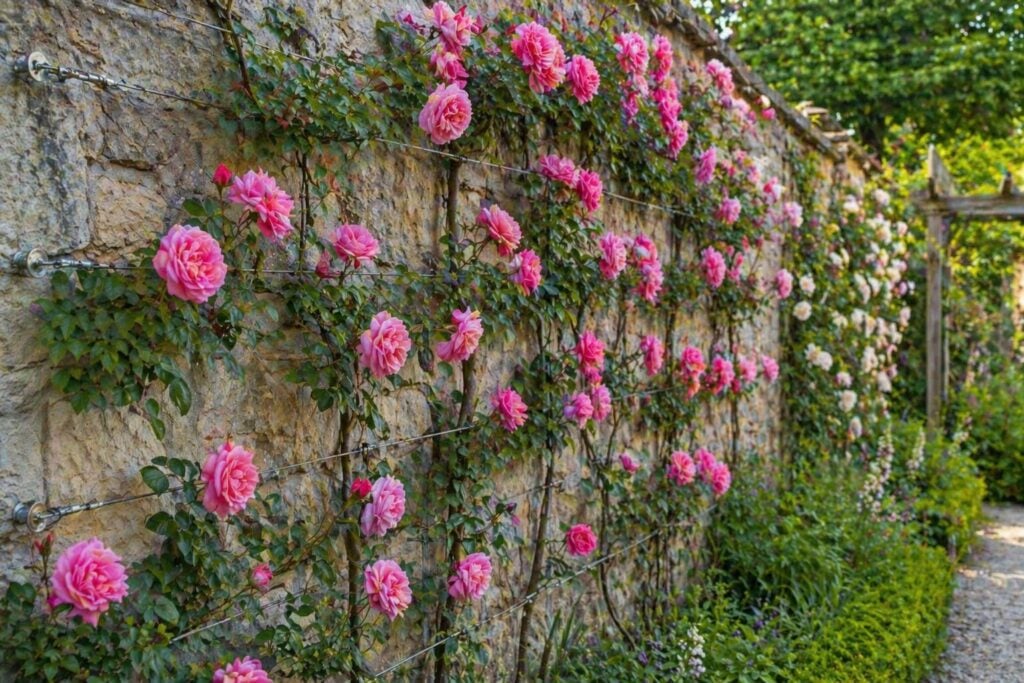
Climbing roses are a great example. They do not cling or twist on their own, so I gently tie them to wires or trellises. This allows me to shape their growth exactly how I want it.
What I love about this method is the level of control it gives me. I can guide the plant to create patterns, fill gaps, or frame certain areas of the garden. It feels more like designing than gardening.
While it does require a bit more effort, the results are incredibly rewarding.
Choosing the Right Support for Your Wall
One thing I learned the hard way is that support structures are just as important as the plants themselves. Without the right support, even the best climbing plant will struggle.
For self clinging plants, I make sure the wall surface is suitable. Brick and stone work well, but delicate surfaces might not.
For twining and tendril climbers, I install trellises, wires, or lattices. I always leave a small gap between the wall and the support, usually about four inches.
This allows for proper air circulation and prevents moisture buildup.
Pergolas and arches are perfect for heavier climbers like wisteria. They provide both support and a stunning visual feature.
Taking the time to set up the right structure makes everything easier in the long run.
Creating a Balanced and Beautiful Design
When I started combining different climbers, I realized how much impact layering can have. Instead of using just one type of plant, I began mixing varieties with different colors, textures, and growth habits.
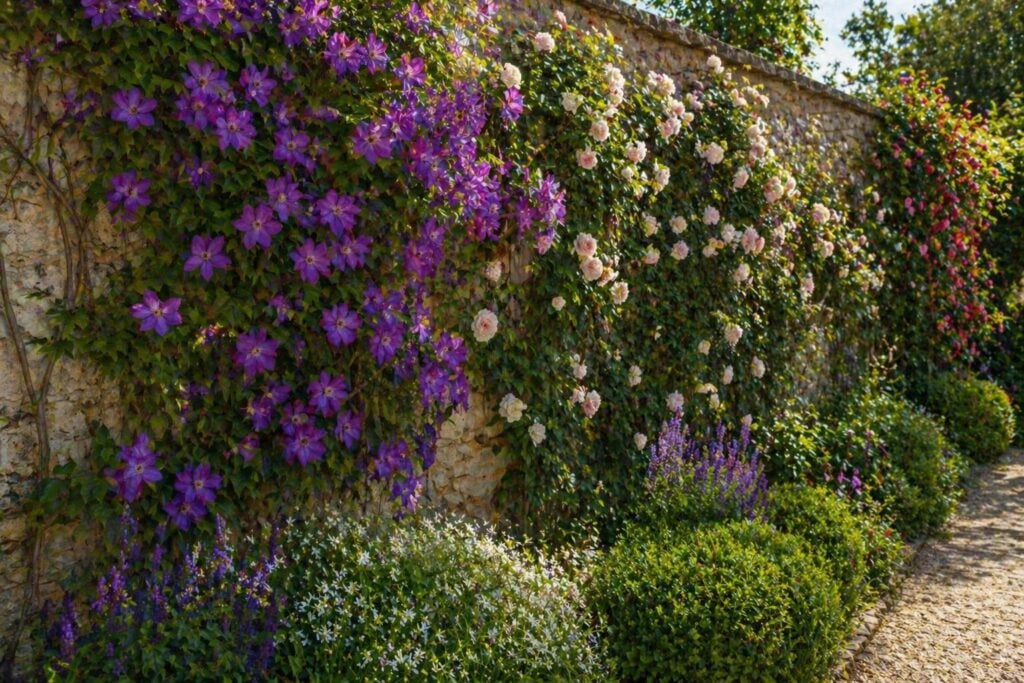
For example, I like pairing a bold climber like trumpet vine with a softer one like clematis. The contrast creates depth and visual interest.
I also pay attention to blooming seasons. By choosing plants that flower at different times, I can keep the wall looking vibrant throughout the year.
Designing with climbing plants feels like painting, except the canvas is alive and constantly evolving.
Maintenance Tips for Long Term Success
I used to think climbing plants would take care of themselves, but I quickly learned that a little maintenance goes a long way.
Pruning is essential to keep plants healthy and under control. I trim back overgrowth to prevent it from becoming too dense or invasive.
Watering and feeding are also important, especially during the early stages. Once established, many climbers become more resilient, but they still benefit from occasional care.
I also keep an eye on the support structures. As plants grow, they can put pressure on wires and trellises, so I make sure everything remains secure.
With consistent care, climbing plants can thrive for years and continue to enhance the garden.
Common Mistakes to Avoid
Looking back, I made several mistakes that taught me valuable lessons. One of the biggest was not considering the plant’s growth rate. Some climbers grow much faster than expected and can quickly take over.
Another mistake was planting too close to the wall without proper spacing. This can lead to poor air circulation and potential damage.
I also underestimated the importance of support strength. Weak structures can collapse under the weight of mature plants.
By learning from these mistakes, I was able to create a more sustainable and enjoyable garden.
Turning Challenges Into Opportunities
What I once saw as a boring wall has now become one of the most beautiful parts of my garden. Climbing plants have completely transformed the space, adding life, color, and character.
The key is to understand how each plant grows and to match it with the right support system. When you do that, even the most difficult wall can become a stunning feature.
If you have a wall that feels like a problem, I encourage you to see it differently.
With the right climbing plants, it might just become the highlight of your entire garden.