
As someone who loves spending time in the water, I’ve always dreamed of a backyard oasis where I could relax and swim without the harsh chemicals of traditional pools.
Over time, I discovered the beauty of natural swimming pools, a growing trend that not only promotes environmental sustainability but also offers a serene, chlorine-free swimming experience.
Natural swimming pools, unlike conventional ones, rely on a bio-filtration system that keeps the water clean and clear using plants, sand, and geotextile fabric.
After researching and experiencing these pools firsthand, I can confidently say that they are the perfect blend of beauty and functionality.
What Are Natural Swimming Pools?
A natural swimming pool (NSP) is a swimming pool that uses natural filtration processes instead of synthetic chemicals like chlorine. These pools are designed to resemble a natural pond or lake, incorporating aquatic plants, gravel, sand, and geotextile fabric to clean the water.
The filtration system works through a biological process where the plants and other natural elements remove impurities from the water, creating a clean and healthy environment for swimming.
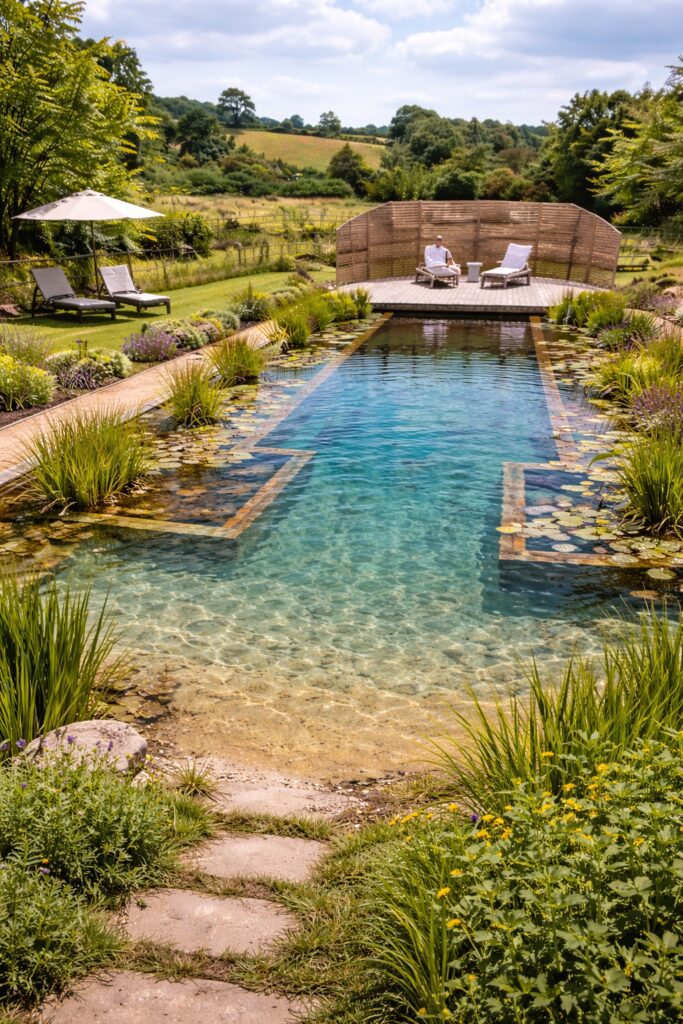
Unlike conventional pools that rely on chemicals to sanitize the water, natural swimming pools are entirely eco-friendly, using organic processes to keep the water clean.
The aesthetic appeal of natural swimming pools is unmatched, as they blend seamlessly into their surroundings, creating a tranquil, natural space in your backyard.
The Benefits of Natural Swimming Pools
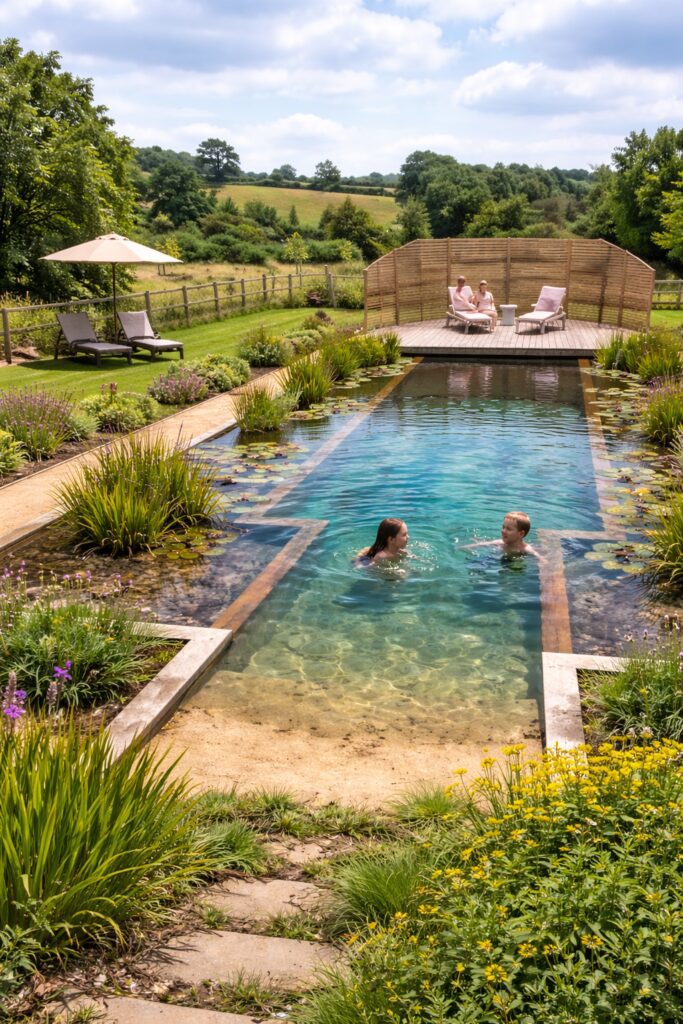
There are numerous benefits to installing a natural swimming pool. Here are some of the reasons why more people are choosing these chlorine-free alternatives:
- Chemical-Free Swimming: One of the biggest draws of natural swimming pools is that they don’t require chlorine or other chemicals. This makes the water gentler on your skin and eyes, and better for the environment. You won’t have to worry about harsh chemical burns or the unpleasant smell of chlorine.
- Eco-Friendly: Natural swimming pools are sustainable and eco-friendly. By using natural filtration systems, they consume less energy and reduce the need for harsh chemicals that can harm the environment. Additionally, the use of native plants helps create a natural habitat for local wildlife.
- Low Maintenance: While natural swimming pools do require maintenance, they are far easier to manage than traditional pools. With the right filtration system and a balanced ecosystem, they can be self-cleaning, requiring less time and money spent on upkeep.
- Aesthetic Appeal: Natural swimming pools are beautiful. They resemble natural ponds or lakes, with lush greenery surrounding the water. These pools blend into the landscape, offering a calming, serene space where you can relax and unwind.
- Healthier Water: Without chemicals, the water in a natural swimming pool is free of harmful substances, offering a safer and healthier environment for swimmers, particularly for those with sensitive skin or allergies.
Designing Your Natural Swimming Pool
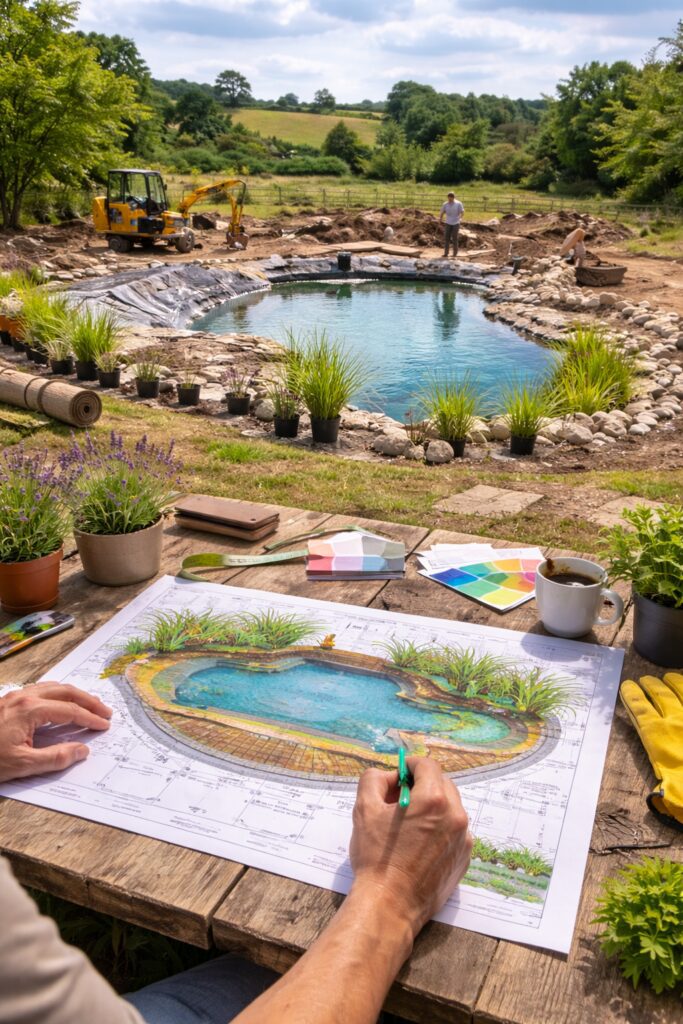
Designing a natural swimming pool requires careful planning. I’ll walk you through the key design elements that make up an NSP, ensuring you have a clear understanding of the steps involved.
1. Swimming Area and Rest Zones
The design of a natural swimming pool includes two main zones: the swimming area and the rest zones. The swimming area is where you’ll spend most of your time.
It needs to be large enough to swim and move comfortably. The rest zones are shallow areas planted with aquatic plants that help with filtration.
These areas also create a peaceful space for relaxation.
2. Choosing the Right Location
The location of your natural swimming pool is crucial. You want it to be in a sunny spot where the water can be heated naturally by the sun.
However, you should also consider privacy and how the pool will blend into your garden’s overall design. Ideally, the pool should be integrated into the landscape, allowing it to appear as though it’s always been a part of your backyard.
3. Wood Pier and Access
Incorporating a wood pier or a similar structure provides easy access to the pool. It can also serve as a beautiful focal point in the design.
I found that having a wooden pier adds a rustic, natural touch to the pool and allows for easy entry and exit.
4. The Filtration System: Geotextile and Pond Soil
The filtration system is one of the most important parts of a natural swimming pool. In a typical NSP, the water flows through different layers of materials such as pond soil, sand, and geotextile fabric.
These materials work together to filter the water, removing dirt and debris. The plants in the rest zones also play a vital role in keeping the water clean by absorbing nutrients and providing oxygen.
Materials Needed for Your Natural Swimming Pool
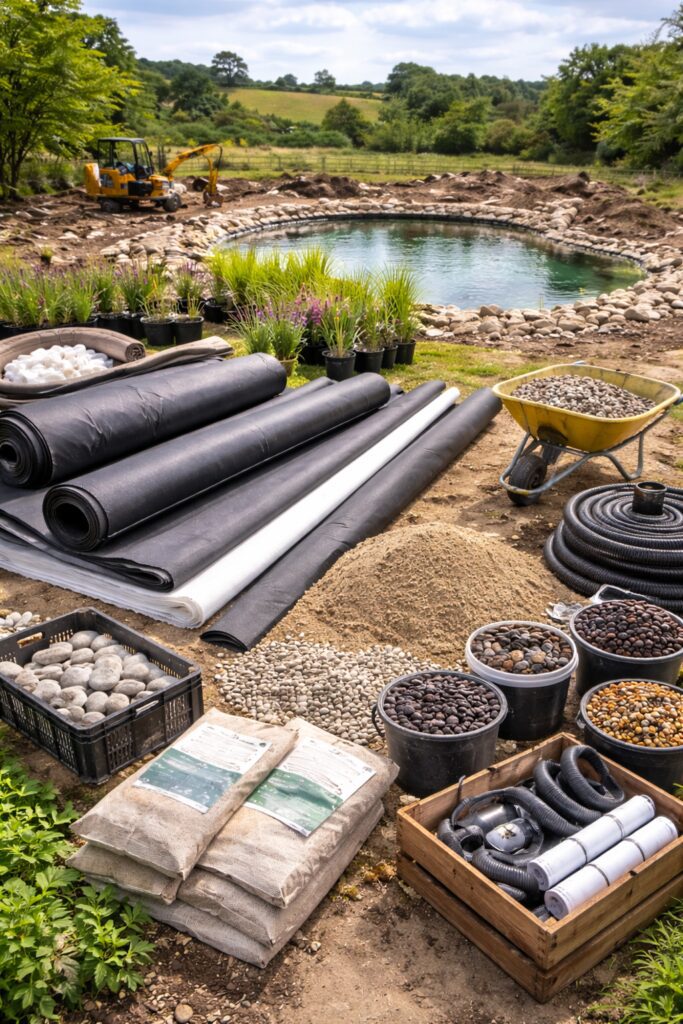
Building a natural swimming pool requires specific materials to ensure that the water stays clean and healthy.
Here are the key materials you’ll need:
- Geotextile Fabric: This fabric helps to separate the soil layers and prevent contamination. It acts as a barrier, allowing water to pass through while preventing soil erosion. It’s an essential component in ensuring the longevity and effectiveness of the filtration system.
- Pond Soil: Pond soil is used to create a natural filtration layer. It’s rich in beneficial microorganisms that help break down organic matter, keeping the water clean.
- Fill Sand: Fill sand provides additional filtration and supports plant growth. It’s an essential component of the bottom layer of the pool.
- Aquatic Plants: Plants are not only decorative but also functional in a natural swimming pool. They help absorb nutrients from the water, keep algae in check, and provide oxygen. Popular plants for NSPs include water lilies, reed grasses, and floating plants.
- Pond Liner: A pond liner is necessary to keep the water contained and prevent leaks. It should be durable, UV-resistant, and made from non-toxic materials to ensure the health of the water and the ecosystem.
- Wood Pier: For a natural and rustic look, a wood pier provides a perfect access point for entering and exiting the pool.
Maintaining Your Natural Swimming Pool

Maintaining a natural swimming pool is relatively simple but requires regular care to ensure it continues to function properly.
Here are some tips to keep your pool in top condition:
- Regular Plant Care: Aquatic plants should be maintained regularly to ensure they don’t become overgrown. Trim dead leaves, remove debris, and divide plants as necessary.
- Monitor Water Quality: While natural swimming pools don’t require chemicals, it’s still important to monitor the water quality. Check the water’s pH levels, temperature, and clarity. If the water becomes cloudy, this may indicate an imbalance in the system.
- Clean the Pool: Regularly remove any debris, such as leaves or branches, from the water. You can use a net or skimmer to remove large debris. Additionally, clean the filter and check the water levels to ensure everything is functioning as it should.
- Check the Filtration System: The filtration system should be checked periodically to ensure the geotextile fabric and pond soil are working effectively. If necessary, replace or refresh these materials to keep the filtration system functioning at its best.
- Seasonal Maintenance: Depending on your climate, you may need to winterize your natural swimming pool. In colder climates, it’s important to remove plants and protect the filtration system from freezing temperatures.
Dive into the Future of Swimming
Natural swimming pools are a fantastic alternative to traditional pools, offering a chemical-free, eco-friendly swimming experience. They’re not only healthier for you but also for the environment.
With the right design, materials, and maintenance, you can create your own personal oasis that blends seamlessly with nature.
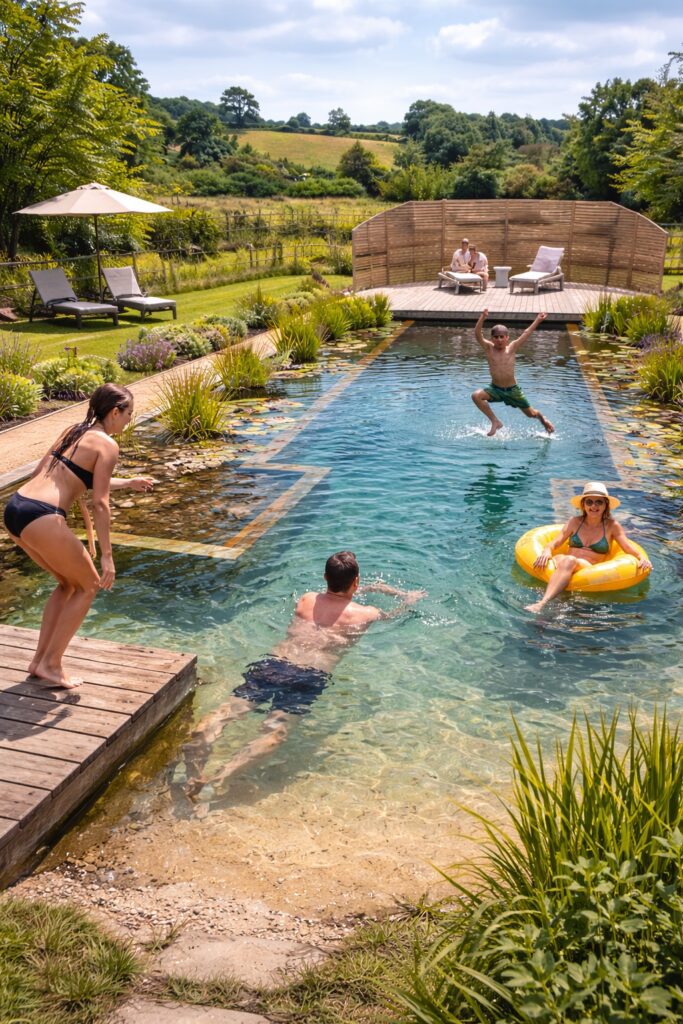
After building my own natural swimming pool, I can confidently say that it’s one of the best investments I’ve made. The serene atmosphere, the absence of harsh chemicals, and the low maintenance required make it a truly magical place to unwind.
If you’re looking to transform your backyard into a peaceful retreat, consider the beauty and benefits of a natural swimming pool. It’s time to embrace the magic of nature in your own home.


