
Vertical gardening is an increasingly popular solution for those with limited space or a desire to make the most of their outdoor areas. By growing plants vertically, you can save space while increasing the yield of your garden.
One of the best ways to accomplish this is by constructing a vertical trellis.
Whether you’re looking to grow vegetables like tomatoes, cucumbers, or beans, a sturdy and efficient trellis will support your plants as they grow upwards, leading to better air circulation, reduced pests, and healthier plants
Why Choose a Vertical Trellis for Your Garden?

A vertical trellis is an excellent choice for your garden because it maximizes space, allowing you to grow more plants in smaller areas, making it ideal for urban gardens or small backyards.
By encouraging plants to grow upward rather than outward, a trellis also improves airflow and sunlight exposure, promoting healthier, more productive growth.
Additionally, vertical gardening helps reduce the risk of soil-borne diseases, as plants are kept off the ground, and it can enhance the aesthetic appeal of your garden by adding structure and beauty.
Whether you’re growing vegetables, flowers, or climbing vines, a vertical trellis is a practical and stylish solution for any garden.
1. Space Efficiency
A vertical garden trellis maximizes your available gardening space by encouraging plants to grow upwards instead of sprawling out across the ground.
This is particularly useful for small gardens or urban spaces where horizontal space is limited. Not only does this technique allow you to grow more in less space, but it also keeps your garden neat and organized.
2. Improved Plant Health
Climbing plants, such as tomatoes, beans, and peas, benefit from vertical gardening as it keeps them off the ground. This ensures that the plants receive better airflow and more sunlight, leading to healthier growth.
It also minimizes the risk of soil-borne diseases, as the plants are less likely to come into contact with the damp, disease-prone soil.
3. Aesthetic Appeal
In addition to their functional benefits, vertical trellises add an aesthetic element to your garden. They can serve as natural decorative structures, providing a rustic charm and a visually appealing framework for climbing plants to wind around.
A well-maintained vertical garden can be a beautiful addition to any outdoor space, transforming a plain garden into a lush, green retreat.
Step-by-Step Guide to Building a Vertical Trellis
Building a vertical trellis is a simple yet rewarding DIY project that allows you to make the most of your garden space. Start by selecting sturdy materials like wooden posts or bamboo for the vertical support, and secure them firmly in the ground.
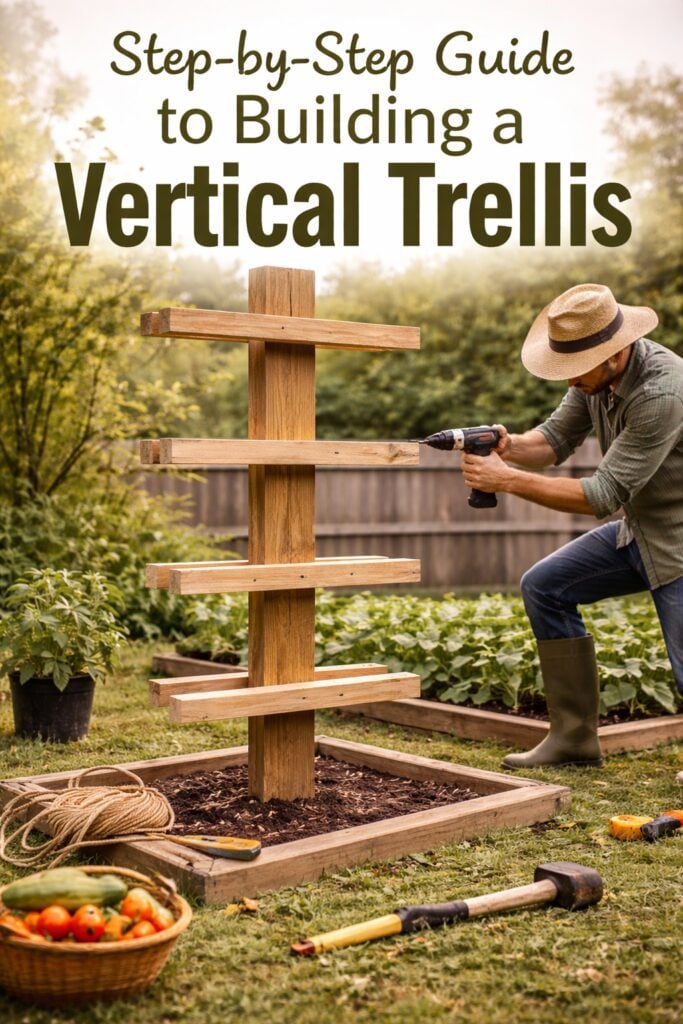
Next, attach horizontal slats or strings to create the framework for your plants to climb. Weave additional twine or wire to provide extra support as your plants grow.
Once your trellis is in place, plant your climbing vegetables or flowers at the base, and gently train them to grow upwards as they develop.
With minimal maintenance and the right support, a vertical trellis will help your plants thrive while adding structure and beauty to your garden.
Step 1: Gather Your Materials
Before you start building your trellis, it’s important to gather the materials you’ll need. For a basic, sturdy structure, you’ll require the following:
- Wooden posts: Choose long, durable pieces of wood for the vertical support of your trellis. Cedar or treated pine work well because they resist rot and weather damage.
- Horizontal slats: These will create the rungs for your plants to climb. You can use thinner pieces of wood or bamboo.
- Twine or wire: This will be used to secure the plants to the slats and give them something to climb on.
- Nails, screws, or twine: You’ll need these to secure the slats to the vertical posts.
Once you have all your materials, you’re ready to start constructing your trellis.
Step 2: Design Your Trellis Layout
Decide where you want your trellis in your garden and how big it should be. For a tomato trellis, you’ll want it to be about 5 to 6 feet tall. The width can vary depending on how many plants you plan to grow.
A good guideline is to space the slats about 6 inches apart, ensuring the plants have enough space to spread out and grow.
Step 3: Prepare the Vertical Posts
Start by setting the vertical posts in place. You can choose to dig holes and set the posts in concrete for a more permanent structure, or you can simply hammer them into the ground if you’re looking for a simpler, temporary setup.
The posts should be at least 5 to 6 feet tall, with about 12 inches of the post buried in the soil for stability.
Step 4: Attach the Horizontal Slats
Once the vertical posts are in place, it’s time to attach the horizontal slats. Use nails or screws to secure the slats to the vertical posts, spacing them evenly apart.
These slats should be strong enough to hold the weight of the plants as they grow. If you’re using bamboo, it can be tied in place with twine for a more rustic, natural look.
Step 5: Weave and Secure the Twine or Wire
Next, take the twine or wire and weave it horizontally between the slats. This will give your climbing plants something to cling to as they grow. If you’re using wire, ensure it’s taut and securely fastened at each end.
If you’re using twine, you may want to wrap it around the slats and tie it off to make sure it’s strong enough to support the weight of your plants.
Step 6: Plant Your Vegetables
Now comes the fun part—planting your vegetables! Place your plants at the base of the trellis, making sure they are spaced out evenly to allow for growth.
Be gentle when planting, and water them well after planting to ensure proper root establishment. As the plants grow, gently tie them to the slats with more twine or use plant clips to encourage them to climb upward.
Step 7: Maintain and Support
As your plants grow, continue to support them by adding more twine or clips as necessary. Regularly prune any dead or overgrown vines to ensure they don’t become entangled in a way that might harm their growth.
Keep an eye on pests and disease, and ensure the plants are getting enough sunlight and water.
Pros and Cons of Vertical Gardening with Trellises
Vertical gardening with trellises offers numerous advantages, such as maximizing limited space, improving air circulation, and promoting healthier plant growth by keeping vines off the ground. It also enhances the aesthetics of your garden, turning it into a vertical green space that can support a variety of climbing plants like tomatoes, cucumbers, and flowers.

However, vertical gardening is not without its challenges. The initial setup can require an investment of time and materials, especially if you’re using durable materials like treated wood or metal.
Regular maintenance is also necessary to ensure plants are properly supported and pruned.
Additionally, vertical trellises are exposed to weather conditions, which may cause wear and tear over time, especially in areas with heavy rain or wind.
Despite these challenges, the benefits of vertical gardening often outweigh the drawbacks, making it a worthwhile option for space-conscious gardeners.
Supportive Perspectives
Supportive perspectives on vertical gardening with trellises highlight its many benefits, making it an ideal choice for gardeners looking to maximize limited space while enhancing plant health.
By growing plants vertically, gardeners can optimize sunlight exposure, improve air circulation, and reduce the risk of disease, all of which contribute to stronger, more productive plants.

Additionally, vertical gardens offer a visually appealing structure, transforming your garden into a lush, green space that is both functional and beautiful.
With the added bonus of making gardening accessible in small spaces, vertical trellises provide a sustainable and efficient solution for modern gardeners.
- Maximized Space: For gardeners with limited space, vertical trellises are a game-changer. They allow for the cultivation of more plants in smaller areas.
- Healthier Plants: With better airflow and sunlight, plants grown on a trellis are less likely to suffer from disease.
- Aesthetic Appeal: Vertical gardens provide a visually striking feature in a garden, enhancing the overall beauty of the space.
Critical Perspectives
Critical perspectives on vertical gardening with trellises point out some of the challenges and limitations that come with this method. While vertical gardening maximizes space, it can also require an initial investment in materials, especially if you’re using treated wood, metal, or high-quality wire.
Additionally, maintaining a vertical trellis can be more labor-intensive compared to traditional gardening, as plants need constant support, pruning, and training to grow properly.

The exposure to the elements can also cause wear and tear on the trellis, especially in regions with extreme weather, which may reduce its longevity.
Despite these drawbacks, many gardeners find the benefits outweigh the inconveniences, but it’s important to consider these factors before committing to a vertical gardening setup.
- Initial Setup Cost: While building a vertical trellis is a relatively low-cost project, the materials (especially treated wood and wire) can add up.
- Maintenance: Vertical gardens require regular maintenance, especially in terms of plant training and support, which might not be suitable for those looking for a low-maintenance gardening solution.
- Weather Exposure: Vertical gardens are exposed to the elements, meaning the materials used to construct the trellis may wear down faster than in-ground structures.
Real-World Impact
The rise of vertical gardening is part of a broader movement toward sustainable gardening and urban farming. By building and using vertical trellises, individuals can create healthier, more productive gardens in limited spaces, supporting local food production.
The benefits are particularly evident in urban areas where space is at a premium, and people are looking for ways to grow their own food while reducing their carbon footprint.
In communities, vertical gardens can also contribute to the aesthetic improvement of urban areas, offering an alternative to traditional, less sustainable landscaping methods.
Furthermore, as urban agriculture continues to grow, vertical trellises may become a standard method for growing food in apartment complexes, community gardens, and small backyards.
Conclusion
Building a vertical trellis is an excellent way to maximize your garden’s potential, allowing you to grow more plants in smaller spaces. It provides not only space efficiency but also healthier plant growth, enhanced by better sunlight and airflow.
With the step-by-step guide provided, you can easily construct your own trellis and enjoy a lush, thriving garden throughout the growing season.
As vertical gardening becomes more popular, the potential for transforming urban spaces into food-producing areas grows, making this simple and effective solution an important part of the sustainable gardening movement.


