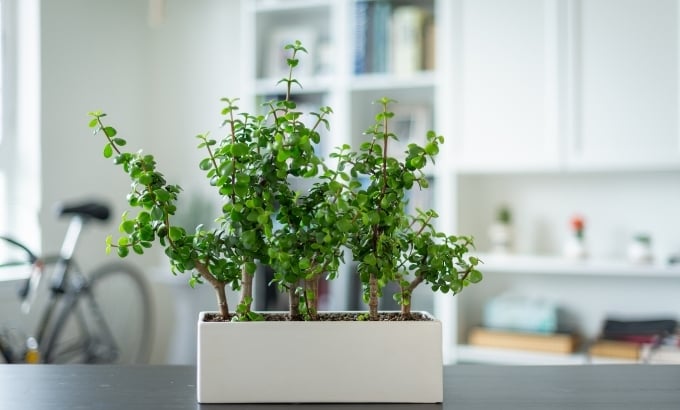
When I first brought home a Monstera deliciosa, I wanted to give it all the love in the world. For me, that meant watering it every few days, just to “make sure” it never went thirsty. Within weeks, I noticed yellow leaves, drooping stems, and a musty smell from the soil. I thought my plant needed more water, but the truth was the opposite.
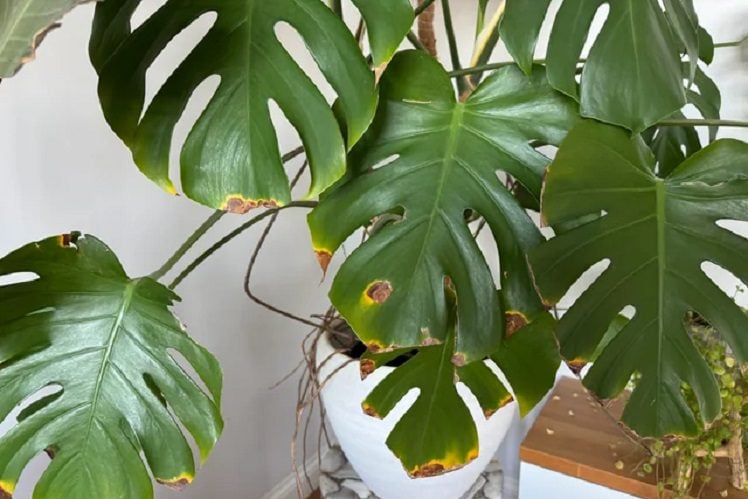
In this article, I’ll share the clear signs of overwatering that I’ve seen first-hand, how to confirm it, and most importantly, how to bring your Monstera back to health.
Signs Your Monstera is Overwatering
Overwatering is one of the most common mistakes new Monstera owners make. And trust me, I’ve been there. The good news? Your Monstera usually tells you when it’s getting too much water—you just need to learn how to read the signs.
1. Yellowing Leaves That Spread From the Bottom Up
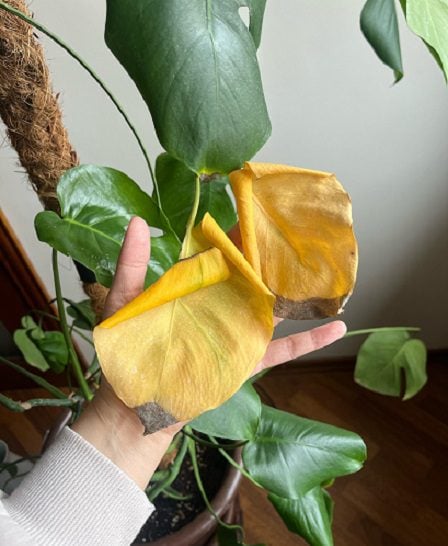
The first red flag I noticed was yellow leaves starting at the bottom of the plant. While Monsteras do occasionally shed old leaves, overwatering causes a pattern: the yellowing spreads upward.
From my experience, when multiple lower leaves turn yellow quickly, it’s almost always linked to soggy soil. Healthy leaves should stay green and firm—yellow is a clear distress signal.
2. Consistently Wet or Mushy Soil
Over time I realized that the soil itself tells the truth. If you stick your finger two inches into the pot and it’s still wet days after watering, that’s a problem.
Monsteras like their soil to dry out slightly between waterings. Constantly wet or muddy soil suffocates the roots, encouraging fungal growth and root rot.
I now use a simple habit: I don’t water again until the top few inches feel dry to the touch.
3. Drooping or Limp Leaves

When I first saw my Monstera’s leaves drooping, I thought it was thirsty. But overwatering actually causes the same symptom.
The difference is in the texture of the leaves:
- Underwatered Monstera leaves droop but feel crisp and dry.
- Overwatered Monstera leaves droop but feel soft and limp.
Once I learned to feel the leaves instead of just looking at them, I stopped making the mistake of adding water when the plant didn’t need it.
4. Brown or Black Leaf Spots
If you notice dark brown or black patches spreading across the leaves, especially with yellow halos, that’s often a sign of a fungal leaf spot triggered by too much moisture.
When I made this mistake, I cut off the damaged leaves and adjusted my watering routine. The new growth came out clean and healthy.
5. A Musty or Rotten Smell

The day I knew I had really overdone it was when I leaned in and smelled the soil. A healthy Monstera has almost no scent. Overwatered soil develops a musty, swampy, or even rotten smell.
This odor usually means fungal activity or root rot has already started. At that stage, repotting with fresh soil is often the only way to save the plant.
6. Root Rot Symptoms
I discovered root rot the hard way while repotting my Monstera. Instead of firm white roots, they were brown, mushy, and foul-smelling.
Root rot is the most dangerous consequence of overwatering because it damages the plant’s ability to absorb nutrients. If left untreated, it can kill the plant.
Catching it early, trimming away the rotten roots, and repotting in a well-draining mix saved my Monstera.
7. Fungus Gnats Around the Soil
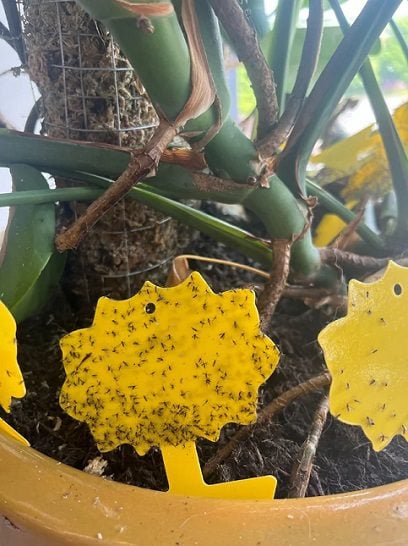
Finally, one subtle sign I ignored at first was tiny flies buzzing around the soil. Fungus gnats thrive in damp environments. If they show up, it usually means your soil is staying wet too long.
A simple yellow sticky trap told me the truth: I had created the perfect home for gnats by overwatering. Once I adjusted my routine, they disappeared.
How to Confirm If You’re Overwatering?
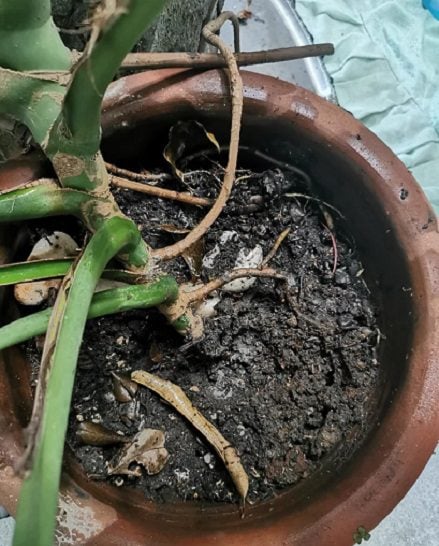
If you’re not sure whether your Monstera is overwatered, try these checks:
- Finger Test: Stick your finger 2–3 inches deep—if it’s wet, wait to water.
- Pot Weight: Over time you’ll learn how heavy a freshly watered pot feels compared to when it’s ready for another drink.
- Moisture Meter: Inexpensive meters can give an instant readout of soil moisture.
How to Fix an Overwatered Monstera?
1. Adjust Watering Schedule
Water only when the top few inches are dry. Don’t water on a strict calendar—water based on soil needs.
2. Improve Drainage
Use pots with drainage holes. Add perlite or orchid bark to your soil mix to help excess water escape.
3. Repot If Necessary
If the soil smells rotten or roots look mushy, repot into fresh, airy soil. Trim off any damaged roots before replanting.
4. Boost Airflow
Better airflow helps the soil dry evenly. A gentle fan near your plant can prevent future issues.
5. Clean Damaged Leaves
Remove any yellow or black-spotted leaves so the plant can focus energy on new healthy growth.
Personal Watering Routine That Works for Me

Here’s what I do now:
- Check the soil twice a week with my finger.
- Water thoroughly until it drains out of the bottom, but only when needed.
- Empty the saucer so roots don’t sit in standing water.
- Adjust frequency based on season—less in winter, more in summer.
This simple change saved my Monstera, and it’s been thriving ever since.
Common Mistakes Gardeners Make
Here’s what I get:
- Watering on a schedule instead of by soil dryness.
- Using decorative pots with no drainage.
- Not adjusting for seasons—plants drink less in cooler months.
- Confusing drooping leaves with thirst instead of water stress.
I’ve made all of these mistakes, but the key is to learn and adapt.
Final Thoughts
Monsteras are resilient plants, but overwatering is their silent enemy. The signs—yellow leaves, soggy soil, drooping stems, and even unwanted smells—are your plant’s way of asking for help.
From my experience, the best gardeners aren’t perfect waterers—they’re observant listeners. Once I started paying attention to what my Monstera was telling me, my plant not only survived but thrived.
If you take away one thing from this article, let it be this: water less often, but more mindfully. Your Monstera will thank you with lush, vibrant growth.