
When I first started gardening, I had no idea how essential pruning was for lavender. Lavender is one of the most aromatic and beautiful plants in any garden, and it can thrive for many years with proper care.
However, without pruning, lavender plants can become woody and miss out on their potential beauty.
Over time, I’ve learned how important it is to prune lavender correctly—not just for aesthetics but for its overall health and longevity.
What Happens if You Don’t Prune Lavender?
If you’ve ever seen a lavender plant grow too long without pruning, you may have noticed that it starts to become woody. Lavender is a short-lived perennial, meaning it has a limited lifespan but can still last for many years if properly maintained.
When I first let my lavender grow without pruning, I saw that it started to develop long, bare stems with fewer flowers.
This happens because the plant’s energy is used to sustain the older, woody parts rather than the newer growth, which is essential for vibrant blooms.
Without pruning, lavender can also become leggy and sparse. The plant will focus on maintaining its older growth, and you’ll notice that the newer shoots won’t flourish.
Pruning helps prevent this by encouraging new growth, which is key to maintaining a healthy and productive lavender plant.
Why Pruning Lavender is Essential for Its Health?
Pruning lavender has multiple benefits, not only improving its appearance but also promoting stronger growth and better blooms.
Here are the main reasons why I regularly prune my lavender plants:
- Encourages New Growth: Pruning lavender stimulates the plant to produce fresh, new shoots, which are the foundation for more flowers in the coming seasons. When I prune after the flowering season, I allow the plant to focus its energy on regenerating itself.
- Prevents Woody Stems: As mentioned earlier, lavender can become woody and less productive if not pruned. Cutting back the plant regularly prevents it from becoming too woody, ensuring that it stays healthy and robust.
- Improves Airflow and Sunlight Exposure: Lavender is a sun-loving plant. By removing dead or overcrowded stems, pruning allows better airflow and sunlight penetration, reducing the risk of fungal diseases and promoting healthier growth. I’ve noticed that my plants are much stronger and more compact when pruned correctly.
- Maintains a Neat Shape: A well-pruned lavender plant has a more pleasing, rounded shape. It looks tidy and compact, and the flowers are better distributed throughout the plant, making it more attractive in the garden.
When to Prune Lavender?
Knowing when to prune lavender is crucial for its health. In my experience, the best time to prune lavender is after the flowering season, typically in late summer or early autumn.
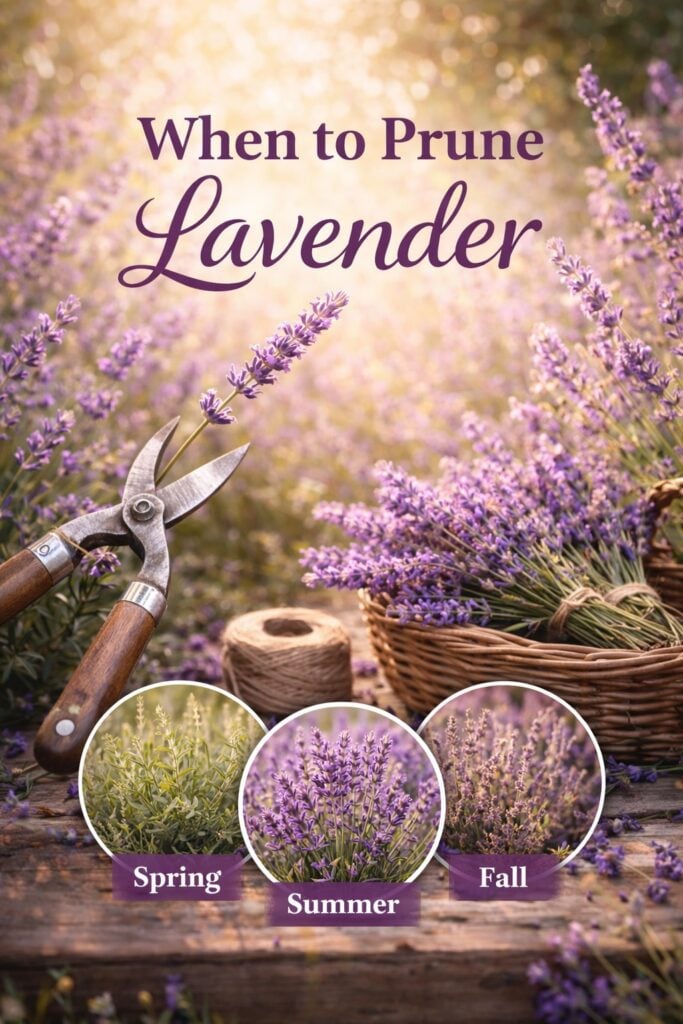
This allows the plant to recover from flowering and prepare for the colder months.
- After Flowering (Late Summer to Early Autumn): I always wait until after my lavender flowers have finished blooming. At this point, the plant has used up most of its energy to produce flowers, and it’s the perfect time to give it a gentle prune. By removing the spent flower stems and cutting back the plant’s size, I help encourage new growth before the colder weather sets in.
- In Early Spring (Optional): If you missed pruning your lavender in the fall, or if you want to do some light maintenance, early spring can also be a good time to prune. However, I avoid cutting too much in early spring because the plant will still be waking up, and it’s best not to remove too much of its structure at this time.
How to Prune Lavender?
Pruning lavender may seem daunting, but once I got the hang of it, it became a simple and rewarding task.
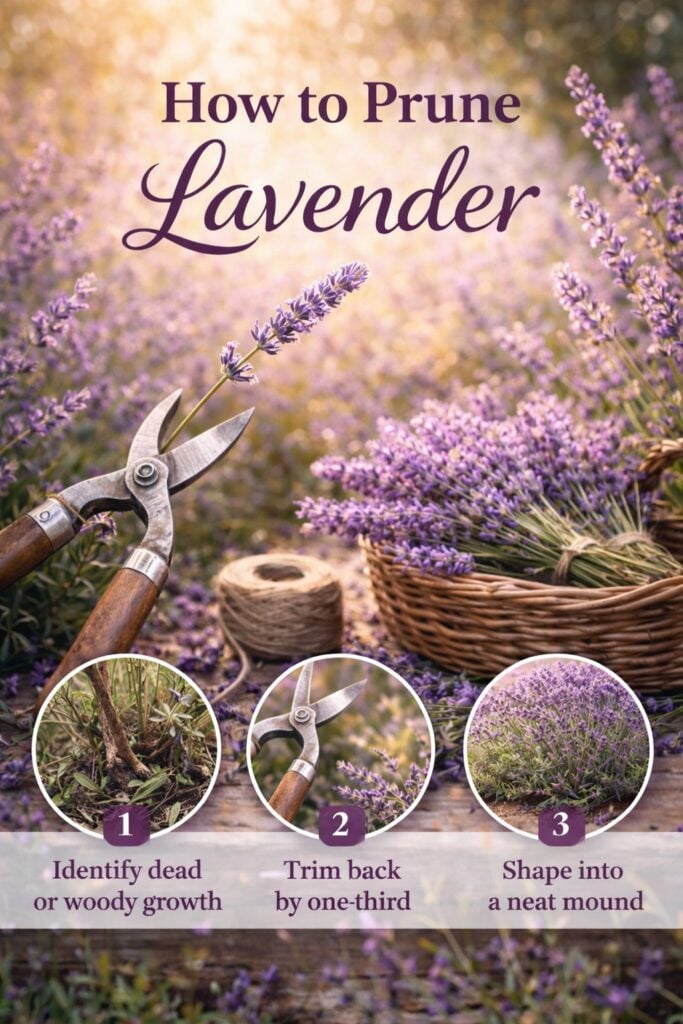
Here are the steps I follow when pruning my lavender:
- Prepare Your Tools: Always use sharp, clean pruning shears or garden scissors. Clean tools help prevent the spread of diseases and ensure clean cuts. I make sure to disinfect my tools before using them on different plants to keep everything sanitary.
- Prune After Flowering: Once the lavender has finished flowering, I look for the spent flowers and cut them back to the first set of healthy leaves. It’s important not to cut into the woody part of the plant, as this can damage it. I leave about two-thirds of the plant intact to ensure it has enough foliage to survive the winter.
- Shape the Plant: I prune to maintain a rounded shape. Cutting back the edges slightly encourages more compact growth, preventing the plant from becoming leggy. I also make sure not to remove too much of the woody stem. Pruning the lavender just above the woody stems helps to keep it in a neat shape while promoting new growth.
- Remove Dead and Spent Stems: I also make sure to remove any dead, damaged, or diseased stems during the pruning process. This helps reduce the risk of pests and disease while allowing the plant to focus its energy on healthy growth.
- Don’t Cut Too Low: One of the mistakes I made early on was cutting the lavender back too far. Lavender has a hard time regenerating from the woody base, so I always make sure to leave at least a few inches of healthy growth above the woody part of the plant.
Additional Lavender Pruning Tips
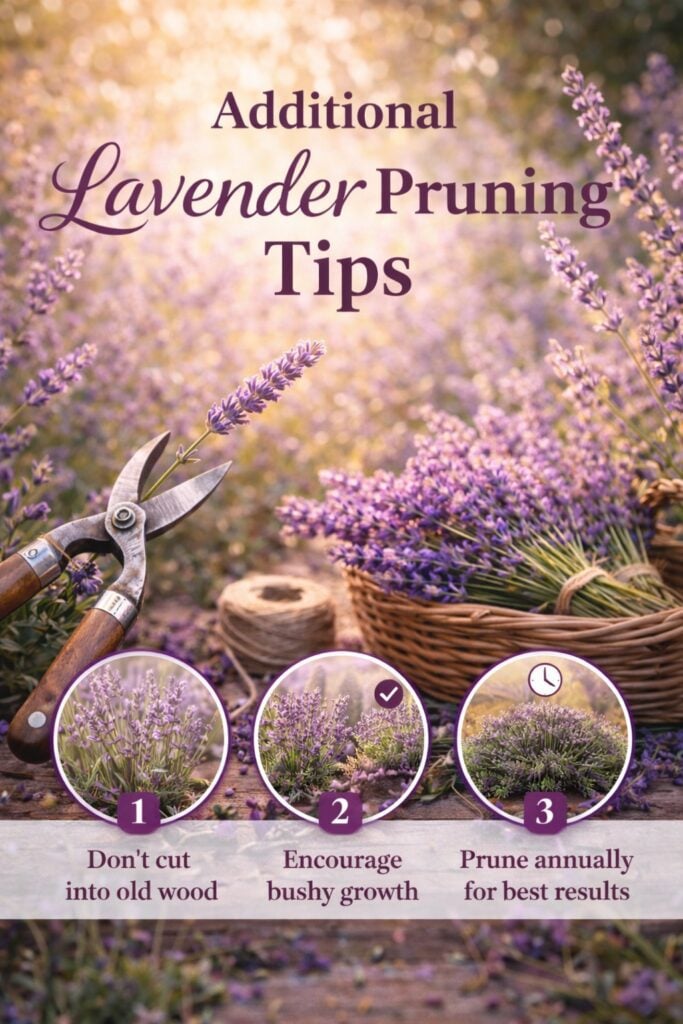
Here are a few extra tips I’ve found helpful when pruning lavender:
- Avoid Cutting Into the Old Wood: Lavender can’t regenerate well from the older, woody parts of the plant. I always make sure to prune above the woody stems, leaving enough healthy growth to ensure that the plant can bounce back the following season.
- Prune Regularly: Regular pruning keeps lavender healthy, but it’s important not to prune too often. I make sure to prune once or twice a year, as over-pruning can weaken the plant.
- Consider the Climate: In colder climates, I may cut back a little more than I would in warmer areas. The pruning helps the plant survive the winter and come back strong in the spring.
Conclusion
Pruning lavender is a vital task that every gardener should prioritize to maintain healthy, vibrant plants. By pruning correctly, I ensure that my lavender remains productive, beautifully shaped, and free from disease.
Lavender thrives with a little care, and by following the steps and tips I’ve shared, you’ll be able to enjoy its fragrant blooms year after year.
Remember, the key to successful lavender care lies in regular pruning, so don’t let your plants become too woody—prune, enjoy, and watch them flourish!


