When I first started gardening, I had no idea how important it was to rotate crops in my garden. I quickly learned that keeping the same plants in the same spot year after year could result in nutrient depletion and an increase in pests.
Crop rotation is a simple yet powerful gardening practice that has significantly improved my garden’s productivity and health.
What is Crop Rotation?
Crop rotation is the practice of growing different plant families in the same soil across different seasons. Instead of planting the same crops in the same place year after year, I switch out plant families in a way that helps balance the nutrients in the soil.
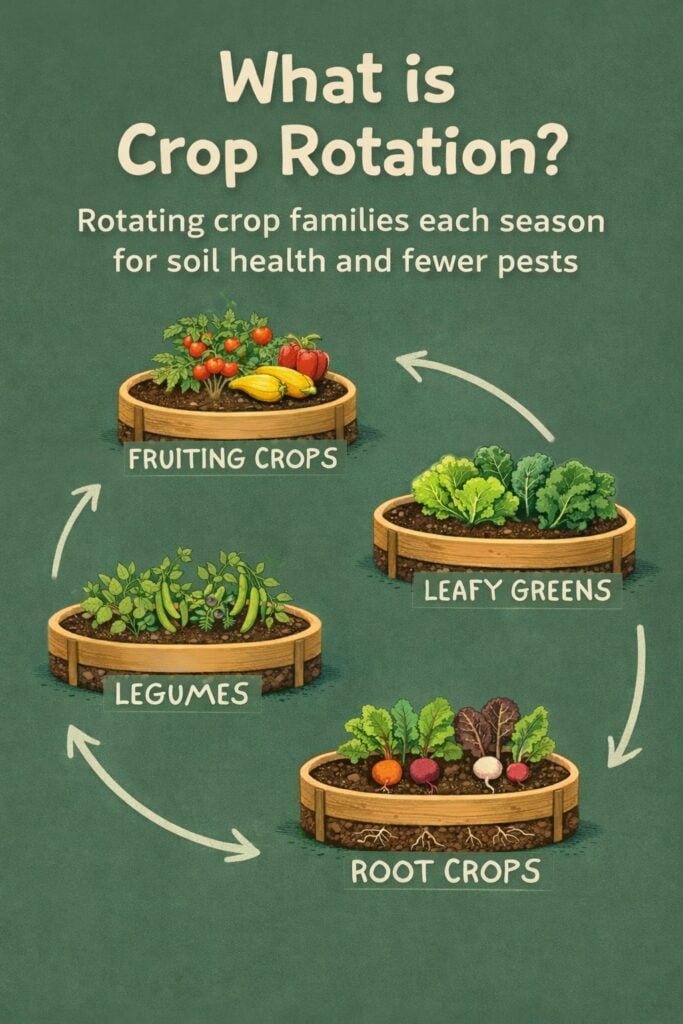
Each plant family has its own specific needs, and by rotating them, I can reduce soil depletion, improve soil fertility, and prevent the buildup of pests and diseases that target specific crops.
Why is Crop Rotation Important?
Crop rotation benefits both the soil and the overall health of your garden. From my own experience, here are the key reasons why you should rotate your crops:
- Nutrient Balance: Different plant families have different nutrient requirements. For example, fruiting crops like tomatoes and peppers are heavy feeders, while legumes like peas and beans enrich the soil with nitrogen. By rotating crops, I can avoid depleting the soil of essential nutrients, which ultimately leads to better plant health and higher yields.
- Pest and Disease Control: Planting the same crops in the same location year after year can lead to a build-up of pests and diseases specific to those plants. Rotating crops helps break the cycle of pest infestations and disease outbreaks, which can save you a lot of trouble in the long run.
- Soil Structure Improvement: Certain crops, like root crops (e.g., carrots and beets), help loosen the soil, while others (like legumes) help bind it together. By rotating these crops, I can improve soil texture and create a more balanced, healthy environment for all plants.
The Four Main Crop Types in Rotation
To fully understand crop rotation, it’s helpful to break it down into the four main types of crops you should rotate in your garden: fruits, legumes, leafy greens, and root crops.
Each of these plant families has distinct characteristics, so understanding them is key to rotating them effectively.
1. Fruiting Crops (Heavy Feeders)
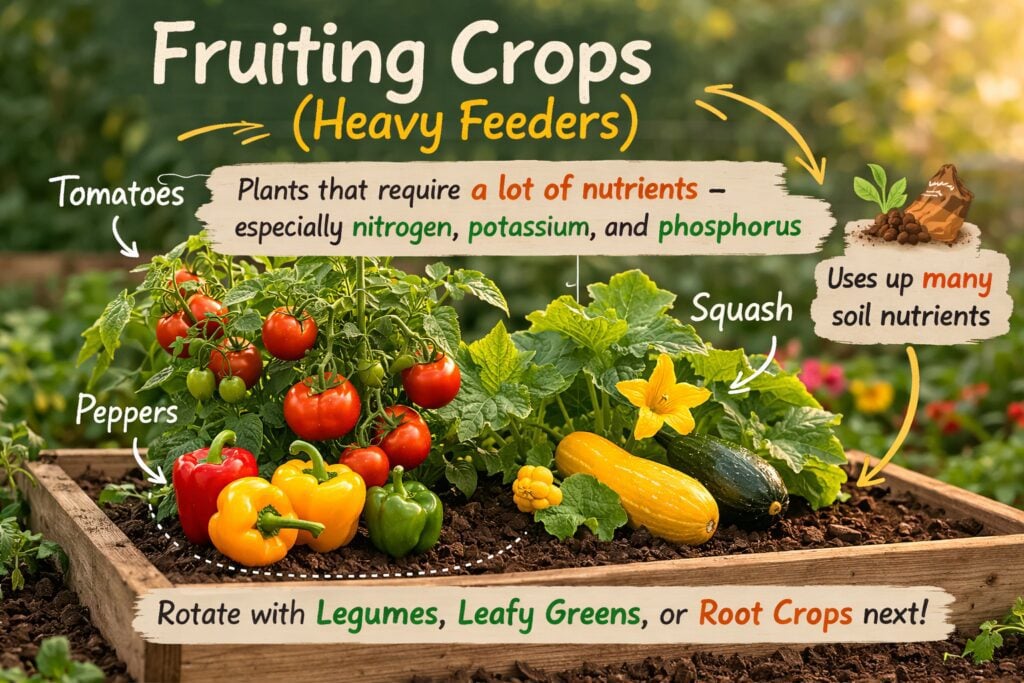
Fruiting crops, such as tomatoes, peppers, and squash, are the heavy feeders in your garden. These plants require a lot of nutrients, particularly nitrogen, potassium, and phosphorus.
In my garden, I rotate my fruiting crops with other families that do not deplete the soil in the same way. This ensures that my soil remains fertile and my plants continue to thrive.
- What to Plant Here: Tomatoes, peppers, eggplants, squash, and cucumbers.
- Why Rotate: These plants use up a lot of soil nutrients, so they should be followed by crops that replenish the soil.
2. Legumes (Soil Enrichers)
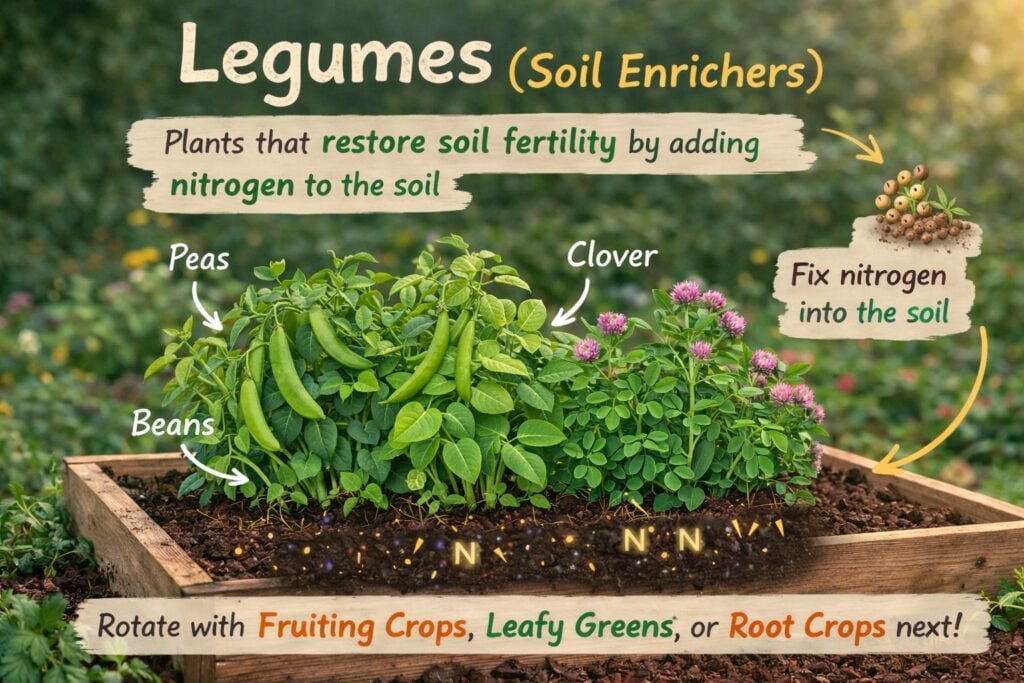
Legumes, including peas, beans, and clover, are known for their ability to fix nitrogen in the soil, a crucial nutrient for plant growth.
In my garden, I love rotating legumes after heavy feeders because they naturally replenish the soil, which helps prepare it for the next round of crops.
- What to Plant Here: Peas, beans, lentils, and clover.
- Why Rotate: Legumes add nitrogen to the soil, enriching it for the next round of crops.
3. Leafy Greens (Light Feeders)
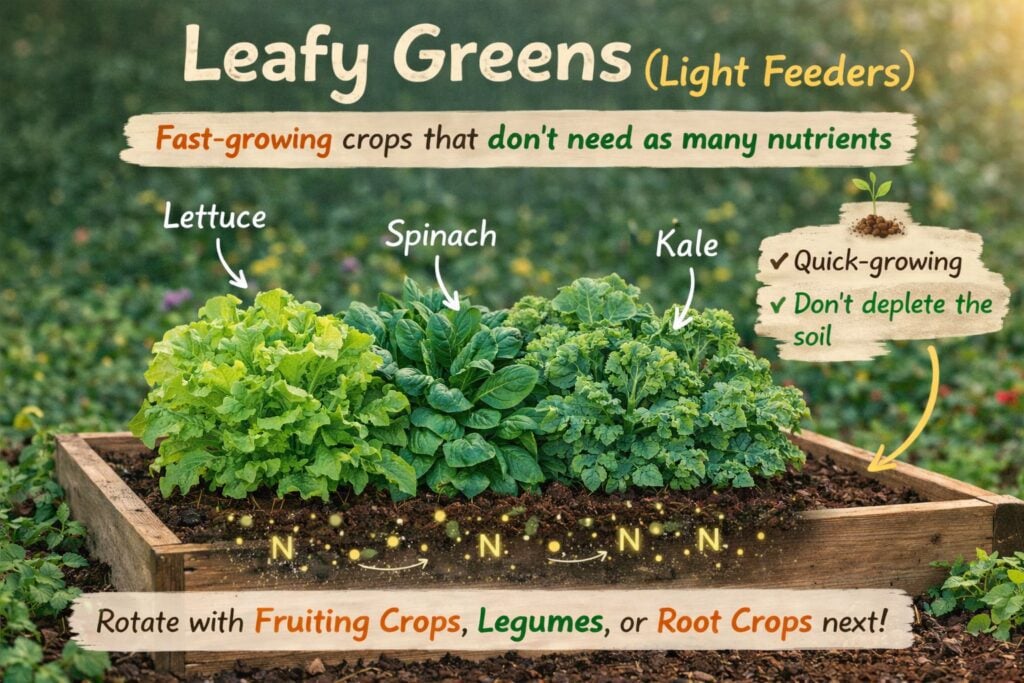
Leafy greens like lettuce, spinach, and kale are considered light feeders. They don’t require as many nutrients as fruiting crops, and they grow quickly.
After rotating heavy feeders and legumes, I often plant leafy greens because they don’t take as much out of the soil, allowing it to recover.
- What to Plant Here: Lettuce, spinach, kale, and arugula.
- Why Rotate: These crops are light feeders and can help restore soil nutrients after heavy-feeding crops.
4. Root Crops (Soil Looseners)
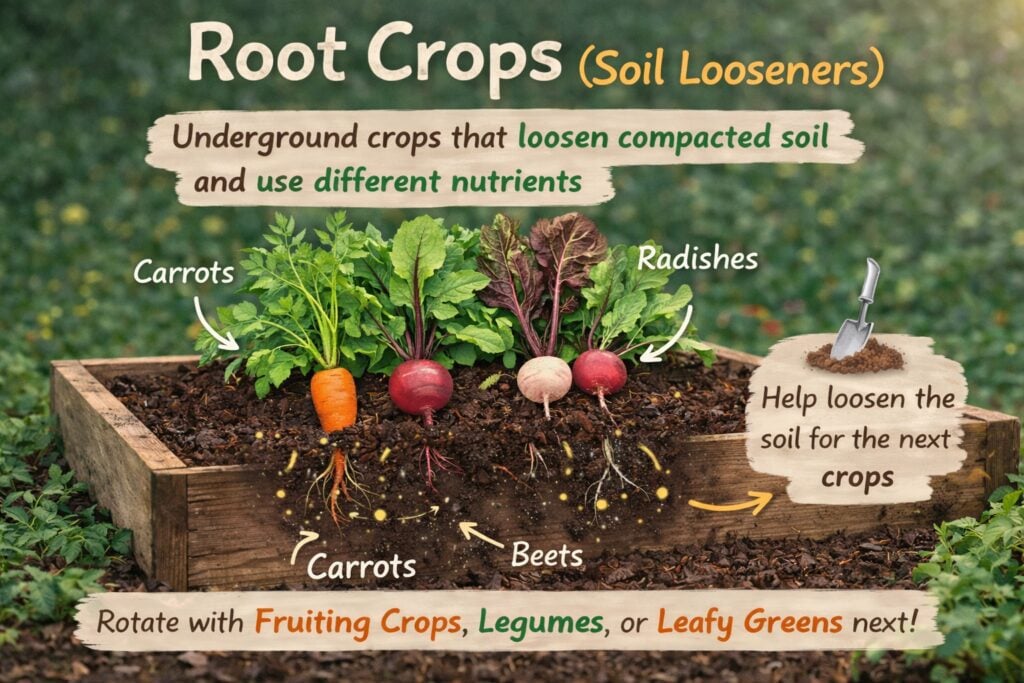
Root crops, such as carrots, beets, and radishes, have a unique benefit: they help to loosen compacted soil.
In my garden, I plant root crops after legumes or leafy greens because they improve the soil structure by breaking it up, allowing for better water infiltration and root growth for future crops.
- What to Plant Here: Carrots, beets, radishes, and turnips.
- Why Rotate: These crops loosen the soil, which helps improve soil texture for the next planting season.
How to Create a Crop Rotation Plan?
Creating a crop rotation plan for your garden may seem daunting at first, but it’s easier than it looks.
Here’s how I break it down into simple steps:
- Divide Your Garden into Zones: First, I divide my garden into sections based on plant families. For example, one section for fruiting crops, another for legumes, another for leafy greens, and a final one for root crops.
- Rotate Crops Annually: I make sure to rotate my crops each season. For example, after planting tomatoes in the fruiting crop section in one season, I’ll move them to a new section the following year, replacing them with legumes or leafy greens.
- Track Your Rotation: I keep a garden journal where I track what I planted in each section each year. This helps me avoid planting the same family of crops in the same section two years in a row.
- Follow a 3-4 Year Rotation Cycle: For best results, I follow a 3-4 year crop rotation cycle. This ensures that soil nutrients are replenished and pests are kept at bay.
Additional Tips for Successful Crop Rotation

While crop rotation is an incredibly effective technique, there are a few additional tips I’ve found useful:
- Consider Companion Planting: Along with rotating your crops, I also practice companion planting. Certain plants thrive when planted near each other, while others can repel pests or improve soil health. For example, I plant basil next to tomatoes to help deter pests.
- Add Organic Matter: In addition to rotating crops, I add organic matter such as compost or cover crops to my soil. This helps further enrich the soil and improve its structure.
- Plan for Crop Success: Before each planting season, I research the best varieties of crops for my USDA zone. This ensures I’m planting crops that will thrive in my specific climate.