Growing your own food has become more than just a hobby. It is now part of a larger movement toward sustainability, food security, and self-reliance. Yet many people face one major limitation: space.
Whether living in urban homes or managing small backyards, traditional row gardening is often impractical. This is where vertical gardening techniques like the potato crate tower come in.
By using height instead of width, gardeners can maximize productivity in extremely limited areas while reducing physical strain.
Research from institutions like the University of Minnesota Extension highlights the increasing interest in compact, high-efficiency gardening systems, especially as urban gardening continues to grow.
Potatoes are a particularly suitable crop for experimentation because they form tubers underground and respond well to controlled growing environments. The crate tower method builds on these biological traits, offering a creative and efficient alternative to traditional planting.
Why potatoes work well in vertical systems?
Potatoes grow by forming tubers along underground stems called stolons. When covered with soil, these stems can produce more potatoes, which is why gardeners often “hill” soil around plants as they grow.
Vertical systems take advantage of this behavior by encouraging tuber formation across multiple layers.
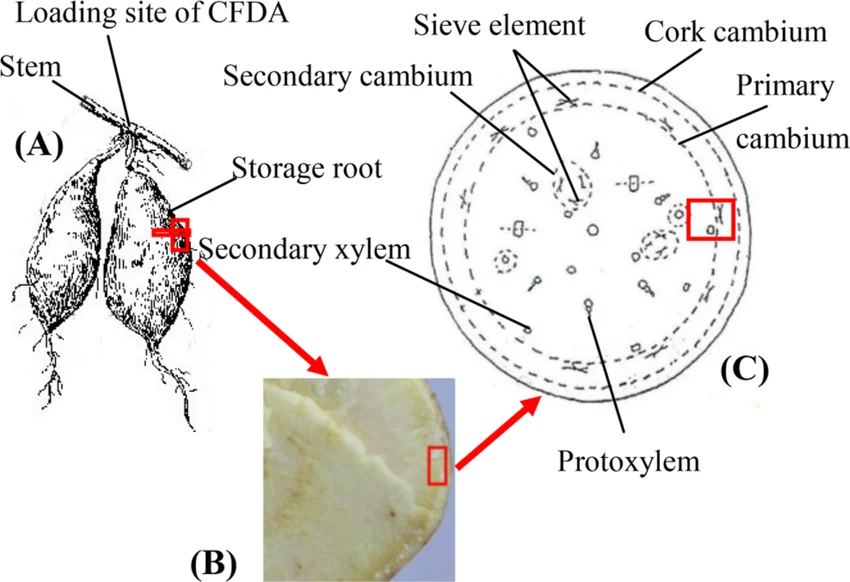
However, there is an important nuance. Agricultural studies indicate that most potato varieties produce tubers primarily at a certain depth rather than continuously along the entire buried stem.
This means that while vertical systems can increase yield per square foot, the idea of endlessly stacking soil for unlimited production is somewhat overstated.
Still, when designed properly, systems like crate towers can significantly improve space efficiency and simplify harvesting.
Step 1: Build the structure all at once
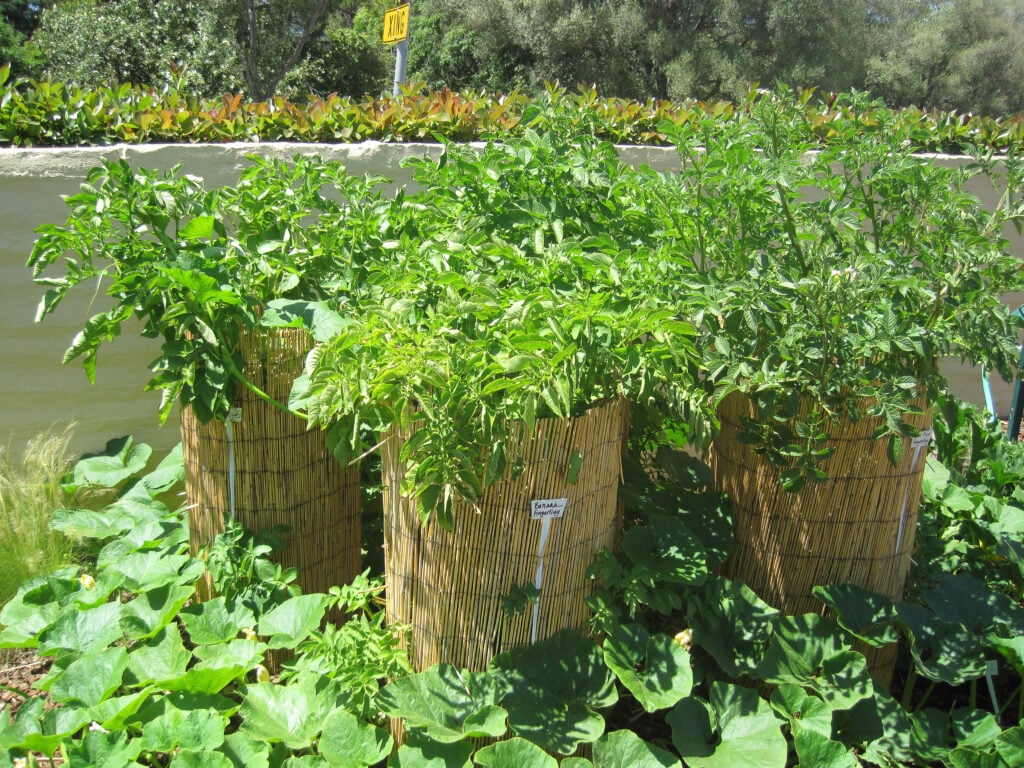
The crate tower method begins with assembling the entire structure on day one. Instead of gradually adding layers over time, you stack multiple crates immediately. This approach ensures that each level functions as its own growing zone.
Plastic milk crates are commonly used because they provide a strong frame while allowing airflow. Good airflow is critical for preventing fungal diseases, which can develop in damp, enclosed environments.
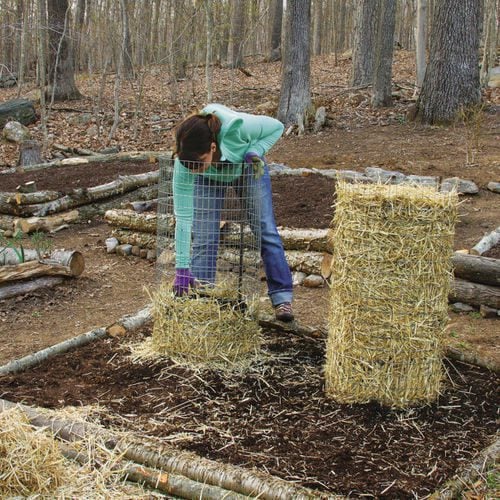
To contain the soil, each crate is lined with straw or hay. This natural lining holds the growing medium in place while still allowing excess water to drain.
Drainage is essential. Studies on container gardening consistently show that poor drainage is one of the leading causes of root rot and plant failure. The combination of open crates and organic lining helps maintain a balance between moisture retention and aeration.
From a sustainability perspective, using recycled crates and natural materials also aligns with environmentally conscious gardening practices. Reusing materials reduces waste and lowers the environmental footprint of home gardening projects.
Step 2: Plant every level for maximum yield
Once the structure is ready, each crate is planted individually. Start by filling the bottom crate halfway with a mix of potting soil and compost. Place seed potatoes evenly spaced, then cover them with more soil.
Instead of waiting for growth before adding another layer, prepare the next crate immediately. Repeat the same process for each level and stack them vertically. This creates a multi-layer system where each crate independently produces potatoes.
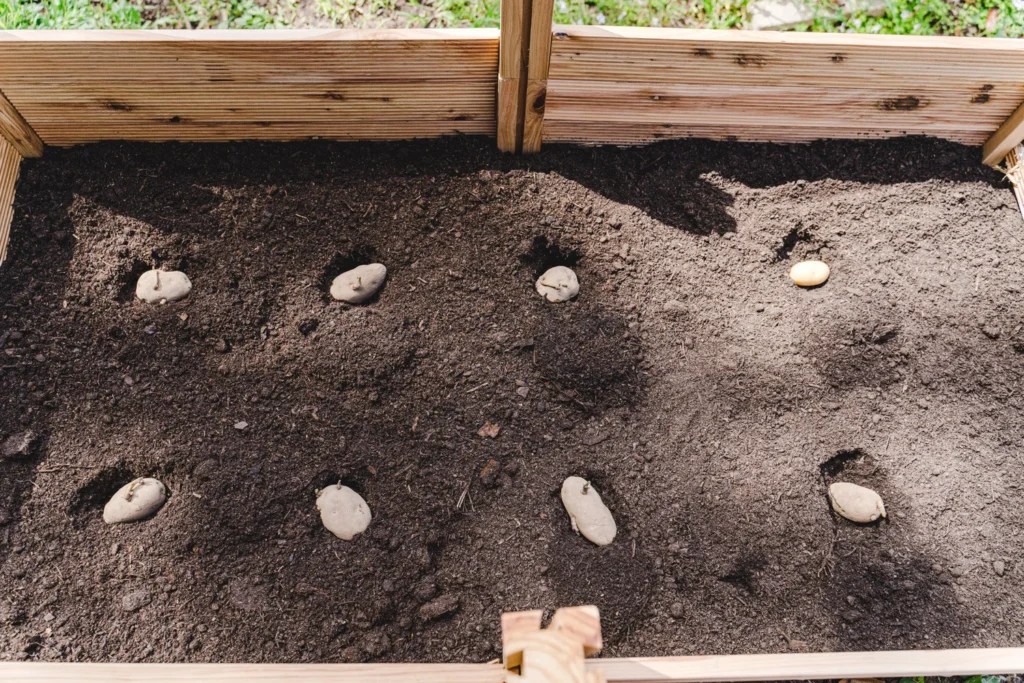
This method contrasts with traditional hilling, where soil is added gradually as the plant grows. The crate tower approach aims to maximize production from the beginning rather than relying on vertical stem growth alone.
However, experts caution that yields depend heavily on factors such as potato variety, soil quality, and sunlight. Determinate potato varieties tend to produce in a single layer, while indeterminate types may benefit more from vertical systems.
Understanding these differences helps gardeners set realistic expectations and optimize results.
Step 3: Water effectively with the side-spray method
One of the biggest challenges in vertical gardening is uneven watering. Gravity causes water to flow quickly from the top layer to the bottom, often leaving middle sections dry or overly saturated.
The crate tower design offers a practical solution. Because the sides are open, water can be applied directly to each layer. Using a gentle spray setting, gardeners can target the middle and lower crates, ensuring even moisture distribution.
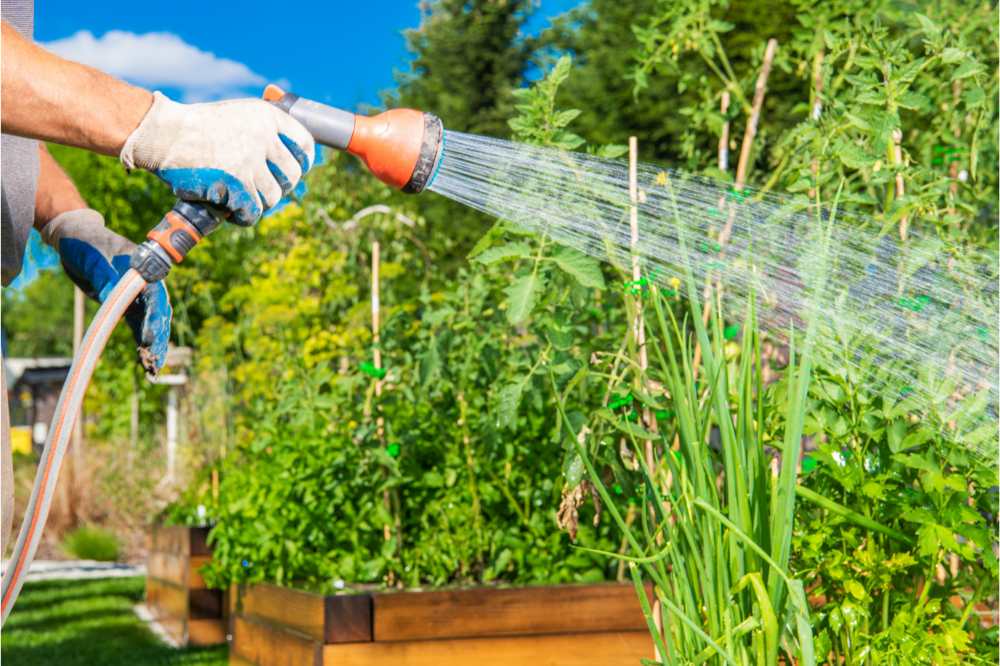
Consistent moisture is especially important for potatoes. Uneven watering can lead to issues such as cracked tubers or poor development. Research in crop science shows that stable soil moisture levels are key to producing uniform, healthy potatoes.
At the same time, overwatering must be avoided. While potatoes need moisture, waterlogged conditions can promote disease. The straw lining and open structure help prevent this by allowing excess water to escape.
Step 4: Maintain healthy growth conditions
Beyond watering, maintaining optimal growing conditions is essential. Potatoes require full sun, typically six to eight hours per day, and nutrient-rich soil.
Adding compost improves soil structure and provides essential nutrients.
Temperature also plays a role. Potatoes grow best in cooler conditions, and extreme heat can reduce yields. In warmer climates, positioning the tower in a slightly shaded area during peak afternoon heat can help protect the plants.
Pest management is another consideration. Container systems like crate towers can reduce some soil-borne pests but do not eliminate risks entirely. Regular monitoring helps catch problems early.
From a community perspective, these systems are increasingly used in urban gardens and educational programs. They provide a hands-on way to teach food production while demonstrating efficient use of space.
Step 5: Harvest without digging
One of the most appealing aspects of the crate tower method is the ease of harvesting. Traditional potato harvesting often involves digging into the soil, which can be labor-intensive and may damage the tubers.
With a crate system, harvesting is simple. Once the plants have matured and the foliage dies back, each crate can be lifted and emptied. The soil falls away, revealing clean potatoes.
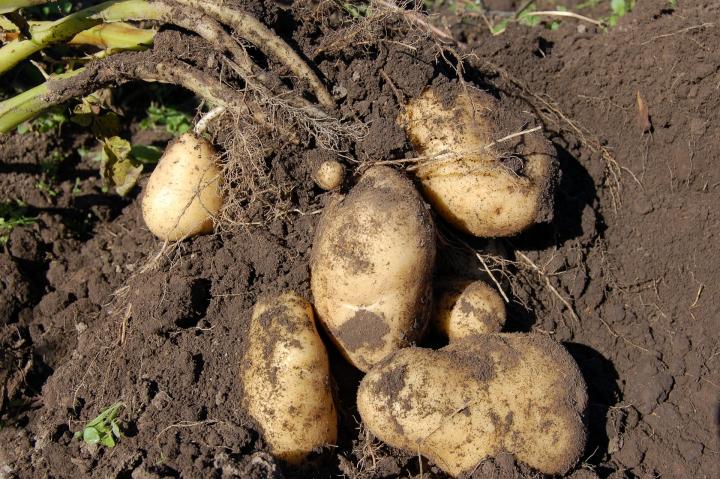
This approach reduces physical strain and makes gardening more accessible, especially for older adults or those with limited mobility. It also minimizes waste, as fewer potatoes are accidentally cut or left behind in the soil.
The leftover soil and straw can be composted, creating a closed-loop system that supports future planting.
Supportive and critical perspectives
Supporters of the crate tower method highlight its efficiency, accessibility, and adaptability. It allows people with limited space to grow their own food and reduces the need for heavy labor. It also aligns with broader trends in sustainable living and urban agriculture.
However, there are also critical perspectives to consider. Some horticultural experts argue that vertical potato systems do not always produce significantly higher yields than traditional methods.
The added complexity and material costs may not be justified for all gardeners.
Additionally, container systems require careful management of water and nutrients. Unlike in-ground gardening, where soil ecosystems help regulate conditions, containers rely entirely on the gardener’s input.
These considerations do not diminish the value of the method but highlight the importance of understanding its limitations.
Real-world impact and future implications
The rise of techniques like potato crate towers reflects a broader shift in how people approach food production. As urbanization continues and climate challenges affect traditional agriculture, small-scale, efficient systems are becoming increasingly important.
For individuals, this method offers a practical way to grow food at home. For communities, it supports local food resilience and education. For the environment, it encourages resource-efficient practices and reduces reliance on large-scale industrial systems.
Looking ahead, innovations in vertical gardening and container design are likely to expand. From smart irrigation systems to modular growing units, the future of home gardening will continue to evolve.
Conclusion
The potato crate tower method demonstrates how creative design can transform a simple crop into a high-efficiency gardening solution.
By building the structure upfront, planting each layer independently, managing water carefully, and simplifying harvest, gardeners can make the most of limited space.
While it is not a perfect system and requires thoughtful management, it offers a compelling alternative to traditional methods. As gardening continues to adapt to modern challenges, approaches like this highlight the potential for innovation in even the most familiar crops.