Gardening offers a rewarding experience, especially when planting trees. Not only do trees provide numerous environmental benefits, but they also enhance the aesthetic appeal of any garden.
However, the process of planting a tree requires more than just digging a hole and dropping in a sapling. Proper planting ensures that the tree thrives, grows strong, and serves its purpose for years to come.
The following steps break down an easy, effective method to plant trees using simple materials like PVC pipes and gravel.
Step 1: Preparing the Hole
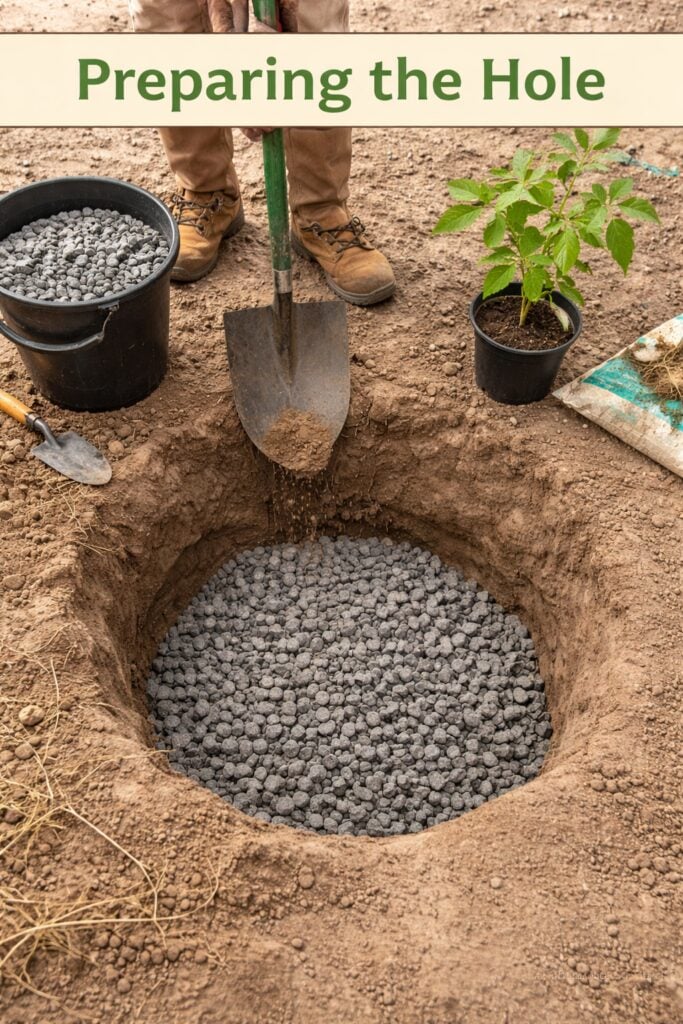
The first step in planting any tree is preparing the right environment for its roots. Start by digging a hole that’s large enough to comfortably fit the root ball of the sapling you are planting.
Why It’s Important?
Without proper drainage, water can collect at the bottom of the hole, causing the roots to suffocate or rot.
By adding gravel, you allow excess water to flow freely, preventing waterlogged soil and giving the tree the oxygen it needs to grow strong roots.
Step 2: Setting the PVC Pipe
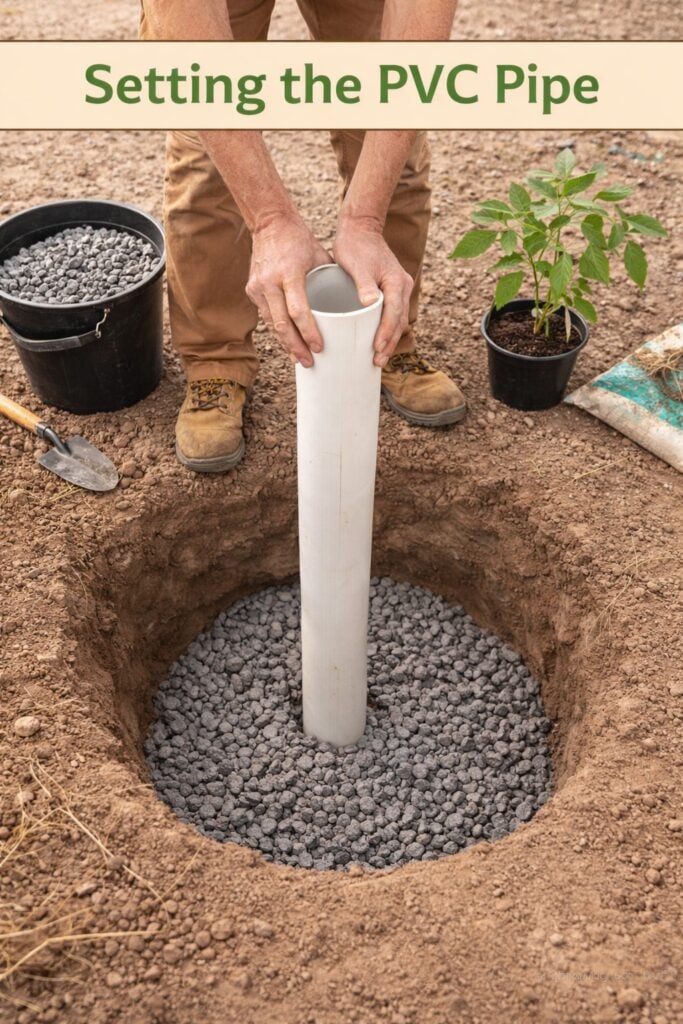
Once the gravel layer is in place, it’s time to insert a PVC pipe into the hole. The pipe should be positioned upright at the center. This step is key to maintaining proper watering for the tree.
Why It’s Important?
PVC pipes act as a guide for water to reach the tree’s roots deep underground. By placing the pipe in the hole, water will be directed straight to the root zone, which is essential for deep watering.
This is especially beneficial during dry spells, ensuring the tree gets enough water at its roots, where it’s needed most. The pipe also helps prevent the soil around the tree from compacting too quickly.
Step 3: Planting the Tree
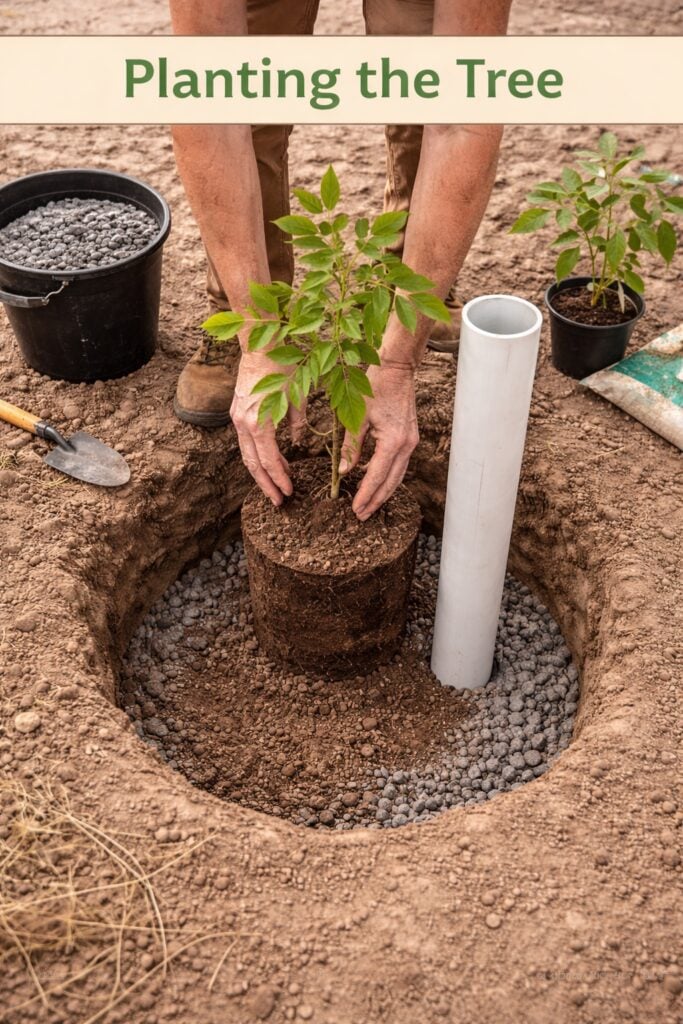
At this stage, place your sapling in the hole, ensuring the roots are spread out evenly. Fill the hole around the root ball with a mixture of soil and gravel. This ensures the tree’s base is well-supported and stable.
Why It’s Important?
The tree needs firm, but not tight, contact with the soil to establish healthy roots. When the tree is planted, it should be at the same depth as it was in the pot or nursery.
Planting it too deep can cause the roots to suffocate, while planting it too shallow can leave the root system exposed, leading to drying out or damage.
Step 4: Adding Gravel and Completing the Planting
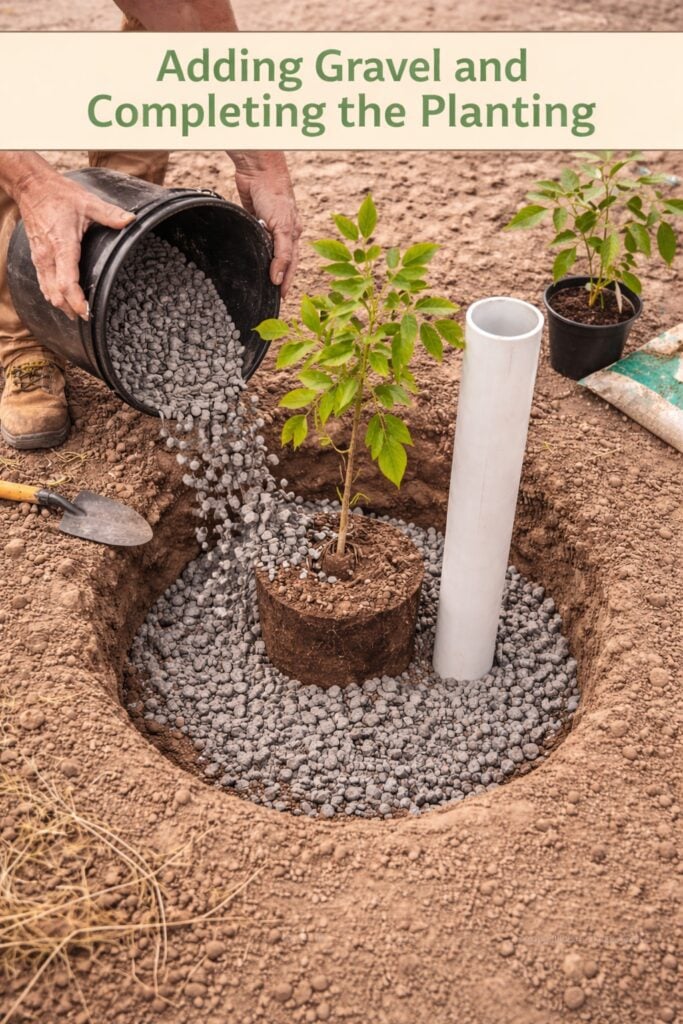
After securing the tree in the hole, finish by adding more gravel to the top of the soil. This final layer will help further with drainage while providing a protective layer for the tree’s roots.
Why It’s Important?
The layer of gravel helps keep the soil from drying out too quickly. It also discourages weed growth around the base of the tree, allowing it to get the nutrients it needs without competition.
Additionally, the gravel prevents compaction and keeps the root zone loose enough for easy root expansion.
Step 5: Watering the Tree
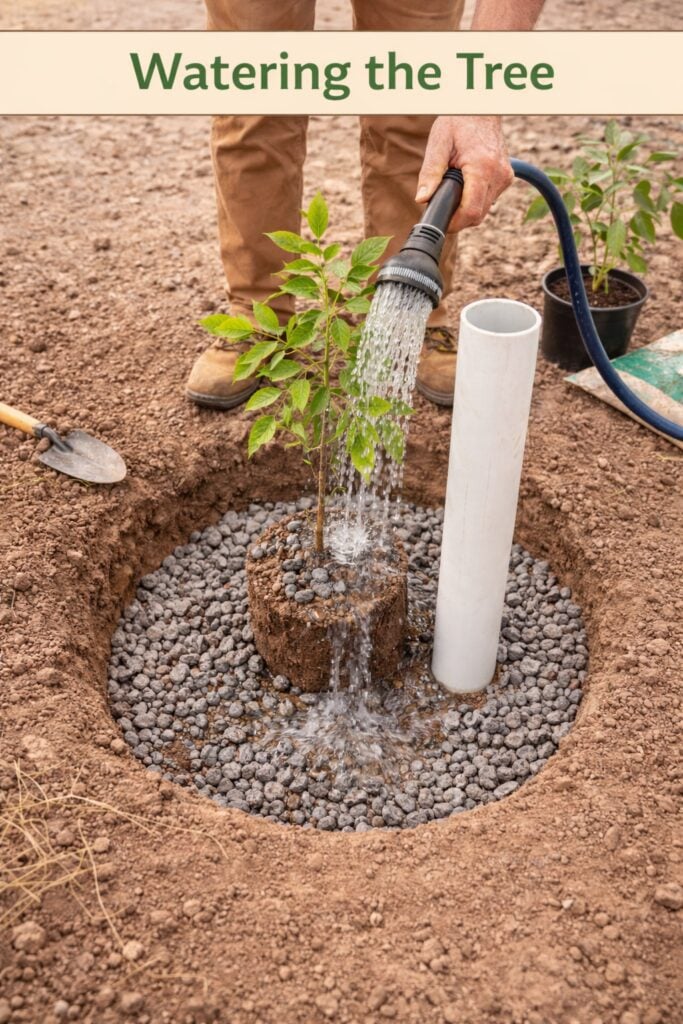
Once the tree is planted, the next step is to water it thoroughly. The PVC pipe will help you direct the water directly to the roots. The key here is deep watering, ensuring that moisture reaches the entire root system.
Why It’s Important?
Watering deeply encourages the roots to grow downward, which strengthens the tree’s overall structure. Shallow watering only encourages surface roots that can become vulnerable to drying out and pests.
By using the PVC pipe to direct the water, you ensure the moisture reaches deep, supporting long-term growth.
Step 6: Long-Term Care and Maintenance
While these steps get the tree off to a great start, regular care is necessary for long-term success.
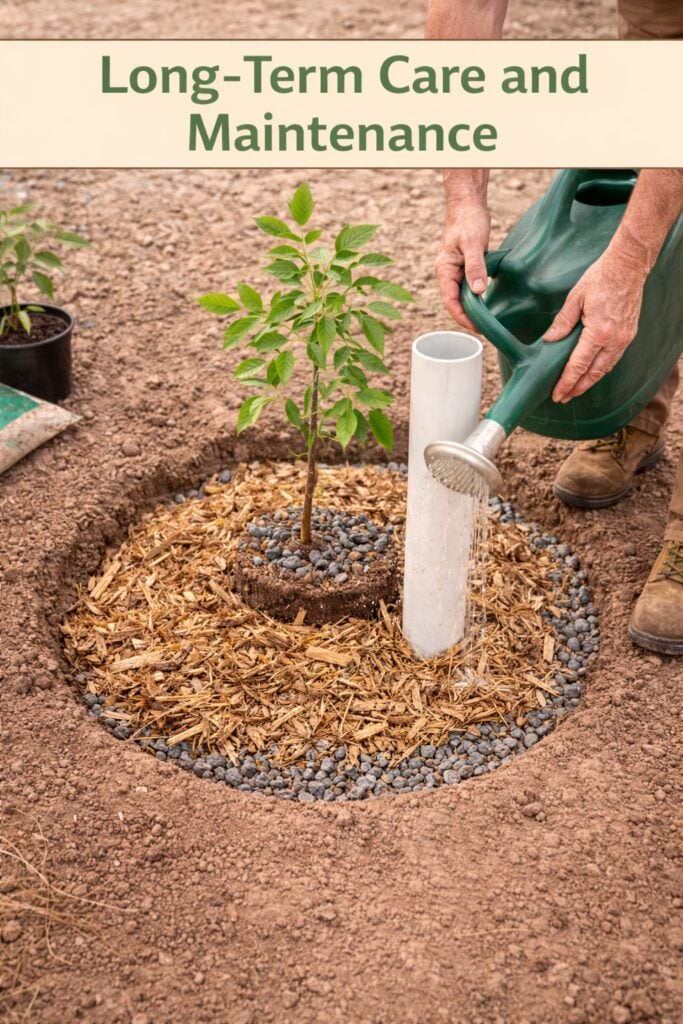
Continue to monitor the moisture levels, especially during dry spells, and consider adding a layer of mulch around the tree to conserve water and regulate soil temperature.
Why It’s Important?
Ongoing care ensures the tree establishes itself in its new environment. Trees need time to develop strong roots, and factors like consistent watering, fertilization, and pest management all contribute to healthy growth.
Supportive and Critical Perspectives
1. upportive Perspective
This method of tree planting with gravel, PVC pipes, and careful watering is a simple yet effective technique for ensuring trees thrive.
The benefits are especially clear in regions where water drainage is a challenge or where deep, consistent watering is needed. This method is easy for gardeners of all levels and can be applied to various tree types.
2. Critical Perspective
While this approach offers practical advantages, it may not work for all soil types. In areas with heavy clay soil, even with proper drainage, water might still struggle to permeate the soil deep enough.
Additionally, the use of PVC pipes could raise environmental concerns if not disposed of properly, as plastics can take a long time to degrade.
Real-World Impact on Communities and Environment
This simple gardening technique has the potential to positively impact local communities by encouraging sustainable tree planting practices. Proper tree planting supports environmental health by improving air quality, reducing urban heat islands, and promoting biodiversity.
It also contributes to beautifying neighborhoods, providing shade, and even enhancing property values.
Furthermore, as urbanization increases, many communities are turning to tree planting as a solution to combat air pollution and mitigate climate change.
Tree planting initiatives, like the one described, can be easily implemented by homeowners, schools, and community groups, fostering environmental responsibility and community pride.