
As someone who spends a lot of time observing birds in my backyard, I quickly learned that water baths aren’t enough. Birds don’t just need to stay hydrated; they also need a way to maintain their feathers and keep parasites in check.
That’s where dust baths come in.
Unlike water, dust baths allow birds to clean their feathers in a way that targets tiny parasites and keeps their plumage healthy.
I first noticed sparrows and robins vigorously rolling in patches of dry soil, and I realized that providing a dedicated dust bath could transform my backyard into a healthy bird haven.
Understanding the Mechanics of a Dust Bath
The first thing I had to understand was how dust baths work. When birds fluff their wings and roll in loose soil or dust, fine particles penetrate their feathers and skin, mechanically suffocating parasites like mites and lice.
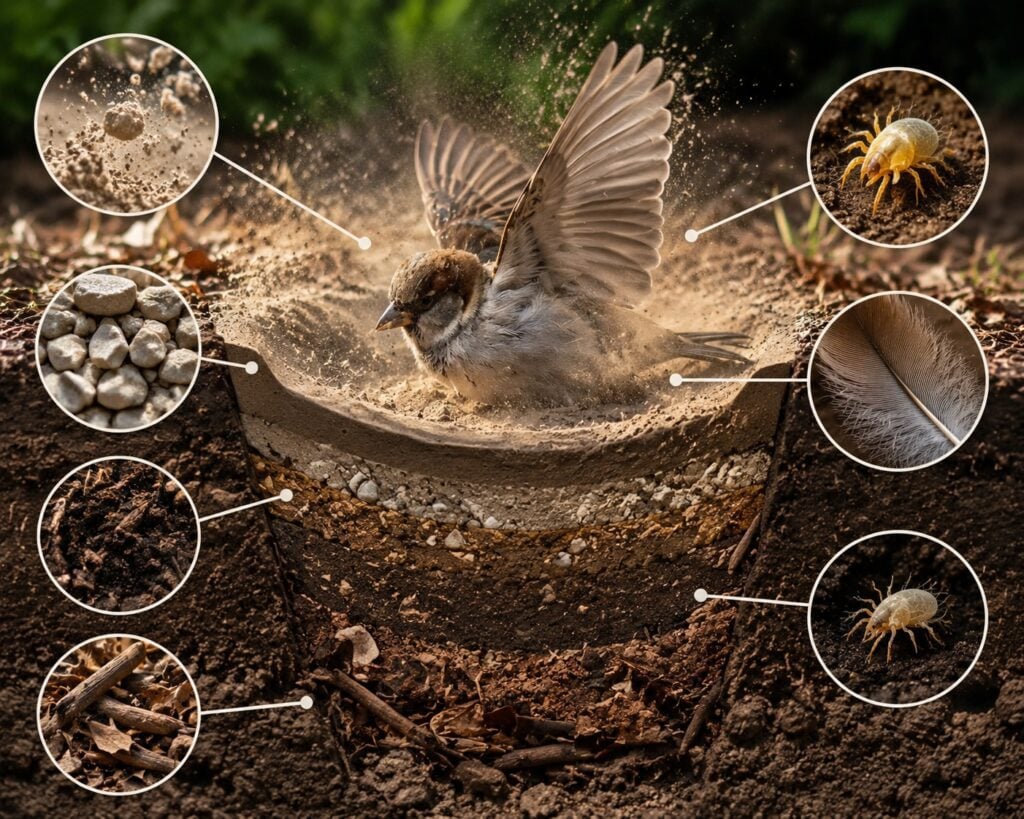
This is not just a cleaning ritual; it’s a critical part of feather health. Observing a house sparrow take a dust bath, I saw how it moved back and forth, shaking its feathers so that dust penetrated every barb.
The result is visibly cleaner, fluffier feathers and significantly fewer parasites.
Materials for a Perfect Dust Bath

Creating a dust bath doesn’t require fancy tools. Based on my experience, a few simple components make all the difference:
1. Sand + Soil + Wood Ash
I mix two parts fine sand with one part dry soil, then add a small portion of wood ash. The sand provides structure, the soil offers natural texture, and the wood ash absorbs oils that parasites feed on.
This combination creates a medium that birds can easily fluff and roll in.
I learned that the ash must be dry and finely powdered to avoid clumping, and the soil should be well-draining to keep the bath from getting muddy during rain.
2. Optional: Diatomaceous Earth
For added parasite control, I sometimes sprinkle a small amount of diatomaceous earth. Its microscopic sharp edges slice through parasite exoskeletons, making it a powerful but optional addition.
When I first added it, I noticed that birds became more enthusiastic, perhaps sensing the enhanced cleanliness effect.
Setting Up the Dust Bath
Placement and preparation are key. I like to create a shallow depression about 3–4 inches deep, ensuring it remains dry.
The bath should be in full sun, which helps keep the soil warm and dry while also encouraging birds to use it more frequently.
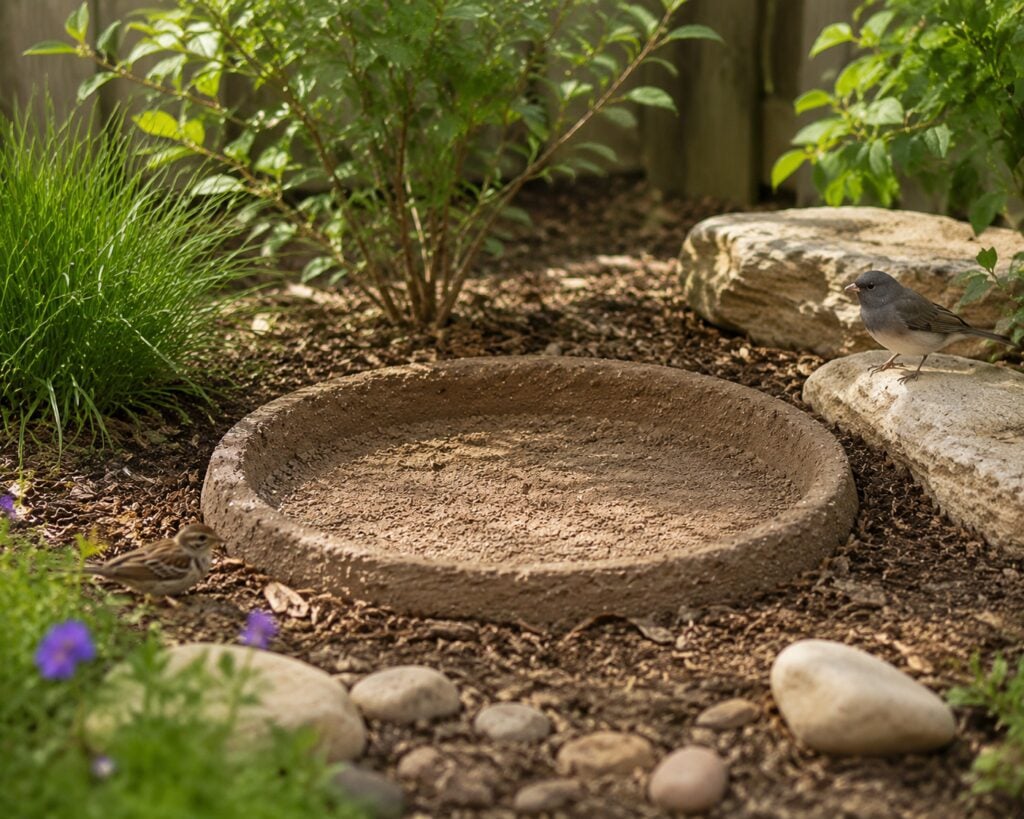
I usually check that the area is free of water runoff, and I occasionally rake the surface to keep it loose and fluffy. From experience, a firm, compacted patch discourages birds from rolling, while loose soil encourages more vigorous activity.
Once set, the dust bath becomes an inviting, low-maintenance feature for my feathered visitors.
Observing Bird Behavior
The beauty of a dust bath is watching birds interact with it. House sparrows are among the most enthusiastic users, often bathing in groups of five to ten.
They roll back and forth, wings fluffed, and feathers fully exposed, maximizing contact with the dust.
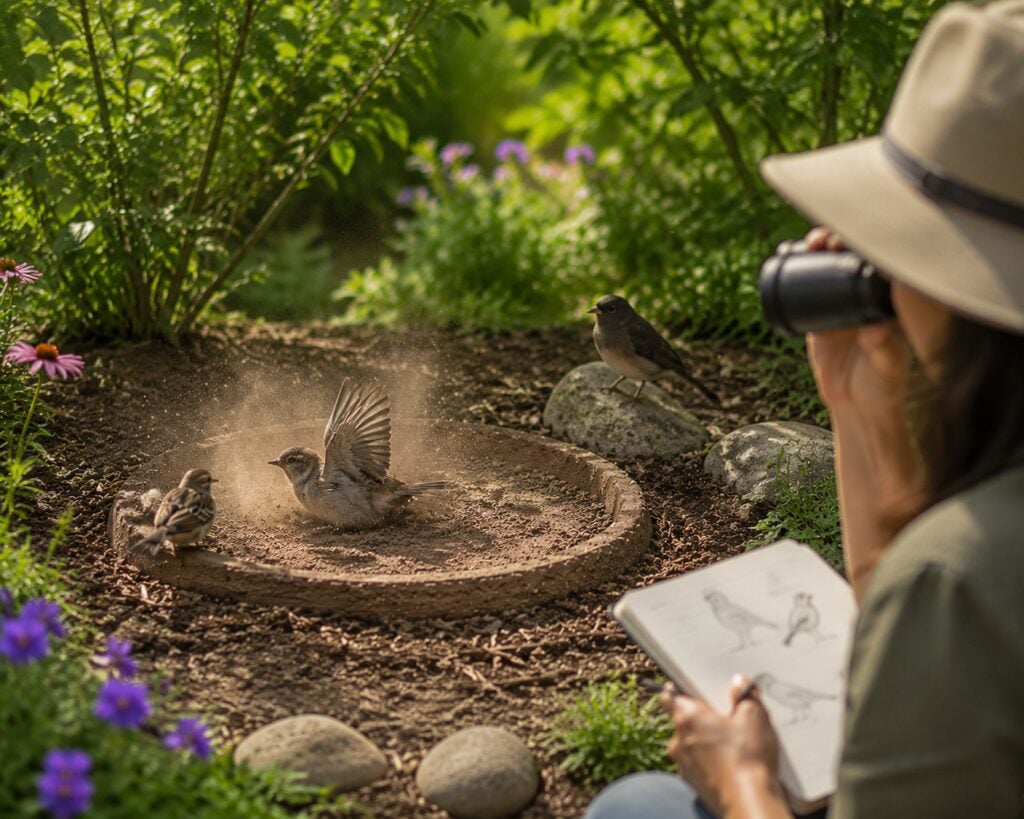
Robins, on the other hand, tend to use the bath aggressively before nesting, ensuring that parasites are removed before laying eggs.
I also noticed that birds with fluffed wings expose the bases of their feathers, which is where dust works its magic. They strategically shake, roll, and hop to get every feather clean.
Watching this behavior reinforces why dust baths are a vital complement to water baths in maintaining bird health.
Benefits of Providing a Dust Bath
Based on my experience and observations, the benefits are remarkable:
- Parasite Control: Dust suffocates and dislodges mites and lice that hide in feathers.
- Feather Maintenance: Birds keep their plumage healthy, shiny, and flexible.
- Nesting Preparation: Birds remove parasites before egg-laying, supporting chick survival.
- Behavioral Enrichment: Dust baths offer stimulation and encourage natural behavior.
I was surprised by how quickly birds adopted the bath once it was set up correctly. Within days, multiple species were using it daily, and I noticed fewer signs of feather damage and parasite distress.
Maintenance Tips
Even though dust baths are low-maintenance, some care ensures long-term success. I usually rake the dust every few days to keep it loose and fluffy.
After heavy rain, I mix in fresh dry sand to restore the bath’s texture. It’s also helpful to occasionally add small amounts of wood ash to maintain its parasite-control properties.
Keeping the bath in a sunny, dry location ensures frequent use. I also observe how birds interact with it and adjust the depth or soil composition if I notice hesitation or reduced activity.
Combining Dust Baths with Water Baths
For maximum effect, I always place the dust bath near a water bath. Birds need both: water to drink and clean with, and dust to keep parasites at bay.
By providing both options close together, I’ve created a natural, thriving habitat. Birds often alternate between dusting and splashing, which maximizes feather health and hydration.
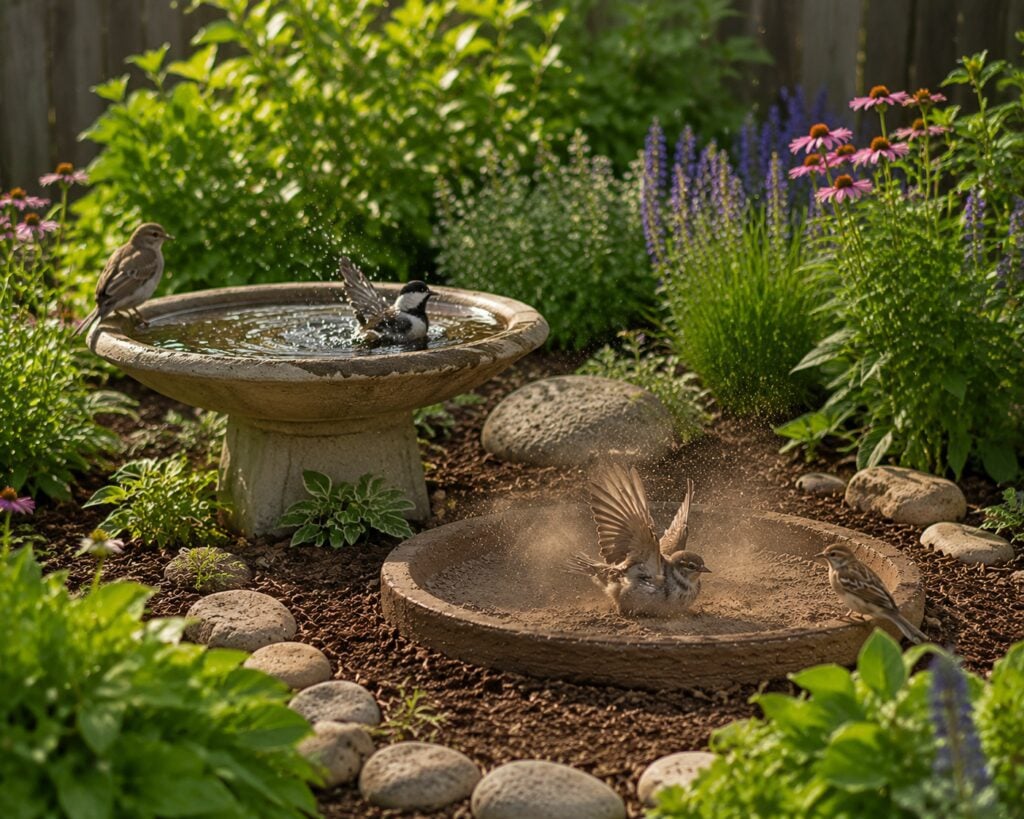
From personal observation, combining these baths significantly increases backyard bird activity.
It’s fascinating to watch the interplay between species, as they engage in both water and dust bathing throughout the day.
Why This Works?
The success of a dust bath comes down to mimicking natural conditions. Birds instinctively know how to use soil, sand, and ash to control parasites and maintain feather health.
Providing a properly prepared dust bath ensures that birds can perform these behaviors safely in your backyard.
After setting up my first dust bath, I noticed immediate results: more birds, healthier feathers, and a livelier backyard. This simple intervention has transformed my space into a small sanctuary where birds can thrive.
The combination of proper materials, depth, placement, and observation ensures a dust bath that is effective, sustainable, and enjoyable for both birds and observers like me.
A Simple Addition with Big Rewards
Creating a bird dust bath may seem simple, but it has profound benefits for feathered friends. With a mix of sand, soil, and wood ash, placed in a sunny, shallow depression, birds gain a safe space to maintain their plumage and control parasites.
Observing their behavior is both educational and rewarding.
For anyone looking to enhance their backyard birdwatching experience, a dust bath is an essential addition. It complements water baths, encourages natural behavior, and keeps birds healthier and happier.
From experience, I can confidently say that offering a dust bath makes a tangible difference in bird activity and wellbeing.


