
I’ve always loved watching birds in my backyard. There’s something peaceful about seeing them splash, bathe, and chirp. But over time, I noticed that my birdbath wasn’t attracting as many birds as I hoped.
Some days, it was completely empty, even though I had set it up perfectly; or so I thought.
Through experience, I realized that most birdbaths fail because of just a few common problems. Fortunately, each problem has a simple solution, and fixing them takes only a few minutes.
Problem 1: Too Deep for Small Birds
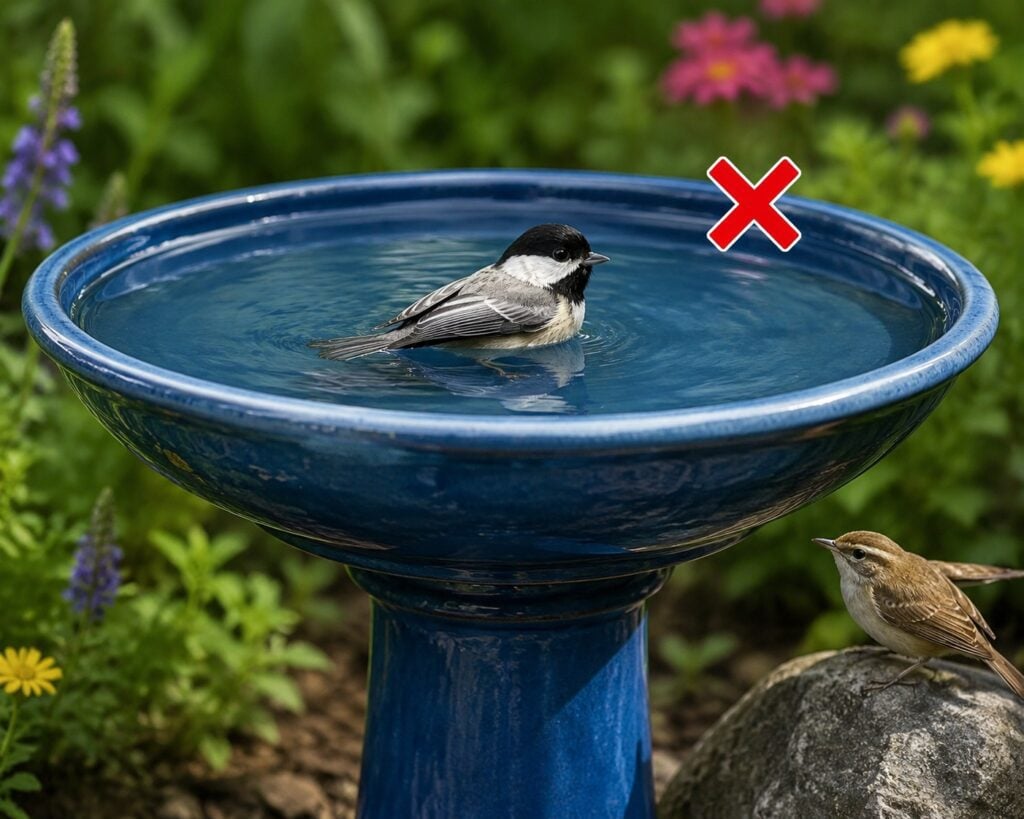
When I first filled my birdbath, I didn’t think about the depth. The water was about 3–4 inches deep.
For a chickadee or sparrow that is only about 2 inches tall, this is way too deep. Birds can’t stand comfortably, and they feel unsafe. The water might be perfect for larger birds, but for tiny backyard visitors, it’s intimidating.
The Fix: Add a Rock
Adding a single large rock in the center of the birdbath creates a shallow 1–2 inch shelf. This gives small birds a safe place to perch while they drink or bathe.
It took me less than five seconds to place a rock, and almost immediately, I saw birds exploring the birdbath again. A simple rock is such a small change, but it makes a huge difference.
Problem 2: Too Smooth to Grip
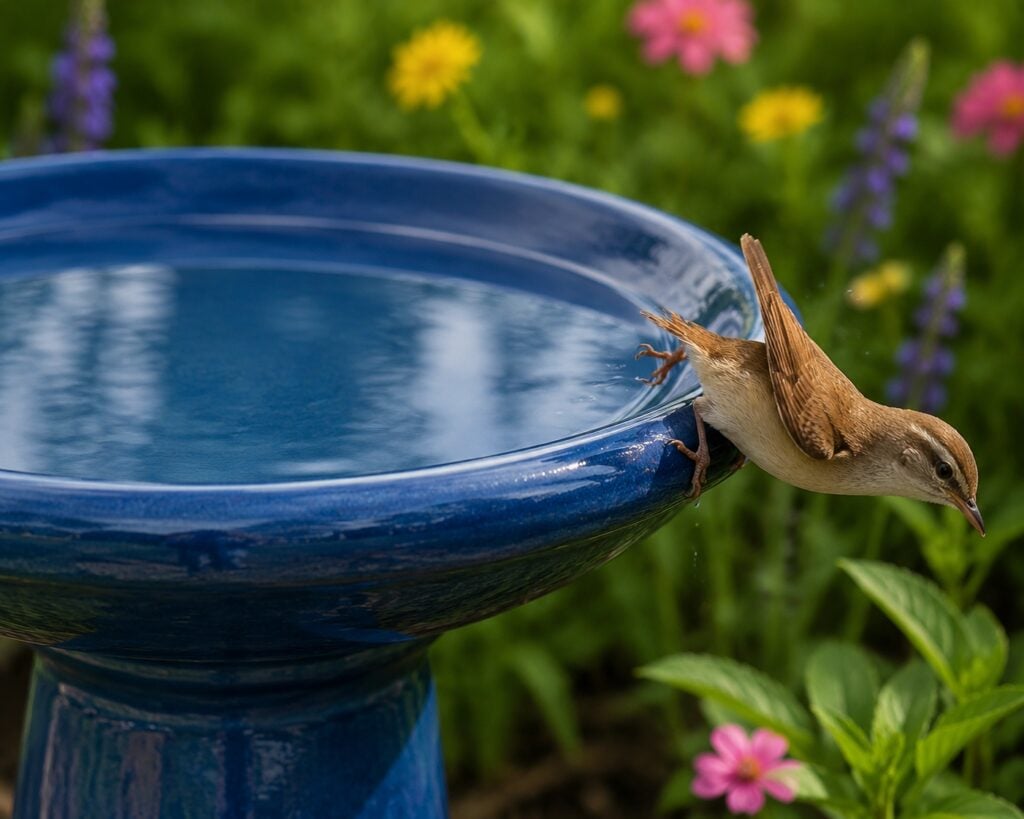
My birdbath was a glazed ceramic bowl, shiny and beautiful—but birds couldn’t grip the surface. I noticed sparrows trying to step in but slipping and quickly flying away.
It’s not just about water depth; birds need to feel secure.
Smooth surfaces give them no foothold, making them avoid the bath entirely.
The Fix: Add Pea Gravel
Pea gravel is an inexpensive and easy solution. Sprinkling a layer of small gravel in the bath creates a natural slope and provides traction for the birds.
They can wade in safely without slipping.
After I added pea gravel, I noticed birds lingering longer, splashing and preening without hesitation. It gives the bath a more natural feel, mimicking shallow streams or puddles they encounter in the wild.
Problem 3: Too Still for Migratory Birds
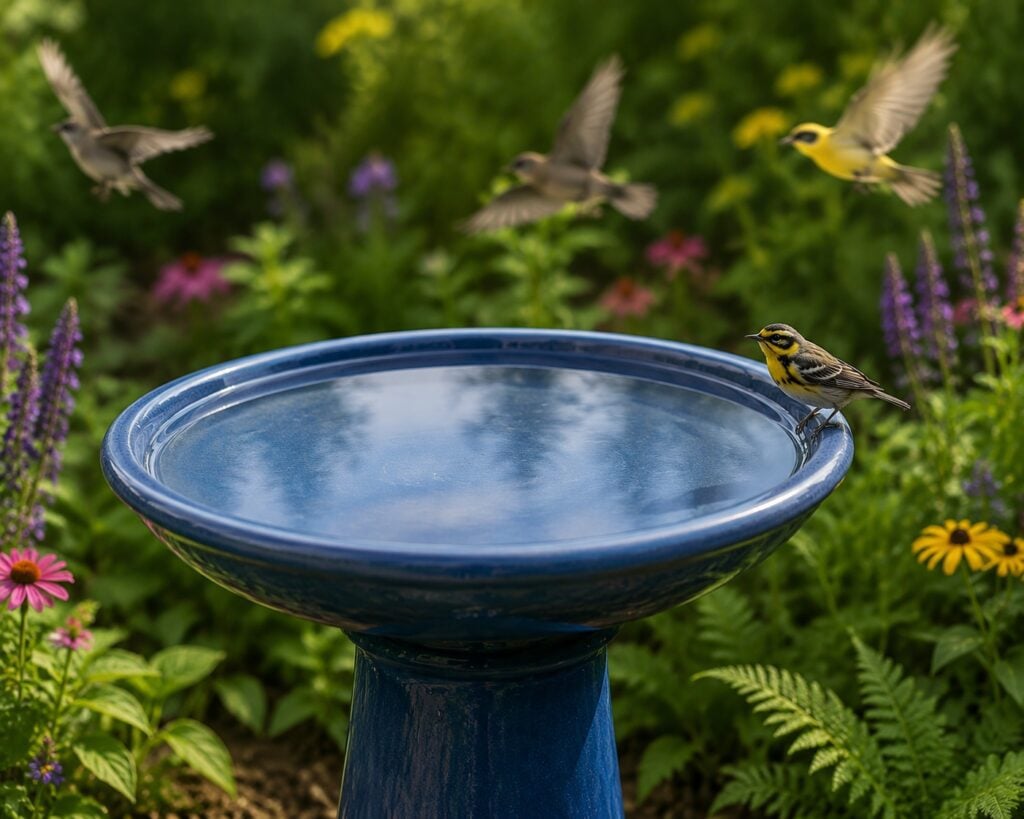
I’ve learned that birds are attracted to the sound of moving water. A completely still birdbath is often invisible to them. Even if you live in an area with many birds, a quiet, motionless bath may sit empty.
Migratory birds, especially, detect water from far away by sound, and they often ignore silent sources.
The Fix: Install a Solar Pump
This is a game-changer. A small solar pump, costing around $15, makes water ripple and move, and birds can hear it from over 100 feet away.
I installed one on my birdbath, and within days, it became a hotspot for a variety of birds. Robins, sparrows, and chickadees all came to bathe and drink.
The pump is energy-efficient and self-sufficient, powered by the sun, so you don’t need to plug it in.
The sound of moving water creates a natural lure, signaling safety and freshness to birds.
Combining All Fixes for Maximum Effect

Once I implemented all three solutions (adding a rock, laying down pea gravel, and installing a solar pump), the difference was astounding. My birdbath went from being underused to one of the busiest spots in my backyard.
I often sit near my window with a cup of coffee, watching a dozen different bird species come and go. Some even bring their friends. The combination of shallow water, grip, and sound transformed a simple bowl into a thriving bird sanctuary.
Step-by-Step Setup Guide
Here’s what I recommend based on my experience:
- Check Depth: Ensure your birdbath isn’t deeper than 1–2 inches for small birds. Place a rock in the center if necessary.
- Provide Traction: Add a layer of pea gravel to prevent slipping and create a gradual slope.
- Add Sound: Install a solar pump to create moving water, attracting birds from far away.
- Maintain Regularly: Clean the bath weekly, especially if you notice algae growth.
- Optional: Plant native flowers nearby to make your birdbath even more inviting.
Additional Tips for Birdbath Success
- Location Matters: Place the birdbath in a quiet spot with some cover nearby, like shrubs or small trees, so birds feel safe from predators.
- Keep it Shallow: If you have multiple birdbaths, vary the depth slightly to accommodate different species.
- Clean Often: Moving water helps reduce mosquitoes, but it’s still important to refresh the water and clean the gravel periodically.
- Observe Patterns: I’ve noticed birds visit most often early in the morning and just before sunset, so that’s when your birdbath will be busiest.
Why This Works?
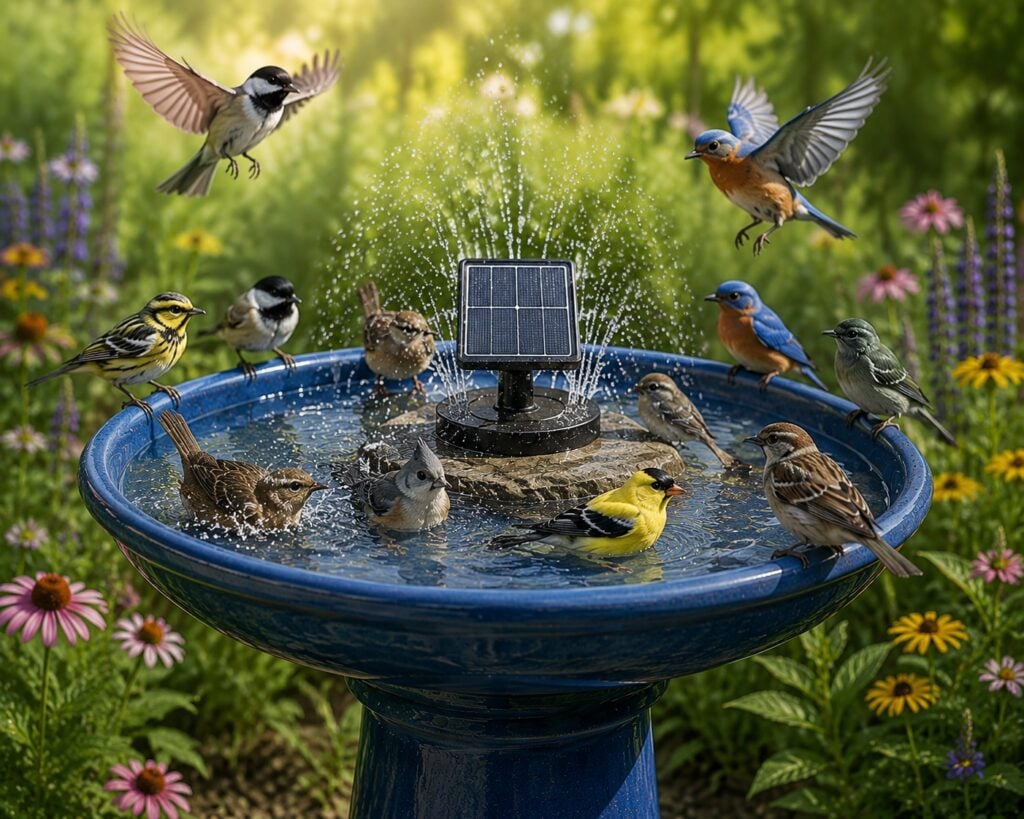
Birds need three things in a bath: safety, traction, and water movement. Rocks provide a safe perch. Gravel allows them to grip and wade.
Moving water signals freshness and attracts birds from far away.
These simple changes mimic natural conditions in streams or shallow ponds, making your birdbath irresistible. It’s amazing how a few small adjustments can turn a lonely, unused bath into a vibrant, lively hotspot.
Before and After
Before making these changes, my birdbath was empty most days. After implementing the fixes, the bath became a central feature of my backyard ecosystem.
Watching birds bathe and interact is not only relaxing but also educational. I’ve learned about species I never noticed before, and the garden feels more alive than ever.
The transformation is visual and rewarding; a small investment with big returns.
A Birdbath Worth Visiting
If your birdbath is underused, don’t get discouraged. Most problems are easy to fix. A rock, some gravel, and a $15 solar pump can make your backyard the most visited spot for local birds.
I’ve witnessed it firsthand: what was once an overlooked feature has become a lively hub of activity, offering joy, entertainment, and a touch of nature right at my doorstep.
Taking the time to adjust your birdbath not only helps birds but also enhances your own outdoor experience. It’s a simple, inexpensive way to attract wildlife, connect with nature, and bring more life to your backyard.
Once I made these changes, I never thought a simple birdbath could have such a profound effect.


