
I never thought my kitchen waste could become one of the most valuable resources for my garden until I tried worm composting. What started as a small experiment quickly turned into a daily habit that reduced my waste and improved my plants dramatically.
Instead of throwing away vegetable scraps, I began transforming them into nutrient-rich compost using worms, and the results were honestly better than I expected.
Worm composting, also known as vermicomposting, is one of the simplest and most effective ways to recycle organic waste at home. It does not require a large space, complicated tools, or professional skills.
With a well-designed system like the one shown in the image, anyone can do it, even in a small backyard or indoor space.
Understanding the Worm Composting System
When I first saw a stacked worm composting system like this, I was surprised by how organized and efficient it looked. Each layer has a specific function, making the entire process clean, controlled, and easy to manage.
The top section is where fresh food scraps are added. This is the active zone where worms gather to feed. Below that, there are layers where the waste is gradually broken down into compost.
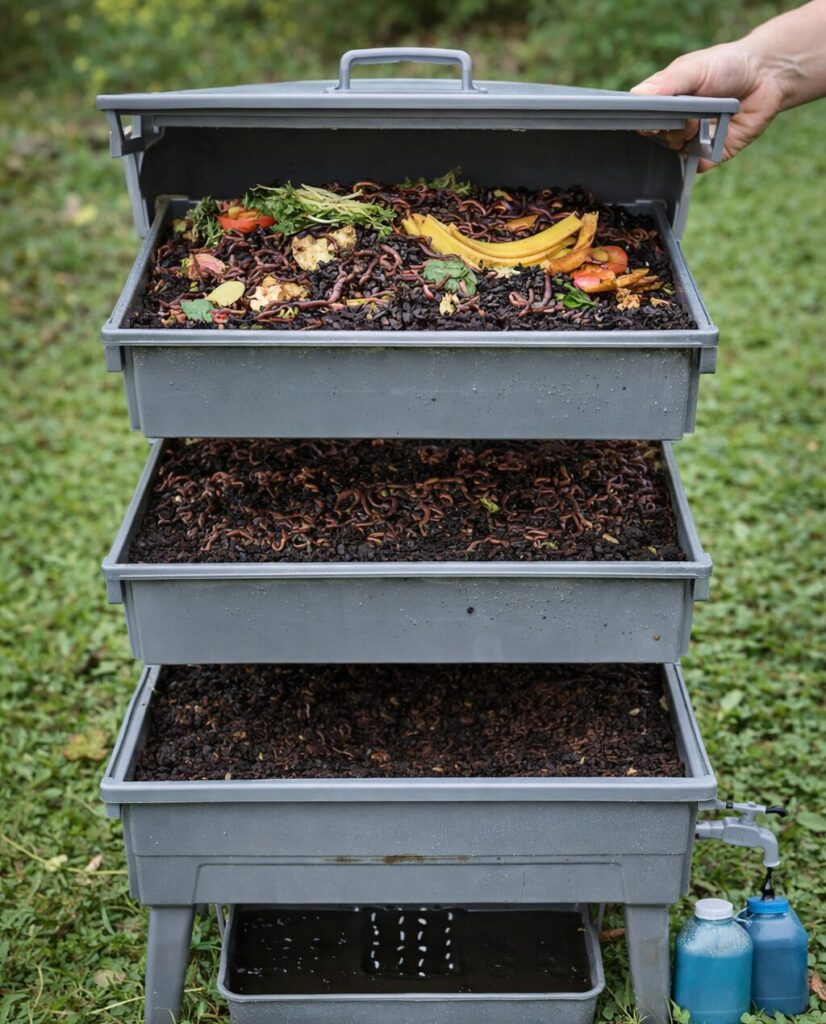
At the very bottom, there is a liquid collection area where excess moisture drains and forms what many people call “worm tea.”
This multi-layer design allows the composting process to happen continuously. As I kept adding scraps at the top, the worms naturally moved upward, leaving behind fully processed compost in the lower layers.
The Active Layer
The most exciting part of worm composting happens in the top layer. This is where I place my kitchen scraps, and it becomes the busiest area in the entire system.
I usually add fruit peels, vegetable scraps, coffee grounds, and crushed eggshells. The worms quickly gather and begin breaking down the material.
Over time, I noticed that the scraps disappear faster than I expected, especially when the system is well balanced.
Air vents in this layer are very important. They allow oxygen to flow through the system, preventing bad odors and keeping the environment healthy for the worms.
I learned early on that proper airflow makes a huge difference in how efficiently the system works.
The Middle Layers
As the waste breaks down, it moves into the middle layers where the transformation becomes more visible. This is where partially decomposed material turns into darker, richer compost.
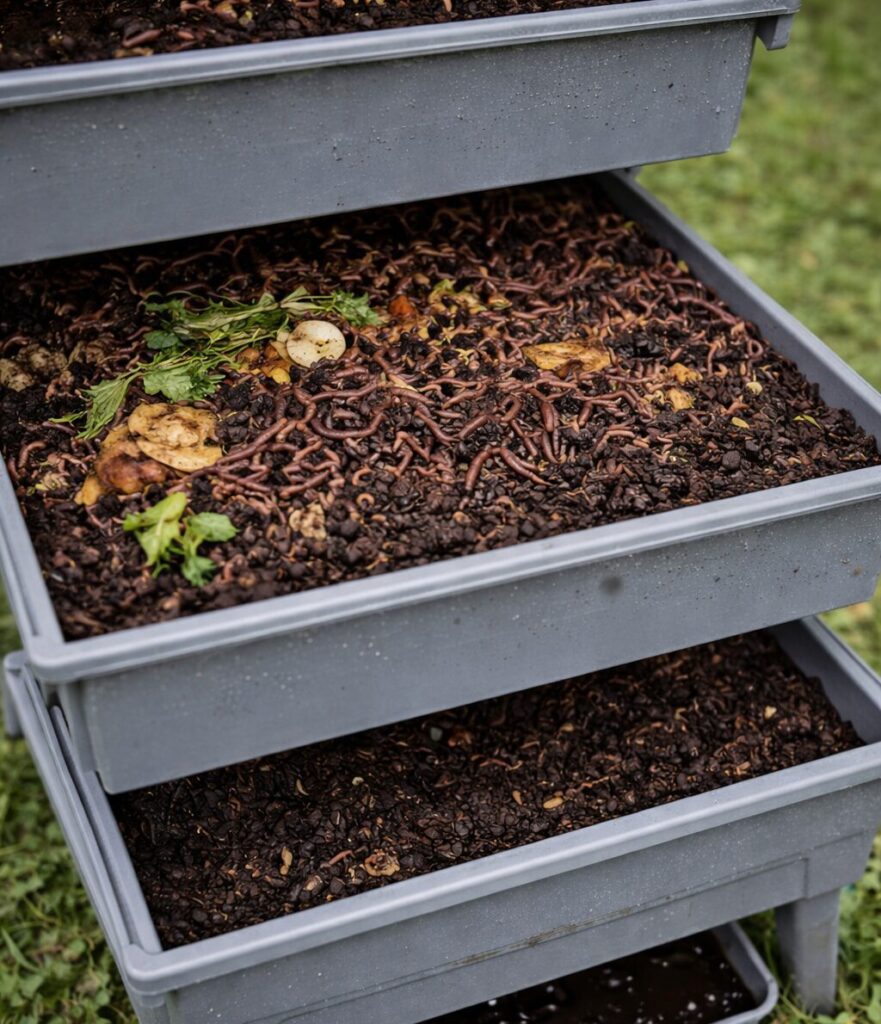
Whenever I check these layers, I can see the texture changing. What used to be recognizable food scraps becomes a crumbly, soil-like substance. This is a sign that the worms and microorganisms are doing their job properly.
One thing I noticed from experience is that patience is key. The process does not happen overnight, but once it starts, it becomes consistent and reliable.
These layers act like a transition zone, gradually converting waste into valuable compost.
The Bottom Layer
The bottom layer is where the final product collects. This is what I look forward to the most because it contains fully processed worm castings, which are incredibly rich in nutrients.
This layer also includes drainage holes. Excess moisture from the upper layers drips down and collects here. This prevents the system from becoming too wet, which is important because too much moisture can harm the worms.
From my experience, this layer is also the cleanest part of the system. The compost here is ready to use, and it has a natural earthy smell that tells me it is healthy and balanced.
Collecting Worm Tea
One of the most surprising benefits of worm composting for me was the liquid fertilizer, often called worm tea. At the bottom of the system, there is usually a tap that allows this liquid to be collected easily.
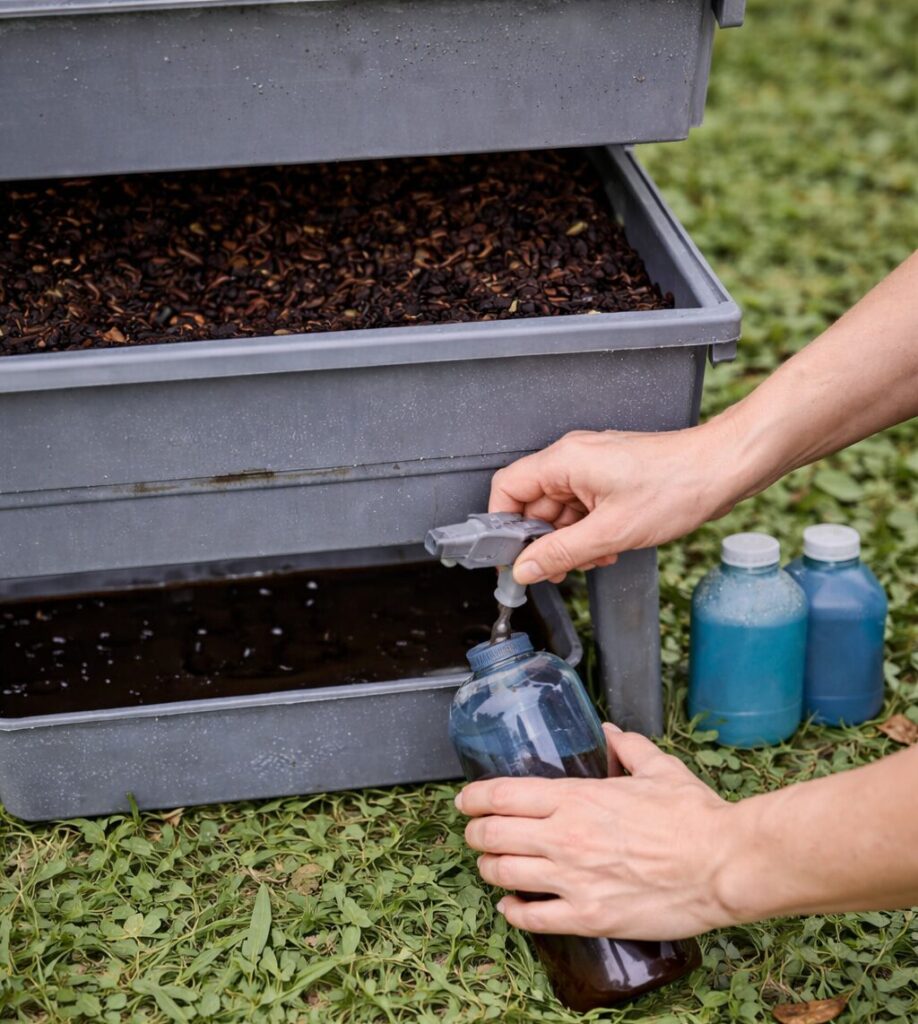
I remember the first time I used worm tea on my plants. Within days, I noticed greener leaves and stronger growth. It works as a natural liquid fertilizer that can be diluted with water and applied directly to plants.
This part of the system adds even more value because it means nothing goes to waste. Every drop of liquid becomes something useful for the garden.
What I Feed My Worms and What I Avoid?
At the beginning, I made a few mistakes with what I fed my worms, but over time, I learned what works best.
I regularly feed them fruit and vegetable scraps, coffee grounds, tea bags, and small amounts of paper or cardboard. These materials break down easily and create a balanced environment for the worms.
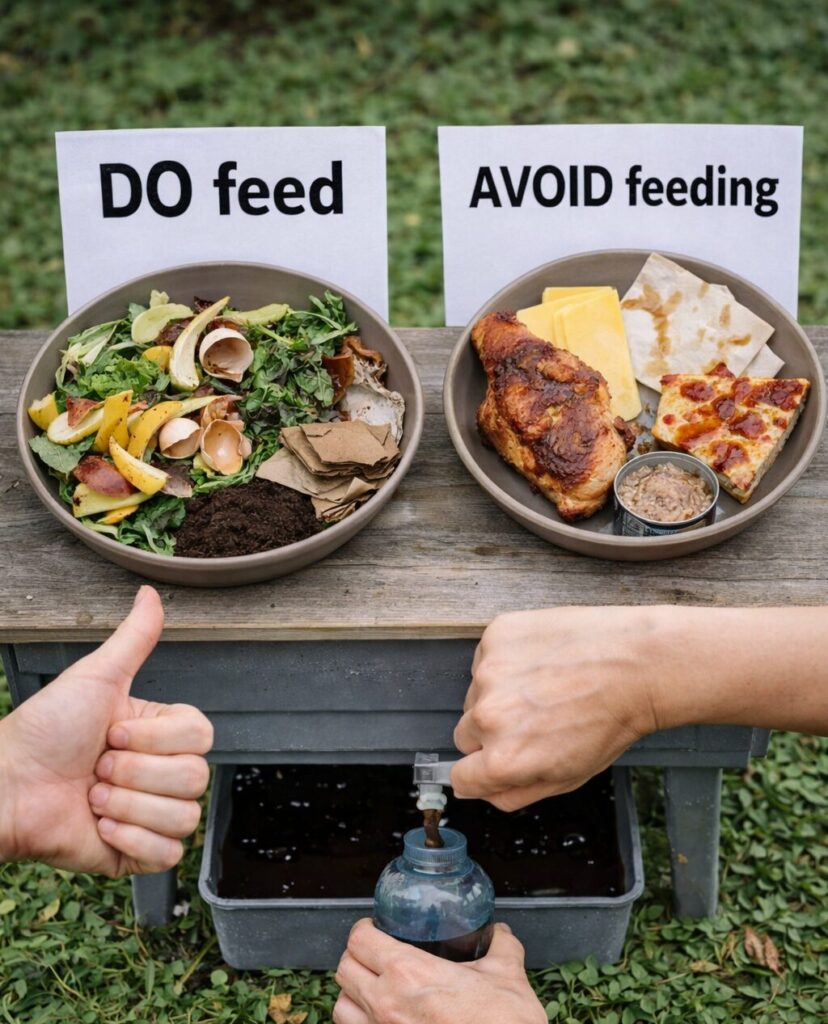
However, I avoid adding meat, dairy, oily foods, and anything heavily processed. These can cause bad odors and attract unwanted pests.
Keeping the system clean and balanced is important, and the type of food added plays a big role in that.
Maintaining the Right Environment
One thing I quickly realized is that worm composting is not just about feeding scraps. It is about maintaining the right environment for the worms to thrive.
The system should stay moist but not too wet. I usually check it by touching the material. It should feel like a damp sponge. If it becomes too dry, I lightly spray water.
If it becomes too wet, I add dry materials like shredded paper.
Temperature is also important. Worms prefer a stable environment, so I keep my system in a shaded area. Avoiding extreme heat or cold helps keep the worms active and healthy.
Harvesting the Compost
Harvesting compost is one of the most satisfying parts of this process. When the lower layers are filled with dark, crumbly material, I know it is ready to use.
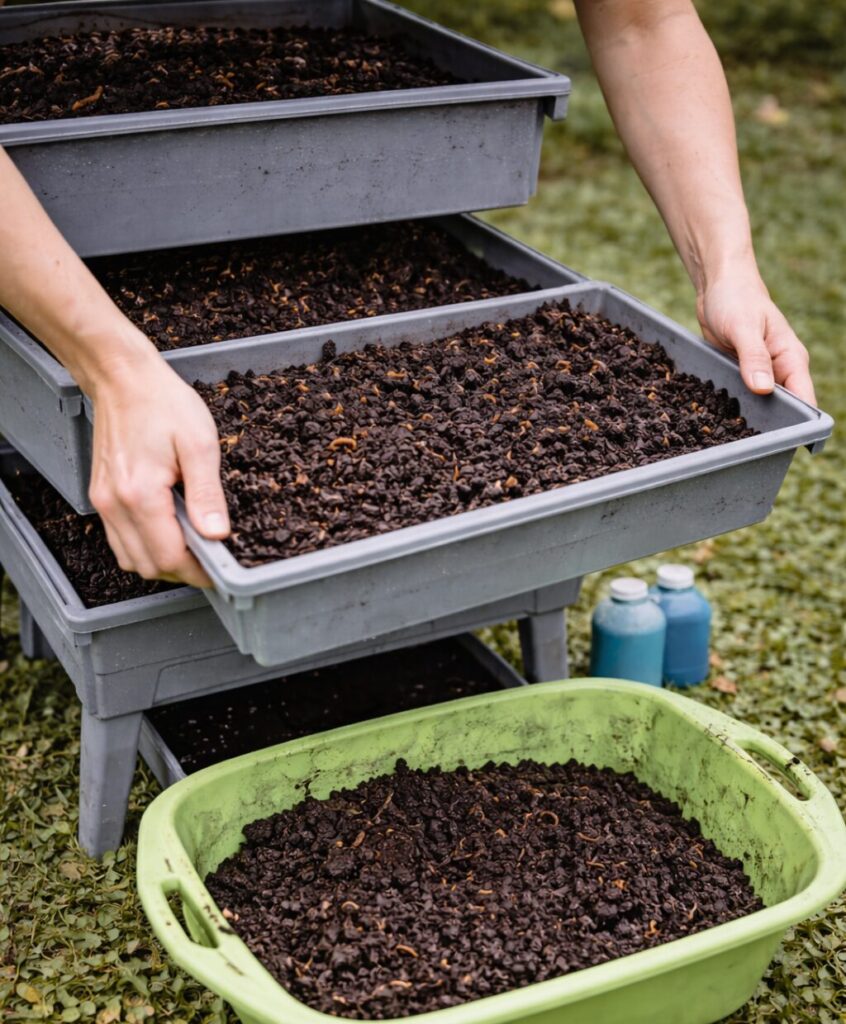
I usually remove the finished compost and use it directly in my garden or mix it into potting soil. It improves soil structure, adds nutrients, and helps plants grow stronger.
The best part is knowing that this compost came entirely from what would have been waste. It feels rewarding to turn something simple into something so beneficial.
Benefits I Experienced from Worm Composting
After using this system consistently, I noticed several clear benefits. First, my household waste was significantly reduced. I no longer throw away as much organic material as before.
Second, my plants became healthier. The compost and worm tea provided natural nutrients that improved growth without the need for chemical fertilizers.
Third, the process itself is surprisingly enjoyable. It feels like being part of a natural cycle where nothing is wasted, and everything has a purpose.
Common Mistakes and How I Fixed Them
Like any new habit, I made mistakes in the beginning. Sometimes I added too much food at once, which caused odors. Other times, I did not manage moisture properly.
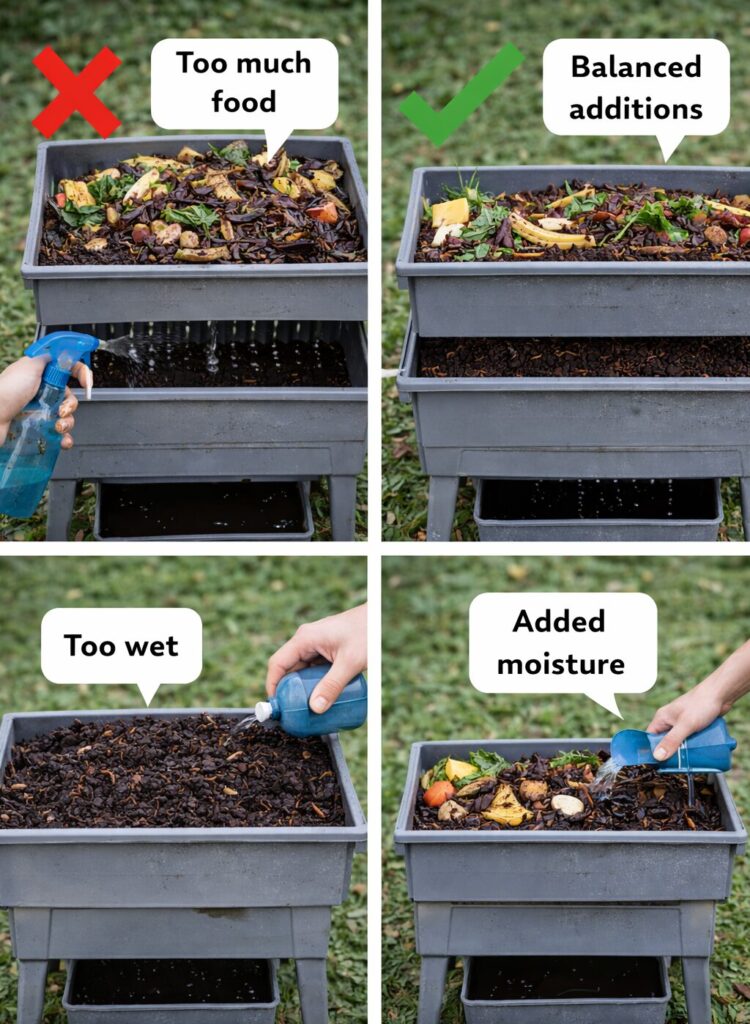
What helped me improve was keeping things simple. I started adding food gradually, checking moisture regularly, and making small adjustments instead of big changes.
Over time, the system became stable, and the worms did most of the work for me.
Why Worm Composting Is Perfect for Any Home?
One thing I always tell people is that worm composting does not require a big garden. This system can be used in small spaces, making it perfect for urban homes as well.
It is quiet, clean, and does not produce strong smells when managed properly. This makes it suitable even for indoor use or small backyards.
The simplicity of the system is what makes it powerful. Once it is set up, it becomes part of your routine without requiring too much effort.
A Small Change with Big Impact
Looking back, starting worm composting was one of the best decisions I made for my home and garden. It changed how I see waste and taught me that even small actions can have a big impact.
This system is not just about composting. It is about creating a sustainable habit that benefits both your environment and your plants. With a simple setup and a little consistency, anyone can do it.
If you are thinking about starting, I would say just begin. Once you see the results, it becomes something you will want to keep doing every day.


