When I first started gardening, I used to think winter meant the end of fresh vegetables. But after experimenting for a few years, I realized that many vegetables actually grow better in cold weather.
Once I learned how to prepare the soil, choose the right varieties, and protect them from frost, my winter garden became one of the most productive parts of the year.
Here’s what I’ve learned about growing vegetables that thrive in winter and how I make them survive even on the coldest days.
Why I Love Growing in Winter?
Winter gardening is slower but more rewarding. The plants grow sturdier, pests are fewer, and the flavors are richer. Some vegetables even taste sweeter after a few frosts.
I’ve found that with a bit of planning, I can harvest fresh greens and roots when most people think the garden is done for the season.

Before I start planting, I always check my local frost dates and choose varieties that tolerate cold. Then, I prepare the soil by adding compost in late autumn.
The compost slowly breaks down during the cold months and keeps the soil active.
My Favorite Vegetables for Winter Gardening
After a few years of trial and error, these are the vegetables that have consistently thrived for me through winter.
1. Kale

Kale is the most dependable vegetable in my winter garden. I plant it in late autumn, and it keeps producing through frost and snow. The cold even improves its flavor.
My tip: I always mulch heavily around the base with dried leaves or straw. It keeps the roots warm and prevents the soil from freezing solid. When the outer leaves look tough, I pick the inner ones—they stay tender even in cold temperatures.
2. Spinach

Spinach grows slower in winter but doesn’t stop. I sow it directly into the soil before the first frost. It survives under a light row cover and starts growing faster again when the days get longer.
My tip: I choose varieties labeled “winter hardy.” I also water early in the day so the soil has time to dry before nightfall, which prevents freezing damage.
3. Carrots

I used to think carrots needed warm weather, but I learned they actually sweeten after frost. The cold turns their starches into sugars.
My tip: I leave some carrots in the ground through winter, covered with thick mulch. I pull them out as needed. They stay crisp and flavorful even in January.
4. Cabbage

Cabbage can handle low temperatures if planted early enough. I transplant seedlings about six weeks before the first frost and protect them with a small hoop tunnel.
My tip: I choose compact, frost-tolerant varieties like “January King.” I keep the soil moist but not soggy to prevent cracking.
5. Garlic

Garlic is the easiest winter crop I grow. I plant cloves in late autumn, cover them with mulch, and let them rest all winter. By spring, they start shooting up strong.
My tip: I plant each clove about 5 cm deep and space them 15 cm apart. The key is not disturbing them during winter—just let them develop roots quietly.
6. Winter Lettuce

Cold-hardy lettuce varieties like “Winter Density” or “Arctic King” survive under a simple cover. They grow slowly but give me fresh salads when store-bought greens are expensive.
My tip: I plant them in raised beds covered with plastic tunnels. I harvest outer leaves regularly to encourage new growth.
7. Broccoli and Brussels Sprouts

These two vegetables love the cold. In fact, frost improves their flavor. I transplant seedlings in early fall so they can establish before winter sets in.
My tip: I support tall plants with stakes to prevent wind damage. For Brussels sprouts, I remove the top leaves once the sprouts start forming to focus energy on the buds.
How I Protect My Plants from Frost?
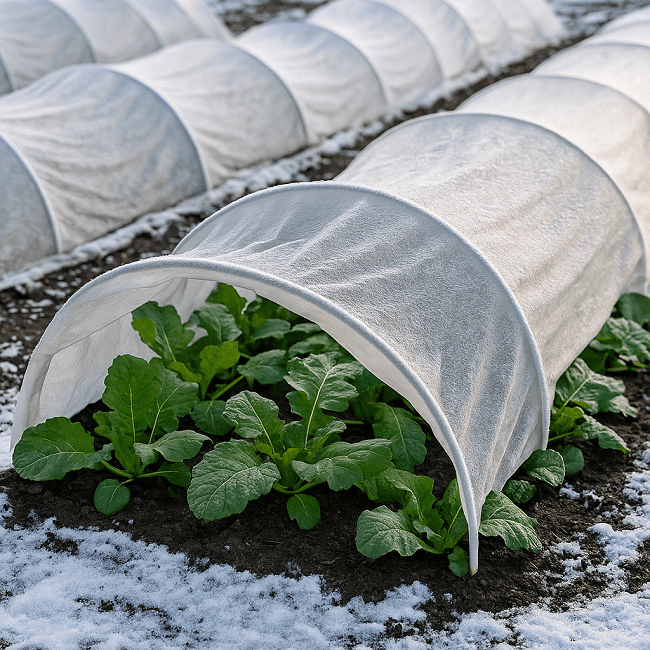
The biggest challenge in winter gardening is sudden temperature drops. Over time, I found simple ways to protect my crops:
- Mulching. I use dry leaves, straw, or compost to insulate the soil. It prevents roots from freezing.
- Row covers. Lightweight fabric or plastic tunnels keep frost off leaves. I remove them during sunny days for ventilation.
- Raised beds. They drain better and warm up faster than ground soil.
- Wind barriers. I plant tall herbs or build small fences to reduce wind chill.
One trick that really works for me is using water-filled jugs inside my tunnels. During the day, they absorb heat, and at night, they release it slowly, keeping the air around the plants a few degrees warmer.
My Watering and Feeding Routine

In winter, overwatering can kill plants faster than the cold. I water sparingly but deeply every 7–10 days, depending on rainfall. The goal is to keep the soil slightly moist, not wet.
I also feed lightly with compost tea once a month.
The microbes stay active even in the cold and help the plants absorb nutrients slowly. For leafy greens, I add a little liquid seaweed fertilizer when they start looking pale.
Mistakes I Avoid Now
I made plenty of mistakes in my first few winters. I planted too late, didn’t protect the roots enough, and watered too often. I’ve learned these simple rules:
- Start early so plants establish before frost.
- Always cover bare soil with mulch.
- Don’t fertilize heavily right before freezing weather.
- Ventilate tunnels on sunny days to prevent mold.
These small adjustments have made a big difference in how healthy my winter crops grow.
What I Learned from Growing Vegetables in Winter?
Winter gardening taught me patience and precision. The slower growth made me pay closer attention to each plant’s needs. I discovered that many vegetables are tougher than they look, and with proper care, they can thrive even in cold conditions.
Now, my garden doesn’t stop producing after summer.
I always have kale, spinach, and carrots ready for harvest. It feels great to walk outside on a cold morning and pick fresh food from the soil.
If you’ve never tried growing vegetables in winter, start small. Pick one or two hardy crops like kale or spinach, protect them with a cover, and see how they do.
Once you see how resilient these plants are, you’ll never think of winter as an off-season again.