
A garden pond can transform an ordinary outdoor space into a peaceful retreat, adding beauty, tranquility, and functionality to your backyard.
Whether you’re creating a simple tire pond or designing an elaborate water feature, ponds offer numerous benefits, from enhancing biodiversity to providing a serene space for relaxation.
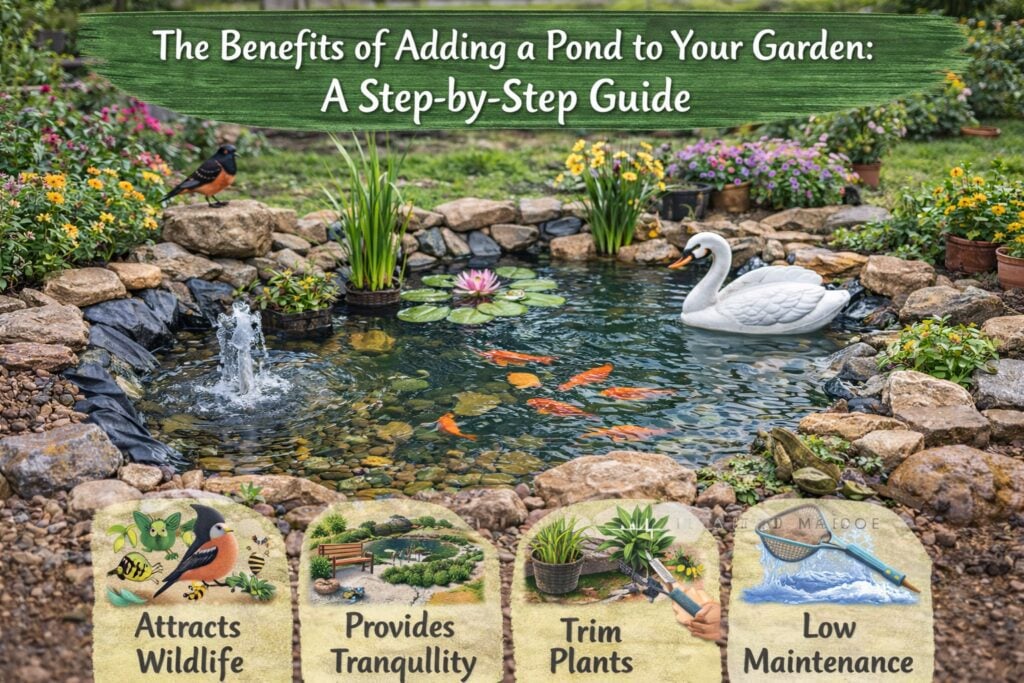
With minimal maintenance once set up, ponds are an excellent addition to any garden. In this guide, we’ll explore the steps to building a pond, its advantages, and how it can elevate your garden’s aesthetic and environmental impact.
Why Build a Garden Pond?
Garden ponds offer a unique blend of beauty and functionality that can significantly enhance the value and appeal of your garden. Not only do they provide an attractive focal point, but they also support the local ecosystem by encouraging biodiversity.
Ponds attract beneficial wildlife, such as frogs, birds, and insects, which help maintain a balanced environment.
Moreover, a well-maintained pond offers a peaceful, tranquil space for relaxation, creating a natural retreat for those seeking a break from their busy lives.
Step 1: Planning and Design
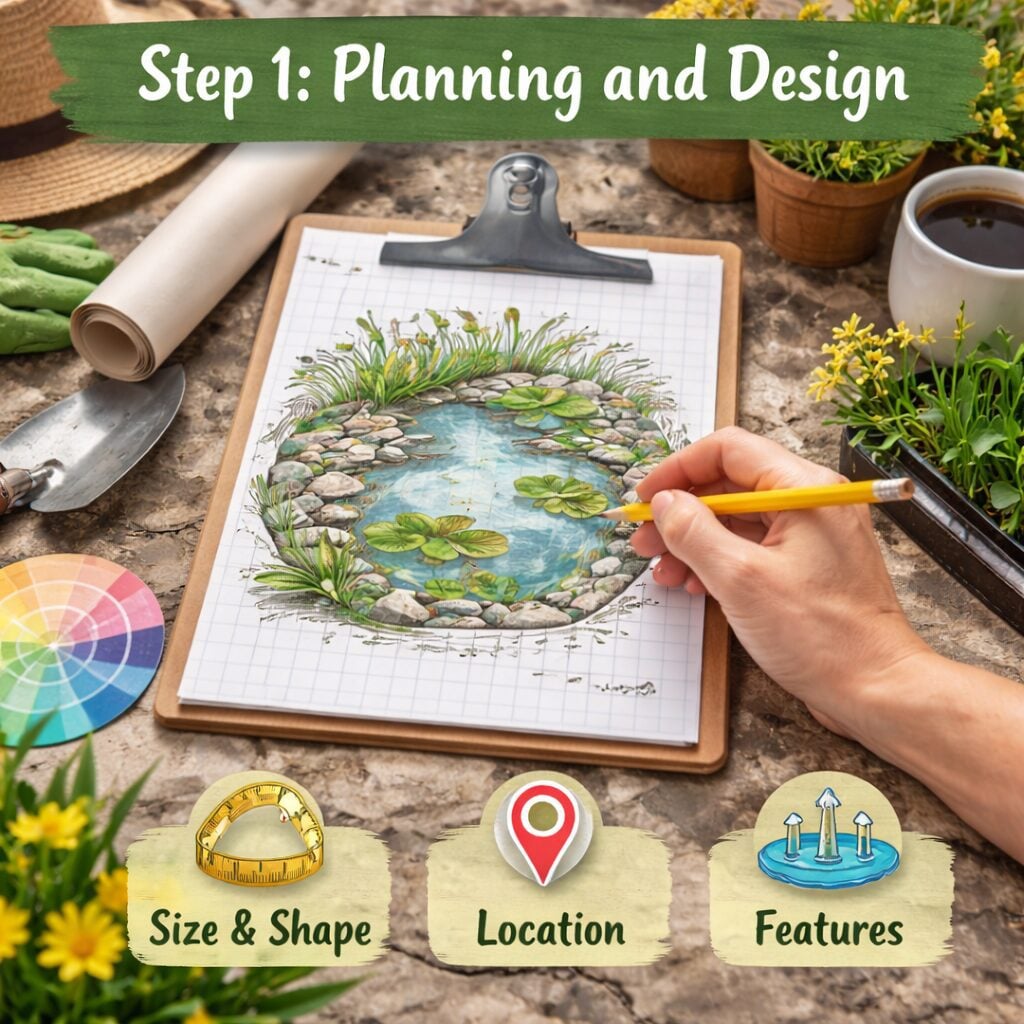
Before beginning the construction of your pond, it’s essential to plan the design carefully. Consider factors such as:
- Size and Shape: Determine how much space you have and how large or small you want the pond to be. Smaller ponds are easier to maintain but may not support as many aquatic plants or animals.
- Location: Choose a location that receives adequate sunlight but is also sheltered from strong winds. Ponds generally require at least 4-6 hours of sunlight daily for plant growth, but too much sun can cause excessive algae growth.
- Purpose: Are you looking to create a tranquil retreat, a wildlife habitat, or simply a water feature? Your purpose will influence the pond’s design and the features you include, such as fountains, waterfalls, or plants.
Step 2: Digging and Lining the Pond
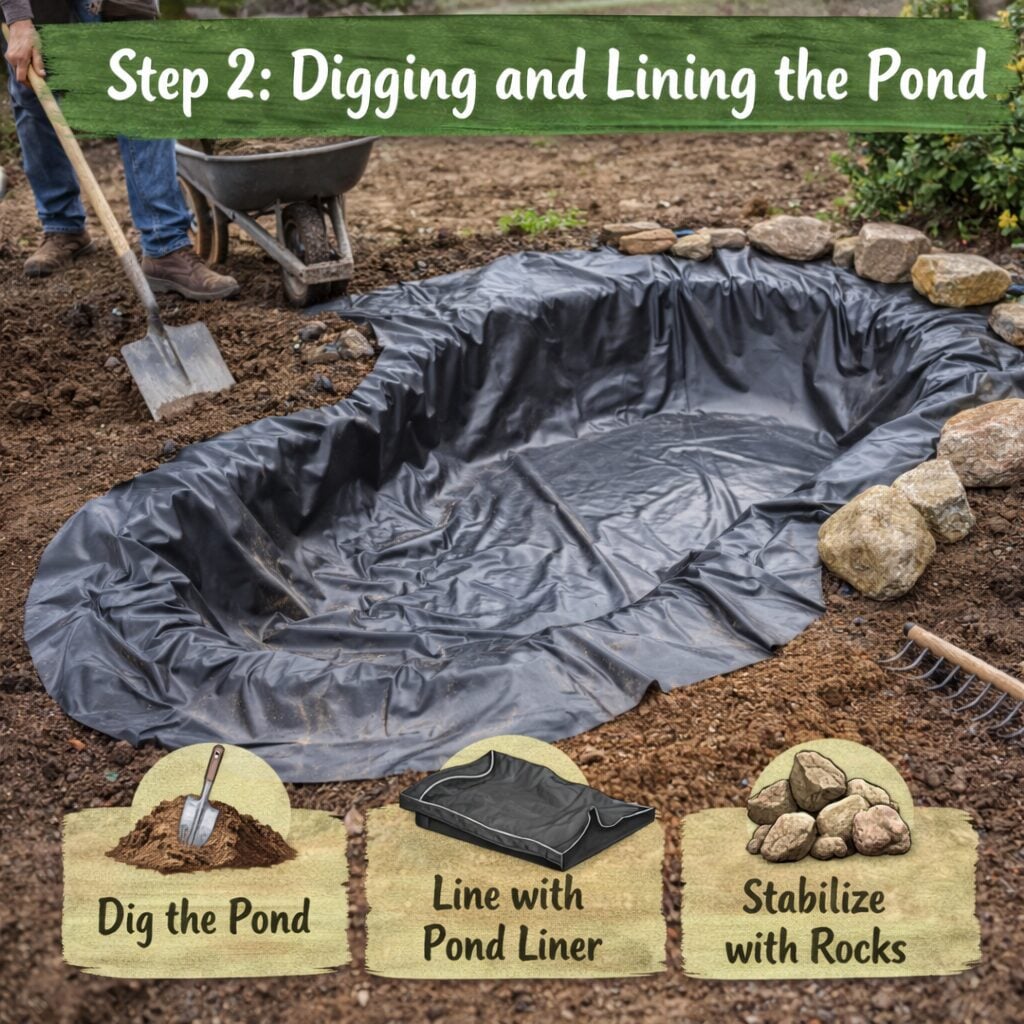
Once you’ve decided on the size, shape, and location, it’s time to begin digging. Here’s how to proceed:
- Dig the Pond: Use a shovel or spade to dig the pond to the desired depth. Keep in mind that the deeper the pond, the better it will support aquatic life. Most ponds should be at least 18 inches deep, but for fish or certain plants, deeper ponds may be necessary.
- Shape the Pond: Create a gentle slope around the edges to allow easy access for wildlife. You can make the pond round, oval, or irregular, depending on your design preferences.
- Lining the Pond: Once the pond is dug, line it with a durable pond liner. Pond liners are typically made of rubber or PVC and provide a waterproof barrier that helps retain water. Ensure the liner covers the entire pond surface, including the edges, to prevent leakage.
Step 3: Adding Rocks, Gravel, and Plants
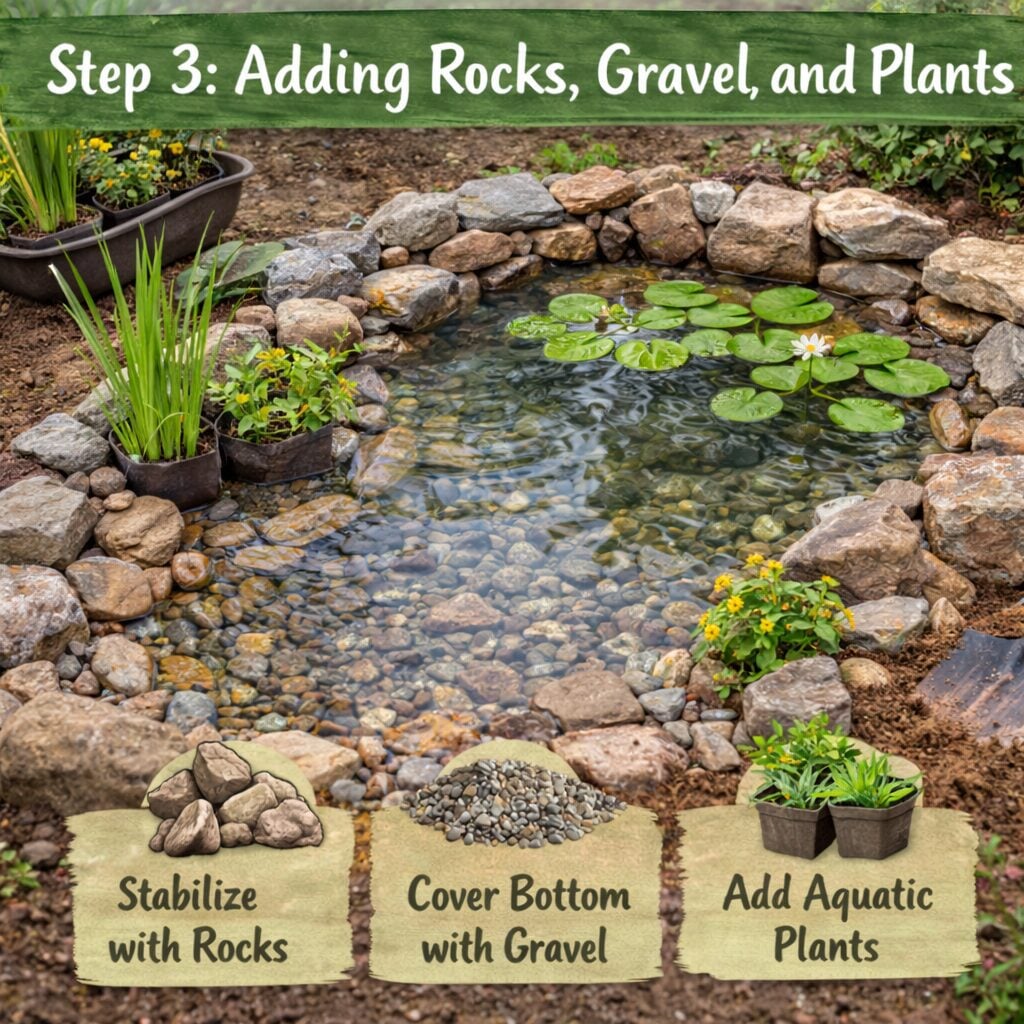
After the pond is lined, it’s time to add the finishing touches:
- Rocks and Gravel: Place rocks and gravel around the edges and bottom of the pond. Not only do these add to the aesthetic appeal, but they also provide hiding places for aquatic creatures and prevent the pond liner from shifting.
- Aquatic Plants: Choose plants that are suited to your pond’s environment, such as water lilies, duckweed, or cattails. These plants help filter the water, provide shelter for wildlife, and contribute to a natural, balanced ecosystem. Place plants at varying depths depending on their specific water needs.
- Beneficial Bacteria: You may also consider adding beneficial bacteria to the pond, especially if you’re introducing fish. These bacteria help break down organic waste and keep the water clear.
Step 4: Filling the Pond with Water
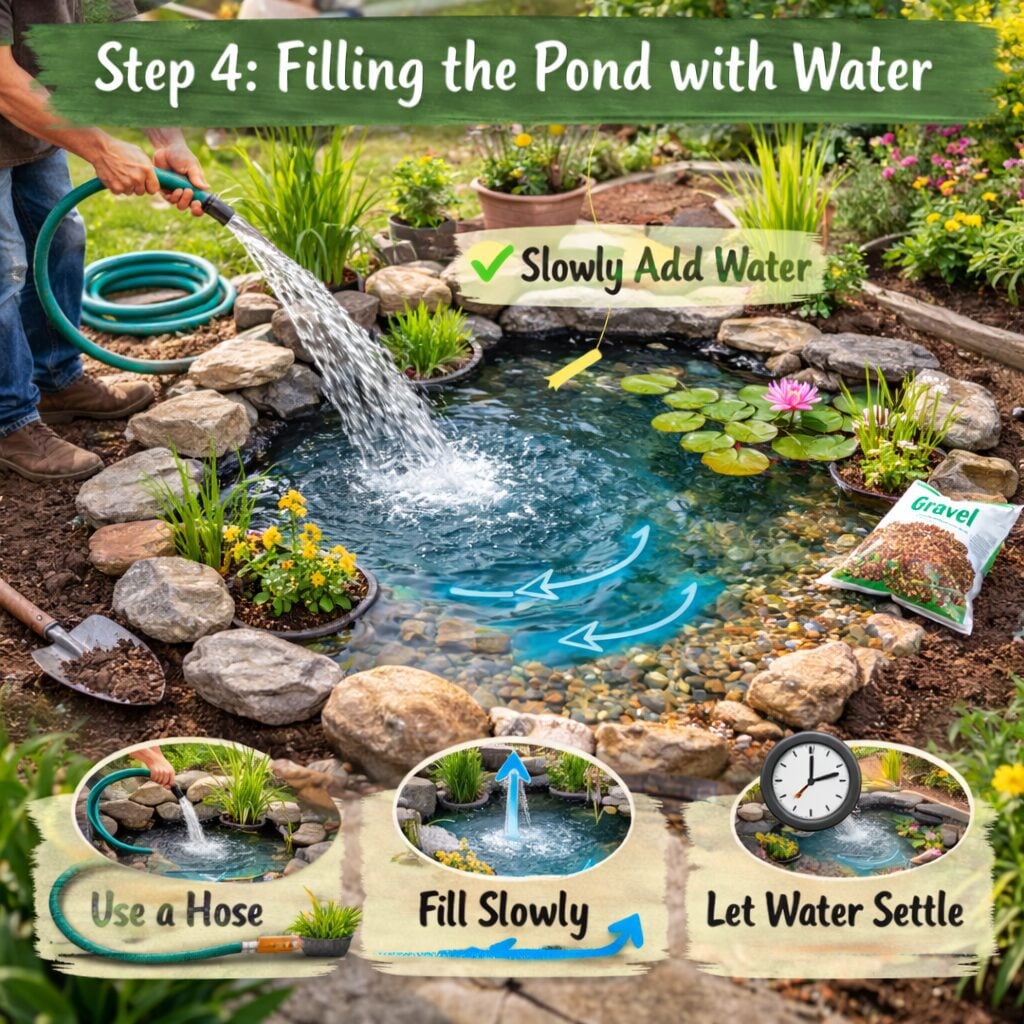
Now that the pond is shaped, lined, and decorated with plants and rocks, it’s time to fill it with water. Use a garden hose to fill the pond, taking care not to disturb the liner or plants.
Fill the pond slowly to avoid disturbing the arrangement of rocks and gravel. Once filled, let the water settle for a few days before adding fish or other wildlife.
Step 5: Adding Wildlife and Decorative Features

If you wish to create a more dynamic pond, consider adding wildlife and decorative features. Here are some options:
- Fish: Fish like koi or goldfish can add color and movement to your pond. Be sure to choose species that are suitable for your climate and pond size.
- Fountains or Waterfalls: Adding a small fountain or waterfall creates the soothing sound of flowing water, enhancing the tranquility of your pond. It also helps with oxygenating the water, which is beneficial for both plants and fish.
- Floating Decorations: Decorative features such as floating swans or lily pads can add a charming touch to your pond, making it a true focal point of your garden.
Step 6: Maintenance and Care

Once your pond is established, it requires relatively low maintenance compared to other garden features. However, some ongoing care is necessary:
- Regular Water Testing: Test the water regularly for pH levels, ammonia, and nitrate levels. This ensures the water is healthy for plants and animals.
- Remove Debris: Use a net or rake to remove fallen leaves and debris from the water. This prevents the buildup of organic material that could harm water quality.
- Prune Plants: Trim dead or overgrown plants regularly to maintain a balanced ecosystem and prevent the water from becoming stagnant.
- Winter Care: In colder climates, you may need to prepare your pond for winter by removing or protecting plants and fish to prevent freezing.
The Environmental Impact of Garden Ponds
Garden ponds contribute to the environment in several positive ways. First, they support biodiversity by attracting wildlife, such as frogs, birds, and insects. These creatures help with pest control and pollination, benefiting the rest of your garden.
Additionally, ponds act as natural water reservoirs, offering moisture to the surrounding soil, which is especially beneficial during dry spells. The plants in the pond also help filter the water, improving water quality and reducing the need for chemical treatments.
From an ecological standpoint, garden ponds help maintain a healthy ecosystem in your garden. They can provide habitat for endangered species, contribute to local water cycles, and enhance the aesthetic and ecological value of your outdoor space.


