As an eco-conscious gardener, I’ve always sought ways to protect my plants from pests without resorting to harmful chemicals.
After some trial and error, I’ve discovered that natural pesticides can be just as effective as store-bought options, while being kinder to the environment.
1. Neem Oil Spray
Neem oil spray has become my go-to natural pesticide, and for good reason. Extracted from the seeds of the neem tree, this powerful oil works wonders in combating a wide range of garden pests like aphids, mealybugs, and spider mites.
What makes neem oil so effective is its active compound, azadirachtin, which disrupts the feeding and reproductive habits of insects.
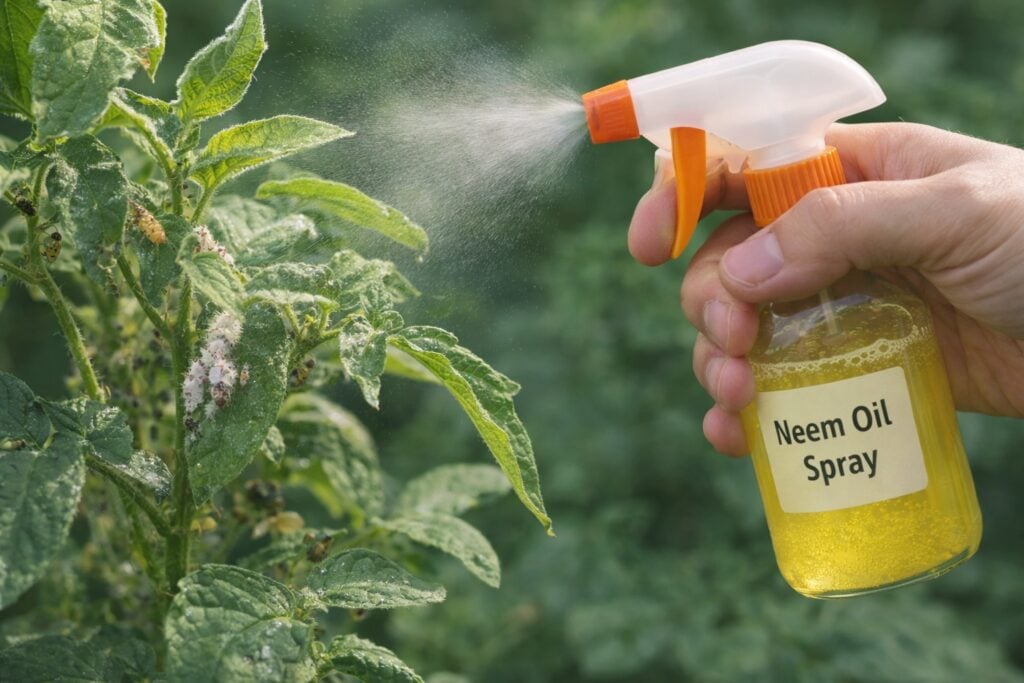
When I first started using it, I was amazed at how it naturally repelled pests without harming beneficial insects like ladybugs or bees. It’s a gentle yet potent solution, and since it’s derived from a plant, it’s safe for both my plants and the environment.
With just a few simple ingredients, neem oil spray has become an essential part of my gardening routine.
What is Neem Oil?
Neem oil comes from the seeds of the neem tree, which is native to India. For centuries, it’s been used in both medicine and agriculture due to its natural pesticide properties.
I started using neem oil spray on my plants a few years ago, and the results have been phenomenal. It works well against a variety of pests, including aphids, mealybugs, and spider mites.
How to Make Neem Oil Spray?
- Ingredients:
- 1 tablespoon of neem oil
- 1 teaspoon of dish soap (preferably organic)
- 1 liter of warm water
- Instructions:
- Mix the neem oil and dish soap into the warm water.
- Stir the mixture thoroughly to ensure the oil emulsifies.
- Pour the solution into a spray bottle.
- Apply directly to the affected plants, ensuring to cover both the tops and undersides of the leaves.
Why It Works:
Neem oil contains azadirachtin, a compound that disrupts the feeding and reproductive habits of insects.
When sprayed on plants, it acts as both a repellent and an insecticide, eliminating pests without harming beneficial insects like bees and ladybugs.
2. Garlic & Chili Spray
Garlic and chili spray is one of my favorite natural pest control solutions because it combines two powerhouse ingredients known for their strong, pest-repelling properties.
When I first tried this combination in my garden, I was amazed at how effective it was at deterring caterpillars, beetles, and other leaf-feeding insects.

Garlic contains sulfur compounds that insects find repulsive, while chili peppers deliver a fiery punch that irritates pests, making them flee.
This simple spray is not only highly effective but also easy to make, and it’s safe for my plants. Whether you’re dealing with an infestation or just looking for a preventive measure, garlic and chili spray is a hot combination that keeps pests away and helps my garden thrive.
The Power of Garlic and Chili
Garlic is a potent natural insect repellent, and chili peppers add an extra kick, making this combination one of my go-to homemade pesticides.
I first tried this spray after reading how effective it was at repelling caterpillars, beetles, and other leaf-feeding insects. I was amazed at how well it worked, and since then, I’ve always kept a batch on hand.
How to Make Garlic & Chili Spray?
- Ingredients:
- 1 bulb of garlic
- 2 fresh chili peppers
- 1 liter of water
- 1 teaspoon of dish soap
- Instructions:
- Blend the garlic and chili peppers with a bit of water to make a paste.
- Add the rest of the water to the paste and let it steep for a few hours.
- Strain the mixture into a clean spray bottle, discarding the solid pieces.
- Add a teaspoon of dish soap to help the solution stick to the leaves.
- Spray the mixture on your plants, focusing on areas where pests are most active.
Why It Works:
Garlic contains sulfur compounds that repel pests, while the capsaicin in chili peppers acts as a deterrent by irritating the insects’ mouths.
Together, these ingredients create an unpleasant environment for pests, causing them to leave your plants alone.
3. Citrus Oil Spray
Citrus oil spray has quickly become one of my go-to natural pesticides for tackling common garden pests, and I love how refreshing it smells!
What makes citrus oil so effective is its high content of d-limonene, a compound that disrupts the exoskeletons of pests like ants, aphids, and soft-bodied insects.
When I first used it on my plants, I was amazed at how quickly it worked, leaving my garden smelling fresh while driving pests away.

It’s an all-natural solution that doesn’t harm the plants or the environment, making it the perfect choice for those of us who want a simple, effective way to keep pests in check.
Plus, it’s an easy DIY recipe that’s safe and gentle yet incredibly powerful against those pesky invaders.
The Benefits of Citrus
I’ve always been a fan of citrus fruits for their refreshing scent, but did you know that citrus oil can also be an excellent natural pesticide? It’s particularly effective against ants, aphids, and other soft-bodied pests.
When I started using citrus oil spray in my garden, I noticed a sharp decline in pest activity, especially around my rose bushes and tomato plants.
How to Make Citrus Oil Spray
- Ingredients:
- 1 tablespoon of citrus oil (or a few drops of essential citrus oil)
- 1 liter of warm water
- 1 teaspoon of dish soap
- Instructions:
- Mix the citrus oil into the warm water.
- Add dish soap to the mixture, stirring to combine.
- Pour the solution into a spray bottle.
- Apply the spray to the infested areas of your plants.
Why It Works:
Citrus oils contain d-limonene, a compound known for its insecticidal properties. It works by breaking down the exoskeleton of pests, causing them to dehydrate and die.
Plus, the fresh citrus scent is a pleasant bonus for gardeners like me!
4. Insecticidal Soap (DIY)
Insecticidal soap has become a staple in my gardening routine for its gentle yet highly effective pest control properties. When I first started using it, I was impressed by how easily it eliminated pests like aphids, whiteflies, and mealybugs without harming my plants.
Made with simple ingredients like liquid soap and water, this DIY solution works by suffocating the insects, disrupting their cell membranes and causing them to die.

The best part is that it’s safe for most plants, including delicate ones, and won’t harm beneficial insects like bees and ladybugs when used correctly.
It’s a straightforward, eco-friendly alternative to chemical pesticides, making it an essential tool in my quest for a healthier, chemical-free garden.
What is Insecticidal Soap?
When I was first starting out with natural pesticides, insecticidal soap was one of the first recipes I tried, and it’s remained one of my favorites. It’s gentle enough to use on a wide range of plants but tough on pests like aphids, whiteflies, and thrips.
This spray is one of the best options for gardeners who want an eco-friendly solution without risking damage to their plants.
How to Make Insecticidal Soap?
- Ingredients:
- 1 tablespoon of liquid soap (castile soap works well)
- 1 liter of water
- Instructions:
- Mix the liquid soap into the water.
- Pour the solution into a spray bottle.
- Shake gently to combine.
- Apply directly to the affected areas of your plants.
Why It Works:
Insecticidal soap works by suffocating the pests, disrupting their cell membranes and causing them to die. The soap solution is mild and won’t harm your plants, but it’s highly effective at killing soft-bodied pests that feed on plant sap.
5. Onion & Garlic Spray
Onion and garlic spray has proven to be an all-purpose, natural pest control solution that I rely on to keep my garden healthy and thriving. The strong scents of both ingredients act as a powerful deterrent for a variety of pests, from aphids to caterpillars.

I was initially surprised at how well this simple combination worked, especially since it’s made from kitchen staples! The sulfur compounds in garlic and the natural oils in onions create an environment that pests simply can’t tolerate, while being safe for my plants.
This homemade spray is easy to whip up and doesn’t contain any harmful chemicals, making it an ideal choice for anyone looking to protect their garden with a natural, eco-friendly approach.
Why Use Onion & Garlic?
I’ve found that combining garlic and onion creates an all-purpose, natural pesticide that works well against a wide range of pests.
This spray is perfect for general pest control and also acts as a deterrent for ants and other annoying insects that tend to invade the garden.
How to Make Onion & Garlic Spray?
- Ingredients:
- 1 onion
- 1 garlic bulb
- 1 liter of water
- 1 teaspoon of dish soap
- Instructions:
- Blend the onion and garlic with some water to form a paste.
- Add the remaining water and allow the mixture to sit for a few hours.
- Strain the mixture into a spray bottle.
- Add the dish soap and mix well.
- Spray on your plants, particularly those suffering from pest infestations.
Why It Works:
Onion and garlic both have strong natural scents that repel insects. They also contain sulfur compounds that deter pests from feeding on your plants. This spray is excellent for keeping your garden pest-free, especially if you have a variety of common garden pests.
6. Herbal Oil Spray
Herbal oil spray has been my secret weapon against flying pests like mosquitoes, flies, and gnats that tend to invade my garden during warmer months.
The soothing scent of oils like eucalyptus and tea tree not only provides a calming aroma but also acts as a natural repellent, keeping those pesky insects at bay.

When I first used this spray, I was amazed at how quickly it drove away mosquitoes, allowing me to enjoy my garden without constant swatting.
It’s a simple DIY solution made with essential oils and water, gentle enough for my plants while being tough on flying pests. Plus, the added bonus of its refreshing smell makes it a pleasant alternative to chemical repellents, keeping my garden—and my time outdoors—pest-free.
The Herbal Advantage
Flying pests, such as mosquitoes, flies, and even certain types of moths, can make gardening a frustrating experience.
I’ve found that herbal oil sprays, particularly those made from eucalyptus or tea tree oil, are highly effective at repelling these pests. Not only does the spray work wonders for pest control, but it also leaves your garden smelling fresh.
How to Make Herbal Oil Spray?
- Ingredients:
- 10 drops of herbal oil (eucalyptus, tea tree, or lavender)
- 1 liter of water
- 1 teaspoon of dish soap
- Instructions:
- Mix the herbal oil into the water.
- Add the dish soap and stir well.
- Pour the mixture into a spray bottle.
- Spray it generously on your plants to deter mosquitoes, flies, and other flying pests.
Why It Works:
Herbal oils, especially eucalyptus and tea tree oil, have strong scents that repel flying insects. The oils also have natural antibacterial and antifungal properties, making this spray a great choice for maintaining healthy, pest-free plants.
Embrace the Power of Nature
Gardening doesn’t have to involve harsh chemicals and harmful pesticides. By using natural ingredients, you can create powerful and eco-friendly solutions to protect your plants from pests.
Whether you choose neem oil, garlic and chili, citrus oil, or any of the other natural pesticides I’ve shared, you can rest easy knowing that you’re nurturing a healthier garden while being kind to the environment.
I encourage you to experiment with these homemade remedies and find the best combination for your plants. Happy gardening!