
Composting has become an essential practice for many of us who want to recycle organic waste, enrich our soil, and contribute positively to the environment.
By turning food scraps, yard waste, and other organic materials into nutrient-rich compost, we can reduce waste going to landfills while improving our gardens and crops.
Whether you’re a seasoned gardener or just starting, understanding the characteristics, pros, and cons of each composting method can help you choose the right one for your garden.
Cold Composting
Cold composting is one of the easiest and most low-maintenance methods of turning organic waste into nutrient-rich compost for your garden. Perfect for beginners or those who want a more hands-off approach, cold composting requires minimal effort, making it ideal for busy gardeners.
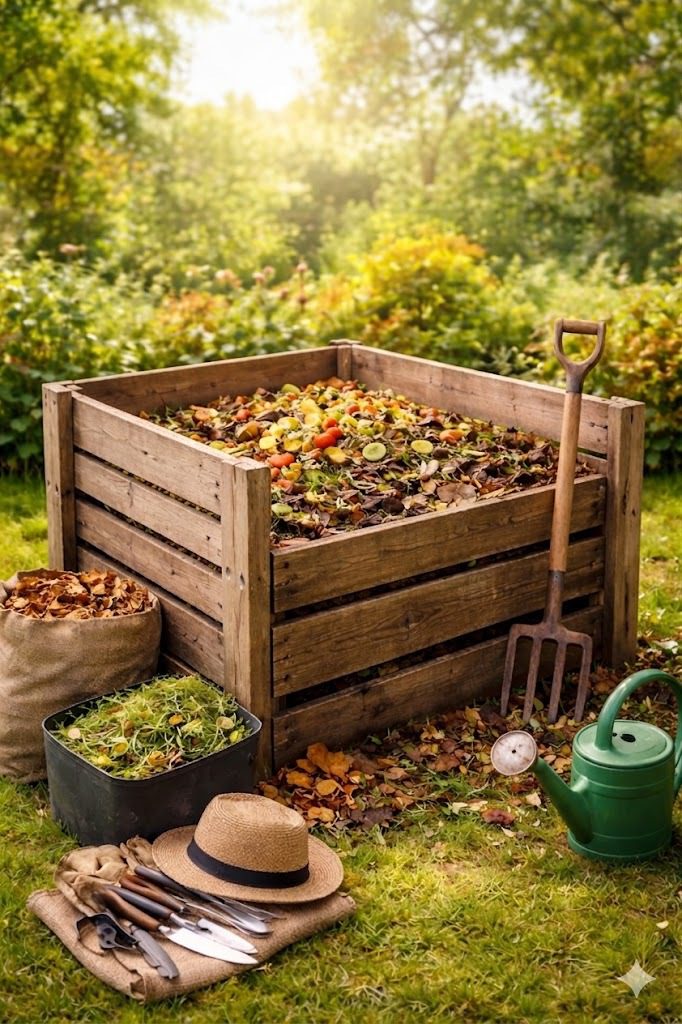
By simply piling up yard trimmings, food scraps, and other organic matter, you can let nature work its magic, turning your waste into valuable compost over time.
While it’s not the quickest method, its simplicity and low upkeep make it a popular choice for anyone looking to reduce waste and enrich their soil.
1. What Is Cold Composting?
Cold composting is the most straightforward and least labor-intensive method of composting. It involves piling up organic waste, like yard trimmings, food scraps, and garden debris, and allowing it to break down naturally over time.
Unlike hot composting, cold composting doesn’t require much intervention, and the composting process can take six months or longer to complete.
It’s perfect for those who want a hands-off approach to composting, but you need to be patient and understand that it can take a while for the materials to decompose.
2. Characteristics of Cold Composting
Cold composting is an easy-to-maintain method. You can simply pile up your materials in a compost bin or a designated area of your yard, and let nature do its work.
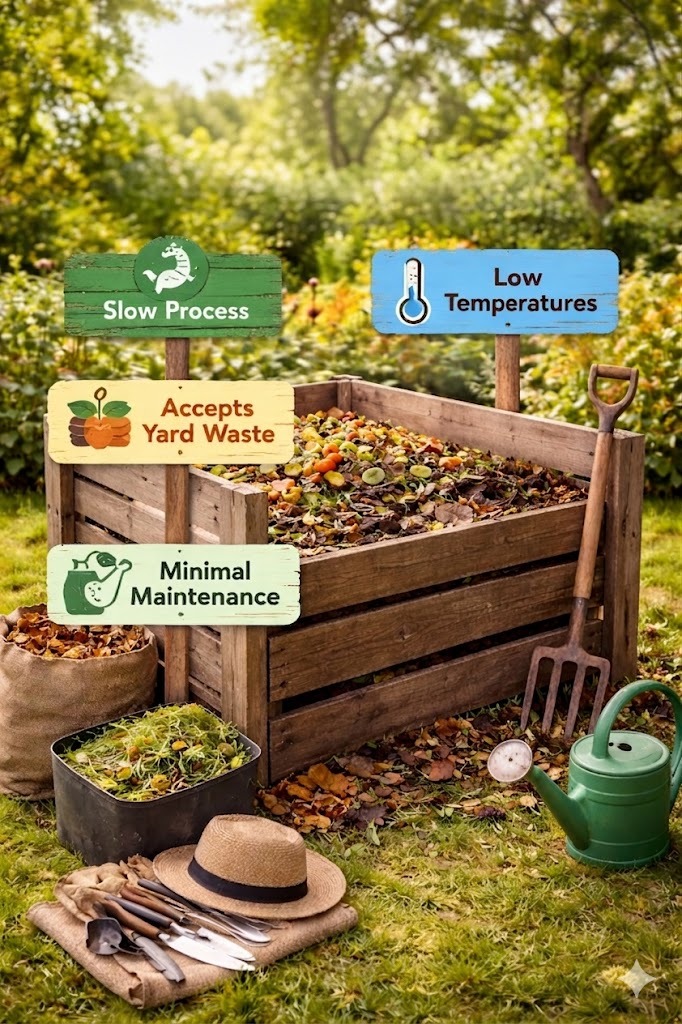
This composting method doesn’t need frequent turning, and you can add new organic material as it becomes available. It’s a simple, no-fuss approach to composting.
3. Pros of Cold Composting
The pros of cold composting lie in its simplicity and low-maintenance nature, making it an excellent choice for gardeners who want a hassle-free composting solution.
Since this method doesn’t require regular turning or careful balancing of materials, it’s easy to set up and forget about, allowing organic waste to decompose naturally over time.
Cold composting is also cost-effective, as it doesn’t need special equipment or bins—just a compost pile or container.
Additionally, it’s environmentally friendly, helping to reduce the amount of organic waste that ends up in landfills while improving soil health and fertility without much effort on your part.
- Low-maintenance: This is the least demanding method of composting. After you set up your compost pile or bin, you won’t need to monitor it regularly. You simply add more organic matter when you have it.
- Minimal effort: There’s no need to turn the pile regularly or maintain the right balance of green and brown materials. The process is more forgiving of mistakes, making it ideal for beginners.
- Environmentally friendly: Cold composting is a sustainable way to reduce organic waste, which helps lower greenhouse gas emissions from landfills.
4. Cons of Cold Composting
While cold composting is low-maintenance, it does come with some drawbacks. One of the biggest disadvantages is the slow decomposition process, which can take anywhere from six months to over a year, depending on the materials and weather conditions.
This extended timeline may not be ideal for gardeners in need of compost quickly.
Additionally, because cold composting doesn’t reach high temperatures, it may not kill weed seeds or harmful pathogens, meaning you could end up introducing unwanted plants or diseases to your garden.
The method also requires more space, as large compost piles are necessary to maintain the decomposition process effectively.
- Takes longer to decompose: Since there’s little to no intervention, the process is slower, and it could take over six months to a year for the compost to break down fully.
- Weeds might survive: Cold composting doesn’t reach the high temperatures necessary to kill weed seeds or pathogens, meaning you might end up with unwanted weeds in your compost.
- Requires space: You’ll need a good amount of space for your compost pile, especially if you’re composting large amounts of yard waste.
Hot Composting
Hot composting is a dynamic and fast-paced method for turning organic waste into nutrient-rich compost in a relatively short amount of time.
Unlike cold composting, this technique involves regular turning and maintaining the right balance of materials to create the ideal conditions for decomposition.
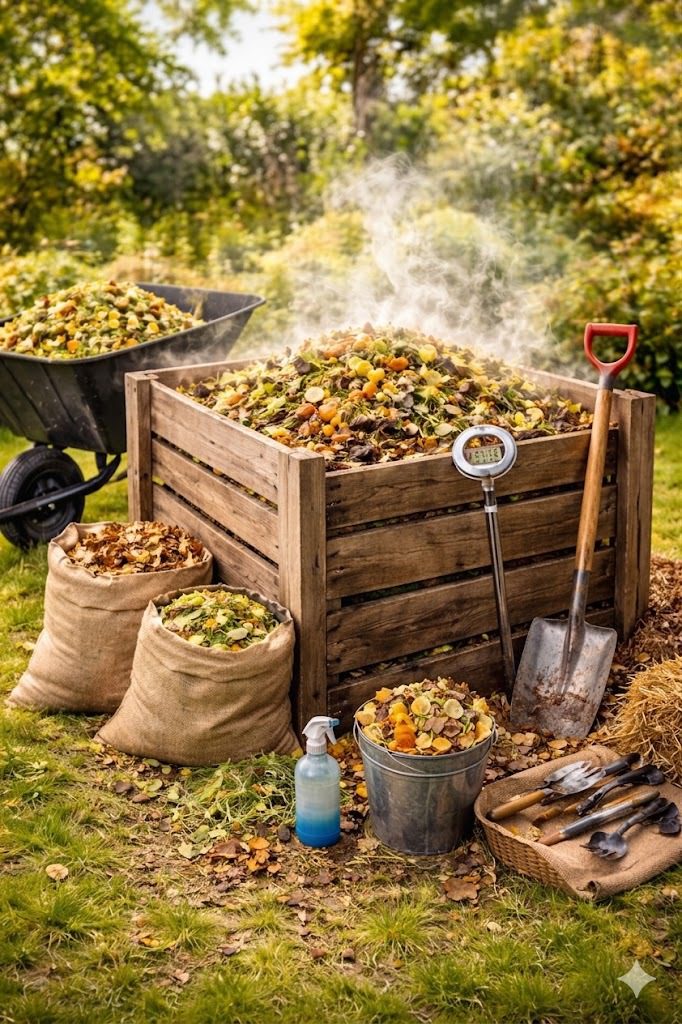
With temperatures reaching up to 160°F (70°C), hot composting accelerates the breakdown of organic matter, making it a great choice for gardeners who need compost quickly.
While it requires more attention and effort, the results are efficient and highly rewarding, especially for those looking to create high-quality compost while keeping weeds and pathogens at bay.
1. What Is Hot Composting?
Hot composting is a more active and efficient method that requires regular turning and a careful balance of materials. The goal is to create a compost pile that heats up, reaching temperatures of 130-160°F (55-70°C), which accelerates the decomposition process.
Hot composting is ideal for people who want compost quickly and are willing to invest time and effort into maintaining their pile.
2. Characteristics of Hot Composting
Hot composting involves a more hands-on approach. You need to monitor the temperature, maintain a proper balance of green (nitrogen-rich) and brown (carbon-rich) materials, and turn the pile regularly.
The high temperature in the compost pile accelerates decomposition, which helps to break down the materials faster and kill weeds and pathogens.
3. Pros of Hot Composting
Hot composting offers several key advantages that make it a highly efficient method for composting organic waste.
First, the accelerated decomposition process is a major benefit, as it allows you to produce finished compost in just 3-4 months, compared to the much longer timeline of cold composting.
The high temperatures also serve a crucial function by killing weed seeds, harmful pathogens, and pests, ensuring the compost is free from contaminants.
This results in a higher-quality product that can improve soil health without introducing unwanted plants or diseases.
Furthermore, hot composting is ideal for handling large volumes of organic waste, making it a perfect solution for gardeners or households with significant amounts of yard waste or food scraps to process quickly.
- Faster decomposition: One of the biggest benefits of hot composting is that it produces finished compost in as little as 3-4 months, depending on how well you maintain the pile.
- Kills weed seeds and pathogens: The high temperatures help kill weed seeds, disease-causing organisms, and other pests, resulting in high-quality, pathogen-free compost.
- Better for larger volumes: If you’re dealing with a lot of organic waste, hot composting is an excellent way to manage large volumes of material and turn it into compost quickly.
4. Cons of Hot Composting
While hot composting offers fast results, it also comes with several challenges. One of the main drawbacks is that it is labor-intensive, requiring regular attention to keep the compost pile aerated and ensure that the temperature stays within the optimal range for decomposition.
This means you’ll need to turn the pile frequently and monitor the temperature, which can be time-consuming.
Additionally, hot composting requires a certain level of knowledge, such as understanding how to balance the right amounts of green (nitrogen-rich) and brown (carbon-rich) materials to maintain an efficient process.
The method also requires more space and equipment, as it’s best suited for larger compost bins or dedicated areas, and tools like a compost thermometer and a pitchfork are necessary for proper maintenance.
This makes hot composting a more involved process compared to other methods.
- Labor-intensive: Hot composting requires more attention. You must turn the pile frequently to keep it aerated and monitor the temperature to ensure it’s within the optimal range.
- Requires knowledge: You’ll need to learn how to balance the right amount of green and brown materials, and how to keep the pile hot enough to break down the materials efficiently.
- Space and equipment needed: Hot composting works best in a large compost bin or a dedicated area. You may also need tools like a compost thermometer and a pitchfork for turning the pile.
Vermicomposting
Vermicomposting is an innovative and highly efficient method that utilizes worms, particularly red wigglers, to break down organic waste into nutrient-dense compost.
This method is perfect for small spaces, as it can be done in compact, contained bins either indoors or outdoors. The worms consume food scraps, creating valuable worm castings that enrich your soil and promote healthy plant growth.
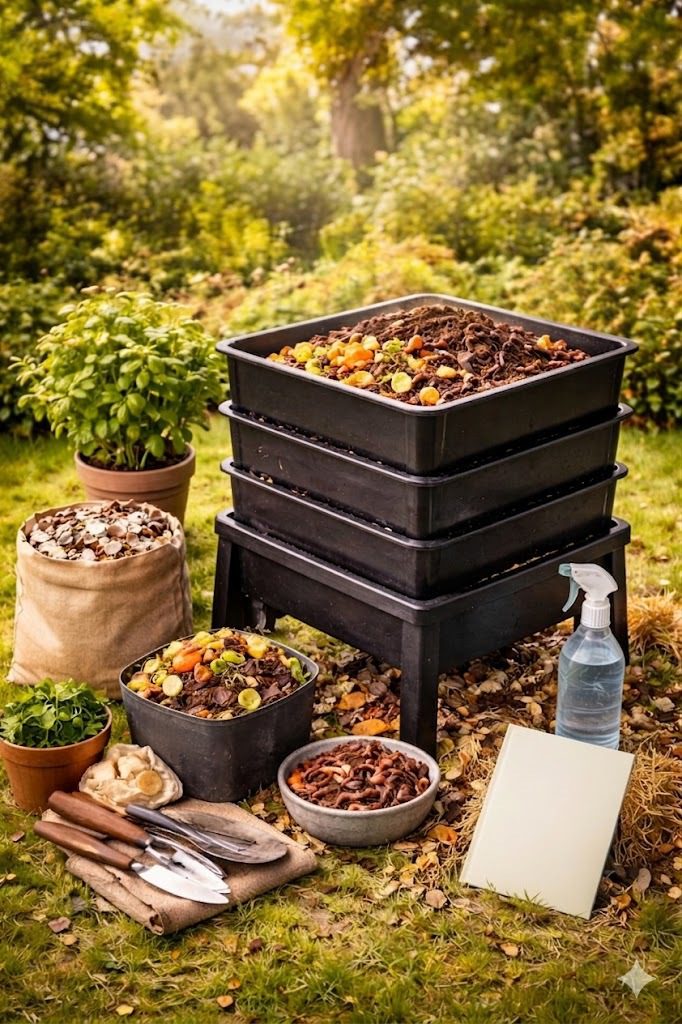
Vermicomposting requires minimal maintenance, as the worms do most of the work, but it does require the right conditions, such as proper moisture levels and food for the worms.
It’s an ideal composting solution for urban gardeners or anyone looking to create high-quality compost with minimal effort.
1. What Is Vermicomposting?
Vermicomposting is a method that uses worms, typically red wigglers, to break down organic matter. These worms consume food scraps, creating nutrient-rich worm castings (also known as worm manure) that are excellent for enriching soil.
Vermicomposting is great for small spaces and those who want a more controlled, hands-off method of composting, but it requires the right environment for the worms to thrive.
2. Characteristics of Vermicomposting
Vermicomposting involves setting up a worm bin, which can be kept indoors or outdoors, depending on your climate. The worms work to digest the organic material, producing rich, dark compost.
This method is ideal for people with limited space, as the composting process is contained and doesn’t require a large pile or lot.
3. Pros of Vermicomposting
Vermicomposting offers several significant benefits, especially for those with limited space. Since it doesn’t require much room, it’s an excellent choice for people living in apartments or with small yards, allowing composting to be done indoors or in compact outdoor spaces.
One of the biggest advantages of vermicomposting is that it requires minimal effort—there’s no need to turn the pile regularly like with hot composting; the worms do all the work for you.
In addition to being low-maintenance, vermicomposting produces high-quality compost.
Worm castings are packed with nutrients and beneficial microbes, making them some of the best compost for enriching soil and promoting healthy plant growth.
- Great for small spaces: Vermicomposting doesn’t require a lot of space, making it perfect for people living in apartments or with small yards.
- No turning needed: Unlike hot composting, you don’t need to turn the materials to keep the process going. The worms do the work for you.
- Produces high-quality compost: Worm castings are considered one of the best types of compost because they contain valuable nutrients and beneficial microbes that enrich the soil.
4. Cons of Vermicomposting
Despite its many benefits, vermicomposting does come with a few challenges. It requires proper care to be successful, meaning you need to create and maintain the right environment for the worms, such as managing the moisture levels, temperature, and ensuring they have a steady supply of food.
Vermicomposting is also limited in the types of materials it can handle—only small organic items like food scraps, coffee grounds, and vegetable peels are suitable for worms.
Larger materials, such as thick branches or big vegetable scraps, cannot be processed in worm bins. Additionally, vermicomposting requires a specialized worm bin, which can be an investment.
Without the proper setup, the worms may escape or die, which can disrupt the entire process.
- Requires proper care: To be successful, you must provide the right conditions for the worms. This includes maintaining the correct moisture level, temperature, and ensuring they have enough food.
- Limited to certain materials: Vermicomposting is best suited for food scraps, coffee grounds, and other small organic materials. Larger items, such as thick branches or large vegetable scraps, aren’t suitable for worm bins.
- Needs special bins: You’ll need to invest in a specialized worm bin to keep the process contained and efficient. Without the proper setup, the worms can escape or die.
Choosing the Best Composting Method for Your Needs
Now that we’ve explored the three main composting methods, it’s clear that each has its own benefits and drawbacks.
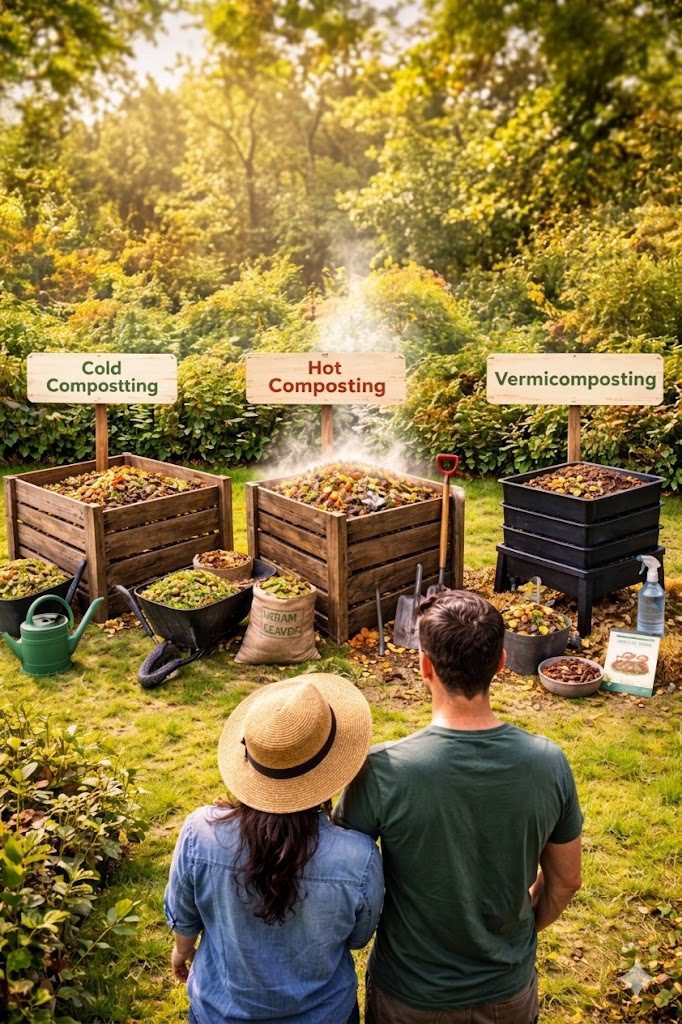
Here’s a quick breakdown to help you choose the right method for your needs:
- Cold Composting: Ideal for beginners or those who want a simple, low-maintenance approach. It’s perfect if you have the space and patience to wait for compost.
- Hot Composting: Great for those who want fast results and are willing to put in the effort to manage their compost pile. It’s ideal for large volumes of waste and for killing weeds and pathogens.
- Vermicomposting: Best for small spaces and those who prefer a hands-off, efficient composting process. It’s perfect for indoor composting or people who want to make high-quality compost without much maintenance.
Composting Made Easy
No matter which composting method you choose, you’re contributing to a healthier planet and a more sustainable lifestyle.
Whether you’re cold composting, hot composting, or using worms for vermiculture, you can rest assured that you’re making a positive impact.
Remember to evaluate your space, time, and energy commitments when choosing a method, and don’t be afraid to experiment and see what works best for you.
Happy composting!


