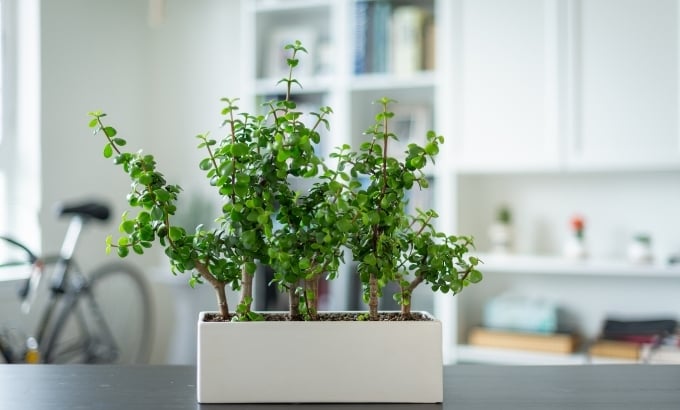
I have always loved gardening, but sometimes life gets busy, and maintaining a full garden can feel overwhelming. That’s when I discovered the incredible potential of regrowing vegetables from scraps in water.
Not only is this method zero-cost, but it also allows for an endless harvest right from my kitchen.
1. Green Onions
One of the first vegetables I tried re-growing was green onions. I simply placed the root ends in a glass of water, and within 5 to 7 days, I noticed new shoots emerging. It was fascinating to see them grow so quickly!
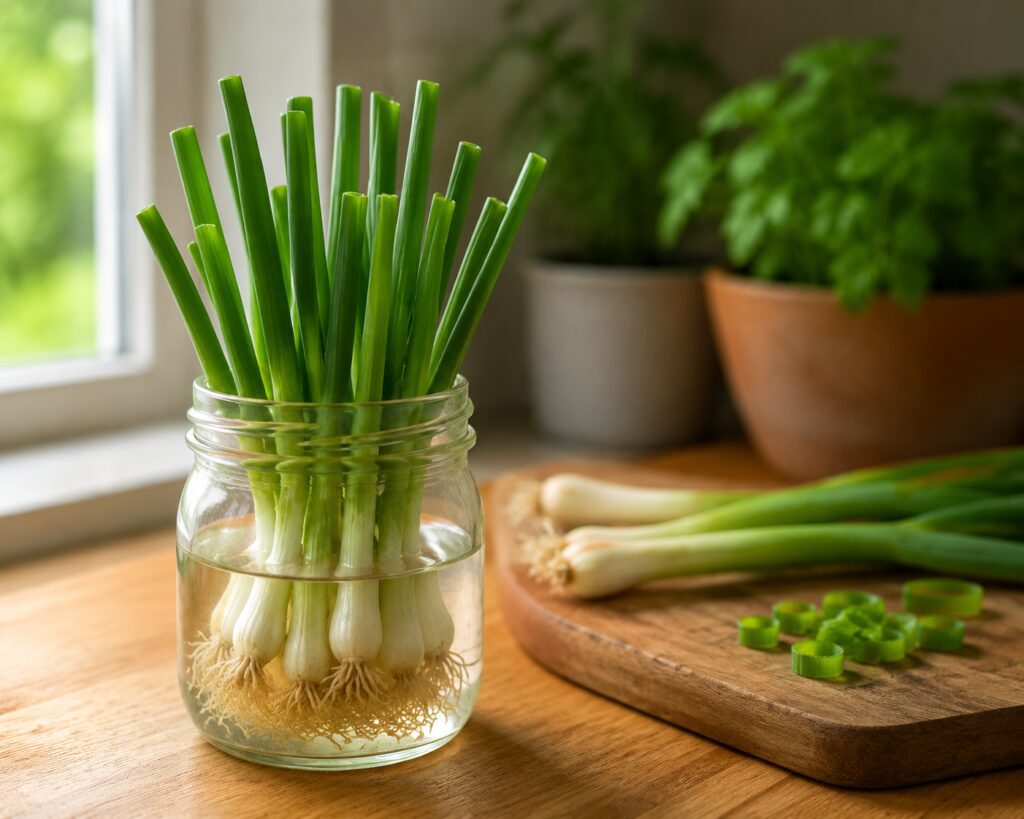
The key here is to ensure the water covers only the roots and to change it every 2 to 3 days. This prevents bacterial buildup and keeps the onions fresh and healthy.
I often keep multiple glasses of green onions around my kitchen—it’s a simple way to have fresh greens for salads, soups, and garnishes at all times.
2. Lettuce
Lettuce regrowth has been a game-changer for me. I cut the base of a head of lettuce and placed it in a shallow bowl of water. Within 1 to 2 weeks, I noticed new leaves sprouting from the center.
The process is slower than green onions but equally rewarding.
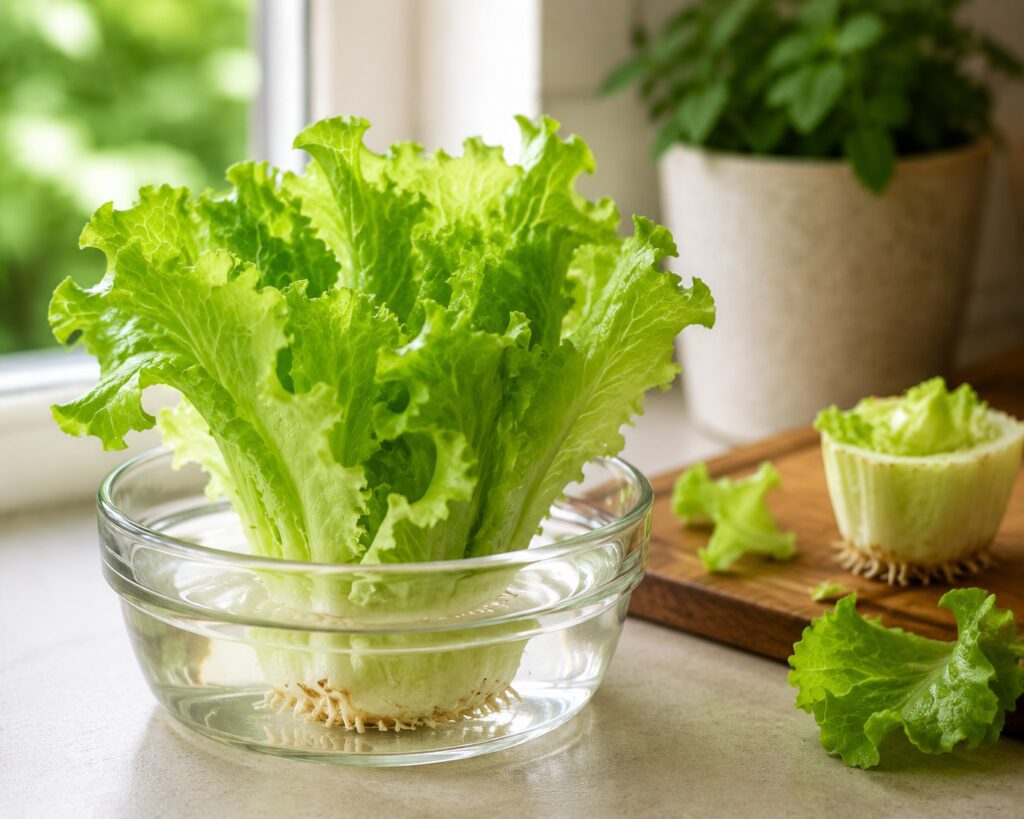
I recommend keeping the water clean and placing the bowl near indirect sunlight. Watching those crisp, green leaves emerge reminded me that even small scraps can provide fresh, vibrant produce.
3. Celery
Re-growing celery is surprisingly simple. I trim the base of the celery and place it in a small glass of water, making sure the cut side is facing down. Over time, new growth emerges from the center.
I have found that indirect sunlight speeds up the process.
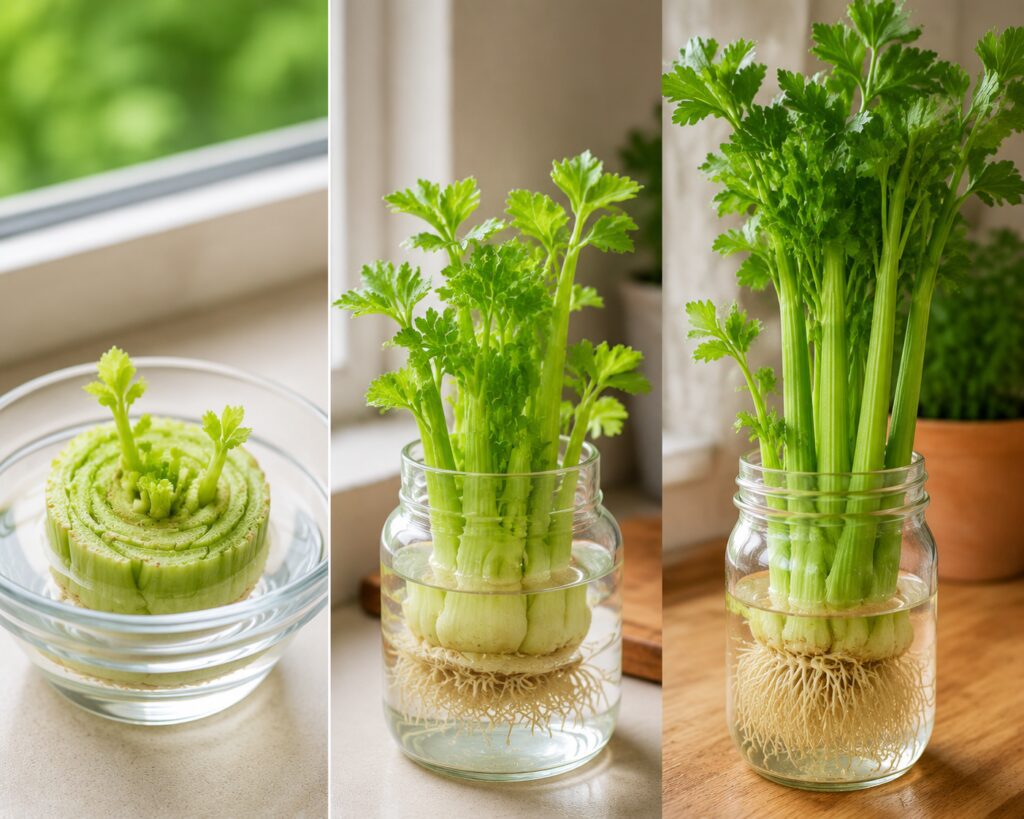
While celery takes longer to fully regrow than some other vegetables, the satisfaction of harvesting fresh stalks from what would have been discarded scraps makes the wait worthwhile.
4. Carrot Tops
While you won’t get a full carrot from the top, the green leaves are incredibly versatile. I place the carrot tops in a shallow dish of water and watch as lush greens appear.
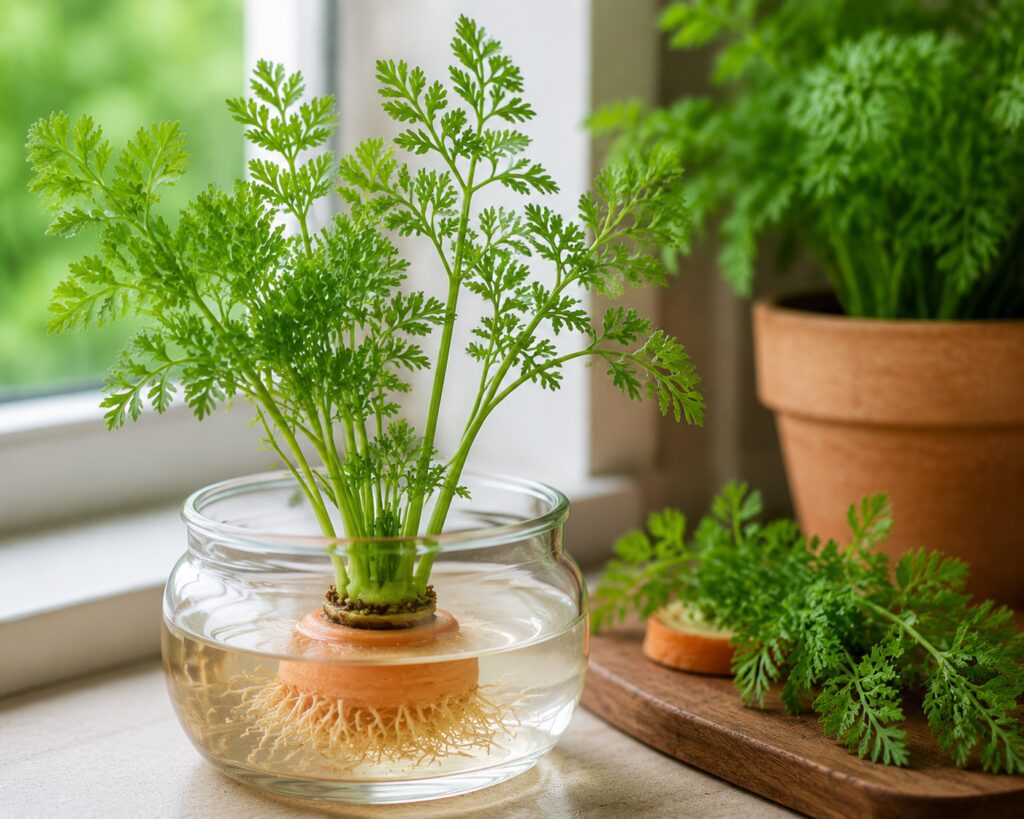
They don’t form roots, but the leaves can be used in salads, garnishes, or even smoothies. I love this method because it allows me to reduce waste and experiment with flavors I might not usually use.
5. Garlic
Garlic isn’t just for its bulbs; I’ve grown garlic greens from leftover cloves. Simply place a clove in a glass of water with the pointed end facing up. Within a few days, roots develop, followed by vibrant green shoots.
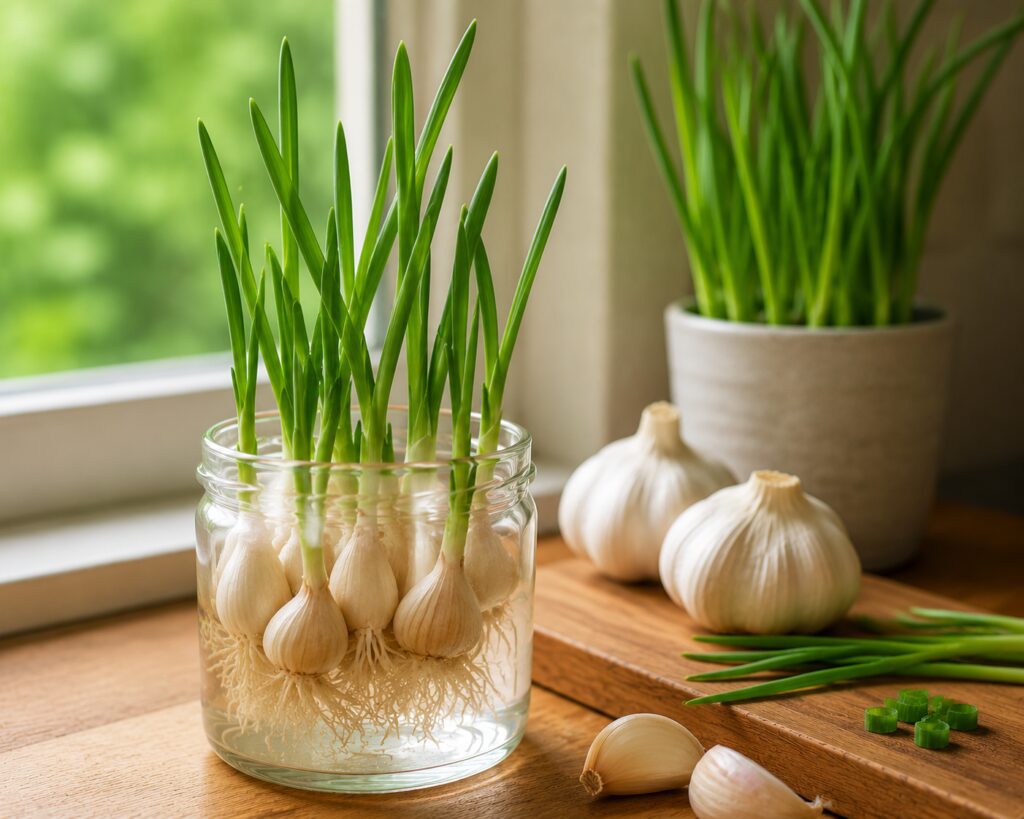
Garlic greens add a mild, fresh garlic flavor to dishes and are a wonderful addition to my kitchen garden. Changing the water every 2 to 3 days ensures healthy growth and prevents mold.
6. Onion
Re-growing onions is remarkably fast. I use the bottom part of the bulb and place it in a glass of water. Almost immediately, I start seeing sprouts emerge.
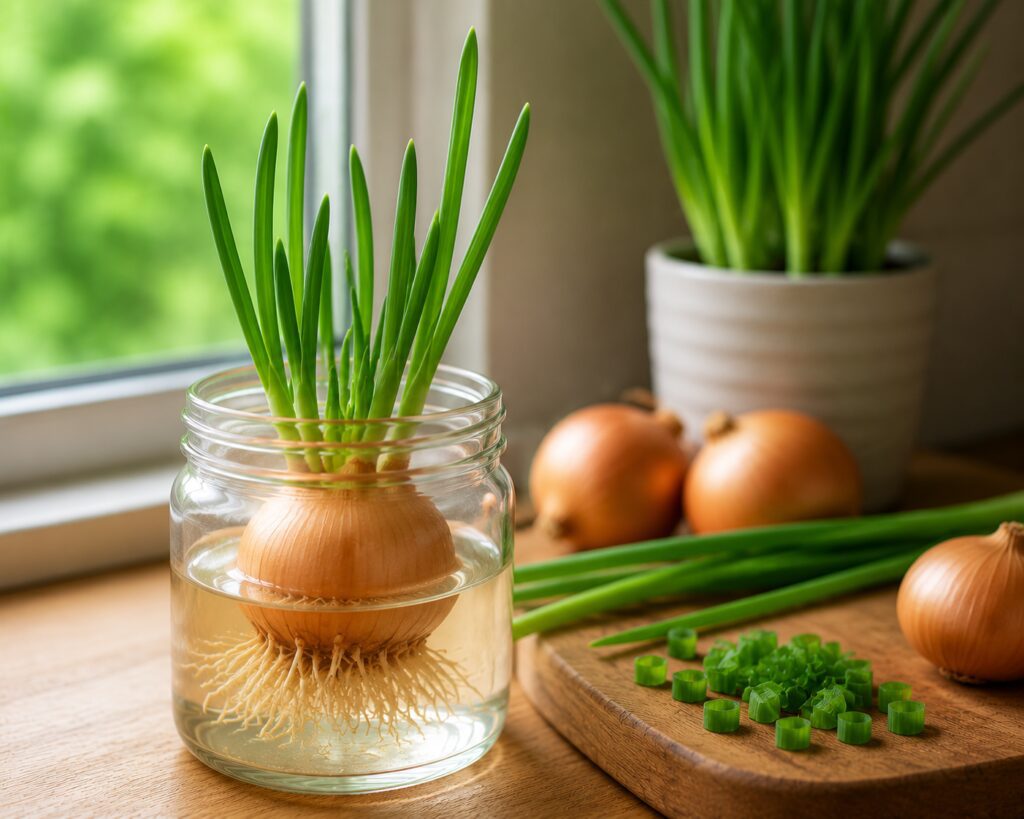
This method gives me fresh green onion-like stalks that can be added to almost any dish. Onions thrive with indirect sunlight and regular water changes, making them one of my favorite kitchen scrap vegetables to regrow.
7. Potato
Potatoes are a bit different from other vegetables because they need to eventually be planted in soil. I start by placing a potato with eyes in water and watch roots develop.
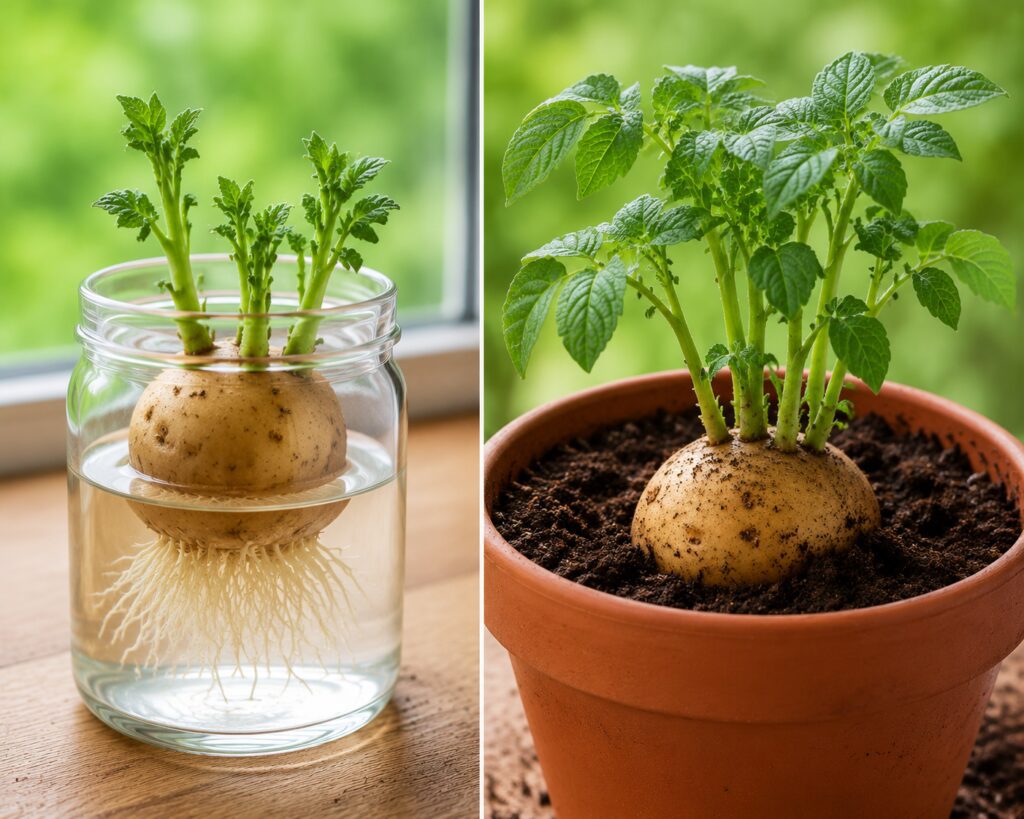
After a few days, I transfer it to soil to grow into a full potato plant. This method has allowed me to grow my own potatoes from kitchen scraps, saving money and reducing waste.
Patience is key, but seeing a full potato plant develop from a small scrap is deeply satisfying.
8. Basil
Basil is a kitchen essential, and regrowing it from scraps has been easy and fun. I place a stem cutting with leaves in a jar of water. Within 7 to 10 days, roots develop, and the plant starts growing rapidly.
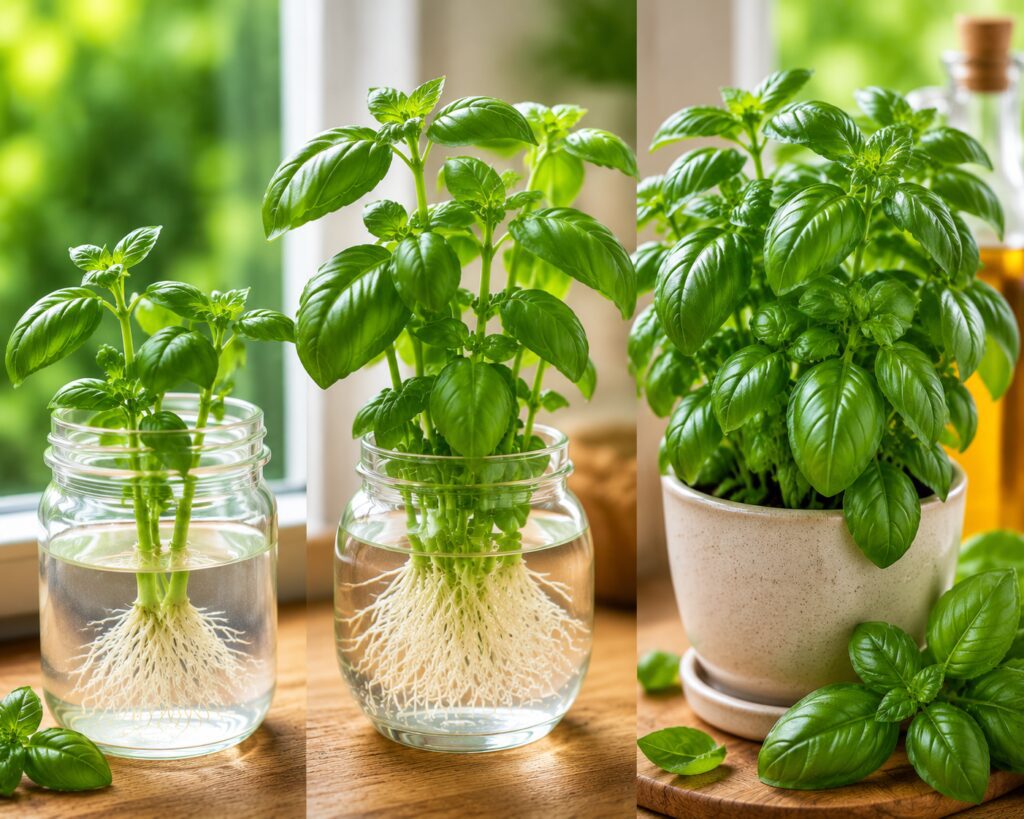
No soil is needed, and keeping the jar near sunlight encourages lush growth. Having fresh basil ready for pasta, salads, and sauces is now effortless.
9. Mint
If you want instant gratification, mint is your best choice. I’ve found that mint cuttings develop roots incredibly fast and can be used for teas, desserts, and garnishes.
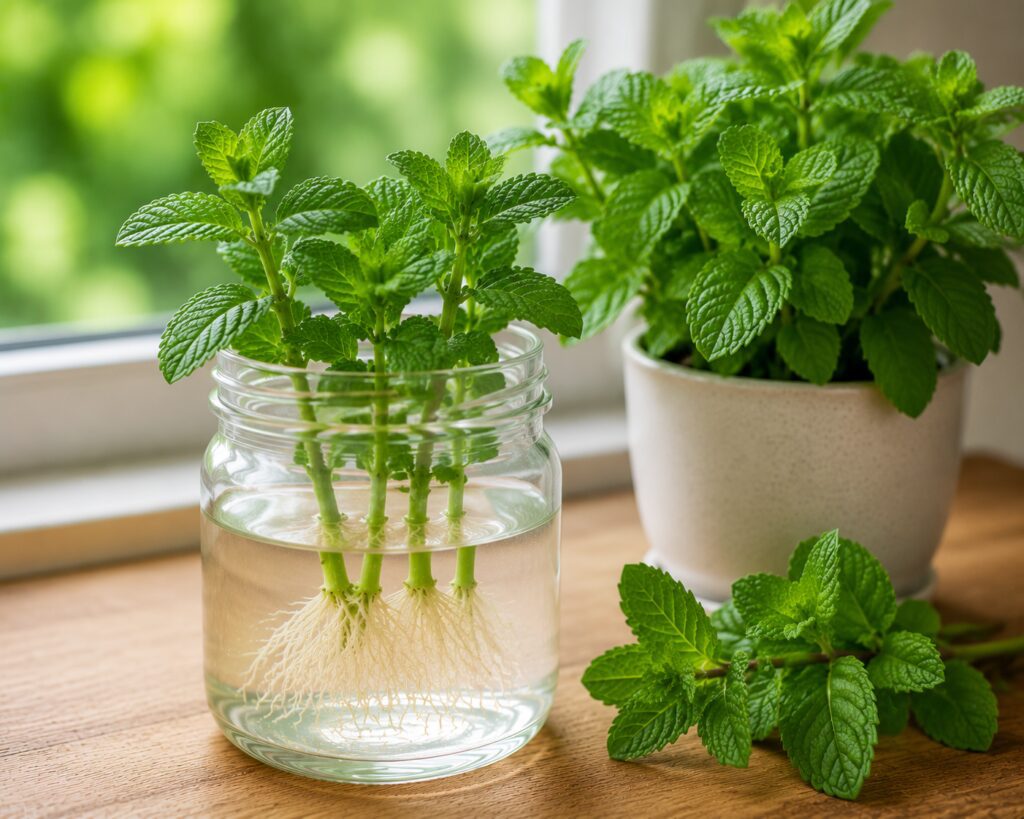
I place the stems in water, and almost immediately, they begin to regrow. Mint is resilient, and even if you trim it often, it keeps coming back, making it one of the fastest and most rewarding herbs to regrow at home.
10. Bok Choy
Bok choy surprises many beginners because it can fully regrow from its base. I place the cut base in a shallow bowl of water and watch as both roots and leaves develop. Within a couple of weeks, a fresh, edible plant emerges.
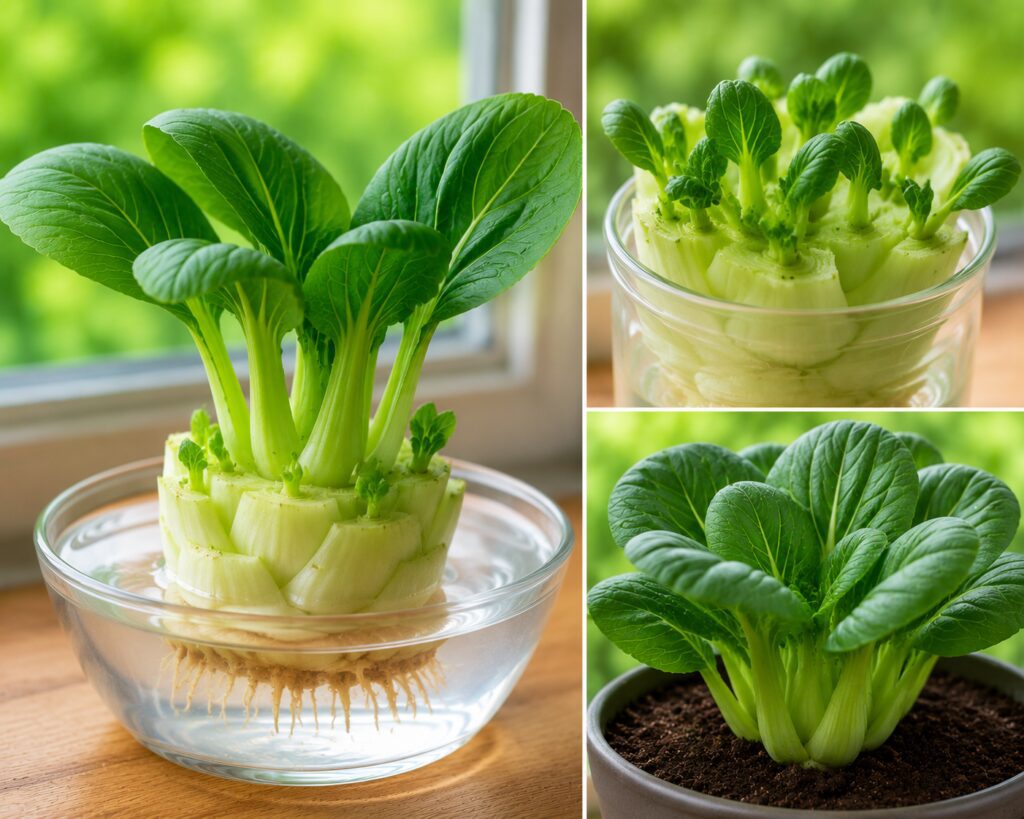
It’s truly amazing to witness a full vegetable regenerate from what would otherwise be kitchen waste. This method emphasizes the incredible potential of sustainable, zero-cost gardening.
Tips for Successful Vegetable Regrowth
From my experience, these are the crucial tips for successful regrowth:
- Change Water Regularly: Every 2 to 3 days to prevent bacteria.
- Indirect Sunlight: Most vegetables thrive in bright, indirect light.
- Container Choice: Clear containers allow you to monitor root development.
- Patience: Some vegetables take longer than others; enjoy the process.
- Use Healthy Scraps: Fresh, firm scraps produce the best results.
Following these tips has ensured that almost every attempt at regrowing vegetables has been successful in my kitchen.
Sustainable Gardening Starts at Home
Regrowing vegetables in water has transformed the way I approach cooking and gardening. It’s sustainable, cost-effective, and surprisingly simple. From green onions to bok choy, almost every kitchen scrap has the potential to flourish.
Not only does this reduce waste, but it also provides a constant supply of fresh, healthy ingredients right at my fingertips.
I encourage anyone who enjoys cooking or gardening to give this method a try. With minimal effort and a bit of patience, your kitchen can become a thriving, sustainable garden that continuously supplies you with fresh vegetables and herbs.