
When I first started raising chickens, I thought they only needed feed, water, and a safe coop. But after learning from experienced chicken keepers, I discovered something surprising: chickens love herbs.
Adding fresh herbs to my coop quickly made my flock more active, curious, and comfortable. Some herbs even helped freshen the coop, support healthy feathers, and create cleaner nesting areas.
It was a simple, natural change that made a noticeable difference.
Why Chickens Naturally Love Herbs?
The first thing I noticed was how curious chickens are around strong scents and textures. Chickens peck at almost everything, but herbs seem to attract them differently.
Fresh herbs create stimulation inside the coop environment.
Chickens scratch through them, nibble on leaves, and even use them to build comfortable nesting spaces.
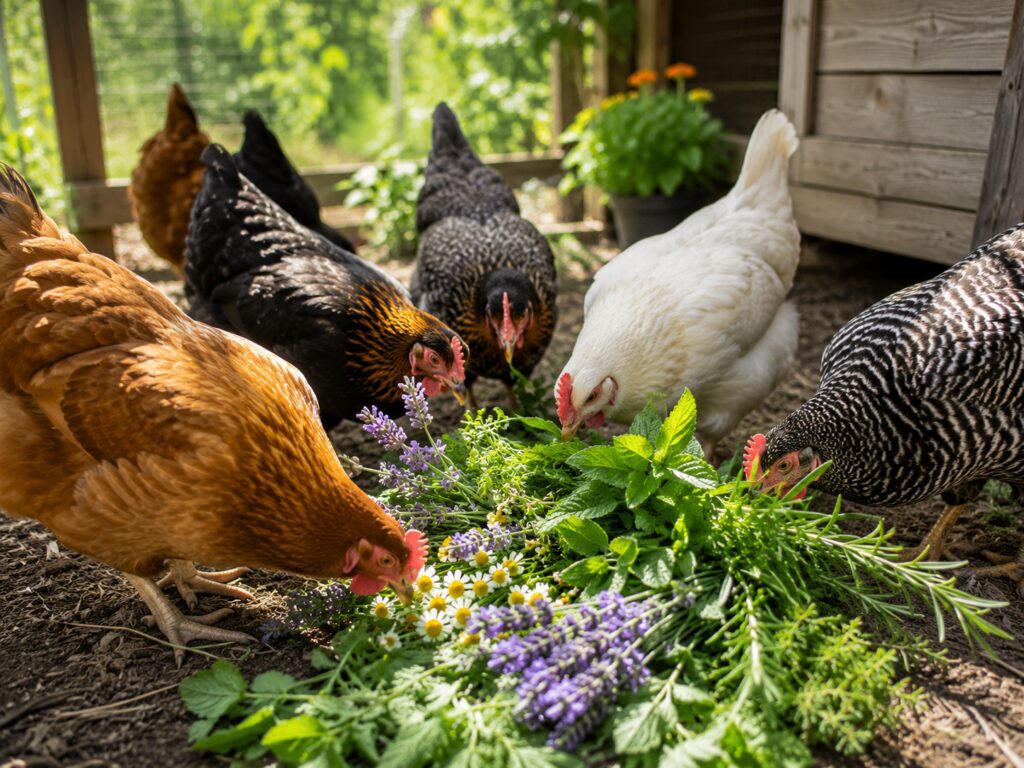
I also learned that many herbs contain natural oils and compounds that may help support general wellness. While herbs are not magical cures, they can become part of a healthier and more enriching environment for backyard flocks.
Another reason herbs work so well is because chickens spend so much time close to the ground. Their coop environment affects them constantly. Clean smells, dry bedding, and natural plants can help make the area feel fresher and more comfortable.
Once I started using herbs consistently, the coop honestly felt more alive and balanced.
1. Lavender
The very first herb I tried was lavender. I planted it mainly because I liked the smell, but my chickens surprised me by interacting with it constantly.
They scratched around the stems, rested nearby, and sometimes pecked lightly at the flowers. Lavender quickly became one of my favorite additions because it made the coop smell calmer and cleaner naturally.
I also noticed it helped create a more peaceful nesting environment.
Some chicken keepers believe lavender supports relaxation, especially during stressful periods like extreme weather or changes in the flock.
Whether that is scientifically proven or not, I can honestly say the coop atmosphere felt noticeably calmer whenever fresh lavender was added.
It also looked beautiful around the run area.
2. Chamomile
Chamomile became another herb I started using regularly after hearing older chicken keepers recommend it. At first, I scattered dried chamomile flowers into nesting boxes just to experiment.
The chickens immediately became interested in pecking around the bedding.
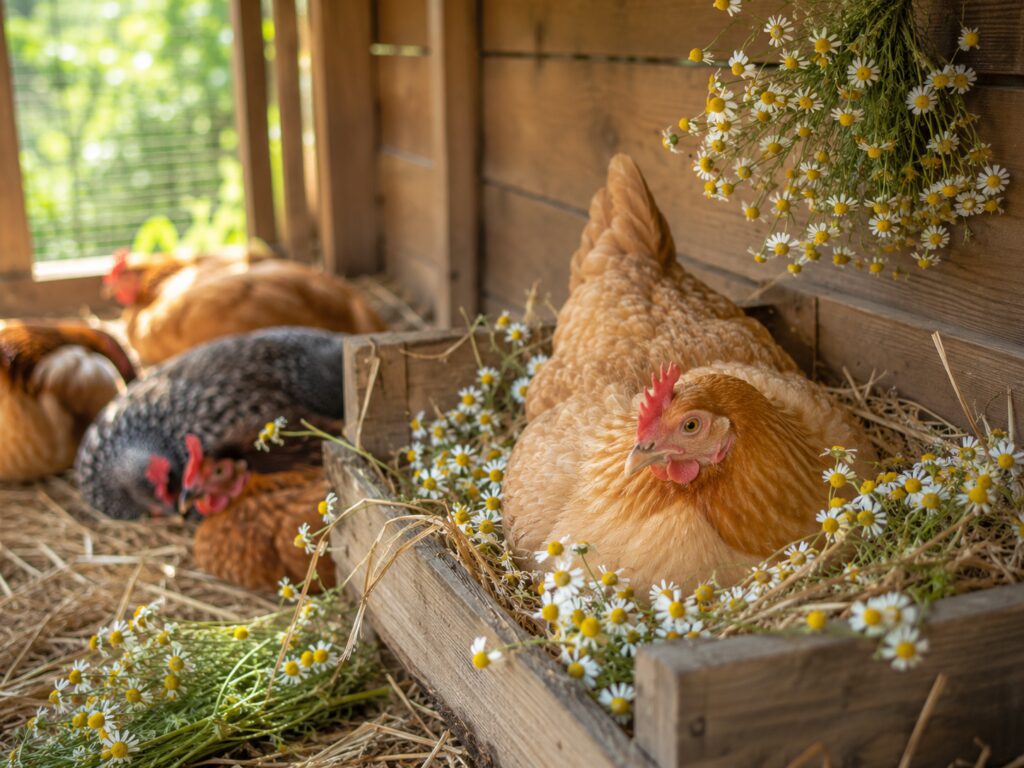
Over time, I noticed chamomile added a soft, fresh scent that helped reduce the stale smell that sometimes builds inside coops.
I personally love using chamomile during hotter months because the coop environment can become stressful for chickens in heat. Adding calming herbs somehow makes the entire space feel softer and more natural.
The tiny flowers also make nesting boxes look surprisingly cozy.
3. Peppermint
Peppermint completely changed how my coop smelled during summer. Before using herbs, warm weather sometimes made the coop feel heavy and humid, especially after rainy days.
Fresh peppermint leaves added a cooling scent that instantly improved the atmosphere.
I usually hang bunches of peppermint near ventilation areas or scatter small amounts into corners where chickens like scratching. The strong smell also seems to discourage certain insects from hanging around the coop too much.
One thing I learned quickly is moderation matters. Too much peppermint can become overpowering, so I only use small amounts at a time.
But when used properly, it creates one of the freshest coop environments I have experienced.
4. Fennel
I honestly did not expect my chickens to care much about fennel. But the first time I offered fresh fennel fronds, the flock immediately gathered around it.
They pecked at the feathery leaves enthusiastically and kept returning for more. Fennel has a light licorice like smell that seems surprisingly attractive to chickens.
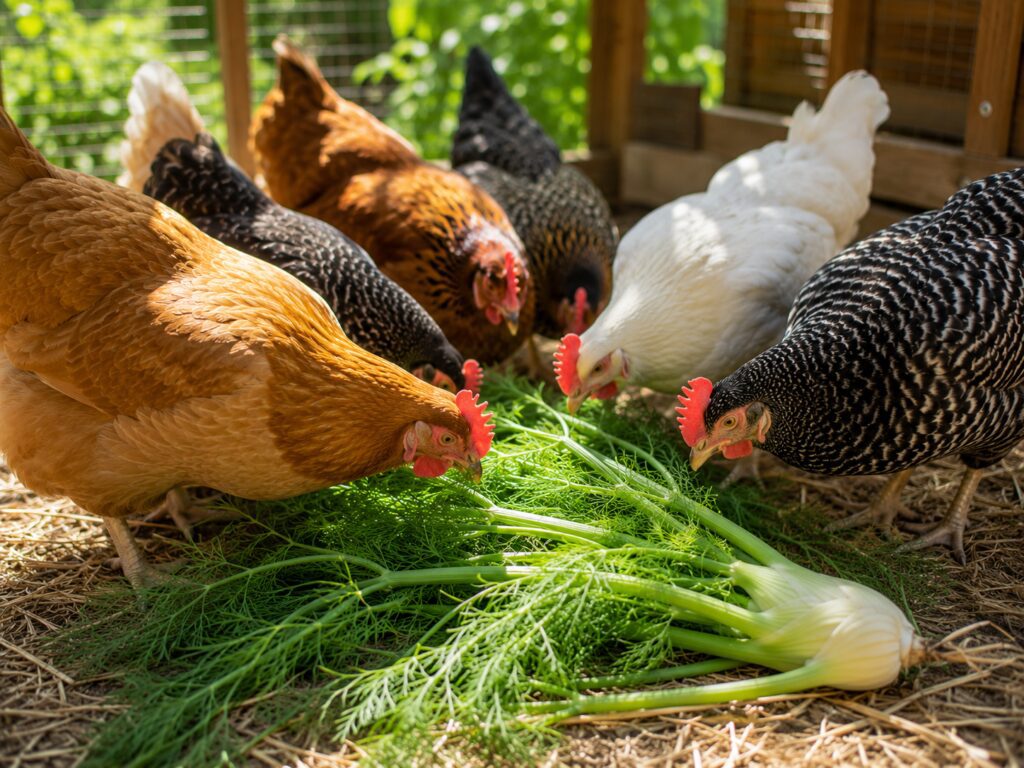
I later learned many backyard keepers use fennel because it may support digestion and encourage appetite naturally.
Even if chickens simply enjoy the texture and flavor, fennel became one of the easiest herbs for me to grow and rotate into the coop. It also grows beautifully in gardens, which is an added bonus.
5. Dandelion
One funny realization I had was that I had been removing useful plants from my yard without knowing it.
Before raising chickens, I treated dandelions like annoying weeds. But once I learned more about natural chicken care, I realized chickens absolutely love them.
The leaves, flowers, and stems all attract attention from curious hens.
Dandelions contain nutrients and provide natural enrichment because chickens enjoy tearing them apart while foraging. Now instead of pulling every dandelion from the yard, I actually leave some areas untouched for the flock.
Watching chickens forage naturally honestly feels healthier and more instinctive than simply dumping feed into a tray.
6. Rosemary
Rosemary became one of the strongest smelling herbs I added to my coop setup. The scent lasts surprisingly long, especially when fresh branches are hung near nesting boxes or doors.
I personally love rosemary because it feels clean and earthy without being overwhelming. It also dries very well, making it practical for long term use.
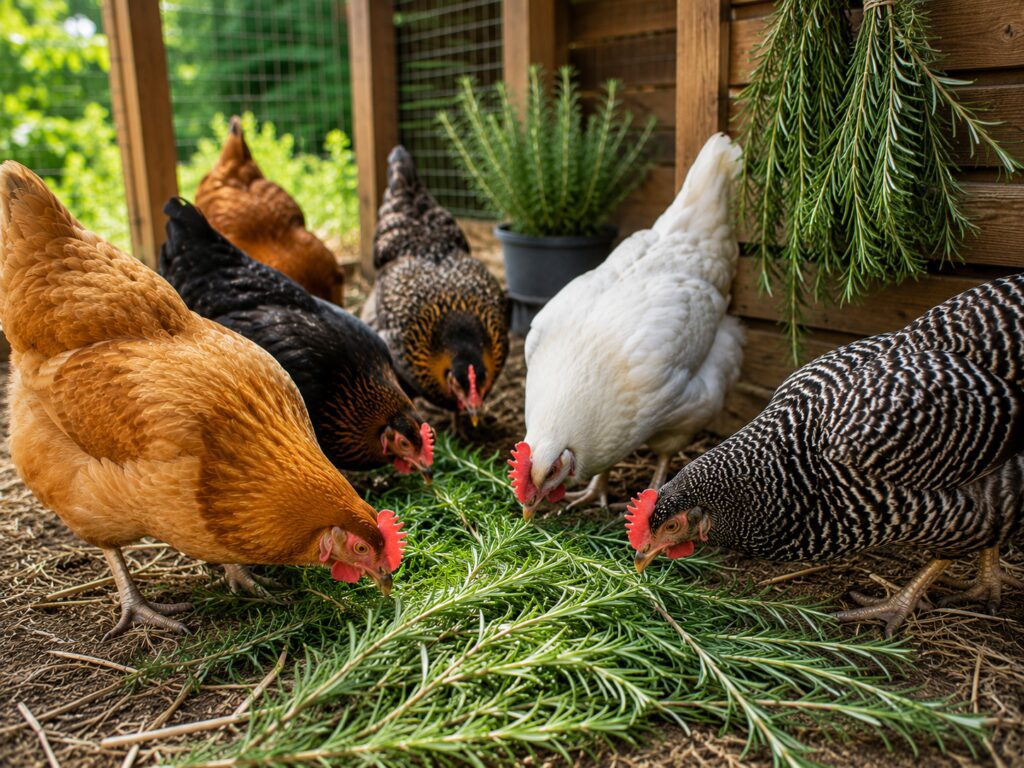
The chickens enjoy pecking around rosemary branches, although they seem more interested in scratching through them than eating large amounts. I also noticed rosemary helped the coop smell fresher between cleanings.
Small natural improvements like this really add up over time.
7. Parsley
Parsley quickly became one of the easiest herbs for me to use regularly because it grows fast and chickens seem to enjoy it consistently. I usually toss fresh bunches directly into the run area and let the flock pull at the leaves naturally.
The bright green color attracts attention immediately.
Parsley is often recommended because it contains vitamins and nutrients that may support overall health. While I still rely on balanced chicken feed as the main diet source, herbs like parsley add variety and enrichment.
The chickens seem genuinely excited whenever fresh greens appear. That excitement alone makes the effort worth it.
8. Marigold
Marigolds might be one of the prettiest additions I ever made around my chicken area. The bright orange and yellow flowers instantly make the space feel more cheerful and alive.
What surprised me most was how interested the chickens were in the petals. They peck at them gently and scratch around the plants constantly.
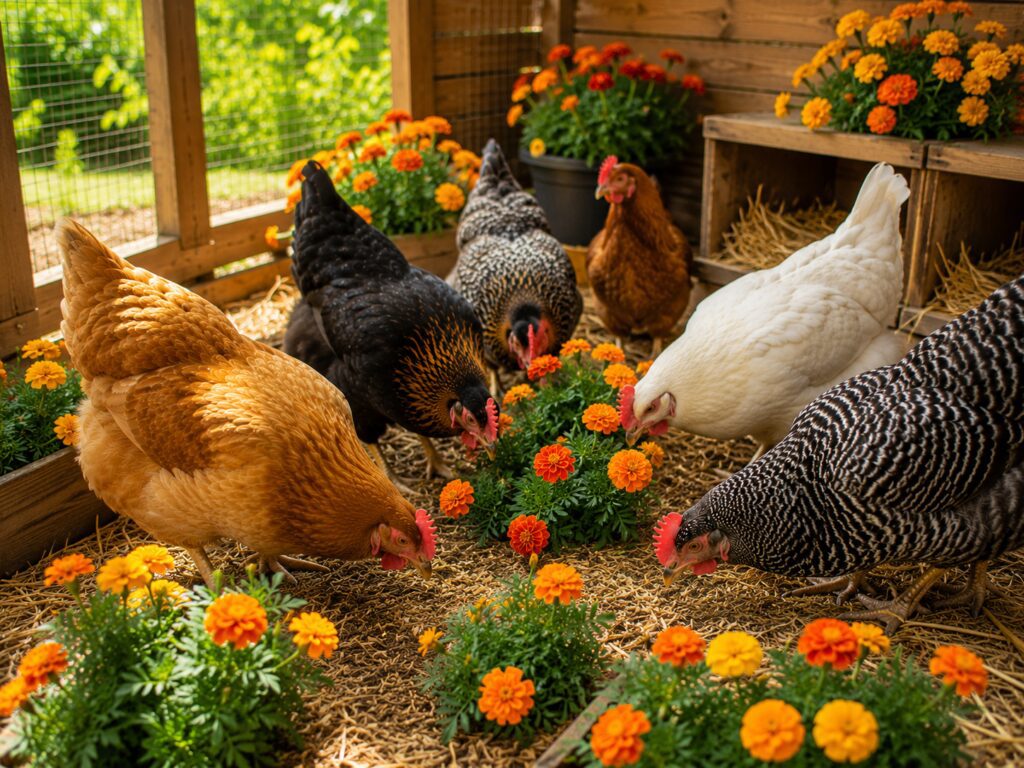
Many chicken keepers believe marigolds may help support feather condition and egg yolk color naturally because of their rich pigments. Even beyond practical benefits, marigolds simply make the coop feel happier visually.
Sometimes improving a coop is not only about function. A beautiful environment changes how both chickens and humans experience the space.
9. Marjoram
Marjoram was probably the herb I knew the least about when I first started experimenting. I planted it mainly because another chicken keeper recommended it casually during a conversation.
To my surprise, the chickens enjoyed scratching through marjoram leaves regularly. The scent is softer and sweeter than stronger herbs like rosemary or peppermint.
I found marjoram especially useful when mixed into dried herb blends for nesting boxes. The combination of herbs created a warm, earthy smell that made the coop feel cleaner and more comfortable naturally.
Now it has become part of my regular herb rotation.
The Biggest Lesson I Learned From Using Herbs
The most important thing herbs taught me was that chickens thrive when their environment feels natural and stimulating.
Backyard chickens are not machines designed only to produce eggs. They are curious animals that benefit from enrichment, fresh smells, textures, and opportunities to forage.
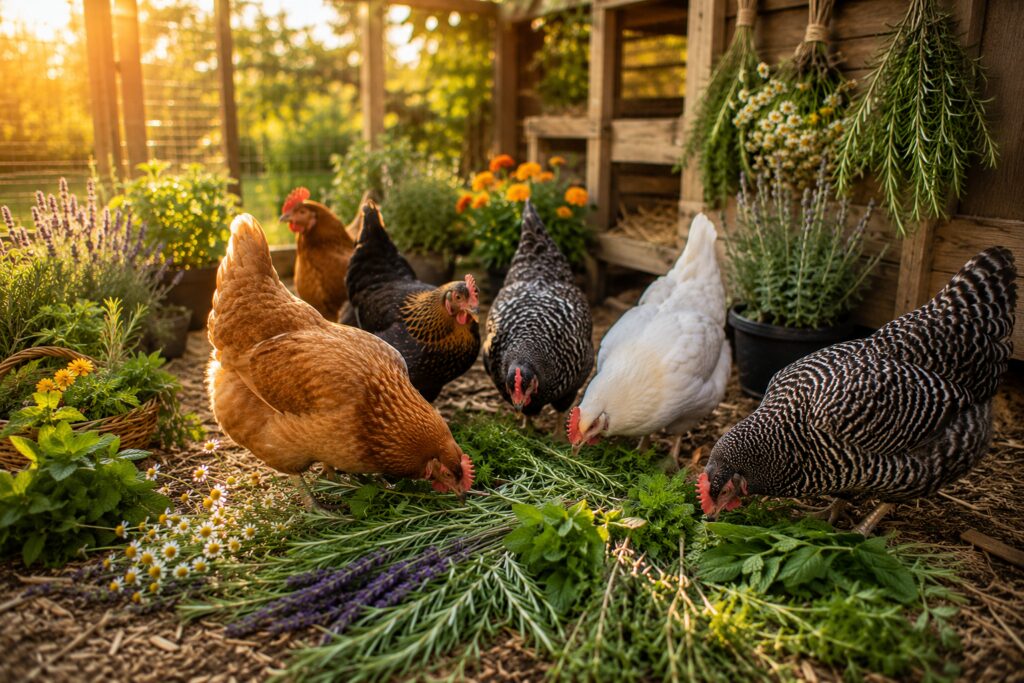
Herbs helped me stop thinking only about basic survival needs and start thinking more about overall quality of life for the flock. I also realized natural solutions often work best when combined with good habits like proper cleaning, ventilation, fresh water, and balanced nutrition.
Herbs alone will not solve every coop problem. But they absolutely improve the atmosphere in ways I did not expect.
Why I Still Use Herbs Today?
Years later, herbs are still one of my favorite parts of chicken keeping. They are affordable, easy to grow, visually beautiful, and surprisingly practical. More importantly, they create a coop environment that feels healthier and more connected to nature.
Every time I walk into the coop and smell fresh lavender, rosemary, or peppermint mixed with clean straw, the entire space feels calmer.
And honestly, I think the chickens feel it too.
That simple connection between plants, animals, and environment is probably why these traditional herb practices have lasted for generations.


