Growing tomatoes always feels exciting at the beginning of the season. I start with healthy plants, rich soil, and high hopes of picking baskets full of ripe, juicy fruit. But over time, I learned that getting a truly generous crop is not just about planting tomatoes and waiting.
If I want larger tomato harvests, I need to help the plants in smart, simple ways throughout the season.
The good news is that tomato plants respond very well to consistent care. Small actions can make a noticeable difference. A little pruning, better feeding, stronger pest prevention, and attention to soil health can all work together to improve the size, quality, and number of tomatoes I harvest.
In my own experience, the biggest improvements came when I stopped looking for one miracle trick and started using a combination of easy methods that support the plant from root to fruit.
1. Baking Soda Can Help Improve Tomato Sweetness
One simple trick I have tried in the garden is using a small amount of baking soda around tomato plants. The idea behind this method is that baking soda may slightly reduce soil acidity near the plant, which some gardeners believe can lead to sweeter tasting tomatoes.

I always use this method carefully. I never dump a large amount directly onto the roots. Instead, I sprinkle a very light amount around the base of the plant, keeping it away from the stem, and water normally afterward.
The purpose is not to dramatically change the soil overnight. It is just a small adjustment.
What I like about this method is that it is easy and inexpensive. However, I also treat it as a minor helper, not a major solution.
Baking soda alone will not create larger tomato harvests if the plant is stressed, underfed, or poorly watered. I see it as something that may improve flavor when the plant is already healthy and productive.
2. Marigolds Support Natural Pest Protection
One of the easiest companion planting habits I recommend is growing marigolds near tomatoes. I started doing this because I wanted a more natural way to reduce pest pressure without depending too heavily on sprays.

Marigolds are often planted near vegetables because they can help discourage certain pests and attract beneficial insects. Beyond that, they also make the garden look lively and colorful.
I have found that when my tomato area includes marigolds, it feels healthier and more balanced overall.
This method works best as part of a larger pest management strategy. Marigolds are not a magic shield, but they can be a helpful layer of protection.
When I combine them with regular plant inspection, good spacing, and removing damaged leaves, my tomato plants tend to stay in better shape. Healthy plants waste less energy fighting stress, which means more energy can go into fruit production.
3. Epsom Salt Can Support Healthy Growth
Epsom salt is another popular tomato gardening method, and I have used it mainly when I suspect the plants may benefit from extra magnesium. Magnesium plays an important role in plant growth because it supports chlorophyll production and helps the plant process energy.

When tomato leaves begin to look pale between the veins or growth seems weak, some gardeners turn to Epsom salt. I use it sparingly and only as a supplement, not as a routine treatment for every plant.
Usually, I dissolve a small amount in water or apply it lightly according to label guidance.
This is important because too much of any amendment can create imbalance in the soil. I have learned that more is not always better. Epsom salt can be useful when a plant truly needs magnesium support, but it should never replace a complete feeding plan.
When used wisely, it can help maintain healthy foliage, and healthy foliage supports better flowering and fruiting.
4. Pruning Directs Energy Into Better Production
Pruning is one of the most effective methods I use for larger tomato harvests. At first, I was nervous about cutting parts off a healthy plant. It felt wrong. But once I understood how tomatoes grow, pruning started to make sense.

The main reason I prune is to help the plant direct its energy more efficiently. I remove unwanted suckers on indeterminate varieties, especially the ones growing between the main stem and branches.
I also remove damaged, yellowing, or low leaves that touch the soil.
This improves airflow, reduces disease risk, and helps the plant focus more on productive growth. In my experience, a well-pruned tomato plant is easier to manage, easier to inspect, and often more productive over the season.
I do not over-prune, though. The plant still needs enough leaves to support photosynthesis and protect fruit from sun damage. The goal is balance, not stripping the plant bare.
5. Start With Rich, Well Draining Soil
Everything in tomato growing becomes easier when the soil is right. I learned early that poor soil creates weak plants, and weak plants rarely deliver a big harvest.

Tomatoes grow best in loose, fertile, well draining soil rich in organic matter. Before planting, I like to mix in compost or well-rotted organic material. This improves both nutrition and soil structure.
Roots can spread more easily, moisture stays more even, and the plant gets a stronger start.
I also pay attention to drainage. Tomatoes do not like sitting in soggy soil. Wet roots can lead to stress, disease, and slow growth. When the soil drains well and still holds enough moisture, the plant stays steady and productive.
For me, this is one of the most important foundations of a successful tomato season.
6. Give Tomatoes Full Sun Every Day
If I had to simplify tomato growing into one basic rule, it would be this: tomatoes need sunlight. No feeding trick or garden hack can fully make up for insufficient sun.
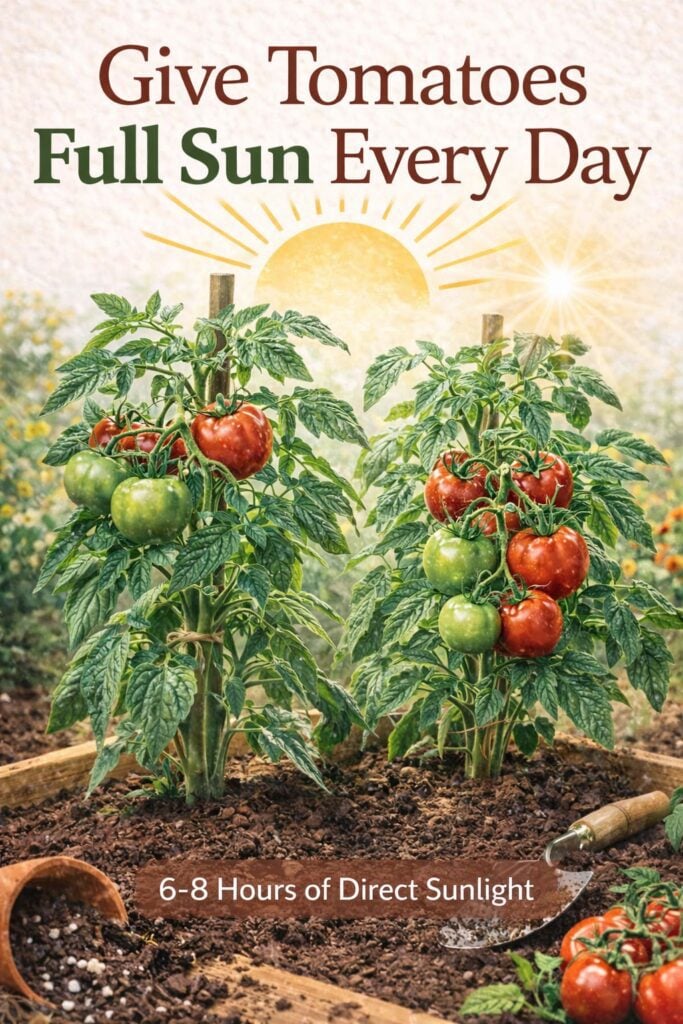
I aim to give tomato plants at least six to eight hours of direct sunlight daily, and more is usually even better. Sunlight fuels the plant’s ability to grow strong stems, healthy leaves, flowers, and fruit. Without enough light, plants often become tall, weak, and less productive.
When I choose a planting location, I think about how the sun moves across the area, not just how the spot looks in the morning. A place that seems bright for a short time may be shaded later in the day.
Once I started choosing sunnier positions more carefully, my yields improved noticeably.
7. Water Deeply and Consistently
Watering is where many tomato problems begin. I have seen plants suffer from blossom end rot, splitting fruit, and inconsistent ripening simply because watering was uneven.
I try to water deeply rather than lightly. Deep watering encourages roots to grow down into the soil, which helps the plant become stronger and more resilient. I also try to keep the schedule consistent.
Tomatoes do best when they receive steady moisture instead of swinging between very dry and very wet conditions.
When possible, I water near the base of the plant rather than overhead. This keeps the leaves drier and lowers the chance of disease. In hot weather, I check the soil more often because container tomatoes and raised beds can dry out quickly.
Consistent watering may not sound exciting, but in my experience, it is one of the most powerful habits for producing a better harvest.
8. Mulch to Protect Moisture and Soil Health
Mulching made a bigger difference in my tomato garden than I expected. Once I started doing it regularly, my plants looked less stressed, especially during hot weather.
A layer of mulch helps the soil hold moisture longer, reduces weed competition, and keeps soil from splashing onto the leaves during watering or rain. That last point matters because soil splash can spread disease organisms onto the plant.
I usually use straw, shredded leaves, or another light organic mulch. I spread it around the plant after the soil has warmed and the seedlings are established. The mulch should not be piled directly against the stem.
With mulch in place, I often find that I need to water less often, and the plants stay more stable. That steady environment helps support stronger flowering and fruit set.
9. Feed Tomatoes With Balanced Nutrition
Tomatoes are hungry plants, especially once they begin flowering and setting fruit. If I want larger tomato harvests, I cannot ignore feeding.
At planting time, I give the plants a strong start with compost and sometimes a balanced fertilizer. As the season continues, I switch to regular feeding that supports blooms and fruit development without pushing too much leafy growth.
Too much nitrogen can make the plant look lush and green while producing fewer tomatoes.
What works best for me is feeding consistently but not excessively. I watch the plant’s growth, leaf color, and flowering pattern. A tomato plant that is pale, slow, or dropping blossoms may need support.
A well-fed tomato plant grows with energy and keeps producing over a longer period.
10. Support Plants With Stakes or Cages
Tomato support is often treated like a simple convenience, but I see it as an important production tool. When plants sprawl on the ground, fruit gets dirtier, airflow decreases, and disease becomes more likely.
I like using sturdy cages, stakes, or trellises depending on the tomato type. Keeping the plant upright protects the fruit, makes pruning easier, and allows sunlight to reach more of the plant.
It also makes harvesting much simpler.
Supported plants usually stay healthier because the leaves dry faster after watering or rain, and the fruit is less likely to rot from touching wet soil. When the plant is organized and lifted, it uses space better and performs better over the season.
11. Remove Pests and Diseased Leaves Early
The longer a pest or disease problem stays in the garden, the more damage it can do. I have learned that early action matters far more than dramatic action later.
I inspect my tomato plants often, especially under the leaves and around new growth. If I spot hornworms, aphids, damaged leaves, or suspicious spots, I deal with them right away.
Sometimes that means hand-picking pests. Sometimes it means removing infected foliage. Sometimes it means improving airflow and watering habits.
The key is not to ignore early warning signs. A stressed or infected tomato plant diverts energy away from fruit production. By catching issues early, I protect the plant’s strength and give it a better chance to keep producing healthy tomatoes.
12. Harvest Often to Encourage Continued Production
One of the simplest ways I keep tomato plants productive is by harvesting regularly. When ripe tomatoes stay on the plant too long, the plant may slow down because it has already completed part of its reproductive cycle.
I check plants frequently and pick ripe fruit as soon as it is ready or nearly ready. This encourages the plant to continue flowering and setting more fruit. It also helps prevent overripe tomatoes from cracking, attracting pests, or rotting on the vine.
Regular harvesting has another benefit: I notice plant problems sooner because I am in the garden more often. The more connected I stay to the plants, the faster I respond to their needs. That steady attention is often the difference between an average season and a truly rewarding one.
Final Thoughts
When I look back on my best tomato seasons, the biggest lesson is that larger tomato harvests come from steady care, not luck. I do not rely on one trick alone.
I combine several practical methods: healthy soil, strong sunlight, careful watering, pruning, feeding, mulch, pest control, and a few extra helpers like marigolds or Epsom salt when appropriate.
That is what makes tomato growing both simple and satisfying. I do not have to be perfect. I just have to be observant, consistent, and willing to support the plant at each stage of growth.
Over time, those easy methods add up.
If you want more tomatoes this season, start with a few of these methods and apply them consistently. In my experience, even small improvements in care can lead to healthier plants, better fruit, and a much more rewarding harvest.