When I first explored regenerative gardening methods, I realized I wanted something more efficient than traditional raised beds.
I wanted a design that improved soil health, reduced watering, and reused natural materials from my own land. That is when I built my circular hugelkultur garden bed with a compost core.
Understanding the Circular Design
The circular design was the foundation of the entire system. Instead of building a straight rectangular bed, I chose a round shape divided into sections. The outer edge is lined with short wooden logs placed vertically to form a natural retaining wall.
This wooden border keeps the soil contained while giving the bed a rustic appearance. I used untreated branches cut to similar lengths so they would sit evenly around the perimeter.
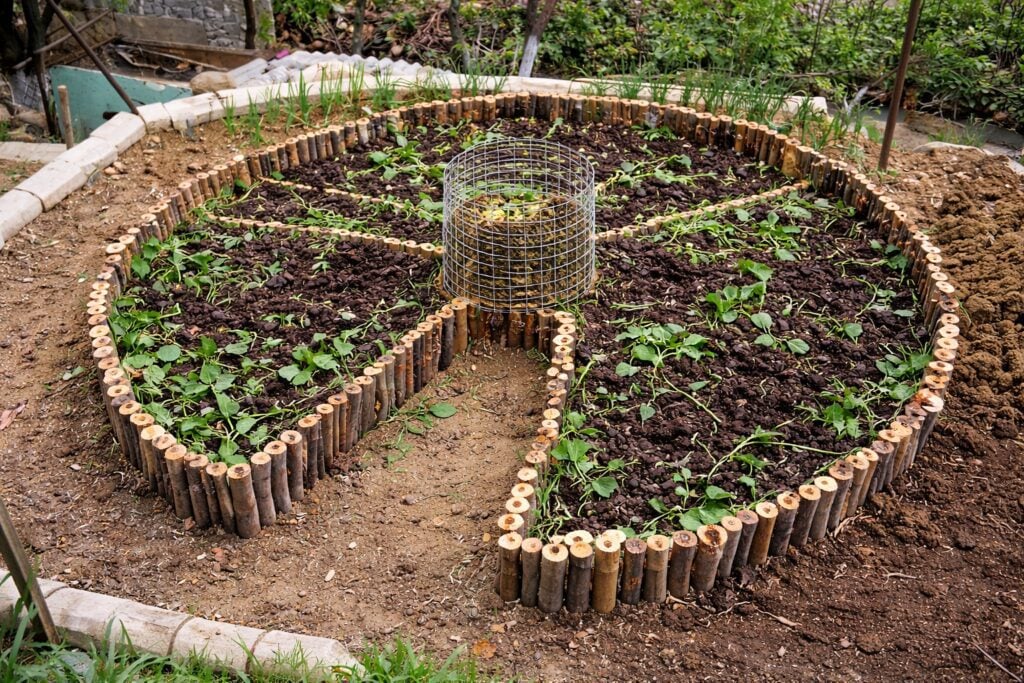
The result is sturdy and environmentally friendly.
The circle also creates equal access from all sides. I can walk around the bed easily and reach every section without stepping inside. This protects the soil structure and keeps it from becoming compacted.
In my experience, the circular hugelkultur garden bed feels more natural, almost like a small ecosystem rather than just a planting area.
Building the Outer Structure
The outer structure was the first physical step I completed. I measured the diameter carefully and marked the circular outline on the ground. Then I dug a shallow trench along that line.
Placing the short wooden logs upright inside the trench gave the bed its shape and strength. I packed soil tightly around the base of each log to secure them in place.
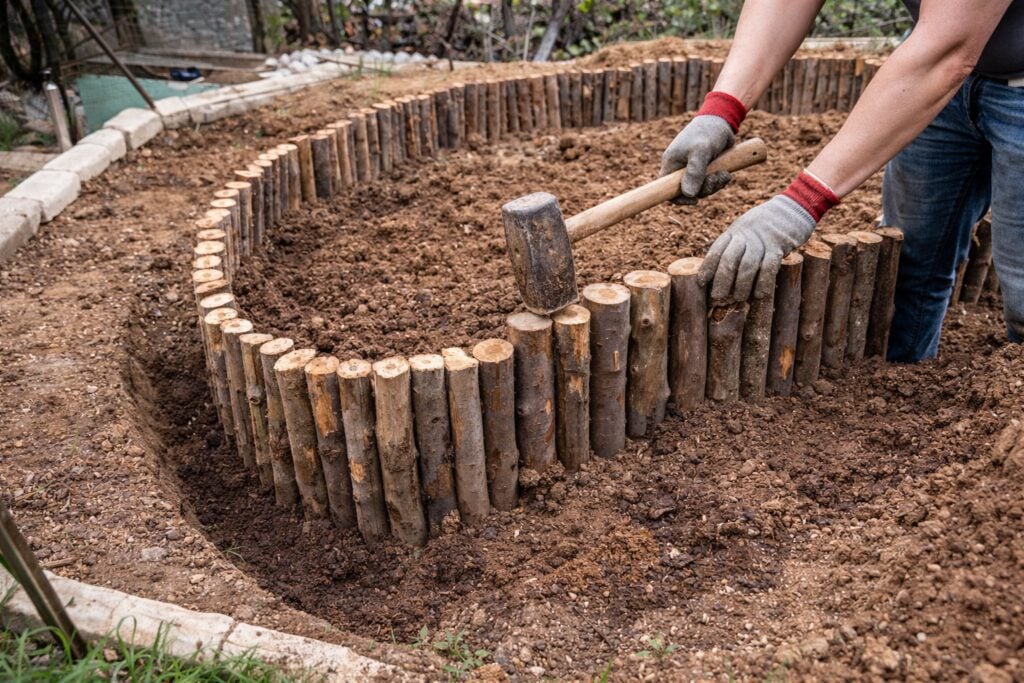
Over time, as the wood slowly decomposes, it will contribute organic matter to the soil.
The wooden wall is not only decorative. It prevents erosion and keeps the internal layers stable. Because hugelkultur beds can settle as materials decompose, having a strong outer boundary helps maintain structure.
From my experience, using natural materials for the frame made the entire bed feel integrated into the landscape.
Installing the Compost Core in the Center
The compost core is the most important feature of this design. In the middle of the circle, I installed a wire mesh cylinder that acts as a compost basket.
This central core is where I add kitchen scraps, green waste, and plant trimmings.
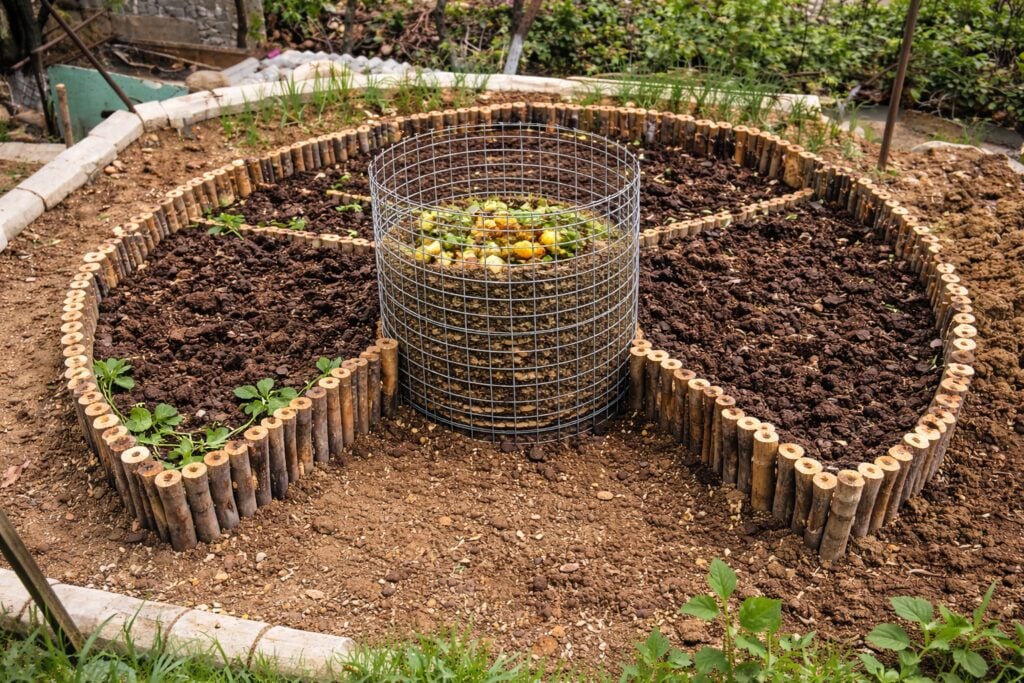
The idea is simple but powerful. As the compost breaks down, nutrients seep outward into the surrounding soil. Every plant in the bed benefits from this constant supply of organic matter.
I positioned the compost basket securely in the center before filling the rest of the bed. It needed to stand upright and stable because it would be filled regularly.
From my experience, this compost core dramatically reduces the need for external fertilizer. It becomes a living nutrient generator right in the heart of the garden.
Layering Wood for Hugelkultur Benefits
After the structure and compost core were in place, I began layering wood inside the bed. In the lower image, you can see logs and branches laid across the base.
These logs form the hugelkultur foundation. Larger pieces go at the bottom, while smaller branches fill gaps. The wood acts as a sponge, absorbing moisture during rainy periods and slowly releasing it during dry spells.
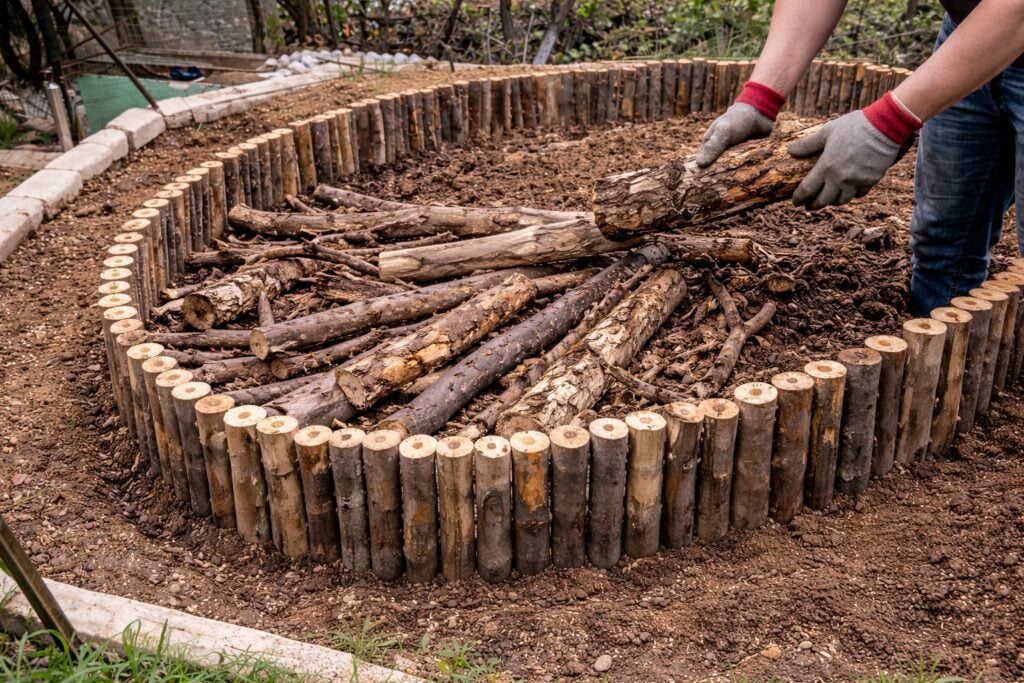
This moisture retention has been one of the biggest advantages for me. I noticed I needed to water far less frequently compared to traditional beds.
The decomposing wood also feeds soil microorganisms, creating a rich underground ecosystem. The combination of compost core and buried wood creates a powerful fertility system.
Adding Organic Matter and Soil
Once the wood layer was complete, I added green materials like fresh plant cuttings and grass clippings. These nitrogen rich materials help balance the carbon heavy wood underneath.
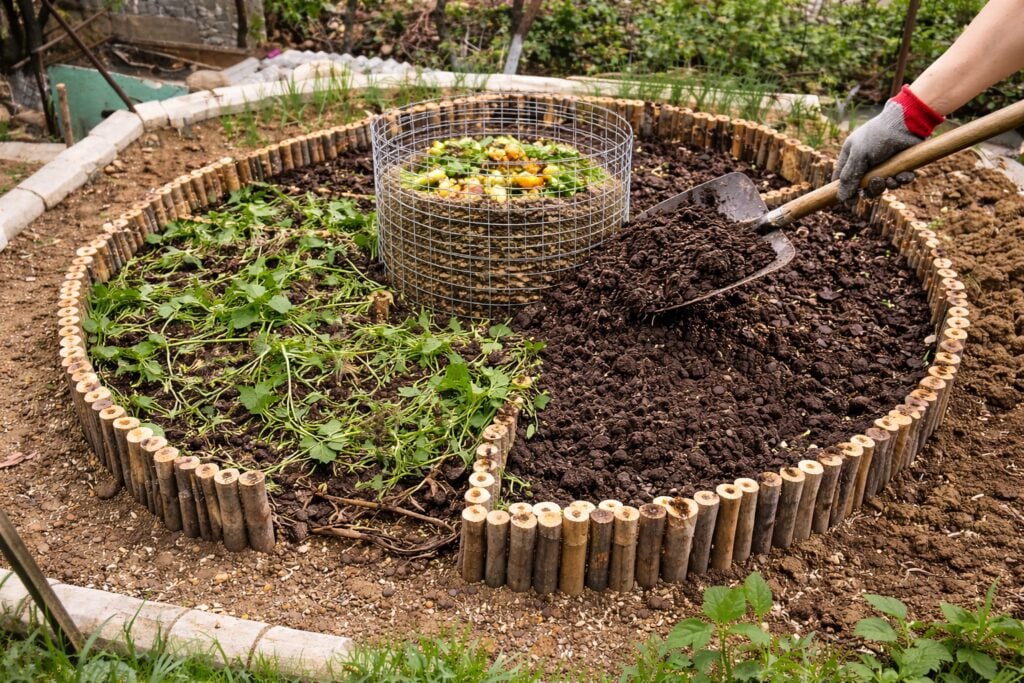
After that, I covered everything with a thick layer of soil mixed with compost. The top layer must be deep enough to support plant roots. I made sure the soil was evenly distributed across each section of the circle.
In the top image, you can see the bed fully assembled with soil and organic matter covering the internal layers. The surface looks rich and dark, ready for planting.
From my experience, the layering process is where the system truly comes together. Each layer has a purpose and works with the others.
Dividing the Bed Into Sections
One design element I found especially helpful was dividing the circle into smaller sections. These internal dividers allow me to rotate crops more easily and manage planting zones.
Each section can host different vegetables or herbs depending on the season. For example, I might plant leafy greens in one segment and root vegetables in another.
The sections also make maintenance easier. I can focus on one area at a time without disturbing the entire bed.
In my experience, this segmented layout improves organization and productivity.
What Happens Beneath the Surface?
The most fascinating part of the circular hugelkultur garden bed is what happens underground. Beneath the soil, the wood slowly decomposes. Fungi colonize the logs and begin breaking down fibers into nutrients.
The compost core releases beneficial microbes and organic compounds that spread outward. Earthworms move through the layers, aerating the soil naturally.
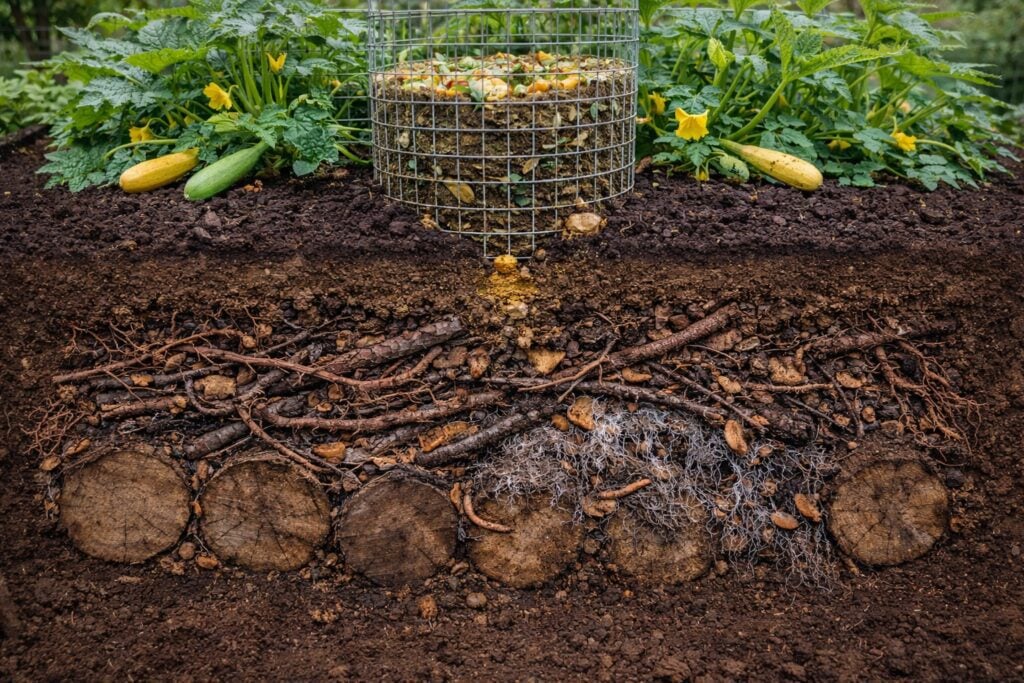
This underground activity creates a living soil system. Instead of relying on synthetic inputs, the bed becomes self sustaining over time.
I noticed that after one full season, the soil texture improved dramatically. It became softer, darker, and more crumbly. Water penetrated more easily, and roots grew deeper.
Planting and Watching It Thrive
After completing the build, I planted vegetables across the circular sections. Within weeks, I noticed strong growth and vibrant green leaves.
The compost core continuously fed the soil, while the buried wood stabilized moisture levels.
Even during hot periods, the plants showed fewer signs of stress. The circular layout also makes harvesting enjoyable. I simply walk around the bed and collect produce from every angle.
From my experience, yields improved noticeably. The plants looked healthier and required less intervention.
Long Term Benefits I Experienced
Over time, the circular hugelkultur garden bed became more productive each season. The wood decomposed gradually, enriching the soil from below.
I experienced several clear benefits:
- Improved soil fertility
- Reduced watering needs
- Better moisture retention
- Less reliance on chemical fertilizers
- Efficient use of yard waste
The compost core minimized food waste by turning scraps into nutrients. Instead of discarding organic matter, I fed it back into the system.
This closed loop approach made my garden feel more sustainable and resilient.
Challenges and Lessons Learned
Every project has learning moments, and this one was no different. One challenge I faced was ensuring proper balance between carbon and nitrogen materials. Too much wood without enough green matter can slow decomposition.
I learned to layer carefully and water thoroughly during the initial build. Moisture helps activate microbial activity.
Another lesson was to build the bed slightly higher than desired because settling naturally occurs over time. From my experience, patience is key. Hugelkultur systems improve with age.
Why I Recommend This Design?
Building a circular hugelkultur garden bed with a compost core has been one of the most rewarding gardening decisions I have made. It combines intelligent design with natural processes.
The circular shape maximizes accessibility. The wooden border adds stability and beauty. The buried wood provides moisture control. The compost core delivers continuous nutrients.
All of these elements work together to create a thriving ecosystem.
If you are looking for a sustainable way to boost soil fertility and increase harvest yields, I strongly recommend trying this design. From my own hands on experience, it transforms organic waste into abundant growth and builds healthier soil year after year.