When it comes to gardening, space can often be a limitation. As much as we’d love to have vast fields to grow everything we need, many of us are limited to smaller backyards or even just balcony spaces.
Fortunately, there’s a solution to this problem when it comes to growing potatoes: Potato Towers. This simple yet highly effective method lets you grow more potatoes in a fraction of the space you’d normally need.
It’s a great way to maximize your garden’s potential, especially if you’re dealing with limited space.
1. The Setup: Laying the Foundation for Your Potato Tower
The first step in growing potatoes using the tower method is to create the structure. You can buy pre-made towers, but it’s very easy to make your own using simple materials you probably already have on hand.
To start, you’ll need a wire mesh cylinder; something like a cattle panel or hardware cloth works well. The size of the tower can vary depending on how much space you have, but aim for a cylinder that’s about 2-3 feet tall.

The key is to have it wide enough to allow space for the potatoes to spread out as they grow vertically.
Place your tower in a sunny spot where your potatoes can get plenty of light. It’s important to remember that potatoes need at least six hours of sunlight a day, so choose your location carefully.
I usually go for an area that gets a good mix of sun but is also shielded from strong winds that might damage the tower.
2. Layering: Building Up Your Potatoes
Once the tower is set up, it’s time to add the base soil and seed potatoes. Start by layering a few inches of well-drained soil at the bottom of the tower.
I typically use a mix of garden soil and compost to ensure the soil has enough nutrients for the potatoes. This layer acts as a foundation and provides the first bit of space for your seed potatoes.
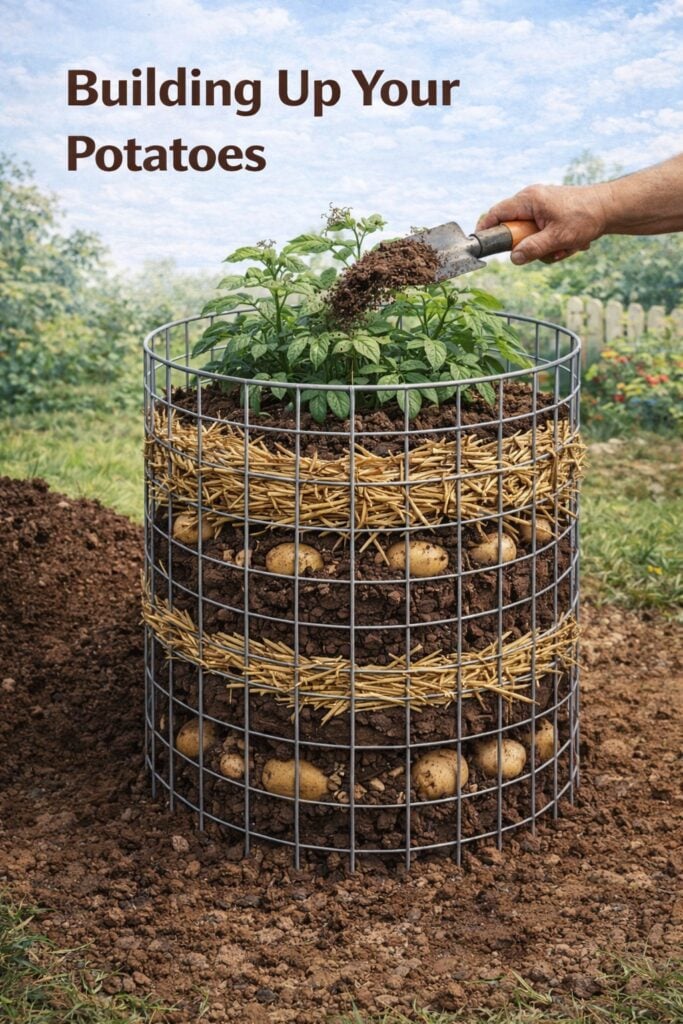
Next, place the seed potatoes on top of the soil. It’s important to space them out evenly to ensure each one has room to grow. When I’m planting, I place around 3-4 seed potatoes in the tower, making sure they’re about 6-8 inches apart.
The next step is where the magic happens: layering. As the potato plants begin to grow, you’ll need to continue adding straw and soil on top. With every few inches of plant growth, cover the stems with more straw and soil.
This method encourages the potatoes to sprout and grow along the buried stems. As the plants grow taller, continue adding more layers until the tower is nearly full.
One of the great things about potato towers is that the more you build upwards, the more potatoes you can grow in the same amount of space. The vertical growth means you’ll have potatoes at various levels in the tower.
3. Growth & Yield: How Vertical Growth Leads to More Potatoes
As you continue adding layers of soil and straw, you’ll begin to notice the potato plants growing taller. What’s exciting about this method is the ability to grow potatoes vertically.
Normally, potatoes spread out beneath the ground, but with a tower, the growth goes upward, utilizing space that would otherwise remain empty.

The vertical growth doesn’t just make the most of limited space; it also means you can harvest more potatoes than you might think. In fact, for every foot of vertical growth, you’re likely to harvest several pounds of potatoes.
The layers of soil and straw keep the potatoes from touching the ground directly, reducing the risk of pests and diseases that are often associated with traditional in-ground potato growing.
4. The Harvest: Easy Harvest without the Digging
The best part of using a potato tower is the easy harvest. One of the challenges with growing potatoes the traditional way is the digging involved. It’s time-consuming and can be frustrating if you end up damaging the potatoes in the process.
With a potato tower, harvesting is as simple as unrolling the sides of the tower and pulling out the mature potatoes.
When the plants begin to die back, you’ll know it’s time to harvest. This usually happens in late summer or early fall, depending on when you planted.

Gently remove the wire mesh from around the tower, and you’ll find a bounty of potatoes waiting for you. The beauty of this method is that you don’t need to dig into the soil, which means you won’t risk damaging your crops.
Simply pull out the potatoes from the layers of soil and straw. It’s like opening a treasure chest! You’ll find potatoes at different heights in the tower, all ready to be washed and stored.
Plus, since the tower keeps everything contained, it’s a lot easier to collect your harvest without making a mess.
5. Potato Tower Tips and Tricks for Maximum Success

While the potato tower method is relatively simple, here are a few tips to ensure you get the best results:
- Watering: Potatoes need consistent moisture, so make sure you water your tower regularly. Be careful not to overwater, as too much moisture can cause rot. I find that watering deeply once a week is usually enough.
- Pest Control: Since the potatoes are elevated off the ground, they are less likely to be bothered by pests like slugs and beetles. However, keep an eye on your plants for any signs of pest damage and take action quickly if needed.
- Soil Quality: Use nutrient-rich soil and compost to encourage healthy growth. Potatoes are heavy feeders, and they thrive in well-fertilized soil.
- Rotation: It’s a good idea to rotate your potato tower annually to avoid soil depletion and disease buildup. Use fresh soil and compost for each new batch of potatoes.
- Space: If you don’t have a large yard, you can grow several towers in the same space. The vertical growth allows for multiple towers to fit in tight spots, which is perfect for urban gardens or smaller yards.
Why Potato Towers are a Game-Changer for Small Gardens?
If you’re working with limited space but still want to grow your own potatoes, potato towers are a great solution. Not only do they maximize your garden’s potential, but they also make harvesting a breeze.
By growing your potatoes vertically, you’ll have a more abundant crop in less space, and you won’t need to do any digging at the end of the season.
Whether you’re a seasoned gardener or a beginner, this method is simple, effective, and rewarding.