For years, I kept hearing that Lamb’s Ear was an aggressive plant that would quickly take over the garden. I almost removed mine because of those warnings.
Instead, I decided to leave it and see what happened. That choice completely changed my perspective.
Rather than becoming a problem, Lamb’s Ear turned out to be one of the most rewarding plants in my garden, attracting pollinators and supporting a healthier garden ecosystem.
What Is Lamb’s Ear?
Before exploring its benefits, it’s worth getting to know Lamb’s Ear. Known scientifically as Stachys byzantina, this hardy perennial is loved for its soft, silver-gray leaves that feel just like a lamb’s ear.

While many gardeners grow it for its unique foliage and drought tolerance, its true value often appears when it blooms.
In late spring and summer, its flower spikes become a rich source of nectar, attracting bees, butterflies, and other important pollinators.
The Myth That Lamb’s Ear Takes Over Garden Beds
One of the most common criticisms I hear is that Lamb’s Ear spreads aggressively and overruns nearby plants. My experience has been very different.
While Lamb’s Ear certainly spreads outward, I would describe it as manageable rather than invasive. Like many ground-cover plants, it gradually expands over time.

However, it is easy to control by simply dividing or trimming sections when needed.
In my garden, it never overwhelmed neighboring perennials. Instead, it formed attractive clusters that helped suppress weeds and fill empty spaces. I think the myth comes from gardeners who mistake natural spreading behavior for invasiveness.
There is a major difference between a plant that grows enthusiastically and a plant that becomes uncontrollable. Lamb’s Ear belongs firmly in the first category.
The Flower Spikes Changed Everything
The moment that changed my opinion came during its blooming season. For most of the year, people focus on the silver foliage. But once the flower spikes emerge, the plant becomes a magnet for wildlife.
I remember walking through the garden one summer morning and noticing constant movement around the flowers. Bees were visiting one after another.
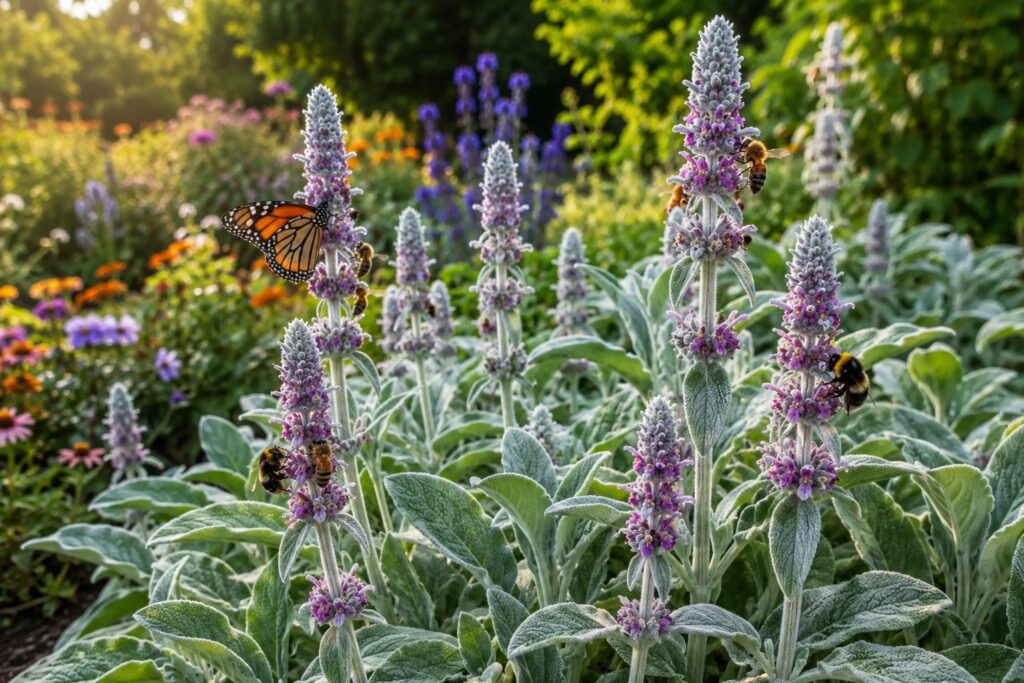
Butterflies occasionally stopped by.
Various beneficial insects explored the blooms throughout the day. The activity was impossible to ignore. Suddenly, I realized that Lamb’s Ear was contributing far more to the garden than simply looking attractive. It was actively supporting pollinator populations.
Why Pollinators Love Lamb’s Ear?
Watching pollinators interact with the flowers taught me a lot about the value of this plant. The tall flower spikes produce numerous small blooms that contain nectar and pollen.
These resources attract a wide range of beneficial insects.
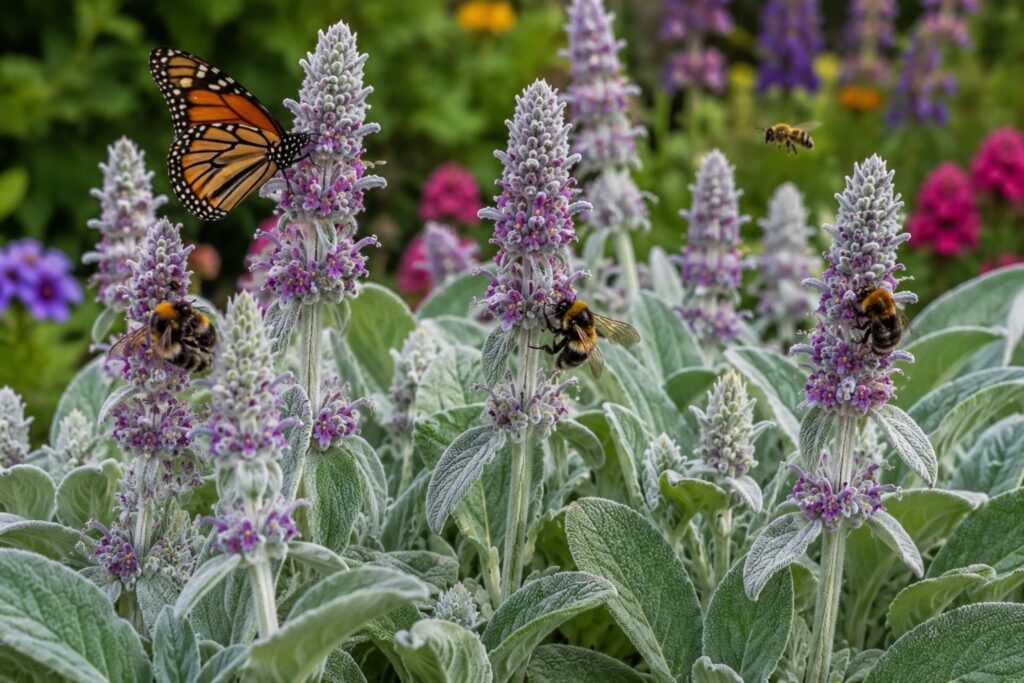
When Lamb’s Ear blooms, it quickly becomes a favorite stop for pollinators. Its tall flower spikes produce plenty of nectar and pollen, attracting bees, butterflies, and other beneficial insects throughout the day.
What starts as a beautiful foliage plant soon turns into a busy feeding station, helping support pollinators when they need it most during the growing season.
1. Bees Visit Constantly
The most frequent visitors in my garden are bees. Honeybees, bumblebees, and native solitary bees seem particularly attracted to Lamb’s Ear flowers.
On warm summer days, it is common for me to see multiple bees working the flower spikes simultaneously. This steady activity highlights how valuable the plant can be as a food source.
2. Butterflies Benefit Too
Butterflies also love Lamb’s Ear. While they may not stay as long as bees, they regularly stop to feed on the nectar during the growing season. Their visits help with pollination while adding color and movement to the garden.
It’s a simple reminder that Lamb’s Ear is more than an attractive plant; it also creates a welcoming habitat for beneficial pollinators.
3. Beneficial Insects Thrive
Many gardeners focus only on bees and butterflies, but countless other beneficial insects also play important roles. Hoverflies, predatory wasps, and various pollinating insects can all benefit from nectar-producing flowers.
Supporting these insects helps create a balanced ecosystem that naturally assists with pest control.
How Pollinators Help the Rest of the Garden?
One of the biggest benefits of growing Lamb’s Ear is the positive impact it has on the rest of the garden. By attracting bees, butterflies, and other pollinators, it helps improve pollination for nearby fruits, vegetables, and flowering plants.
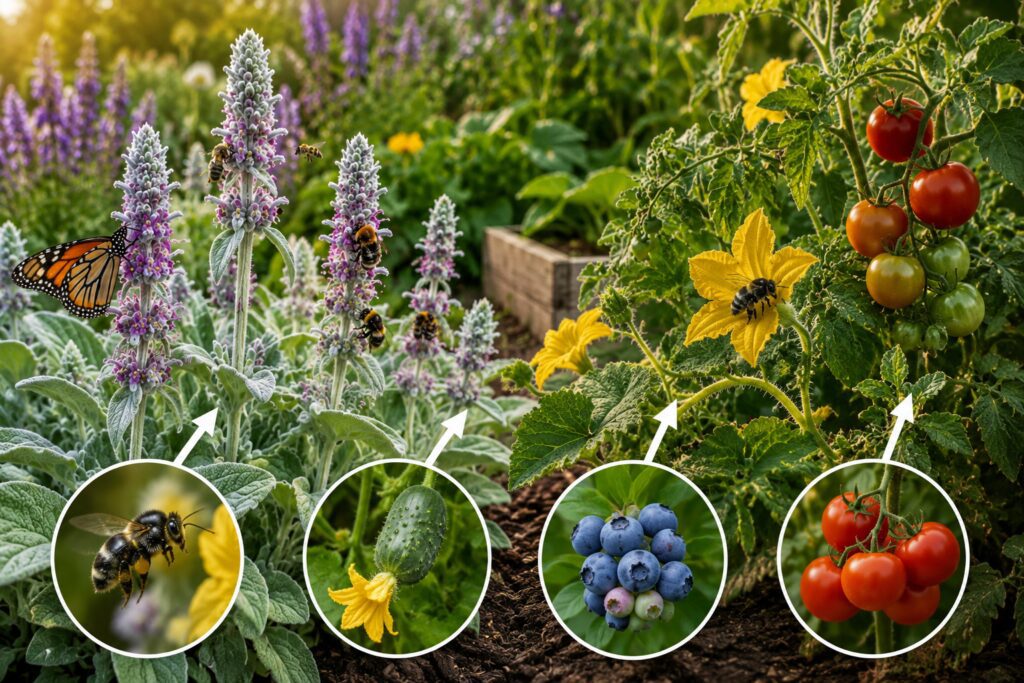
Since adding it to my garden, I’ve noticed more beneficial insect activity and healthier, more productive plants, making the entire garden feel more balanced and alive.
1. Better Fruit Production
One of the greatest benefits of attracting pollinators is better fruit production. Bees and other beneficial insects transfer pollen between flowers, helping many fruit crops develop more successfully.
With more pollinators in the garden, plants often produce larger, healthier, and more consistent harvests.
Supporting these helpful visitors is a simple way to boost the productivity of your entire garden.
2. Improved Vegetable Yields
Pollinators also play an important role in growing healthy vegetables. Crops like cucumbers, squash, pumpkins, and melons rely on bees and other beneficial insects to transfer pollen between flowers.
By planting pollinator-friendly plants like Lamb’s Ear, you help support these insects, leading to better pollination, healthier plants, and more productive vegetable harvests throughout the season.
3. Increased Biodiversity
One of the greatest benefits of planting Lamb’s Ear is the boost it gives to garden biodiversity. By attracting bees, butterflies, and other beneficial insects, it helps create a healthier ecosystem that also supports birds and other wildlife.
A diverse garden is often more resilient, with different species working together to improve pollination, natural pest control, and overall garden health.
The Beauty of the Silver Foliage
Even when it’s not in bloom, Lamb’s Ear is a standout garden plant. Its soft, silver-gray leaves create beautiful contrast with green foliage and colorful flowers, adding texture and brightness to planting beds.
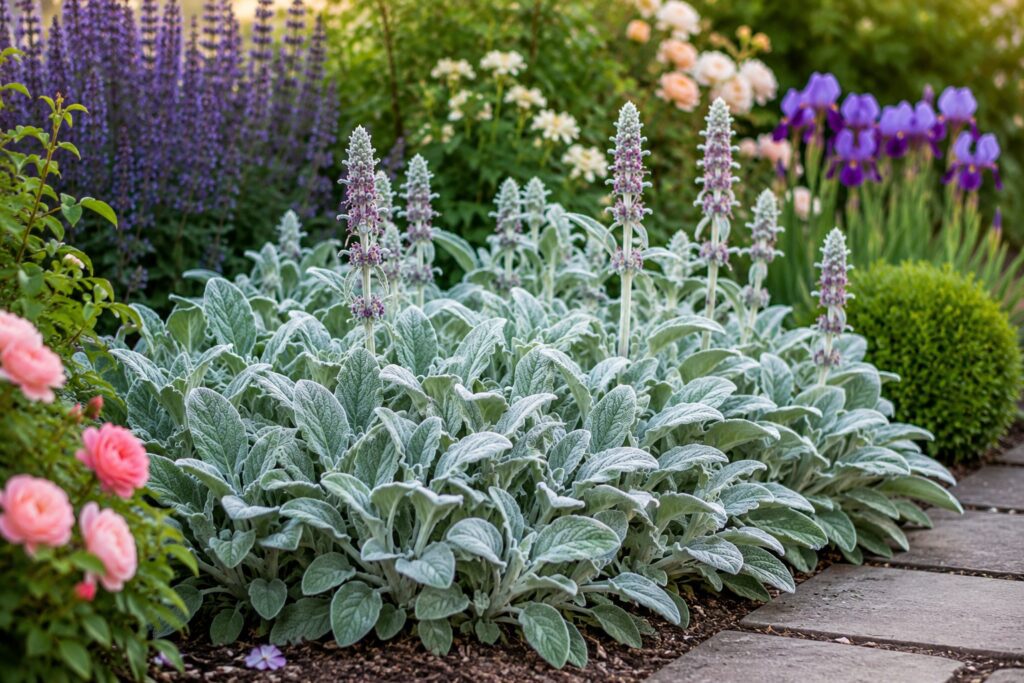
I love using it along borders and pathways, where its velvety foliage stays attractive for most of the growing season, providing lasting beauty even after many flowers have faded.
Why Lamb’s Ear Is Easy to Grow?
One of the best things about Lamb’s Ear is how easy it is to grow. Once established, it needs very little care and often thrives when left alone.
Its soft, fuzzy leaves help retain moisture, making it surprisingly drought tolerant, while occasional trimming is usually all that’s needed to keep it looking its best.
For beginners and experienced gardeners alike, it’s a reliable plant that offers lasting beauty with minimal effort.
1. Drought Tolerant
Once established, Lamb’s Ear is surprisingly drought tolerant. Its soft, fuzzy leaves help reduce moisture loss, allowing the plant to stay healthy even during hot, dry weather.
While other plants may struggle in the heat, Lamb’s Ear often continues to look attractive with very little watering, making it an excellent choice for low-maintenance and water-wise gardens.
2. Low Maintenance
One of the biggest reasons I love Lamb’s Ear is how little maintenance it needs. Once established, it mostly takes care of itself with very little watering or attention.
Aside from occasional trimming and dividing every few years, it stays healthy and attractive on its own, making it a perfect choice for gardeners who want beautiful plants without the extra work.
3. Adaptable
One of the best things about Lamb’s Ear is its versatility. It fits beautifully into cottage gardens, pollinator gardens, rock gardens, and traditional landscape beds.
Its soft, silver foliage pairs well with colorful flowers and green plants, making it easy to include in almost any garden design.
As long as the soil drains well and the plant gets plenty of sun, it thrives with very little effort.
Common Mistakes Gardeners Make
Although Lamb’s Ear is easy to grow, a few mistakes can limit its performance. Poor drainage can cause rot, and removing flower spikes too early reduces its value for pollinators.
Some gardeners also remove it too quickly, thinking it will spread too much. With good drainage, light maintenance, and allowing it to bloom, it remains a simple and rewarding plant.
1. Planting in Poorly Drained Soil
One of the most common problems with Lamb’s Ear is too much moisture. While it is drought tolerant, it struggles in soil that stays wet for too long, which can lead to root rot and poor growth.
In my experience, it performs best in well-drained soil where excess water can quickly move away from the roots, helping the plant stay healthy and maintain its attractive silver foliage.
2. Removing Flower Spikes Too Early
Some gardeners remove flower spikes as soon as they appear because they prefer the foliage alone. While this is a matter of personal preference, doing so eliminates one of the plant’s greatest ecological benefits.
Allowing the flowers to bloom gives pollinators access to valuable nectar and pollen.
3. Assuming It Is Invasive
Many gardeners mistakenly think Lamb’s Ear is invasive and remove it too quickly. In reality, it spreads slowly and is easy to control with occasional trimming or division.
It doesn’t overwhelm other plants but instead fills gaps, suppresses weeds, and supports pollinators. With a little maintenance, it proves to be a reliable and valuable ground cover in the garden.
Why I Continue Growing Lamb’s Ear?
After years of growing Lamb’s Ear, I can’t imagine my garden without it. It brings beauty, texture, drought tolerance, and real ecological value in one plant.
Each summer, its flower spikes attract bees and other pollinators, turning the garden into a lively, active space. It’s a reminder that a great garden is not just about plants, but about supporting the life that depends on them.
Final Thoughts
The idea that Lamb’s Ear should be removed just because it spreads is one of the most common gardening misconceptions. While it does slowly expand, it is easy to manage and offers far more benefits than drawbacks, from its striking silver foliage to its value for pollinators.
My biggest takeaway is simple: instead of acting on assumptions, it’s worth observing how a plant actually behaves.
In the case of Lamb’s Ear, that patience reveals a highly valuable, pollinator-friendly addition to the garden.