
I used to throw banana peels straight into the trash without thinking twice about them. Like many people, I saw them as useless kitchen waste. But after learning how beneficial banana peels can be for plants, I completely changed the way I garden.
What surprised me most was how simple and effective banana peel fertilizer actually is.
At first, I was skeptical.
I had already tried several store bought fertilizers, and while some worked well, they were expensive and sometimes too harsh for certain plants.
I wanted something natural, affordable, and easy to make at home. That was when I discovered banana peel fertilizer.
After testing it in my own garden for several weeks, I started noticing healthier leaves, stronger stems, and more vibrant growth. Some plants even began flowering more consistently.
The best part was that I was creating nutrient rich fertilizer using scraps that would normally end up in the garbage.
Why Banana Peels Are Surprisingly Powerful for Plants?
One thing I learned very quickly is that banana peels contain nutrients plants genuinely love. Most gardeners know bananas are rich in potassium for humans, but the same applies to plants as well.
Banana peels naturally contain potassium, phosphorus, calcium, magnesium, and small amounts of nitrogen.
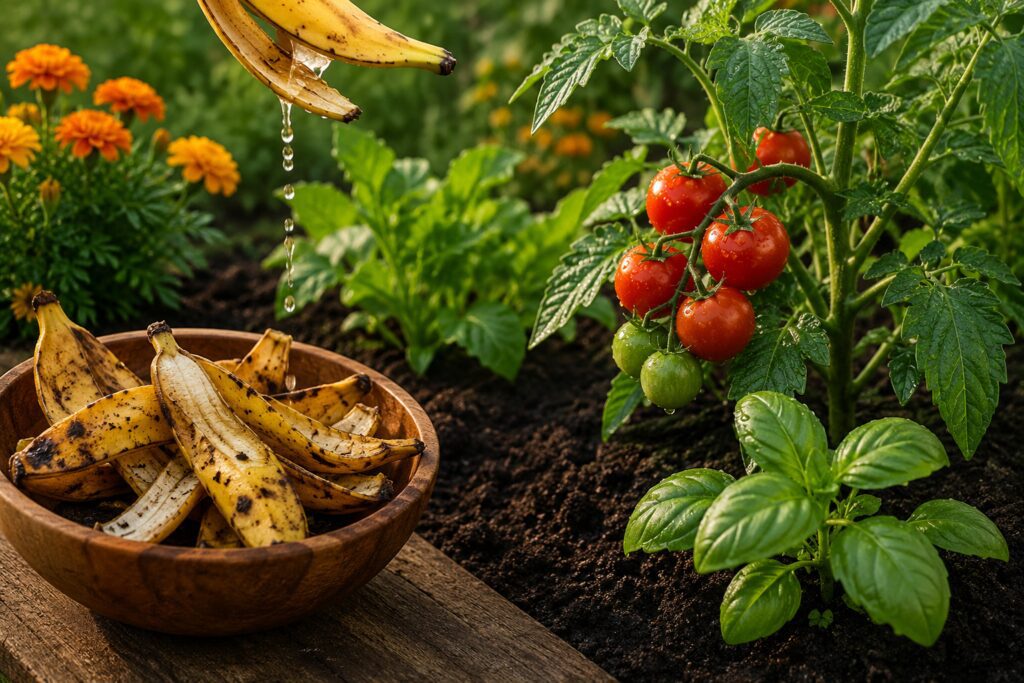
These nutrients support plant growth in several important ways. Potassium helps strengthen plant cells and improve flowering and fruit production. Phosphorus supports healthy roots, while calcium contributes to stronger overall plant structure.
When I first started using banana peel fertilizer, I noticed that flowering plants seemed especially responsive.
My tomatoes produced healthier blooms, and my roses looked brighter and fuller than before.
What I liked most was that the fertilizer felt gentle and natural.
Unlike some chemical fertilizers that can overwhelm plants if overused, banana peel fertilizer provides nutrients more gradually.
The First Time I Made Banana Peel Fertilizer
The first batch I made was incredibly simple. I followed a basic soaking method that required almost no special equipment.
I started by collecting banana peels over several days. Both fresh and overripe peels worked perfectly fine.
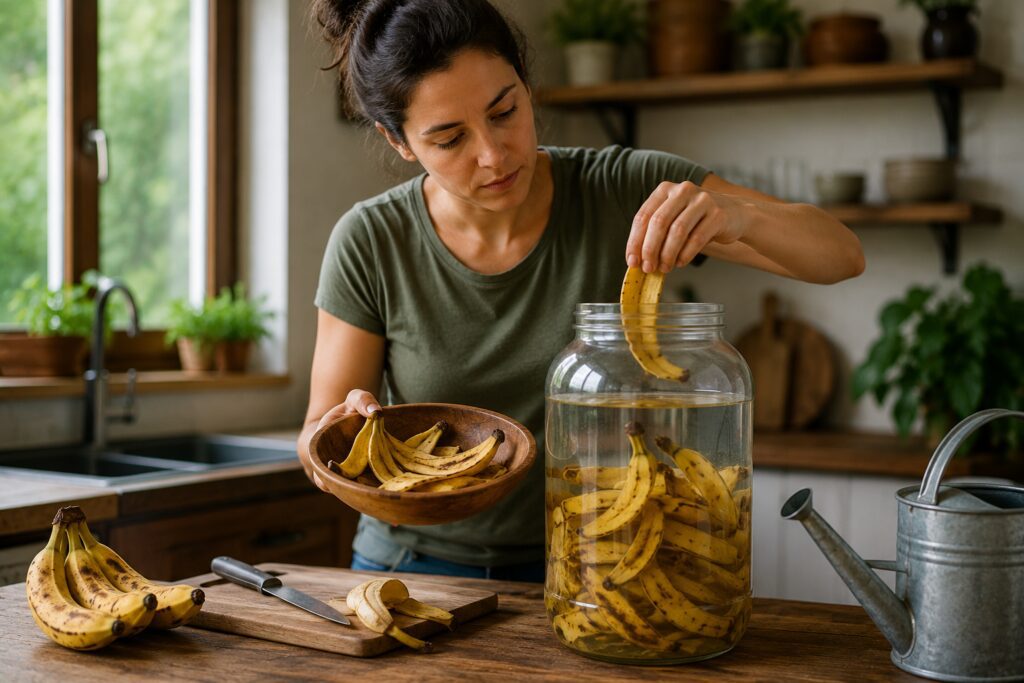
Instead of throwing them away, I stored them in a container in the kitchen until I had enough.
Next, I placed the peels into a large bottle and filled it with water. I made sure the peels were fully submerged because exposed pieces can sometimes develop mold faster.
Then came the waiting period.
I allowed the mixture to steep for around 48 hours. During this time, the water slowly absorbed nutrients from the banana peels and turned darker in color.
By the end of the second day, the liquid had developed a mild earthy smell. It did not smell rotten or unpleasant like I initially feared. In fact, it reminded me of compost tea.
Why Steeping Banana Peels in Water Works So Well?
At first, I wondered why soaking peels in water would make such a difference. After researching further, the process made much more sense.
Water acts as a carrier that pulls soluble nutrients from the banana peels.
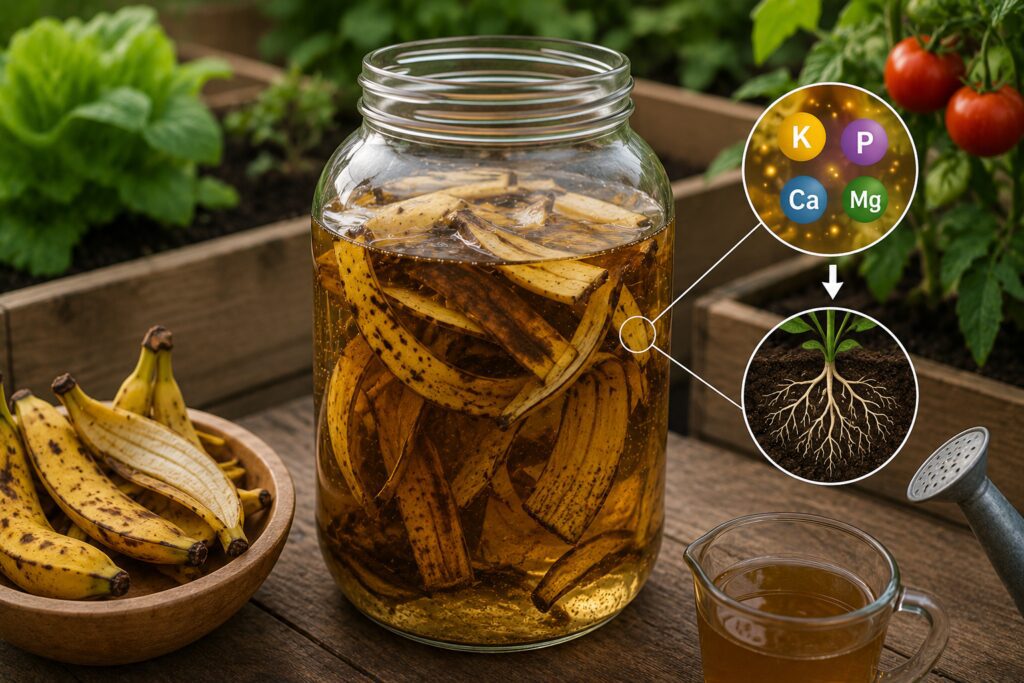
Potassium and other minerals slowly release into the liquid, creating a mild nutrient solution that plants can absorb more easily.
This method works especially well because it avoids wasting nutrients.
Instead of waiting months for banana peels to decompose fully in compost, steeping provides a faster way to transfer nutrients into a usable form.
I also appreciated how beginner friendly the process was. There is no complicated compost system required, no expensive equipment, and no advanced gardening knowledge needed.
It is one of the easiest homemade fertilizers I have ever made.
Choosing the Right Banana Peels Matters More Than I Expected
One thing I learned through trial and error is that the condition of the banana peels affects the quality of the fertilizer.
Fresh peels work very well because they still contain plenty of nutrients and moisture.
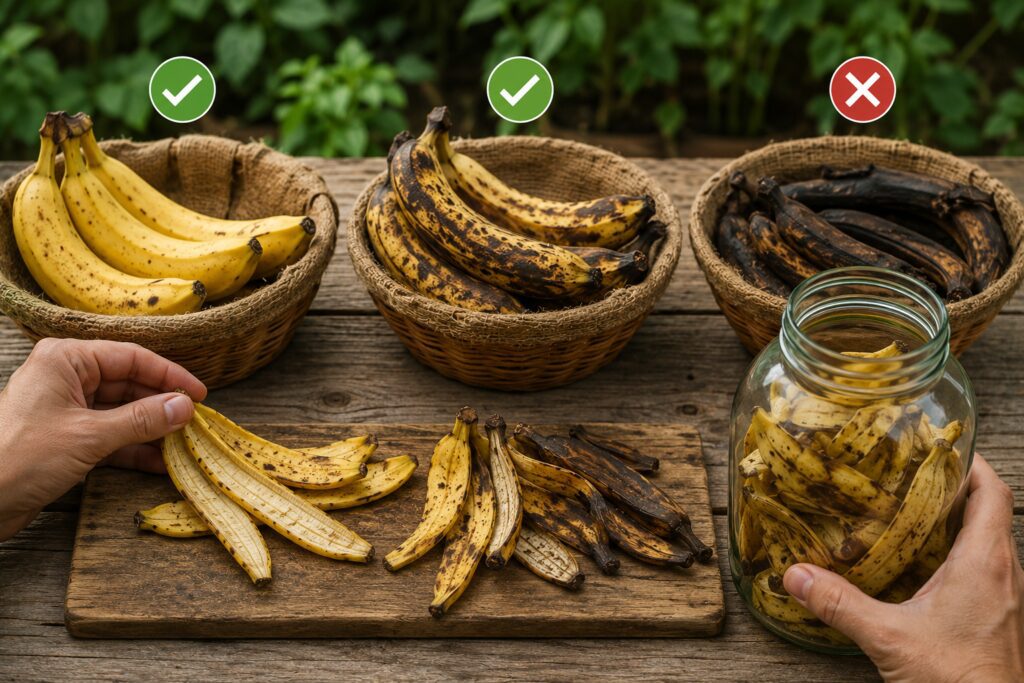
However, overripe peels are also excellent because they break down faster in water.
I personally avoid using peels that have visible mold or strange odors before soaking. Slight browning is completely normal and actually helpful, but spoiled peels can create an unpleasant fermentation smell.
I also started rinsing the peels lightly before using them.
Since some bananas may carry pesticide residue on the outer skin, a quick rinse helps reduce unwanted contaminants.
Although organic bananas are ideal, I found that regular bananas still work effectively as long as they are washed properly.
Diluting the Fertilizer Helped Prevent Problems
One mistake I made early on was using the banana peel water too concentrated.
At first, I poured the steeped liquid directly onto my plants without dilution. While nothing terrible happened immediately, some plants reacted poorly and developed slightly stressed leaves.
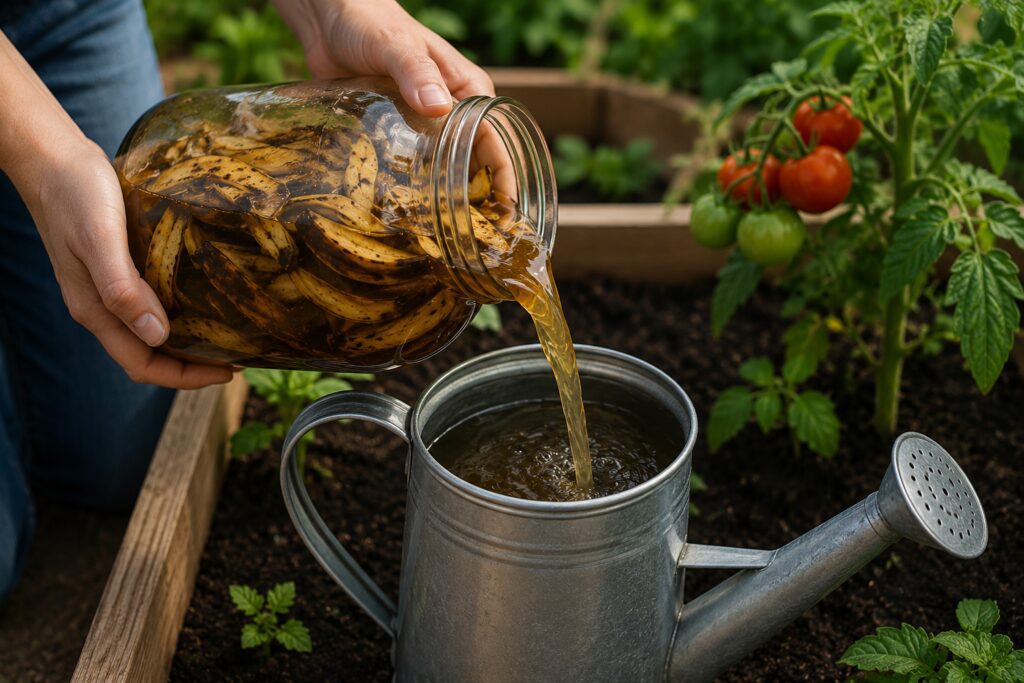
After more research, I learned that diluting the mixture creates a safer and more balanced fertilizer.
Now I usually mix one part banana peel water with about five parts regular water before applying it to plants.
This creates a gentler nutrient solution that supports growth without overwhelming delicate roots.
Since making this adjustment, my plants have responded much better. The growth became more consistent, and I noticed fewer signs of stress.
The Plants That Responded Best in My Garden
Not every plant reacts the same way to banana peel fertilizer, but some clearly thrive with it.
Tomatoes were one of the biggest successes in my garden. The plants developed stronger stems, greener leaves, and better flowering. Peppers also responded very positively, especially during fruit production.
My roses seemed to love the extra potassium as well. After several weeks of feeding them diluted banana peel fertilizer, the blooms became fuller and more vibrant.
Strawberries benefited too.
I noticed healthier leaf growth and slightly improved fruit production compared to previous seasons.
Herbs like basil and mint showed moderate improvement, though leafy greens like lettuce seemed less dramatically affected.
Overall, flowering and fruiting plants appeared to benefit the most.
How Often I Use Banana Peel Fertilizer?
One important lesson I learned is that more fertilizer does not always mean better results.
I usually apply banana peel fertilizer once every one or two weeks, depending on the plant type and growing season.
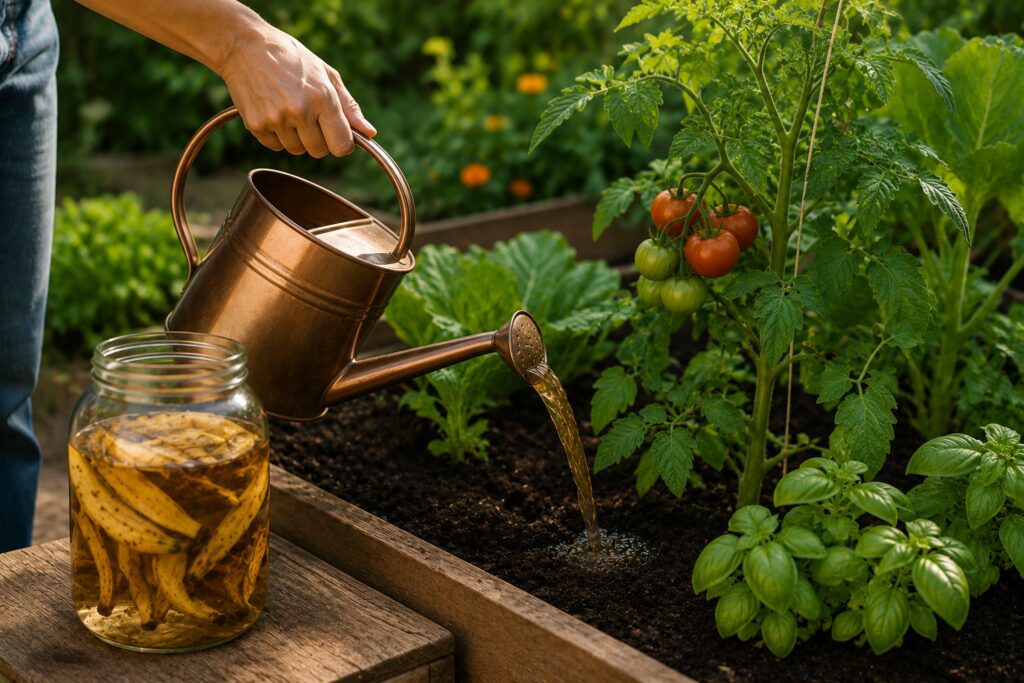
During active growth periods, plants tend to use nutrients more quickly.
For vegetables and flowering plants, weekly feeding works very well. During cooler months or slower growth periods, I reduce applications to avoid overfeeding.
I also avoid soaking the soil excessively. Banana peel fertilizer should supplement healthy gardening practices, not replace proper watering and soil care.
Consistency matters far more than quantity.
The Biggest Benefits I Personally Noticed
After using banana peel fertilizer regularly, several benefits became very noticeable in my garden.
First, I saved money. Instead of constantly buying commercial fertilizers, I started recycling kitchen scraps into useful plant food.
Second, my gardening routine became more sustainable. I loved knowing that something usually considered waste was helping nourish my plants naturally.
Third, the plants themselves genuinely looked healthier. The leaves appeared greener, flowering improved, and overall growth became more vigorous.
I also appreciated how accessible this method is for beginners. Anyone with bananas, water, and a container can make this fertilizer at home.
The Mistakes I Learned to Avoid
Even though banana peel fertilizer is simple, there are still a few mistakes worth avoiding.
One mistake is letting the mixture sit too long. If left for many days without refrigeration, the liquid can begin fermenting excessively and develop a strong unpleasant smell.
I usually try to use the fertilizer within 72 hours for the best freshness and effectiveness.
Another mistake is overapplying it.
Too much nutrient solution can disturb soil balance and stress certain plants.
I also learned not to rely solely on banana peel fertilizer. While it provides valuable nutrients, plants still need balanced soil, compost, sunlight, and proper watering.
Think of banana peel fertilizer as a helpful supplement rather than a complete solution.
Why Homemade Fertilizer Changed My Gardening Mindset
Before trying homemade fertilizers, I assumed successful gardening required expensive products and complicated systems. Banana peel fertilizer completely changed that perspective for me.
It reminded me that some of the best gardening solutions are actually very simple. Nature already provides many useful resources if we learn how to use them properly.
Making fertilizer from kitchen scraps also helped me feel more connected to the gardening process.
Instead of wasting materials, I started viewing food scraps as part of a natural cycle.
That small shift changed the way I approach gardening entirely.
Final Thoughts on Using Banana Peel Fertilizer
Using banana peel fertilizer became one of the easiest and most rewarding gardening habits I have ever adopted. It costs almost nothing, reduces waste, and provides real benefits for many plants.
What impressed me most was how quickly I started seeing results.
Healthier growth, stronger flowers, and more productive plants made the effort feel worthwhile almost immediately.
Of course, banana peel fertilizer is not magic.
Healthy plants still need good soil, proper sunlight, and consistent care. But as a natural supplement, it works surprisingly well.
If you already eat bananas regularly, there is a good chance you already have the ingredients sitting in your kitchen right now. Instead of throwing those peels away, try turning them into something useful for your garden.


