One of the most practical habits I have developed as a gardener is learning to regrow plants from simple leaves. At first, I never imagined that a single leaf could turn into a brand new plant.
I used to throw away plant scraps without thinking. But when I discovered how powerful leaf propagation can be, everything changed.

Today, I regularly grow new plants using nothing more than healthy leaves. It saves me money, reduces waste, and gives me an endless supply of plants for my home and garden.
In this article, I will share the eight types of plants that I never throw away, along with the exact leaf-propagation methods I use.
I will also share tips, mistakes I learned from, and how I choose the best leaves to regrow successfully.
The process is simpler than most people think, and once you try it, you may never look at plant leaves the same way again.
Why I Started Propagating Plants from Leaves?
I began propagating plants from leaves because I wanted to expand my collection without buying new pots and cuttings every season. I also love experimenting with how plants grow, especially when the process is simple and natural.
What surprised me is how quickly leaf propagation can work when the conditions are right.
The moment I saw new roots forming from a tiny leaf, I realized that plants carry more potential than we often give them credit for.
Over time, leaf propagation became one of my favorite low-cost gardening methods.
The 8 Plants I Never Throw Away Because Their Leaves Can Grow Again
Below are the plants I regularly regrow from leaves. Some grow faster than others, but all of them reward a little patience.
1. Aloe Vera
Aloe vera is one of the first plants I learned to propagate by leaf. Although whole leaves take time to form roots, the process works well when I allow the cut end to dry and callous first.
How I do it:
- I cut a mature aloe leaf with a clean knife.
- I allow the cut end to dry for 2 to 3 days.
- I place it upright in well-draining soil.
- I water sparingly until roots form.
Aloe vera loves dry conditions, so I avoid overwatering. In a few weeks, small offsets begin to appear.
2. Jade Plant (Crassula ovata)
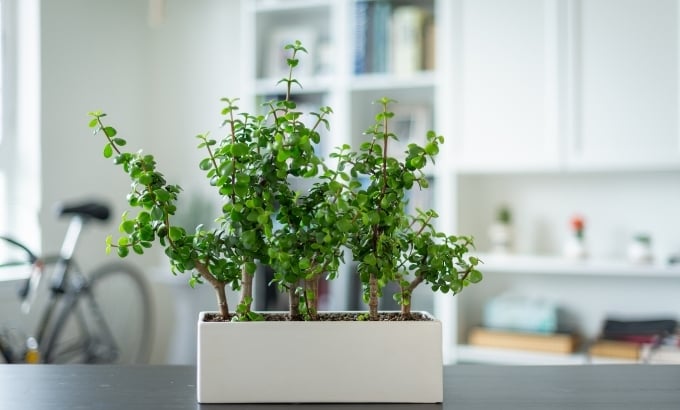
Jade is one of the easiest succulents to grow from leaves. It is also the plant that gave me the most confidence when I started.
How I do it:
- I gently twist off a plump jade leaf.
- I place it on top of dry soil without burying it.
- I mist lightly once or twice a week.
Roots form quickly, followed by small round leaves that grow into a new plant.
3. Echeveria
Echeverias are famous for growing new rosettes from fallen or intentionally removed leaves.
My steps:
- I remove a healthy leaf from the base of the plant.
- I let it dry for one to two days.
- I lay it on top of cactus soil.
Tiny rosettes form at the leaf base after a few weeks. It feels like magic every time.
4. Snake Plant (Sansevieria)
I propagate snake plants from leaf cuttings when I want new pots without dividing the root ball.
How I propagate snake plant leaves:
- I cut a leaf into sections, each about 5 to 7 cm long.
- I make sure I know which end should go into the soil.
- I plant each section upright in moist soil.
- I keep it in bright but indirect light.
This method takes time, but the results are strong, healthy new plants.
5. African Violet
African violets surprised me with how easily they regrow from a single leaf.
My method:
- I choose a mature, healthy leaf.
- I cut the leaf with a small stem.
- I plant the stem at an angle in moist, loose soil.
- I cover the pot lightly to maintain humidity.
Baby plantlets begin appearing in a few weeks.
6. Peperomia
Peperomia leaves are thick and juicy, which makes them perfect for new growth.
How I propagate peperomia:
- I cut a full leaf along with its stalk.
- I insert the stalk into soil.
- I mist the soil lightly and keep it warm.
This method works especially well for varieties with thick leaves.
7. Sedum
Sedums are hardy and propagate very quickly. They often root on their own when a leaf drops.
My routine:
- I remove a leaf gently.
- I place it flat on the soil.
- I give it bright light but keep it slightly dry.
Sedums root fast and form mats of tiny plants that I can transplant later.
8. Kalanchoe
Kalanchoe is a unique plant because it often produces tiny plantlets along its leaf edges.
How I do it:
- I remove a mature leaf.
- I place it flat on soil.
- I mist every few days.
The plantlets grow quickly and become new plants with very little effort.
How I Choose the Best Leaves for Propagation?
Over the years I learned that not every leaf will root successfully. Here is what I look for:
- The leaf must be mature, not newly forming.
- It must be plump and not dehydrated.
- It should not have any tears, bruises or fungal spots.
- For succulents, the base of the leaf must remain intact.
Choosing a healthy leaf is the most important step in ensuring successful regrowth.
My Full Step-by-Step Leaf Propagation Routine
No matter which plant I am propagating, I follow these general steps:
- Remove the Leaf Carefully. I twist gently instead of pulling too hard. A clean break is essential.
- Allow Time for Callousing (for Succulents). Succulents need one to three days for the cut end to dry before planting.
- Prepare Well-draining Soil. I use a mixture of cactus soil, perlite and sand for most leaf propagations.
- Place the Leaf Correctly. Some leaves lie on top of the soil, others are inserted slightly. Each plant has its own method.
- Water Lightly. Leaf propagation fails most often due to overwatering. I mist lightly or water the soil only when dry.
- Provide Strong Indirect Light. I keep the leaves in bright light, but not direct sun, which can scorch them.
- Be Patient. Some plants root within a week. Others take a month. I check for roots gently without disturbing the leaf too often.
Propagation Guidelines for Each Plant
| Plant | How I Place the Leaf? | Watering | Time to Root | Difficulty |
|---|---|---|---|---|
| Aloe vera | Insert upright | Very light | 3 to 8 weeks | Medium |
| Jade | Lay on soil | Mist lightly | 2 to 4 weeks | Easy |
| Echeveria | Lay on top | Minimal | 2 to 6 weeks | Easy |
| Snake plant | Insert upright | Moderate | 6 to 10 weeks | Medium |
| African violet | Insert at angle | Keep moist | 3 to 6 weeks | Medium |
| Peperomia | Insert stalk | Light mist | 2 to 5 weeks | Easy |
| Sedum | Lay flat | Very light | 1 to 3 weeks | Very easy |
| Kalanchoe | Lay flat | Light mist | 1 to 4 weeks | Very easy |
Mistakes I Learned From
Leaf propagation looks simple, but I struggled in the beginning. Here are the mistakes I made:
- Too Much Water. Most leaves rot when the soil is constantly wet. Now I water very sparingly.
- Direct Sunlight. I placed leaves under full sun and they shriveled quickly. Indirect light works best.
- Using Damaged Leaves. Damaged leaves rarely root. Healthy, unbroken leaves always perform better.
- Disturbing Them Too Often. In the past I lifted the leaves every few days checking for roots. Now I wait until I see growth on the surface.
Why Leaf Propagation is Worth It?
Leaf propagation has become one of the most rewarding parts of my gardening routine because:
- It saves money.
- It reduces waste.
- It gives me backup plants when older ones decline.
- It helps me create gifts for friends and family.
- It teaches patience and care.
I also enjoy watching the transformation from a single leaf into a fully grown plant. There is something uplifting about seeing life grow from something so small.
My Final Thoughts
I used to throw away plant leaves without thinking, but now I see them as hidden opportunities. With the right method, patience and a little care, a simple leaf can grow into a beautiful plant.
These eight plants have helped me expand my garden naturally and affordably.
If you want to reduce waste, save money, and learn more about plant growth, leaf propagation is one of the best techniques to try. Once you experience success with one plant, you will want to keep experimenting.
I believe every gardener can benefit from this simple method.