
Gone are the days when the backyard was filled with expensive, plastic playhouses that fade under the sun, waste away in landfills, and serve a short-lived purpose. Today’s homeowners are looking for more sustainable and practical alternatives that not only enhance the garden but also provide ongoing benefits to their daily lives.
One such solution is the secret reading nook; a lush, vegetable-filled hideaway grown from simple bamboo poles and climbing plants. This innovative structure provides not only a peaceful retreat for reading but also the opportunity to grow food for your family’s dinner table.
It’s a perfect example of how eco-conscious gardening can offer both beauty and utility.
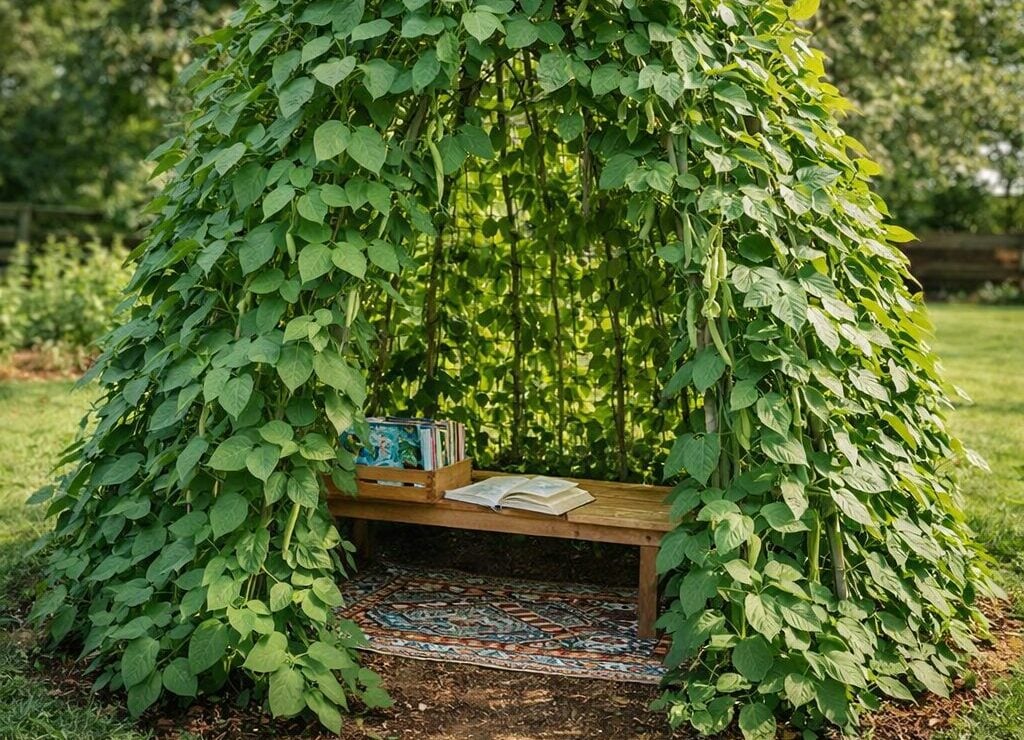
Why a Vegetable Garden Reading Nook is a Game-Changer?
Incorporating a vegetable garden into your outdoor space is an excellent way to improve sustainability, reduce food waste, and connect with nature. However, many people shy away from large vegetable patches due to space constraints or the misconception that they require extensive maintenance.
By transforming your vegetable garden into a cozy reading nook, you can combine your love for literature with your passion for homegrown food, all while benefiting the environment.
This project is not only easy to create but also serves as a long-term solution to building a sustainable, multifunctional outdoor area.
Step 1: Create a Stable Structure for Your Nook
The foundation of your secret reading nook starts with the bamboo teepee structure. Bamboo is an ideal material for this project as it is naturally durable, lightweight, and grows rapidly.
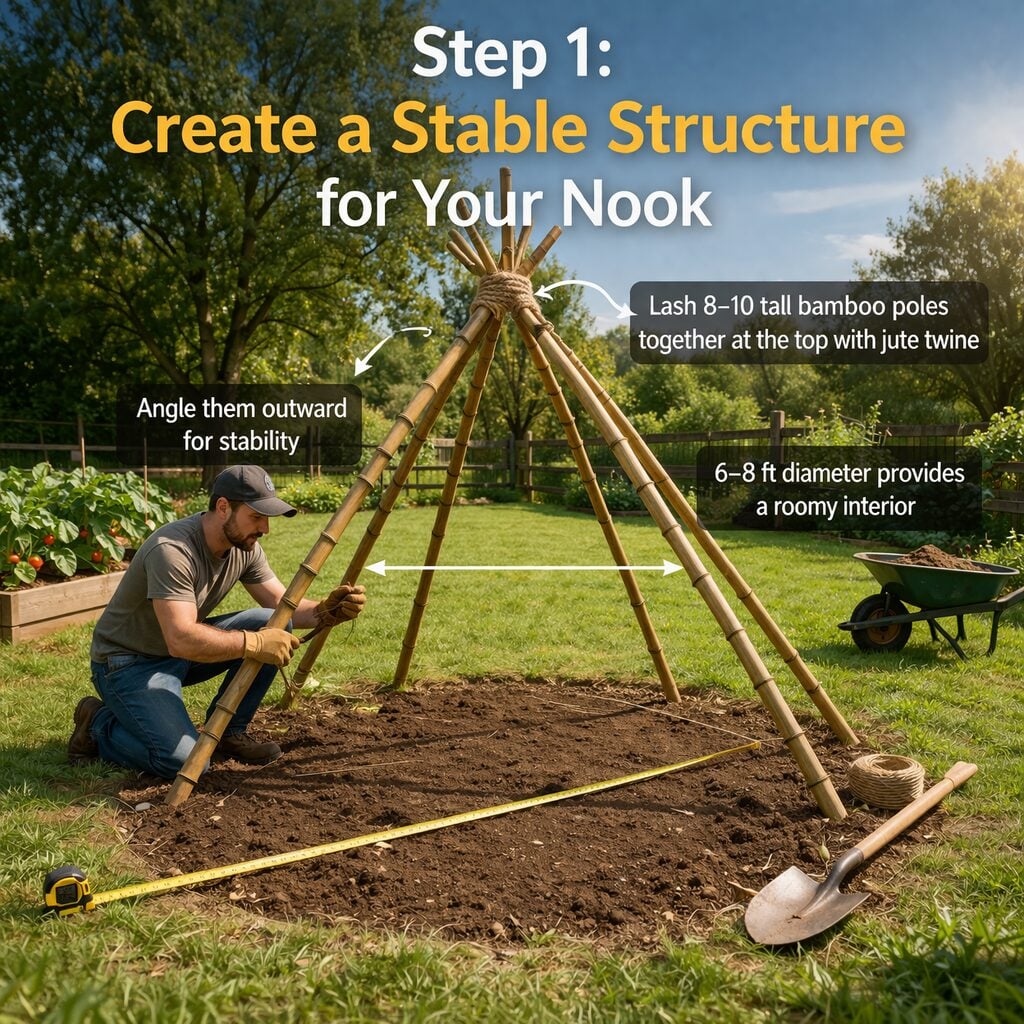
Here’s how you can build a solid base for your reading nook:
- Select Your Location: Choose a spot in your yard that gets a good amount of sunlight but also offers some shade for comfort. A spot near the garden or along the edge of the yard can be ideal.
- Measure the Space: Mark a circle that is 6 to 8 feet in diameter. This size provides ample room for seating, a bench, and plants while ensuring enough space for you to move around and relax comfortably.
- Set Up the Bamboo Poles: Drive 8–10 tall bamboo poles into the ground around the marked circle. Angle the poles inward toward the center of the circle, ensuring they meet at the top. Tie the poles securely together using heavy jute or twine. This method creates a cone shape, which is both stable and spacious.
- Strength and Stability: Bamboo’s strength makes it a perfect choice for building structures that can withstand the elements, including wind. This structure will provide a solid frame that can hold the weight of plants as they climb.
- Add Height for Comfort: Ensure the height of the structure is sufficient for an adult to stand in the center comfortably. This will make the space usable for the whole family, not just for children.
Step 2: Choose the Right “Building Material”
Once you’ve set up the structure, the next step is to select the plants that will transform the bamboo teepee into a lush, living space. The key here is to choose climbing plants that can weave their way up the bamboo poles, creating both shade and a beautiful aesthetic. Pole beans or runner beans are perfect for this purpose.

Unlike bush beans, which grow low to the ground, pole beans are genetically designed to climb, making them the ideal choice for a vertical garden.
- Planting the Beans: Plant the pole beans heavily around the base of each bamboo pole. Be sure to leave a small gap for the entrance to your nook, where you’ll walk in and out.
- Bean Growth: Within weeks, the beans will start to climb up the bamboo supports. Their natural climbing ability will allow them to cover the frame, creating a beautiful green canopy. These beans will grow rapidly and, if planted correctly, will form a thick “roof” of foliage without the need for much maintenance.
- Selecting Bean Varieties: Popular varieties of pole beans include Kentucky Wonder and Scarlet Runner Beans, both of which are fast-growing and produce an abundant harvest. You can choose varieties based on your climate and desired taste.
Step 3: A Cooling Chamber for Summer Reading

One of the standout features of this bean teepee is the natural cooling effect created by the plants. As the beans grow and their leaves form a dense canopy, the inside of the teepee becomes significantly cooler than the surrounding yard.
- Shade and Transpiration: The dense leaves of the pole beans block the direct sun, keeping the interior shaded and comfortable. Additionally, plants naturally release moisture through a process called transpiration, which helps to cool the air inside the structure.
- A Comfortable Retreat: The bean teepee becomes a natural “cooling chamber” where you can escape the heat on warm summer days. This makes it the perfect space for reading or relaxing with a cool drink.
Step 4: Furnishing Your Reading Nook

To make the space comfortable and inviting, add simple furniture and accessories:
- Bench or Seating: Add a wooden bench inside the structure, providing a place to sit and relax. A cushioned seat or small rug will also make the space feel more homey.
- Crate of Books: Since the purpose of this nook is for reading, fill a crate or basket with your favorite books, allowing you to enjoy the space for hours without needing to leave.
- Decorative Touches: Add small accessories like cushions, lanterns, or fairy lights to create a whimsical and cozy ambiance. These small touches will turn the space into a true sanctuary.
Step 5: Reap the Benefits of Your Edible Hideaway
Once the beans start to climb and the structure is fully established, you will not only have a peaceful reading spot but also a source of fresh, homegrown food.
The beans will hang overhead, allowing you to reach up and pick fresh beans whenever you like. This combination of a reading nook and vegetable garden is the perfect way to engage with nature, get outside, and provide fresh produce for your family’s meals.

Real-World Impact: This sustainable garden and reading nook offer multiple benefits to homeowners. It provides a peaceful retreat, promotes family bonding, and reduces the need for plastic or unsustainable materials.
By incorporating edible plants into the design, it also creates an ongoing supply of fresh food, reducing grocery bills and providing a sense of accomplishment.
A Sustainable, Functional, and Beautiful Space
Incorporating a vegetable garden into your reading nook not only makes the space more functional but also adds to the sustainability of your home. With a simple bamboo frame, pole beans, and a few decorative touches, you can create a secret reading nook that is both practical and beautiful.
The benefits are far-reaching, from the environmental impact of reducing waste to the joy of growing your own food and having a peaceful space to unwind.
The future of sustainable outdoor living can look as lush and vibrant as this bean teepee, providing a natural, comfortable, and eco-friendly escape for all.


