
Composting finally clicked for me when I stopped asking how to make perfect compost and started asking one simpler question: does this scrap belong in the bin?
Fruit and vegetable scraps, coffee grounds, eggshells, dry leaves, grass, paper, and cardboard all help build rich compost. But meat, dairy, oil, cooked food, glossy paper, diseased plants, and pet waste can bring smells, pests, and unnecessary problems.
Once I learned what to welcome and what to keep out, composting stopped feeling complicated. It became a small daily habit that quietly turns kitchen and garden waste into something useful.
What the Compost Image is Really Teaching?
Not everything natural belongs in the compost bin.
That was one of the first lessons I had to learn. Fruit scraps, leaves, cardboard, and other simple plant-based materials usually break down cleanly. Meat, dairy, grease, cooked food, bones, and diseased plants can bring odors, pests, or problems back into the garden.
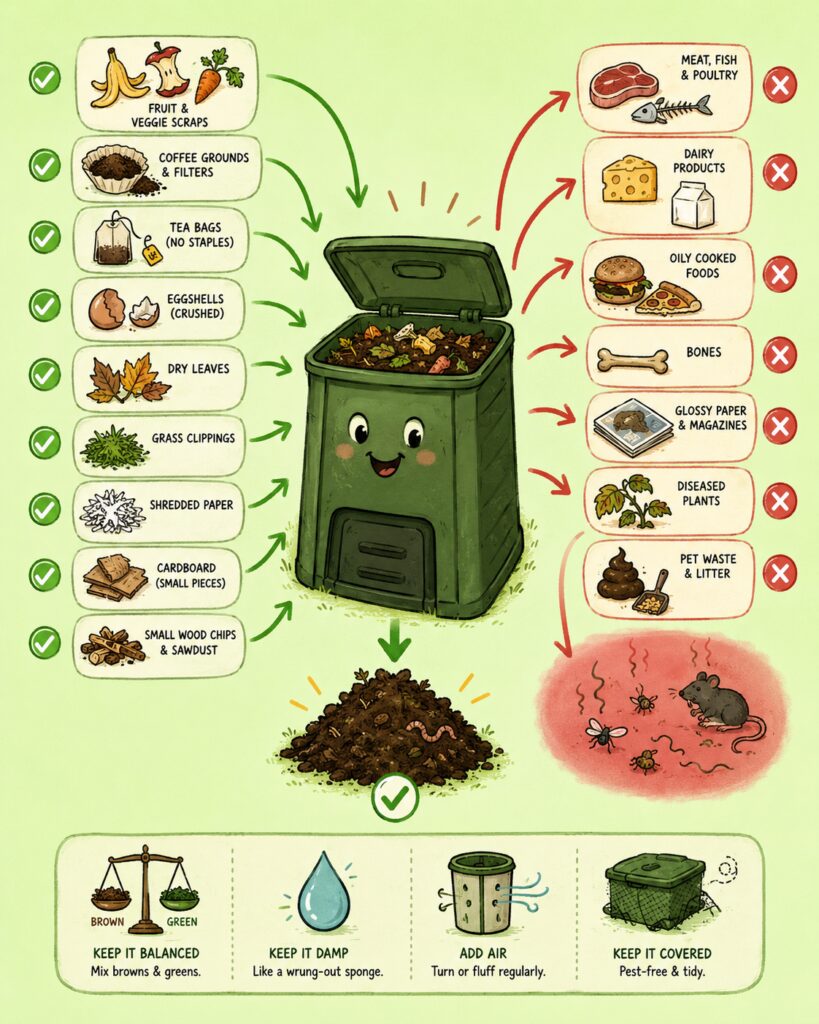
What I like about this guide is how clearly it separates the helpful from the harmful. No complicated science, just a practical reminder that good compost starts with knowing what to leave out.
What I Like Adding to Compost?
My compost usually begins with whatever is left on the chopping board.
Fruit and vegetable scraps break down easily, while small amounts of plain bread, rice, or grains are fine when buried well. Coffee grounds and loose tea add useful green material, but I always remove plastic tea bags, strings, or staples first.
I crush eggshells before adding them because they break down slowly. Nothing needs to be complicated. The best compost often starts with simple kitchen scraps added thoughtfully, little by little.
1. Leaves, Grass, Paper, and Cardboard
My compost once turned into a wet, heavy mess because I kept feeding it kitchen scraps and forgot the dry side of the balance.
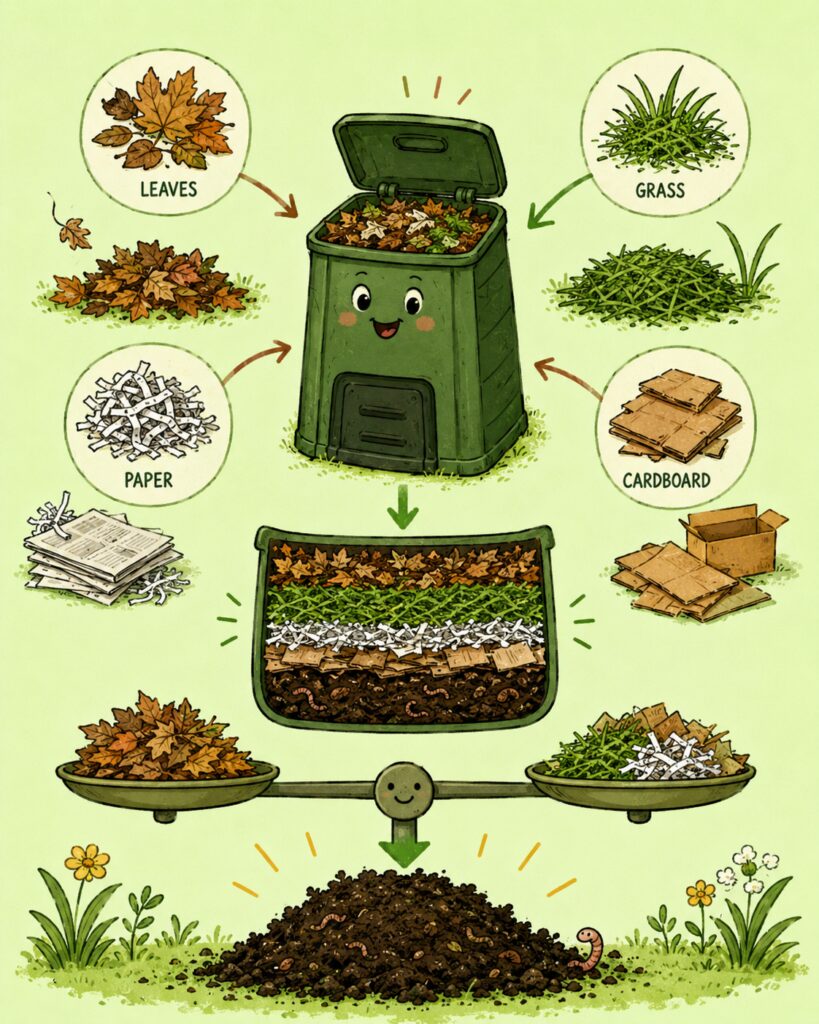
Dry leaves, shredded cardboard, and plain paper absorb moisture and create space for air. Grass clippings help too, but I mix them with dry material so they do not collapse into a slimy layer.
Now I tear everything into smaller pieces and avoid glossy paper. The pile stays lighter, smells better, and breaks down far more evenly.
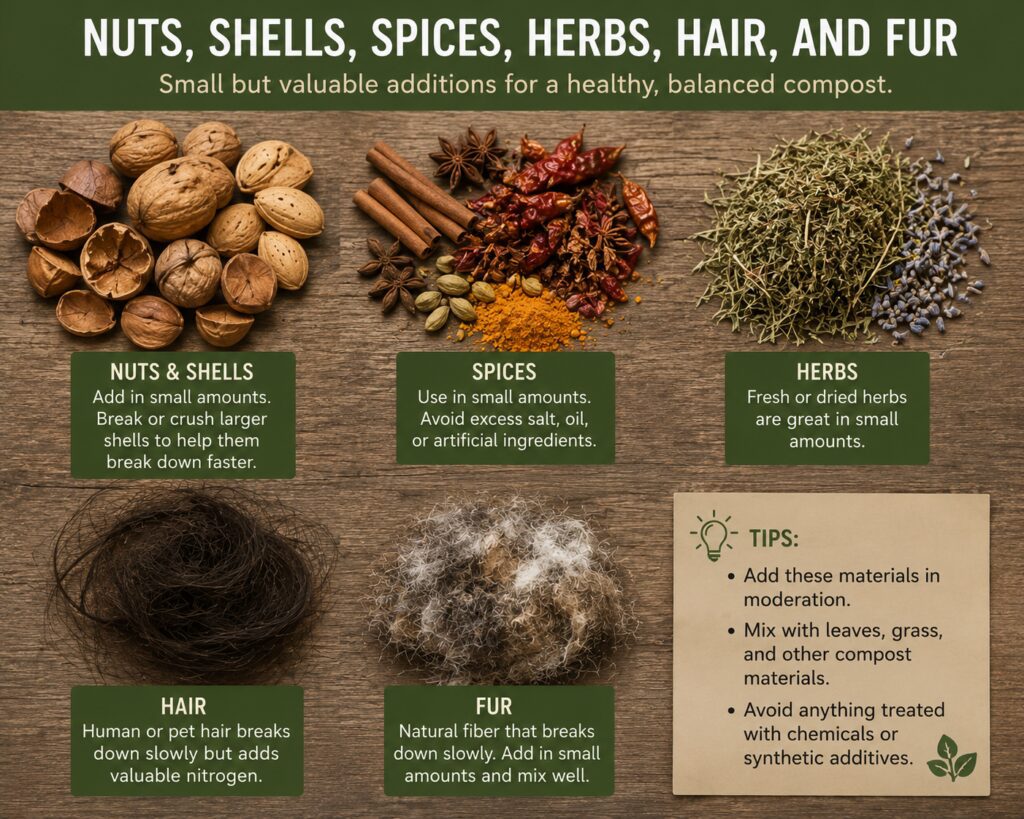
2. Nuts, Shells, Spices, Herbs, Hair, and Fur
My compost once turned into a wet, heavy mess because I kept feeding it kitchen scraps and forgot the dry side of the balance.
Dry leaves, shredded cardboard, and plain paper absorb moisture and create space for air. Grass clippings help too, but I mix them with dry material so they do not collapse into a slimy layer.
Now I tear everything into smaller pieces and avoid glossy paper. The pile stays lighter, smells better, and breaks down far more evenly.
What I Keep Out of My Compost?
Some compost problems begin with one wrong scrap.
I keep meat, bones, dairy, grease, oily cooked food, and pet waste out of my regular bin because they can quickly bring strong smells, pests, and unwanted pathogens. Even food that looks harmless can become a problem once it is covered in oil, salt, or sauce.
I also avoid glossy paper and coated cardboard. For a cleaner, easier pile, I stick with plant scraps, plain paper, and simple brown materials.
What I leave out matters just as much as what I put in.
Why Diseased Plants Should Stay Out?
Compost should return goodness to the garden, not send old problems back into the soil.
That is why I keep diseased plants out of my regular pile. Tomato leaves with blight, mildew-covered stems, or suspicious fungal spots may survive if the compost never gets hot enough.

Healthy trimmings go in. Diseased material stays out.
It may feel wasteful, but protecting the next season’s plants matters more than saving every scrap.
My Simple Compost Routine at Home
My compost routine survives because it fits into everyday life.
I collect kitchen scraps in a small container, then cover each fresh layer with dry leaves, shredded paper, or torn cardboard. That simple habit keeps the pile balanced, reduces smells, and discourages flies.
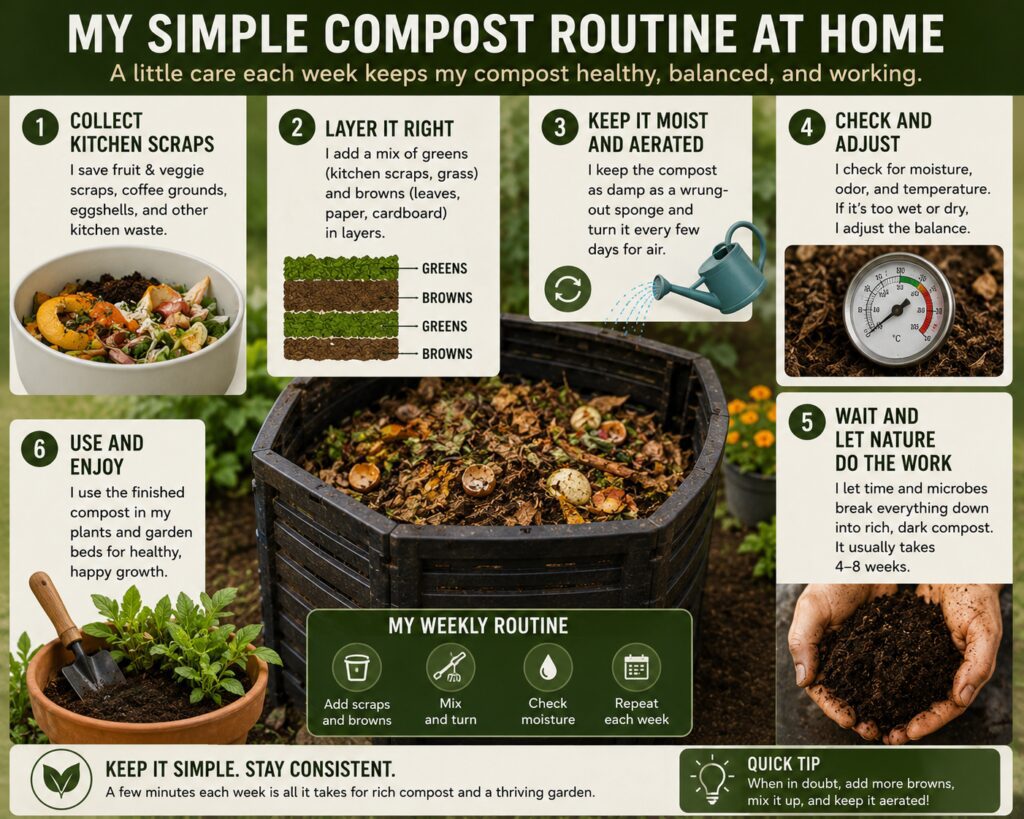
When I have time, I cut larger scraps into smaller pieces so they break down faster. I also turn the pile occasionally to bring in oxygen and mix the layers.
I do not aim for perfect compost. I just watch for one good sign: when the pile smells earthy instead of sour, I know it is working.
How I Know My Compost Is Working?
A healthy compost pile quietly shows me when the balance is right.
It should smell earthy, feel damp but not soggy, and slowly turn from visible scraps into dark, crumbly material. If it smells sour, I add dry leaves or cardboard and turn the pile. If it feels too dry and inactive, I add a little water and fresh green material.
Flies or animals usually mean food scraps are exposed, so I bury them deeper and cover them well.
The most satisfying stage is when the pile no longer looks like waste. It looks like rich soil, ready to feed the garden again.
Composting Is Easier When You Know the Rules
Composting became easier when I stopped seeing scraps as rubbish and started seeing them as unfinished soil.
I keep the rule simple: plant-based kitchen waste, coffee grounds, eggshells, leaves, grass, and plain cardboard go in. Meat, dairy, grease, diseased plants, glossy paper, and pet waste stay out.
The real secret is not perfection. It is repeating a few good choices and keeping the pile balanced.
Over time, yesterday’s peels and garden clippings become dark, crumbly compost that feeds the soil again. That small transformation is what makes composting feel so worthwhile.


