
One of the most useful things in my garden once belonged in the recycling bin.
I lay overlapping sheets of newspaper across the bed, wet them down, then make small openings for each seedling. The paper helps cover bare soil and slows down weeds while the young plants settle in.
I especially like this method for long, evenly spaced rows of strawberries, herbs, or vegetables. It keeps the bed looking organized and saves me from constantly pulling weeds around delicate new growth.
It is not a permanent solution, but for a simple, low-cost start, newspaper can make planting feel much more manageable.
Why I Like Using Newspaper in the Garden?
Newspaper gives me one less battle to fight in the garden.
By covering the bare soil, it blocks some of the light weeds need to grow, helping young plants get more water, space, and nutrients. It also slows moisture loss, which is especially useful while seedlings are still developing shallow roots.

I like this method because it costs almost nothing. Old newspaper can replace expensive weed fabric, then gradually break down into the soil when kept damp or covered with mulch.
It is not a perfect weed-proof solution, but it makes the bed easier to manage and gives new plants a cleaner, calmer start.
What I Use for This Setup?
A smooth planting day usually begins before the first sheet of newspaper touches the soil.
I gather everything in one place: plain newspaper, seedlings, compost or garden soil, water, a few stones or garden pins, and mulch if I have it. For long beds, I also stretch a string line to keep the row neat.
I skip glossy pages because regular newspaper softens faster and sits closer to the soil. On windy days, I weigh each section down as I work.
I also check the seedlings carefully. Green leaves, firm stems, and healthy roots give them a better chance of handling the move. A little preparation now saves a lot of frustration later.
Preparing the Garden Bed
The newspaper may sit on top, but the real work begins underneath.
I clear away large weeds, rocks, sticks, and old plant debris, then loosen the soil so new roots can spread more easily. If the ground feels dry or hard, I water it lightly before laying the paper.
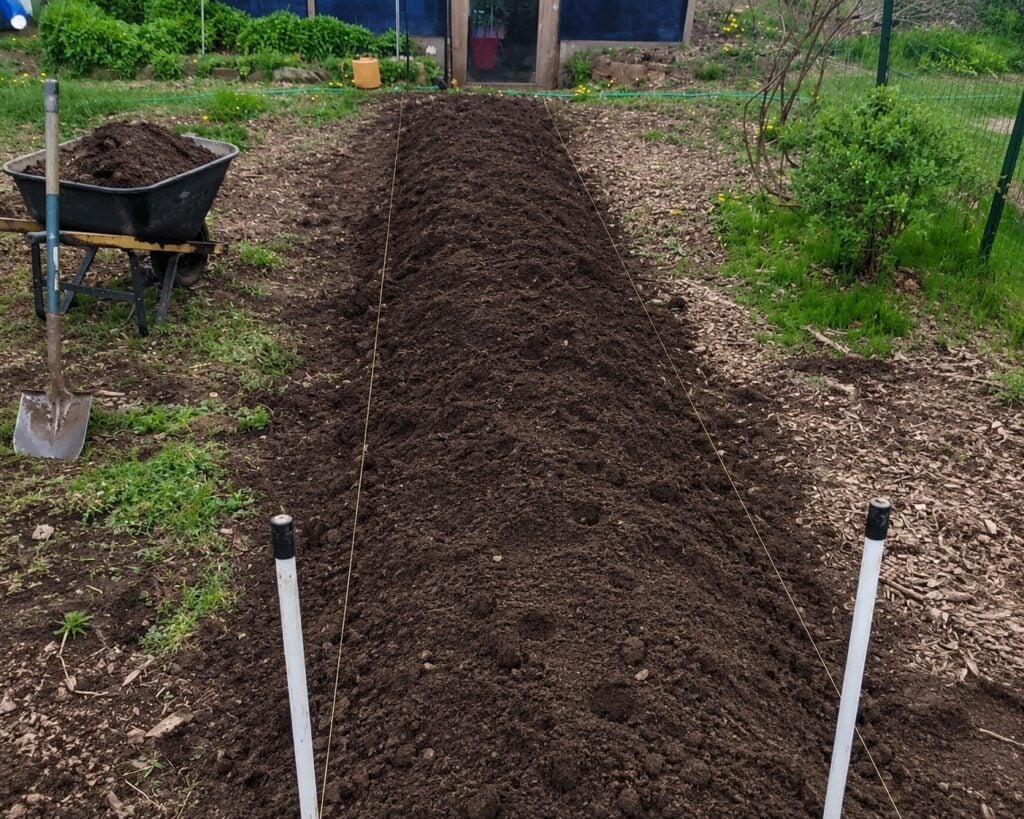
I also mix in compost when the bed needs it. Newspaper can help slow weeds and hold moisture, but it cannot replace healthy soil.
A cleaner surface, softer ground, and better nutrition give the seedlings a much stronger start.
Laying Down the Newspaper
The bed starts looking intentional the moment the newspaper goes down.
I use several layers, overlapping each section by a few inches so weeds have fewer gaps to push through. One thin sheet tears too easily, but a thicker layer creates a stronger barrier while still letting moisture reach the soil.
Once everything is covered, I soak the paper with water and press it gently into place. The wet newspaper softens, follows the shape of the bed, and stays put much better in the wind.
It does not need to look perfect. Good coverage matters more than perfect edges.
Planning the Planting Holes
Before I cut a single opening, I let the seedlings “try on” the bed first.
I place the pots on top of the newspaper and move them around until the spacing feels right. This makes it easier to create a clean row and gives each plant enough room for airflow, growth, and easier harvesting later.
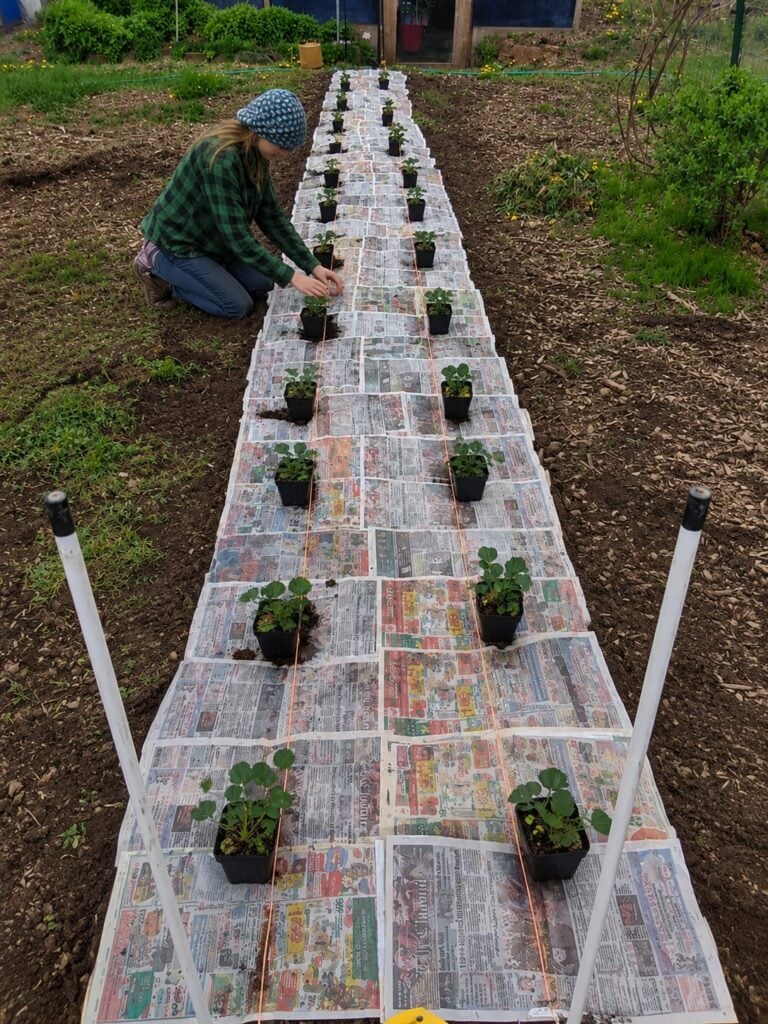
Once I am happy with the layout, I make only small openings in the paper—just wide enough to plant each seedling. Large holes weaken the weed barrier, so I keep them neat and controlled.
Good spacing does more than make the bed look organized. It gives every plant a better chance to grow without competing for light, water, and space.
Planting the Seedlings
Each seedling gets its own careful landing.
I pull back the small opening, dig just deep enough for the root ball, and ease the plant from its pot without disturbing the roots more than necessary. It goes into the soil at the same depth it was already growing.
Then I firm the soil gently and tuck the newspaper close around the base, leaving the crown uncovered.
That small detail matters. The roots need support below, while the center of the plant needs space to keep producing fresh growth.
Watering After Planting
Young seedlings need gentle care right after transplanting. Watering is one of the first things I do once the plants are in place.
I water each plant slowly at the base. The goal is to settle the soil around the roots and help the seedling recover from transplanting. I also wet the newspaper again so it stays flat and secure.
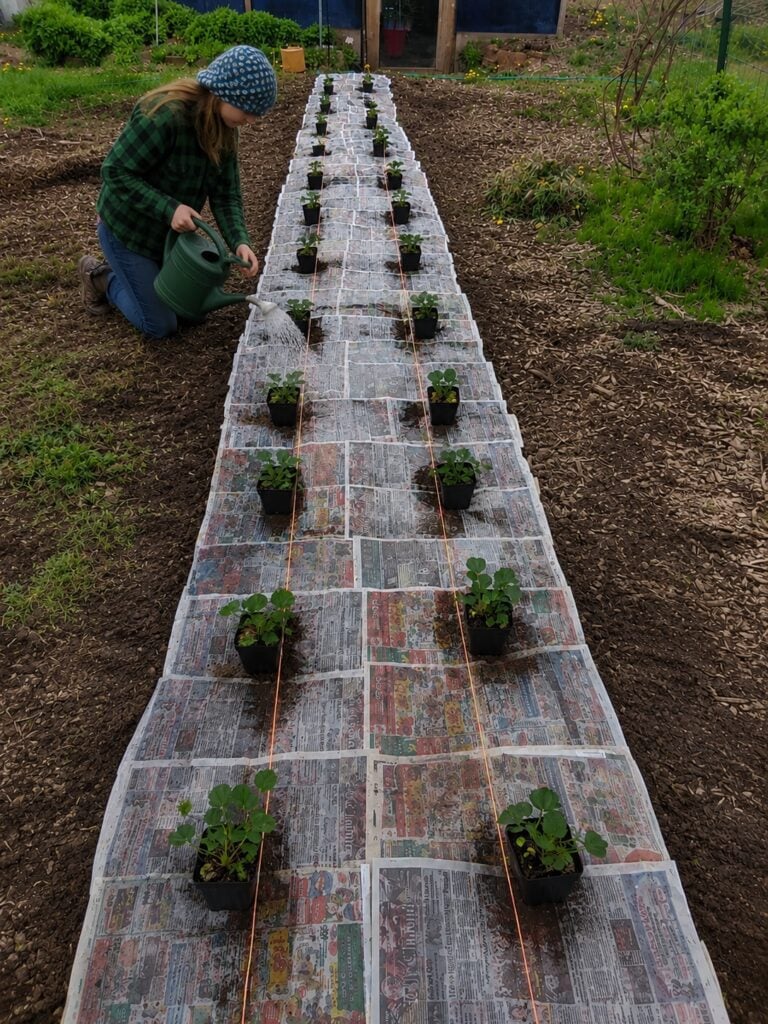
The newspaper can help hold moisture, but I still check the bed regularly. If the weather is hot or windy, the top layer may dry faster than expected. I press my finger near the planting hole to check the soil moisture.
If the soil feels dry below the surface, I water again.
I avoid spraying too hard because strong water pressure can move the newspaper or disturb the young plants. A gentle hose setting or watering can works better.
Adding Mulch Over the Newspaper
Newspaper works on its own for a while, but I prefer covering it with mulch when possible. Mulch makes the garden look more natural and helps protect the paper.
Straw, wood chips, dried leaves, or grass clippings can be used as mulch, depending on what is available. The mulch helps hold the newspaper down, reduces drying, and adds another layer of weed protection.
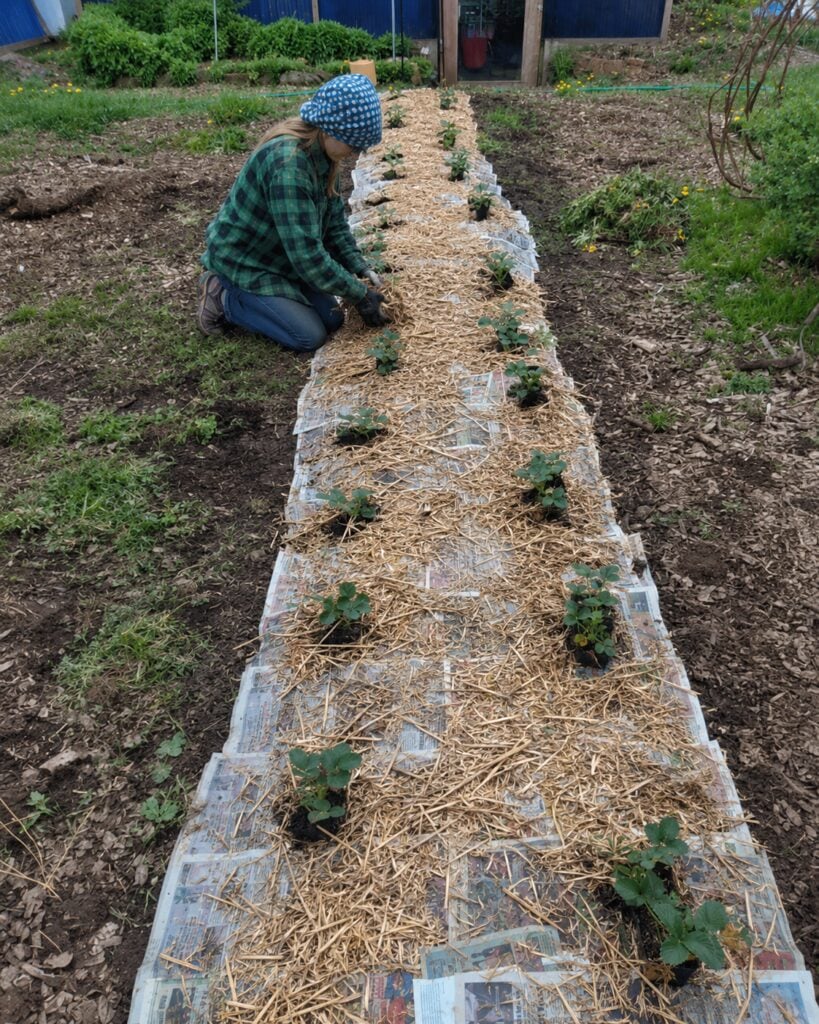
I spread the mulch lightly around the seedlings, keeping it away from the plant crowns. Too much mulch pressed against the stems can trap moisture and cause problems.
A light, even layer is usually enough.
This step also makes the bed look cleaner. Instead of seeing newspaper across the whole row, the garden looks more finished and natural. The paper is still doing its job underneath, but the mulch improves the appearance and function.
What I Watch For While the Plants Grow?
A few minutes of checking the bed can save me from much bigger problems later.
I walk along the row looking for weeds near the planting holes, torn newspaper, and seedlings that seem slow to recover. The paper reduces weeds, but it does not stop every one, so I pull them while they are still small.
If a section shifts or opens, I cover the gap with another sheet and wet it down. These quick repairs help the barrier last longer.
I also watch the plants closely. Fresh growth usually means they are settling in well. If leaves stay wilted, turn yellow, or stop growing, I check the soil moisture, sunlight, and planting depth before assuming they need more water.


