
Butterflies were visiting my garden, but they never stayed long.
At first, I thought flowers were enough. Then I learned butterflies also need shallow, safe spots to drink water and absorb minerals. That is what made me want to create a butterfly puddling station.
It is a simple garden feature that gives butterflies a moist place to rest, sip, and gather nutrients. No fancy setup needed, just a shallow dish, soil, compost, pebbles, rocks, and a little water.
Sometimes, the smallest garden details are what make butterflies feel welcome enough to stay.
What is a Butterfly Puddling Station?
Butterflies do not need a bowl of water. They need a landing spot. A butterfly puddling station gives them a shallow, damp place to stand, sip moisture, and collect minerals from the soil.
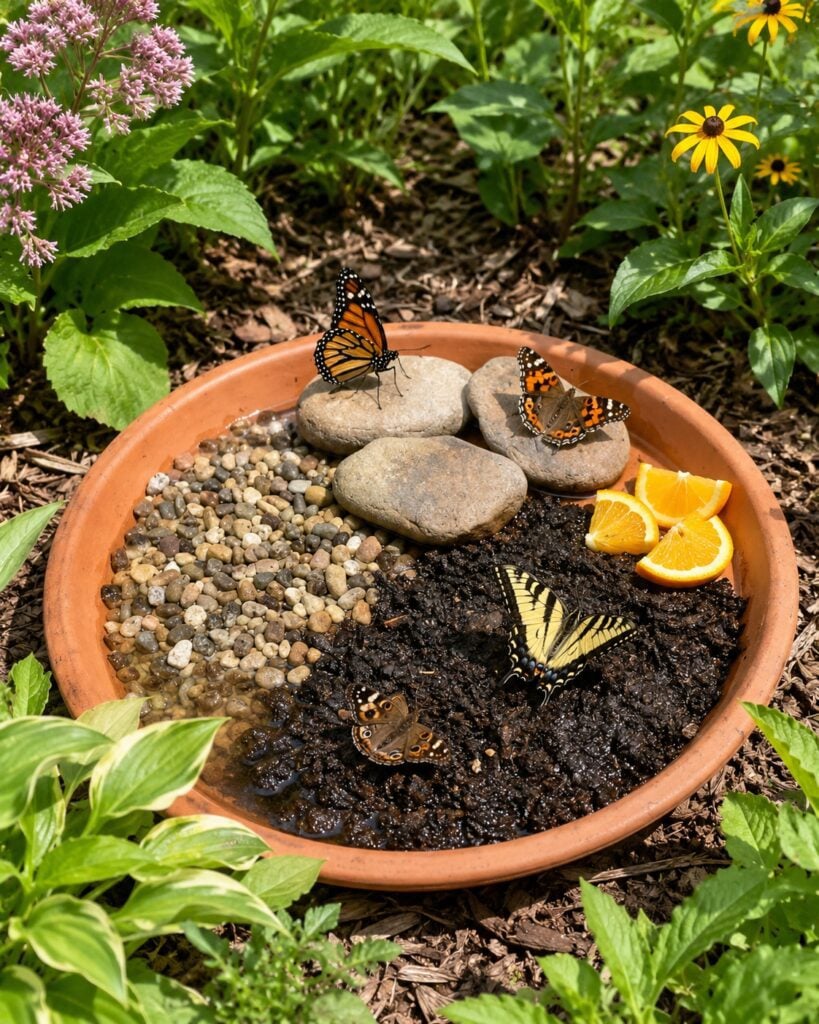
In nature, they do this around mud, wet sand, and riverbanks, so the goal is to recreate that tiny wild moment in the garden.
My first one was simple: a terracotta saucer, a little soil, pebbles, flat rocks, and enough water to keep it moist. Nothing fancy, just a small garden detail that makes butterflies feel safe enough to stay.
Why Butterflies Need Shallow Water?
A butterfly’s drinking spot should feel more like wet ground than a water bowl.
Deep water can be risky because their delicate wings can get soaked, making it hard for them to fly. A puddling station solves that by giving them rocks to rest on, pebbles for safety, and damp soil where they can sip moisture.
I like placing it near flowers because butterflies are already coming for nectar. The station becomes a natural little stop where they can drink, rest, and stay in the garden a little longer.
Materials I Use
A good butterfly puddling station does not require many materials. I prefer using items that look natural and are easy to find around the garden. Here are the materials I usually use:
- A shallow dish or plant saucer
- Garden soil
- A small amount of compost
- Small pebbles or gravel
- A few large flat rocks
- Clean water
- Small pieces of fruit, optional
- A sunny garden spot
The best butterfly puddling station starts with simple, earthy pieces.
A shallow terracotta dish makes the perfect base because it looks natural and holds moisture well. Soil and compost add the minerals butterflies come for, pebbles keep the water shallow, and larger rocks give them safe places to land.
You can add fruit sometimes for a sweet boost, but do not leave it too long. Butterflies may love it, but ants and mess will show up too.
Step 1: Choose a Shallow Dish
Start with a dish that feels more like a tiny puddle than a bowl.
A wide, shallow plant saucer works perfectly because it holds just enough moisture without becoming too deep or risky for butterflies.
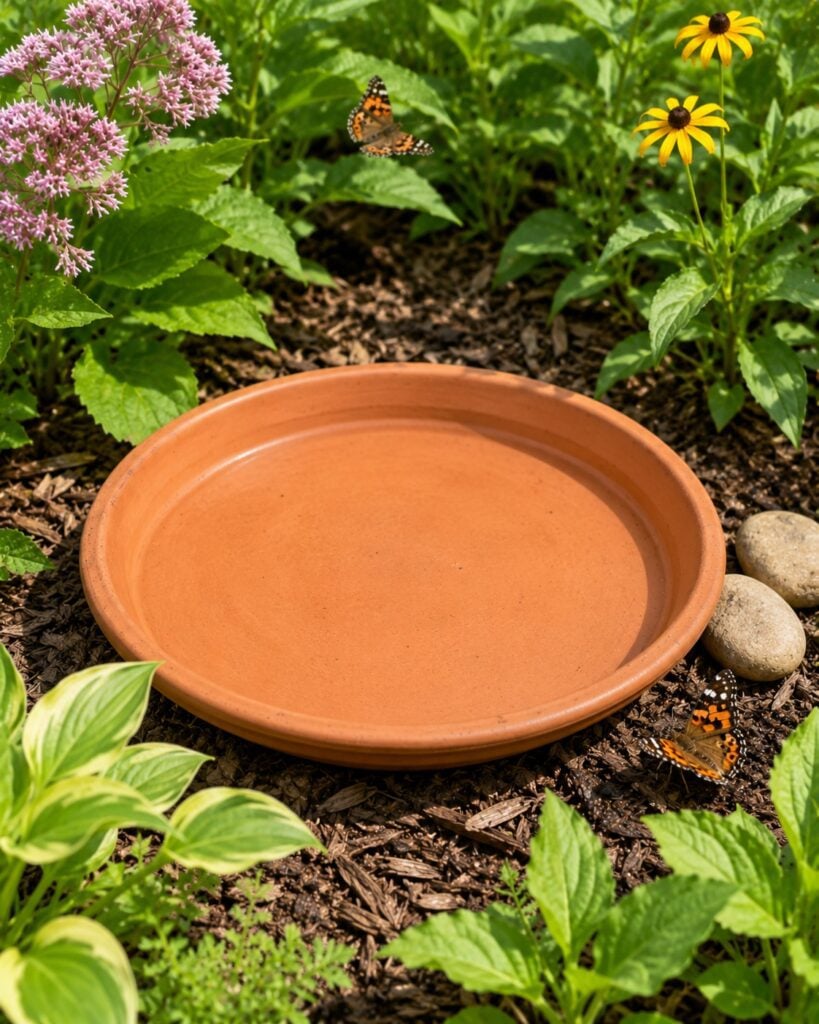
I like terracotta because it blends into the garden and feels natural, but any smooth, shallow container can work.
Place it directly on soil or mulch so it looks like part of the landscape. The more natural it feels, the easier it is for butterflies to discover it while moving between flowers.
Step 2: Add Garden Soil and a Little Compost
Next, I build the part butterflies actually come for: the damp, mineral-rich soil.
I add garden soil to one side of the saucer, then mix in just a little compost. Not too much, because this is not a planter. It is meant to feel like a natural muddy spot where butterflies can sip moisture and collect minerals.
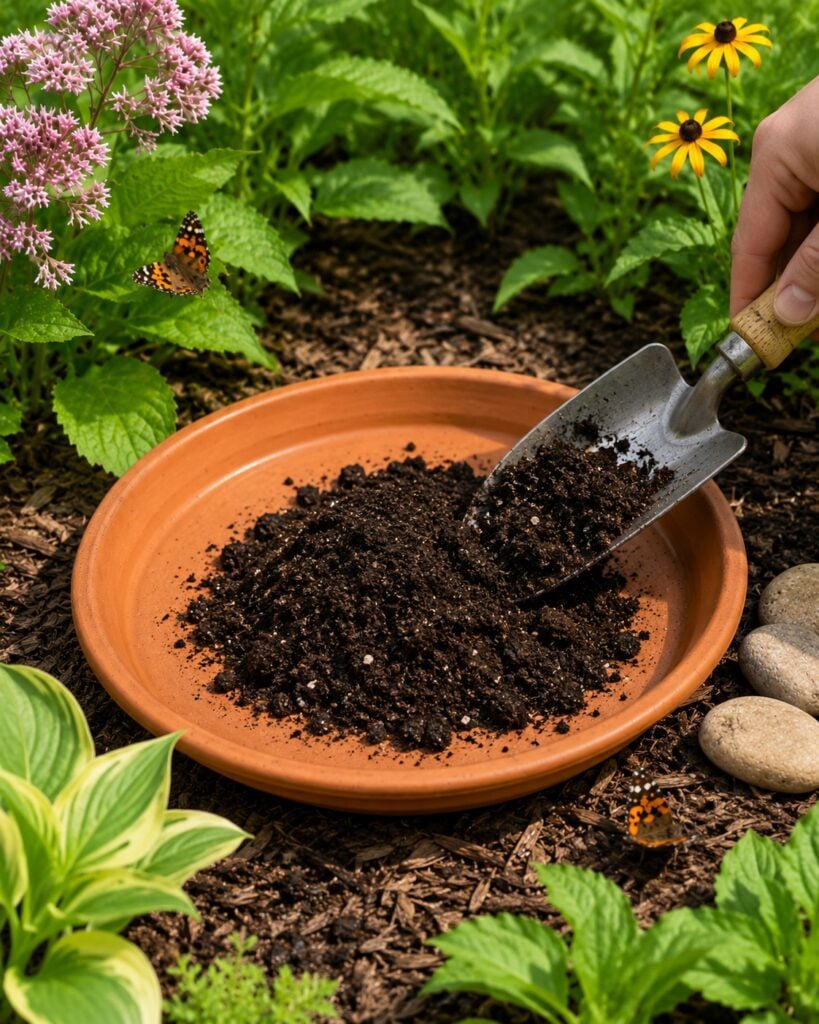
I press the soil down gently, leaving room for pebbles and water on the other side. It does not need to look perfect.
A slightly uneven surface creates little damp pockets, and that is exactly what makes it feel more natural.
Step 3: Add Pebbles and Large Rocks
Now I add the butterfly “landing pads.”
Small pebbles or gravel keep the water shallow and give butterflies safe places to stand. Then I add a few larger flat rocks so they can rest, warm up, and drink without getting their wings too wet.
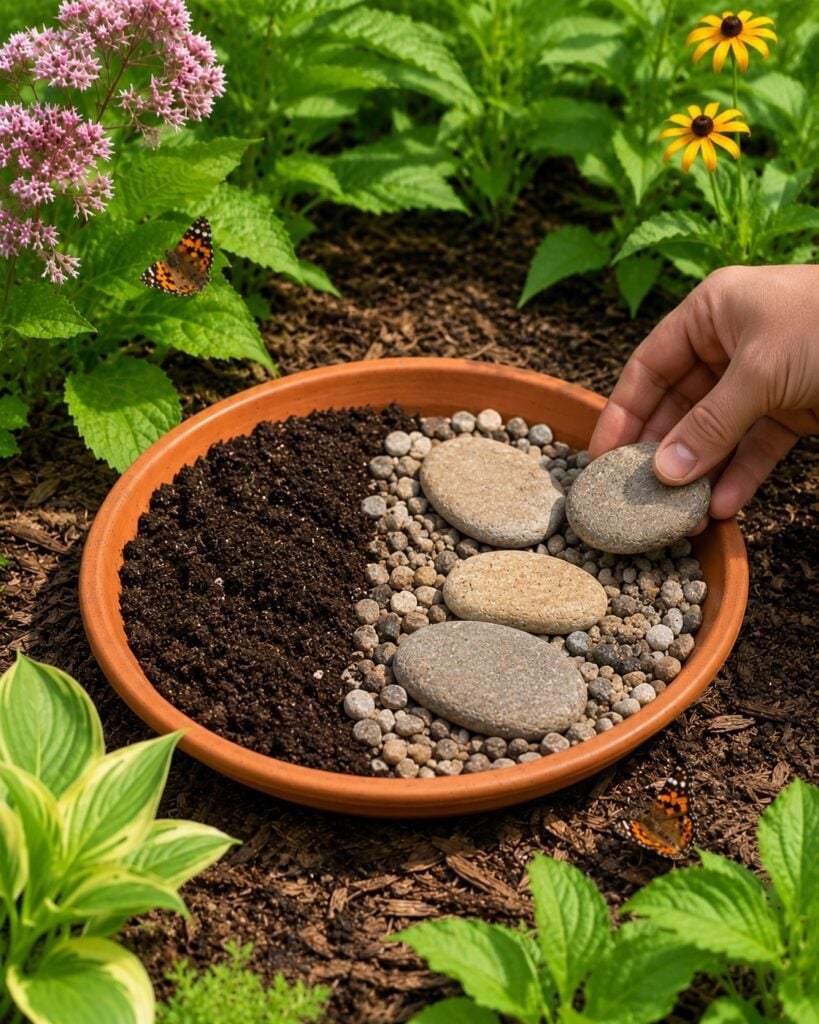
Smooth, flat rocks work best because they feel stable and natural. I usually place them slightly above the damp soil or water level, like tiny resting spots built just for butterflies.
Step 4: Add Water and Keep It Moist
The magic is in keeping it damp, not drowned.
Once the soil, compost, pebbles, and rocks are in place, I add water slowly. Just enough to moisten the soil and create a shallow wet area between the pebbles.
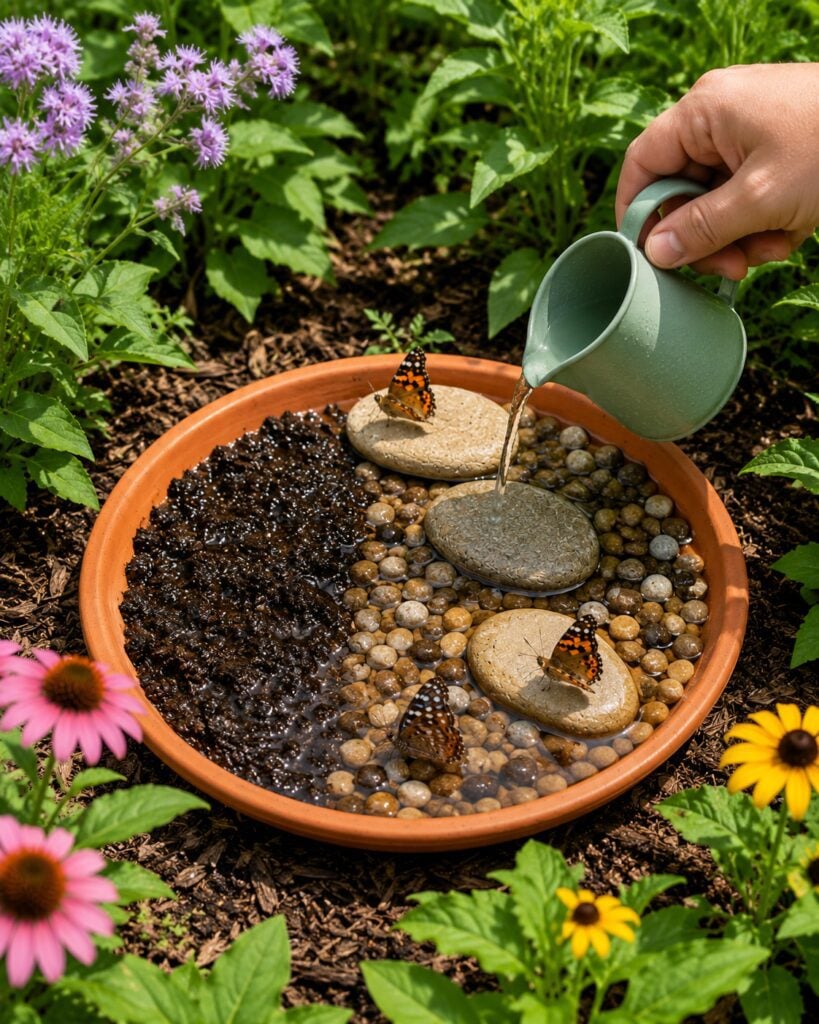
If the water looks too deep, I remove some or add more pebbles. Butterflies need moisture, but they also need safe places to stand.
On hot days, I check it more often and add a little water when the soil starts drying out. The goal is simple: keep it lightly moist, like a tiny garden puddle made just for butterflies.
Step 5: Place It in a Sunny Spot
Butterflies love warmth, so I place my puddling station in a sunny spot. A sunny location helps attract butterflies and keeps the area comfortable for them.
I usually choose a place near flowering plants because butterflies are already visiting that part of the garden.
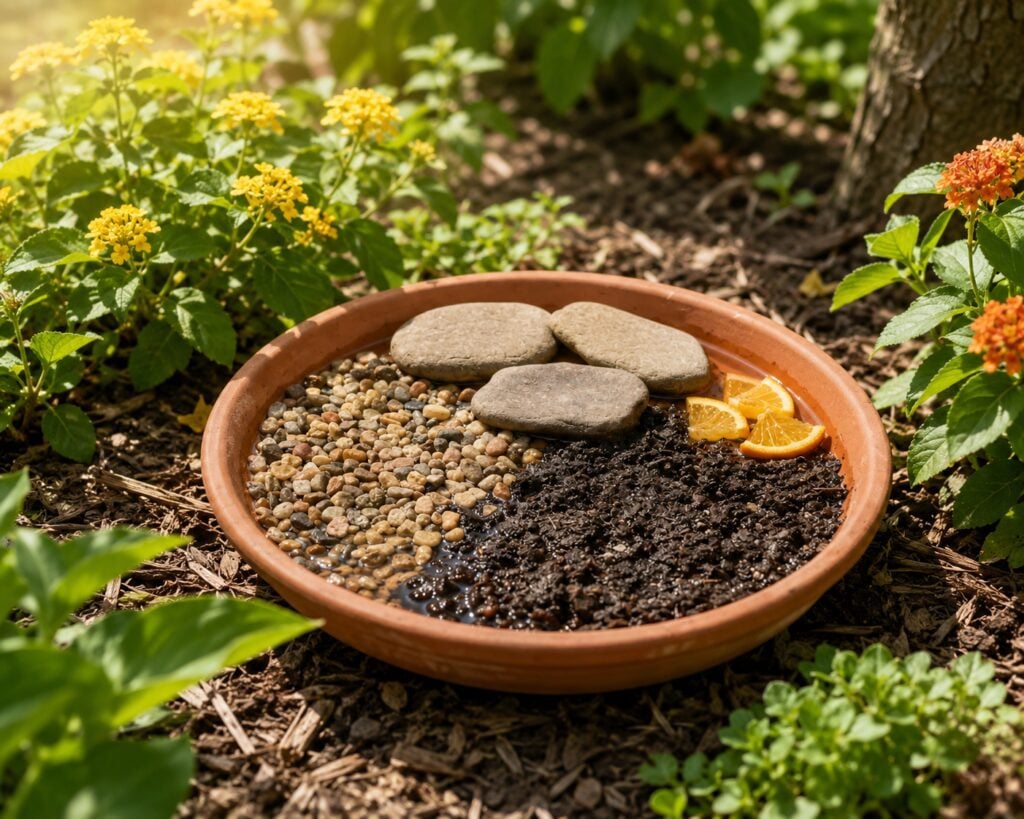
I avoid placing it in a busy area where people walk often.
Butterflies are delicate and easily disturbed, so a quiet garden corner works best. I also avoid areas with strong wind because butterflies need a calm place to land.
If the garden gets very hot, I look for a spot with morning sun and light afternoon shade. This keeps the station warm without drying it out too quickly.
Step 6: Add Fruit for Extra Nectar
Sometimes I add small pieces of fruit to the station. Fruit is optional, but it can make the area more attractive to butterflies. I usually use a small piece of orange, banana, or overripe fruit.
The fruit gives butterflies extra sweetness, similar to nectar.
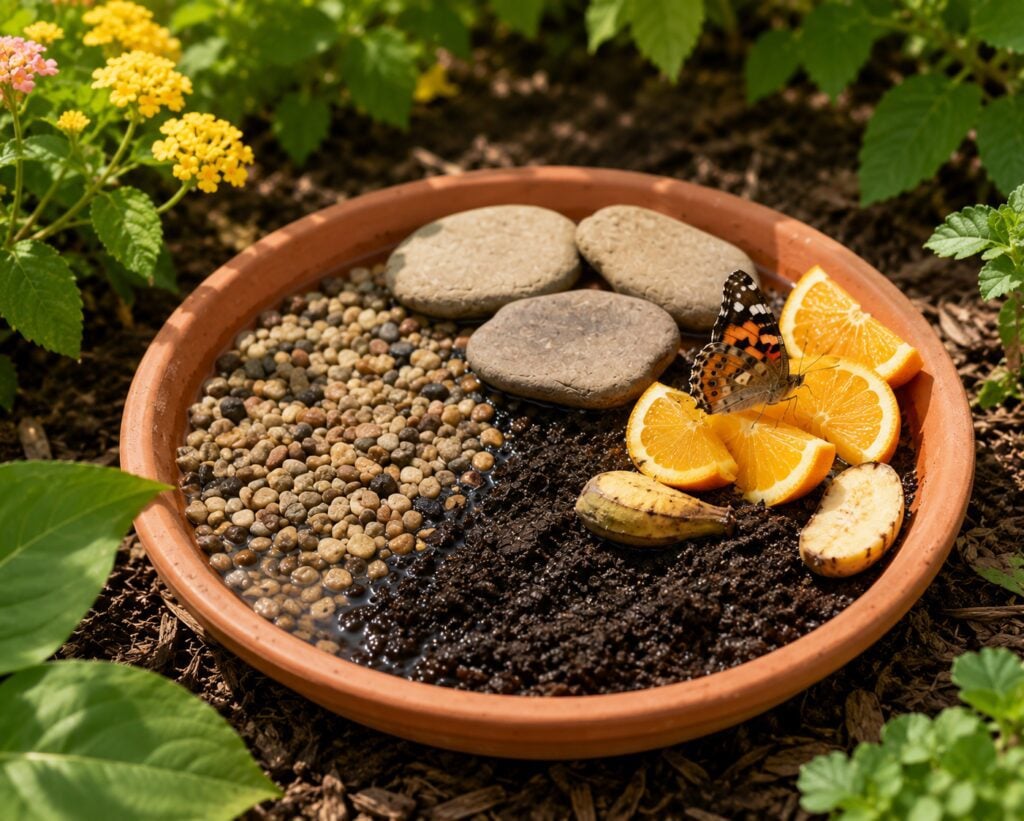
However, I only use a small amount. Too much fruit can attract ants, flies, or other insects.
I also remove old fruit before it becomes rotten.
In my experience, fruit works best as an occasional treat rather than a permanent part of the station. The main feature should still be the moist soil, pebbles, and landing rocks.
How I Maintain the Station?
Maintaining a butterfly puddling station is simple, but it does need regular attention. I check the moisture level almost every day during dry weather. If the soil is dry, I add a little water.
If the water looks dirty or smells bad, I refresh the station.
I also rinse the pebbles and rocks when needed. This keeps the area clean and healthy. If I use fruit, I remove it after a day or sooner if it starts attracting too many insects.
The station should look natural, but not neglected. A clean, moist, shallow setup is much better than a dish full of old water and spoiled fruit.
Common Mistakes to Avoid
One mistake I made early on was adding too much water. I thought more water would be better, but butterflies do not need a mini pond. They need damp soil and safe landing spots.
Another mistake is placing the station in full shade.
Butterflies are more active in warm sunny areas, so shade can make the station less attractive. I also avoid using chemicals, treated soil, or anything that might harm pollinators.
The station should also be low and easy to access. If it is placed too high or hidden away, butterflies may not find it easily.


