
My garden changed the day I stopped reaching for chemical sprays.
Aphids still arrived, leaves still curled, and plants still struggled—but I wanted a solution that felt gentler on the soil and safer around the garden. That search led me to a simple garlic-and-alcohol spray.
I tested it, adjusted it, and learned through experience. What began as a basic gardening tip became one of my go-to natural pest-control methods.
Why I chose a natural insecticide instead of chemical pesticides?
The first thing I realized was that chemical pesticides solved one problem but created many others.
When I used chemical sprays before, I noticed that pests would disappear temporarily, but they always came back stronger. Even worse, beneficial insects like ladybugs and bees also disappeared.
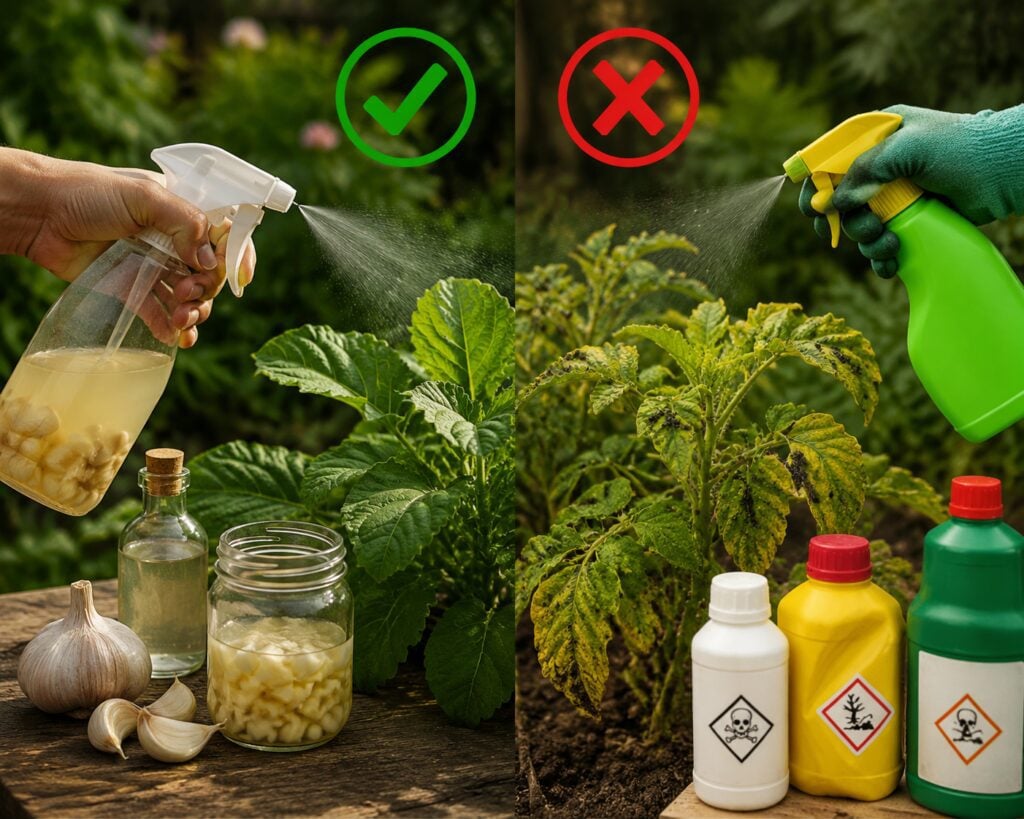
My soil started to feel less alive, and plants did not grow as naturally as before. That is when I started searching for a safer and more balanced solution.
Switching to a natural insecticide garlic spray gave me a way to control pests without damaging the ecosystem in my garden. I wanted something simple, affordable, and safe for long term use, and garlic turned out to be the answer.
Ingredients That I use
The second step in my process was gathering simple ingredients I already had at home. To make this spray, I only needed a few things. Fresh garlic cloves, alcohol, clean water, and a small amount of biodegradable soap.
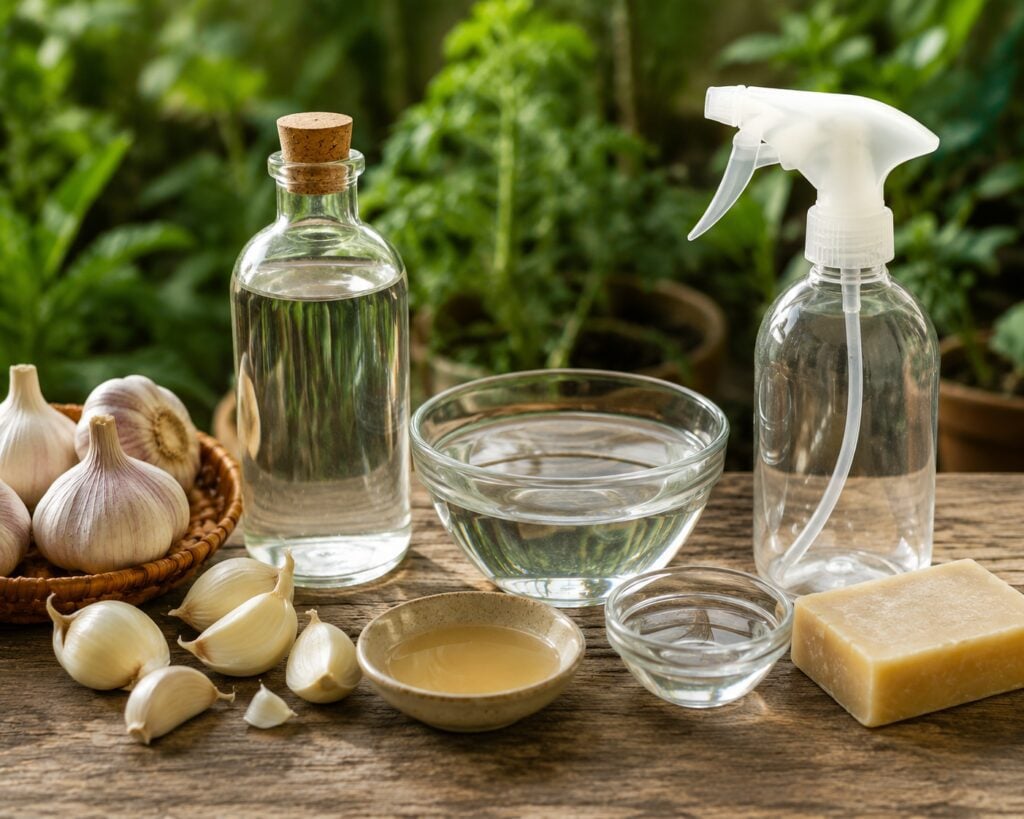
The simplicity surprised me because I expected something complicated, but it turned out to be very practical.
Garlic works as a natural repellent because of its strong sulfur compounds, while alcohol helps extract and preserve those properties. Water dilutes the mixture so it can be safely sprayed on plants, and soap helps the solution stick to leaves where pests usually hide.
Step 1
The third part of my process is preparing the garlic properly to activate its strength. I start by peeling about six cloves of garlic. Then I chop them into very small pieces using a knife.

The smaller the pieces, the better the extraction. I learned this through trial and error because larger chunks did not release enough active compounds.
Once chopped, I crush them slightly to release more natural oils. This step is important because it helps the alcohol extract the garlic’s pest fighting properties more effectively.
I always make sure the garlic is fresh because older garlic loses some potency.
Step 2
The fourth step is combining garlic with alcohol inside a spray bottle.
I place the chopped garlic into a spray bottle and fill it halfway with alcohol. I usually use a simple household alcohol solution. Then I close the bottle tightly and shake it gently to mix everything together.
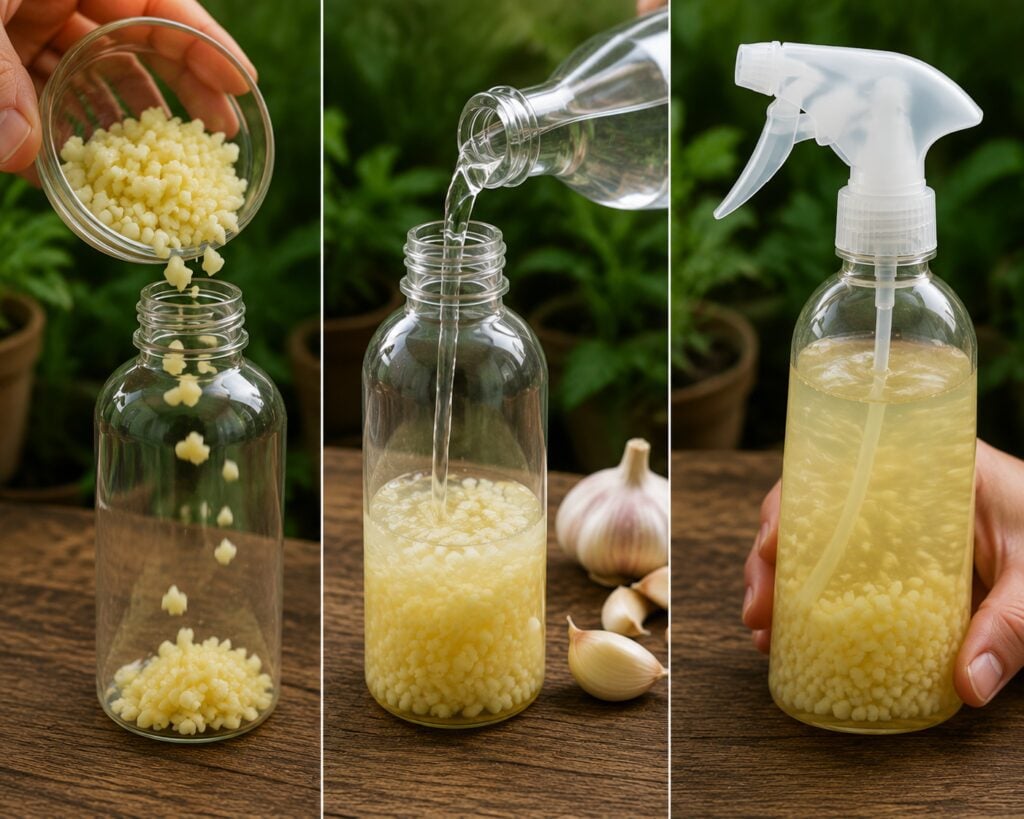
This mixture begins to extract the natural compounds from the garlic. I let it sit in a cool, dark place for the best results. The alcohol acts as a natural solvent that pulls out the strong scent and protective properties of garlic.
Step 3
The fifth step is allowing the mixture to rest so it can fully develop its strength.
I always leave the bottle overnight before using it. This waiting period is important because it allows the garlic to fully infuse into the alcohol. When I first skipped this step, I noticed the spray was less effective, so now I never rush it.
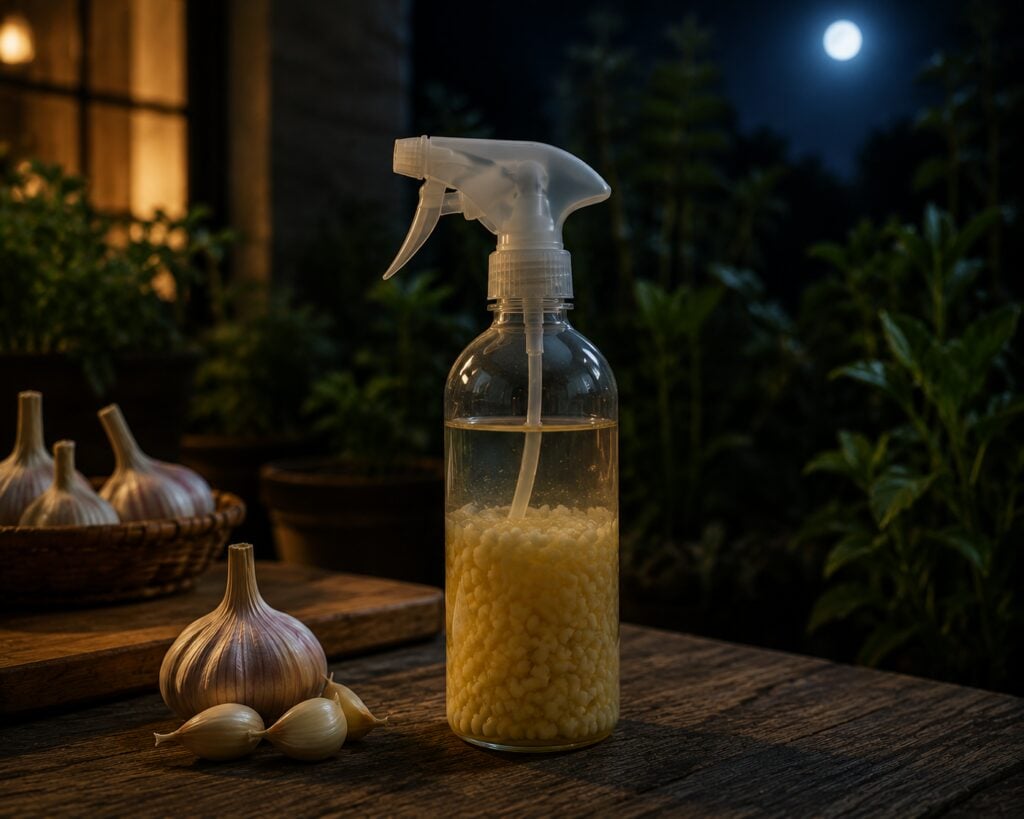
By the next day, the mixture has a strong smell and concentrated properties that help repel insects more effectively. This is when I know it is ready to be diluted and used in the garden.
Step 4
The sixth step is making the solution safe for plants before spraying.
After the mixture has rested, I add clean water to dilute it. This ensures that the spray will not harm delicate leaves. Then I add a small amount of biodegradable soap.
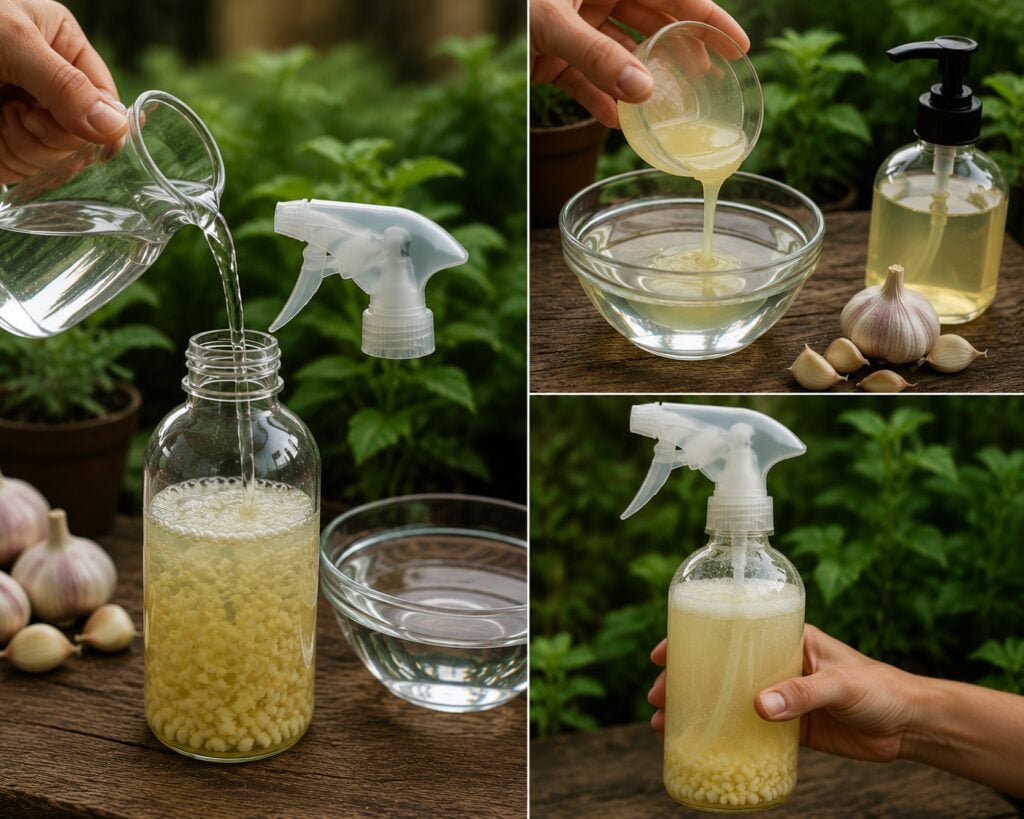
The soap helps the solution stick to plant surfaces, especially the undersides of leaves where pests often hide.
I always mix it carefully because too much soap can damage plants. Over time, I learned that balance is very important in natural gardening solutions like this.
Step 5
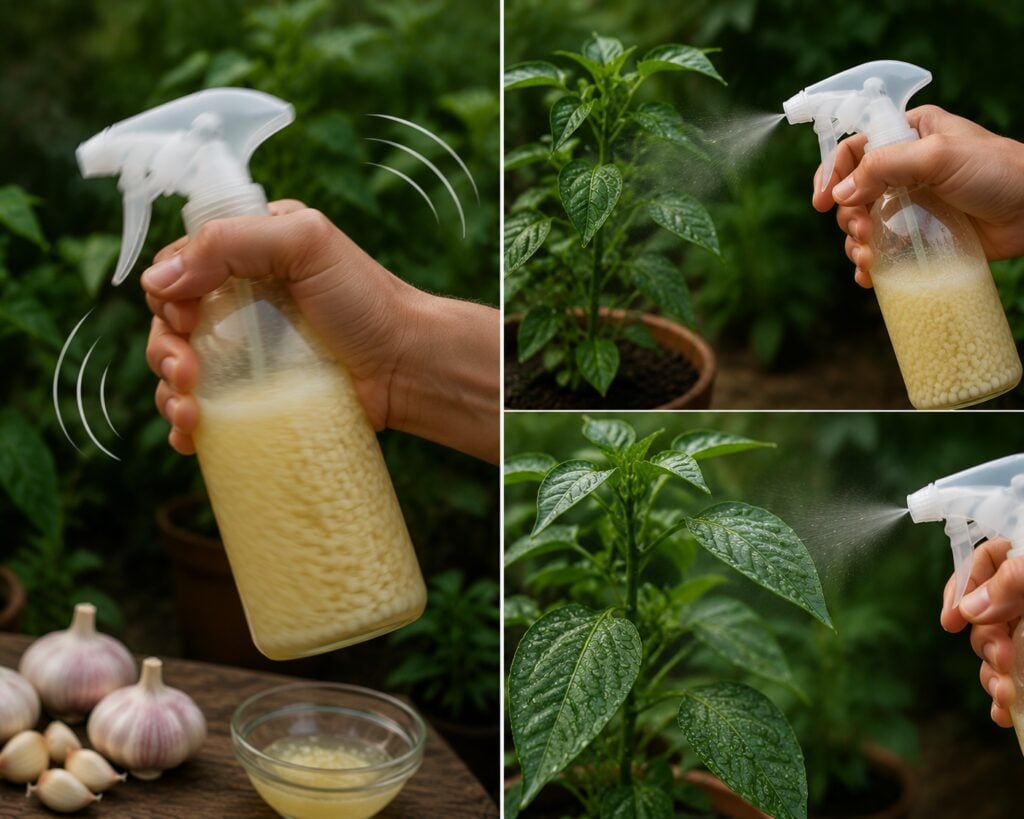
The seventh step is making sure everything is properly mixed before use.
Before spraying, I shake the bottle well to combine all ingredients evenly. Then I spray directly onto affected plants, focusing on areas where pests are visible. I usually spray early in the morning or late in the afternoon to avoid strong sunlight.
I avoid spraying during midday because it can stress the plants. Consistency is key, so I repeat the process every few days if pests persist.
How I use garlic spray?
The eighth part of my experience is integrating this spray into my regular garden care.
I do not wait for pests to take over completely. Instead, I use the spray as a preventive measure. When I notice early signs of aphids or small insects, I immediately apply the garlic spray. This helps control the problem before it spreads.
Over time, I noticed fewer pest outbreaks and healthier plant growth. My garden started to feel more balanced, and I spent less time fighting infestations.
What pests this natural spray works best against?
The ninth thing I learned is that this spray is especially effective against certain types of pests.
In my experience, the natural insecticide garlic spray works very well on aphids, small scale insects, and soft bodied pests that usually attack leaves and stems.
It does not kill beneficial insects in the same harsh way chemical pesticides do, which is something I really appreciate.
However, I also learned that it is not a magic solution. For very severe infestations, it may need repeated application and combined with other natural methods like pruning or improving soil health.
Mistakes I made when first started using garlic spray
The tenth lesson came from mistakes I made during early use.
At first, I sprayed too much solution and damaged a few sensitive leaves. I also skipped dilution once, thinking stronger meant better, but it actually stressed the plants.
Another mistake was not shaking the bottle enough, which made the spray uneven.
These mistakes taught me that natural solutions still require care and balance. Once I adjusted my approach, the results improved significantly.
Benefits I noticed after switching to natural pest control
The eleventh insight is how much my garden improved after using this method consistently.
My plants became stronger, and I saw more natural growth patterns. The soil also seemed more alive because I was not introducing harsh chemicals. I noticed more beneficial insects returning, which helped create a healthier ecosystem overall.
Another benefit was cost. I no longer needed to buy expensive chemical pesticides, and I could make the spray anytime using simple ingredients from my kitchen.
Why I continue using garlic spray today?
The final thing I realized is that simple natural solutions can be incredibly powerful when used correctly.
My experience with natural insecticide garlic spray taught me that gardening does not need to rely on chemicals to be effective. With patience and observation, I learned how to work with nature instead of against it.
Today, I continue using this method because it is safe, affordable, and effective for long term garden health.
It is not just a spray for me anymore.
It has become part of how I care for my garden naturally and sustainably.


