
When I first started gardening, I thought mulch was simple. I assumed anything spread over the soil would automatically help plants grow better. I bought whatever looked cheap, easy, or attractive without really understanding how different mulch materials affect the soil underneath.
Over time, I learned that some mulch types can quietly create serious problems while others completely transform a garden for the better.
Some mulch materials trap too much heat, release harmful chemicals, or damage soil life over time.
Others improve moisture retention, feed the soil naturally, and help plants thrive.
After years of experimenting in my own garden, I’ve learned that choosing the right mulch can make the difference between stressed plants and healthy, vigorous growth.
Why Mulch Matters More Than Most Gardeners Think?
One thing I underestimated early on was how much mulch influences the overall health of a garden. I originally viewed mulch as something decorative that simply made garden beds look cleaner.
But once I paid attention to how soil behaved with and without mulch, I realized it affects almost everything happening underground.
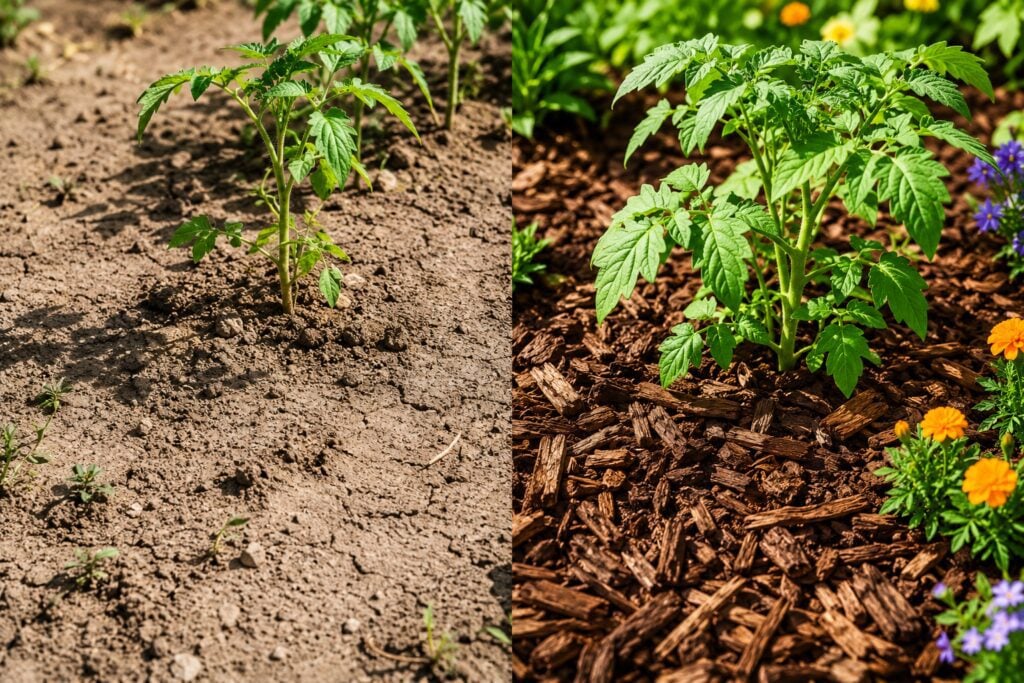
Good mulch helps regulate soil temperature, reduce moisture loss, suppress weeds, and improve soil structure over time. It creates a more stable environment for roots, earthworms, and beneficial microorganisms.
Without mulch, I noticed several recurring problems in my garden:
- Soil drying out too quickly
- Increased weeds
- Hard, compacted soil
- Root stress during hot weather
- Frequent watering needs
- Poor soil quality over time
Once I started using better mulch materials consistently, the entire garden became easier to maintain. Plants looked healthier, watering became less frequent, and the soil slowly became richer and more alive.
The Mulch Mistakes I Regret Making
Looking back, I made several mulch mistakes simply because I followed trends or chose materials based on appearance instead of function.
Some mulch types looked attractive at first but created hidden issues months later. Others seemed convenient but actually harmed the soil ecosystem underneath.
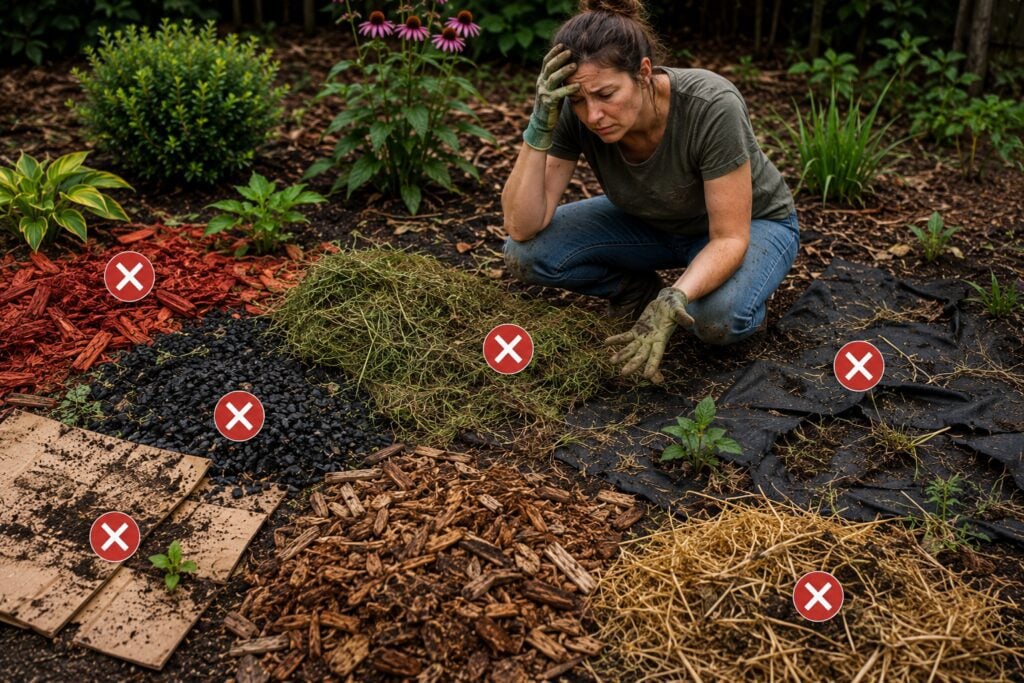
One of the biggest lessons I learned is that mulch should support the health of the soil, not just improve the appearance of the garden bed. Now I pay much closer attention to how mulch behaves in heat, rain, and long term decomposition.
Why I Avoid Dyed Mulch?
At one point, I used dyed red mulch because I thought it made the garden look bold and polished. At first glance, it looked impressive. The colors stood out sharply against green plants, and the garden appeared professionally landscaped.
But over time, I started questioning what was actually inside the material.
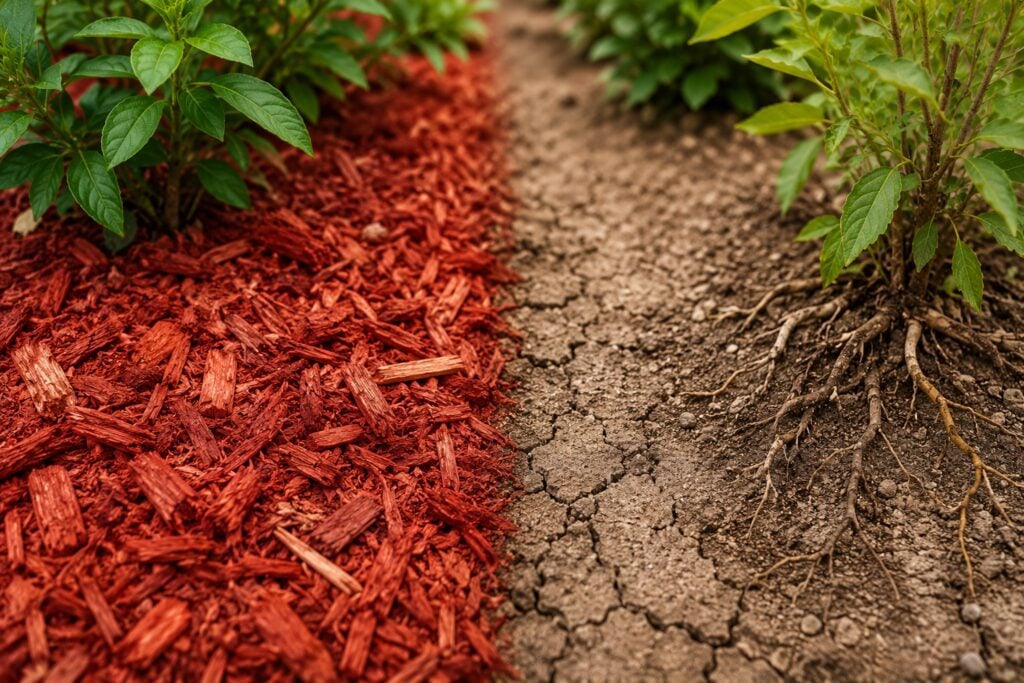
Many dyed mulches are made from recycled wood waste, including old pallets, construction debris, or chemically treated wood. Some may contain residues from paints, fungicides, or preservatives that are not ideal for healthy soil.
I also noticed dyed mulch absorbed and held heat more intensely during summer afternoons. The surface became extremely hot under direct sunlight, which increased stress around sensitive roots.
Eventually, I stopped using dyed mulch entirely. I realized I cared more about healthy soil than artificial color.
Why Rubber Mulch Made Me Uncomfortable?
Rubber mulch is often marketed as low maintenance and long lasting, but personally, I stopped considering it after seeing how it behaved in hot weather.
During warm days, rubber mulch can become extremely hot. I remember touching it once during summer and being surprised by how much heat it retained compared to organic mulch nearby.
Beyond temperature concerns, I also became uncomfortable with the idea of petroleum based material sitting directly in the garden.
Over time, rubber can slowly release compounds into the soil, especially under intense sunlight and rain exposure.
Another thing I disliked was how lifeless the soil underneath became. Organic mulch naturally breaks down and feeds the soil. Rubber simply sits there without contributing anything beneficial to soil health.
For decorative playground areas it may work for some people, but for productive garden beds and healthy soil biology, I personally avoid it completely.
The Problem With Thick Grass Clippings
Grass clippings seem harmless because they are natural, but I learned that applying them too thickly can create serious problems.
The first time I used fresh grass clippings heavily around vegetables, the top layer quickly became wet, dense, and compacted. Instead of helping the soil breathe, it trapped moisture excessively and started producing an unpleasant smell.
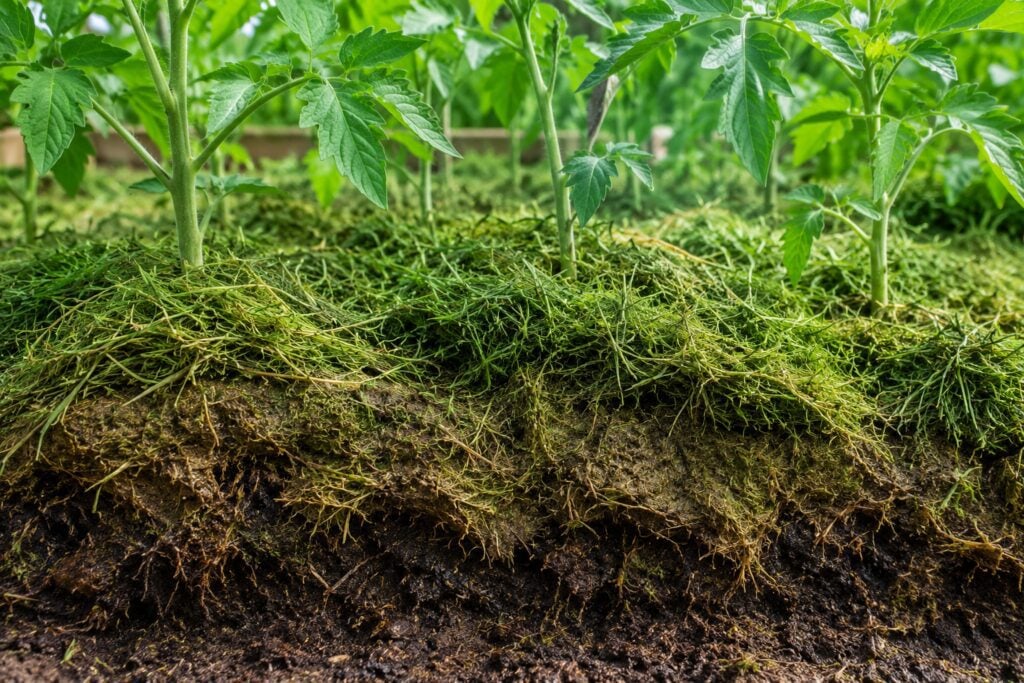
That happened because the clippings began decomposing anaerobically, meaning without enough airflow. When this occurs, the mulch can ferment and create heat that stresses nearby roots instead of protecting them.
Now, if I use grass clippings at all, I only apply very thin layers and allow them to dry slightly first.
Thin layers break down much more safely and integrate into the soil naturally.
Why Black Plastic Causes More Harm Than Help?
For a short period, I experimented with black plastic weed barriers because I was tired of constantly pulling weeds.
At first, it seemed effective. Weeds disappeared quickly, and the surface looked neat. But after several months, the soil underneath became noticeably unhealthy.
The biggest issue was heat buildup. Black plastic absorbs intense sunlight and traps heat around the root zone. During summer, the soil underneath became excessively warm.
I also noticed poor water penetration and reduced soil activity.
Earthworms practically disappeared beneath areas covered in plastic.
Eventually, the plastic started degrading from sun exposure and becoming brittle. Small fragments broke apart into tiny pieces that were difficult to remove completely.
That experience convinced me that short term convenience often creates long term soil problems.
My Frustration With Landscape Fabric
Landscape fabric initially sounds like the perfect solution because it promises weed control while allowing water through. Unfortunately, my real experience was much less impressive.
In the beginning, it worked reasonably well. But after a couple of seasons, weeds started growing on top of the fabric anyway as organic debris accumulated above it.
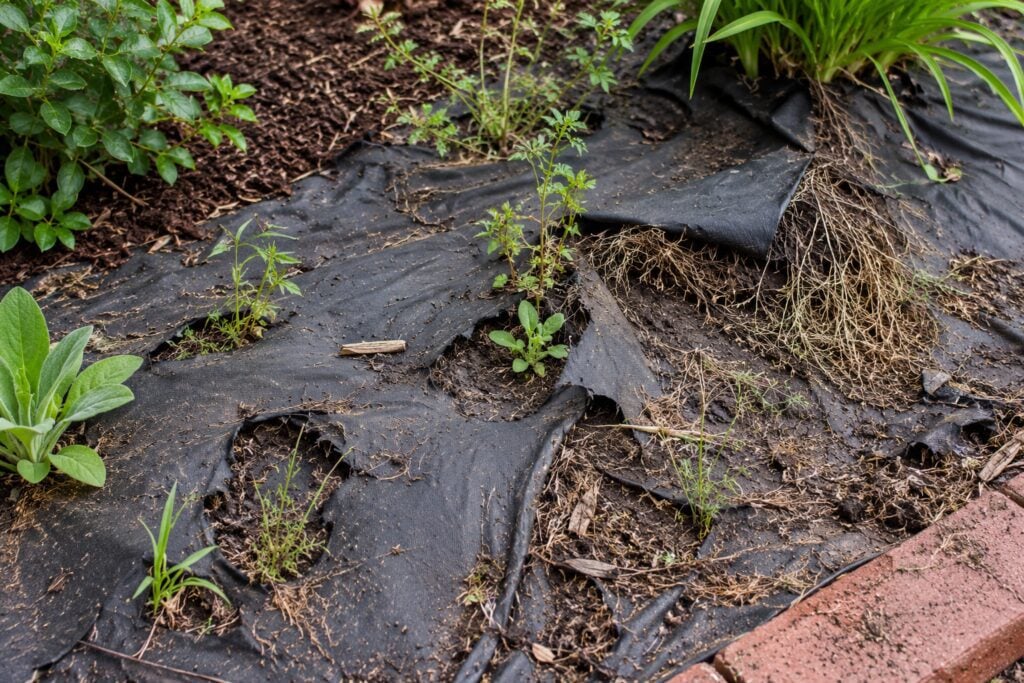
At the same time, roots from nearby plants often became tangled within the material, making future garden maintenance frustrating and messy.
The biggest issue came later when the fabric began breaking down into thin plastic fragments.
Removing old landscape fabric from established beds became one of the most annoying gardening jobs I’ve ever done.
Now I prefer natural solutions that improve the soil rather than introducing materials that become difficult to manage later.
Why Cardboard Became One of My Favorite Mulch Options?
Cardboard completely changed how I approach weed suppression in my garden. I started using plain brown cardboard beneath mulch layers, and the results were surprisingly effective.
It blocks weeds naturally while slowly breaking down into the soil over time.
One thing I love most about cardboard is how it encourages earthworm activity. After several months, the cardboard softens and integrates into the soil naturally instead of leaving behind waste.
I usually remove tape, glossy printing, and labels before using it. Then I wet the cardboard thoroughly before covering it with mulch. The combination works incredibly well for creating healthier planting beds while reducing weeds naturally.
Why Arborist Wood Chips Work So Well?
Out of all mulch types I’ve tested, arborist wood chips have become one of my personal favorites. These chips usually come from fresh tree trimmings and contain a mix of bark, leaves, and wood pieces.
That diversity creates excellent organic matter for the soil.
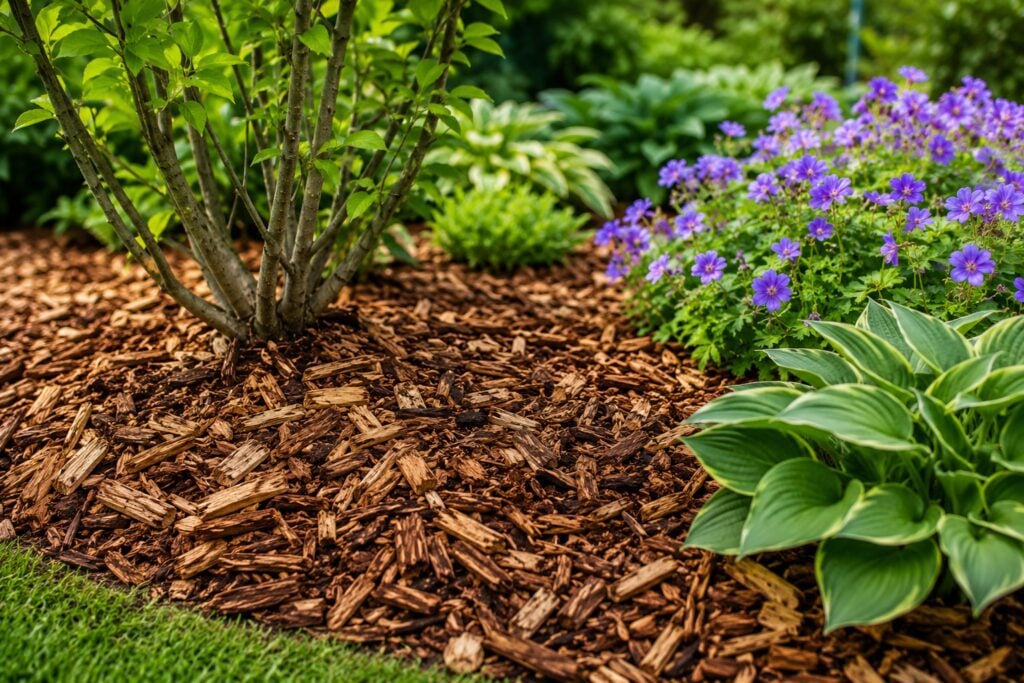
One of the biggest advantages is that arborist chips break down slowly while continuously feeding the soil underneath. Over time, I noticed dramatic improvements in soil texture and moisture retention.
Another benefit is temperature regulation. Thick wood chip layers protect roots from both extreme heat and sudden cold.
I also appreciate that arborist mulch looks natural.
Instead of appearing overly artificial, it blends beautifully into almost any garden style.
Why Shredded Leaves Are Surprisingly Powerful?
Every autumn, I collect fallen leaves instead of throwing them away. Once shredded, they become one of the best free mulch materials I’ve ever used.
Whole leaves can mat together and repel water, but shredded leaves behave very differently.
They create a lighter, breathable layer that protects the soil while decomposing gradually.
The soil life beneath shredded leaf mulch becomes incredibly active. Earthworms, insects, and microorganisms thrive underneath it.
I especially love using shredded leaves around flower beds and vegetable gardens because they enrich the soil naturally without costing anything.
Why Straw Works Better Than Many People Realize?
Straw became especially useful in my vegetable garden. Unlike hay, clean straw contains fewer weed seeds and creates an excellent protective layer around plants.
It helps keep fruits and vegetables off wet soil while dramatically reducing evaporation during hot weather.
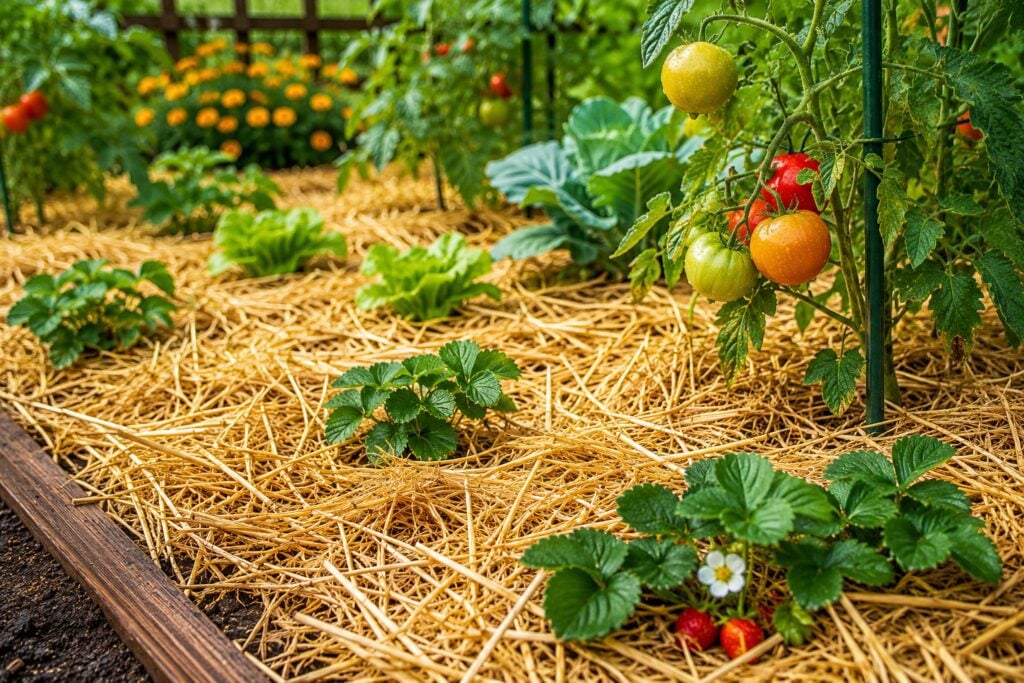
I noticed that tomatoes, strawberries, and cucumbers all benefited from straw mulch because the soil stayed cooler and cleaner underneath.
Straw also breaks down gradually over time, contributing organic matter back into the soil naturally. The key is using actual straw rather than hay, since hay often introduces unwanted weeds into the garden.
My Final Thoughts on Choosing the Right Mulch
After years of gardening mistakes and experimentation, I’ve realized that mulch is much more than decoration. It directly affects soil health, moisture retention, root temperature, and long term plant performance.
Now I focus on mulch materials that improve the soil instead of simply covering it.
Natural mulch options like wood chips, shredded leaves, straw, and cardboard consistently produce the best results in my garden because they support the entire ecosystem underneath the surface.
Meanwhile, synthetic materials often create hidden problems that become frustrating later.
The healthiest gardens I’ve grown always started with healthier soil. And in many cases, the right mulch was one of the biggest reasons that soil improved over time.


