
As a homeowner, one of the most critical aspects of maintaining your property is ensuring the foundation remains intact. A strong, undamaged foundation is essential for the overall structural integrity of your home.
One of the biggest threats to your foundation is excess water, which can lead to cracks, leaks, and even structural instability.
In my years of homeownership, I’ve learned that managing water around the foundation is crucial to avoid long-term damage. It’s a problem many homeowners overlook until it’s too late.
How Excess Water Affects Your Home?
When it rains or when there’s excessive moisture in the ground, water accumulates around your home’s foundation. Over time, this excess water can lead to serious problems.
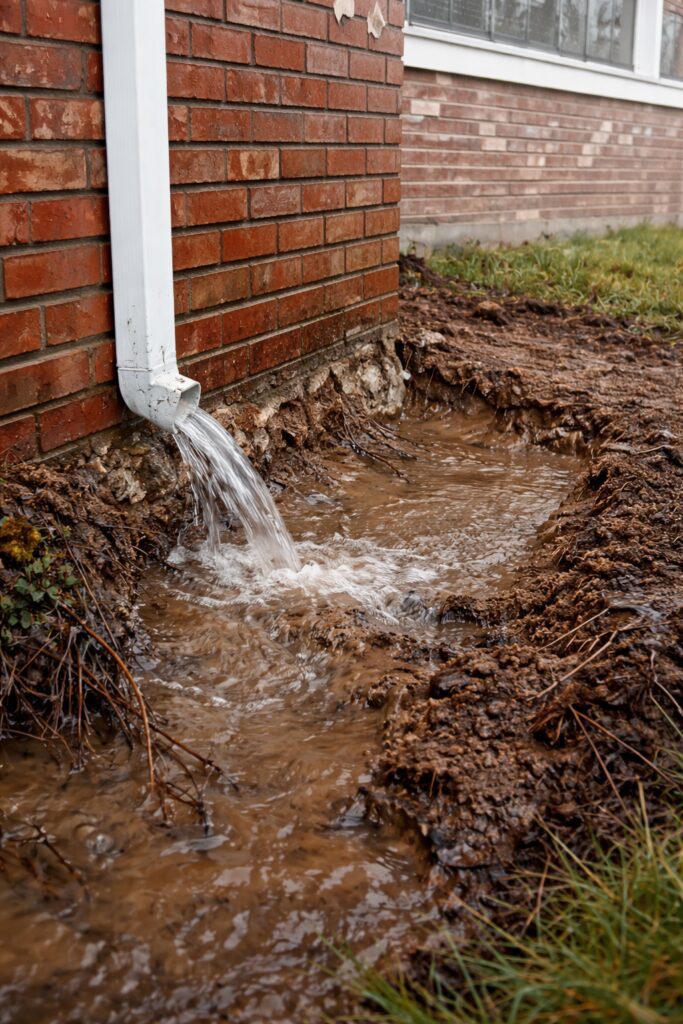
From my experience, I’ve learned that ignoring this issue can lead to:
- Cracks in the foundation: As water seeps into the soil around your foundation, it can cause the ground to expand and contract. This movement can lead to cracks in the foundation walls, which can weaken the structure of your home.
- Basement flooding: Excess water around the foundation often leads to water seeping into the basement, causing flooding. This can damage flooring, walls, and any belongings you may have stored in the basement.
- Soil erosion: Water runoff can erode the soil around your foundation, further destabilizing the structure of your home and leading to uneven settling.
I realized these risks when I started noticing water pooling near the foundation of my house after heavy rainfalls. The problem wasn’t just cosmetic; it was a serious issue that needed to be addressed to prevent further damage.
Catch Basins and Grates
After noticing the water pooling near my foundation, I did some research and found that the best solution to this problem is installing catch basins and grates.
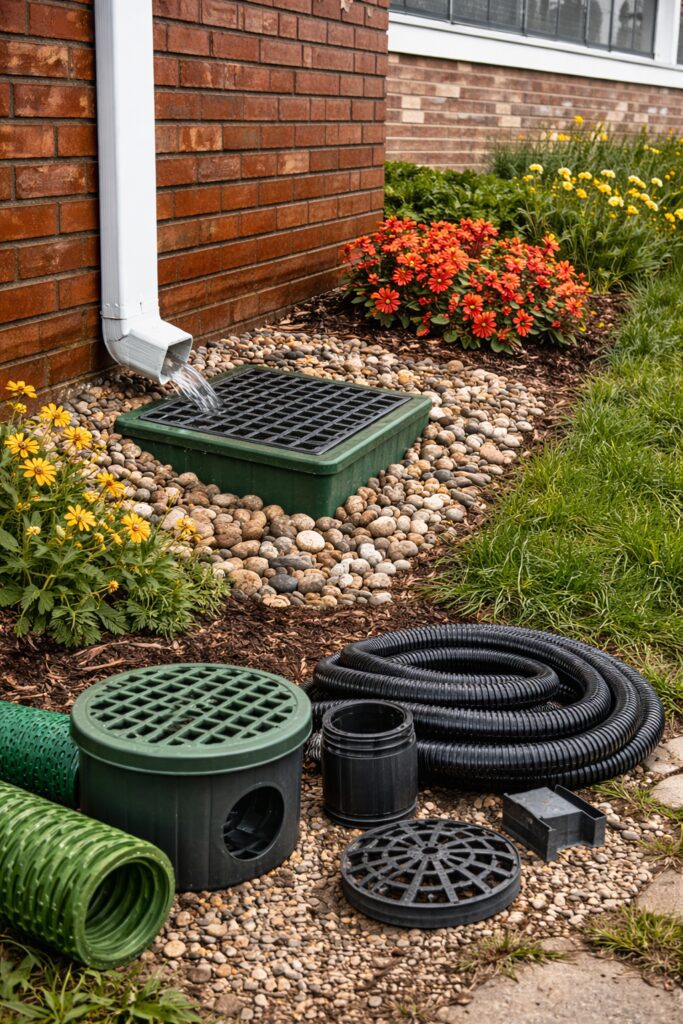
These two elements work together to collect and divert excess water away from your foundation, protecting it from the damaging effects of water accumulation.
1. Catch Basins: A Simple Yet Effective Solution
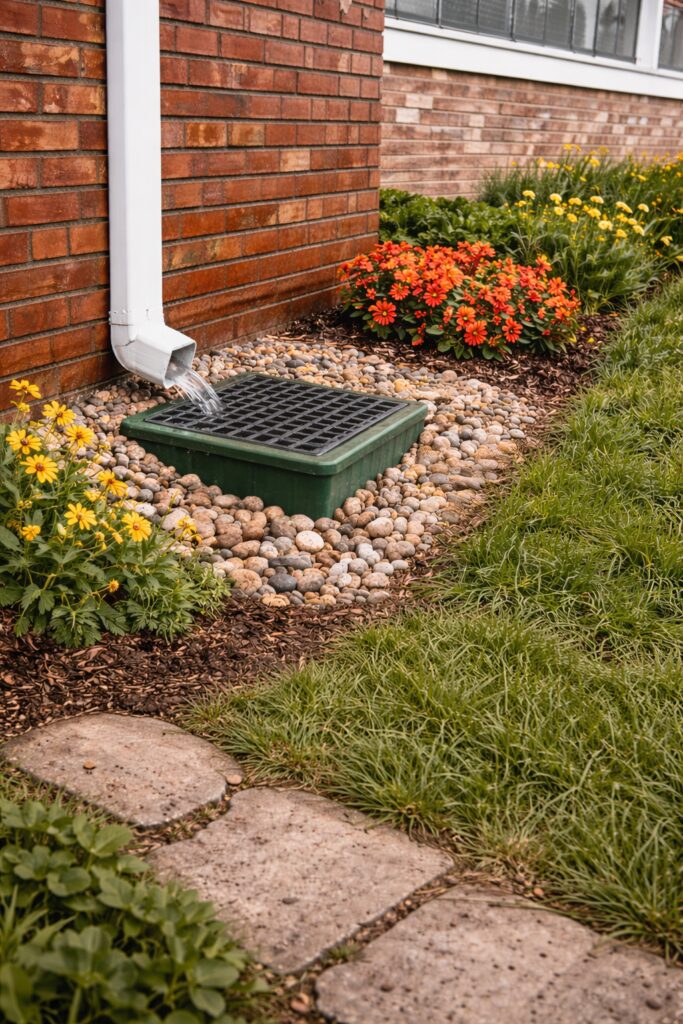
Catch basins are designed to collect and channel excess water away from the foundation of your home. They are typically installed at the lowest points of your yard or near downspouts to catch water before it can pool near the foundation.
I found that catch basins come in various sizes and designs, and they’re relatively easy to install, especially if you’re working with a professional.
The basin is usually placed beneath the surface and connected to a drainage system that carries the water to a safe location away from your home.
The benefits of catch basins include:
- Prevention of water accumulation: By collecting the water before it accumulates around your foundation, catch basins stop water from seeping into the ground and causing damage.
- Improved water flow: Catch basins help maintain proper water flow, ensuring that water is directed away from your foundation and basement walls.
- Ease of maintenance: Catch basins are relatively easy to maintain. Regular cleaning and clearing of debris ensure that they continue to work effectively year-round.
2. Grates: Essential for Diverting Water
Grates are typically installed over catch basins to prevent debris from entering the basin while allowing water to flow freely through. They play a crucial role in keeping your drainage system functioning smoothly.
The grates come in various materials, such as metal or plastic, and can be customized to fit the aesthetic of your yard. I found that having sturdy grates over the catch basins ensures that water is directed properly without any obstruction.
They also help prevent large debris, such as leaves and dirt, from clogging the system, which could cause water to back up and flood your yard.
Benefits of grates include:
- Preventing blockages: The grates prevent leaves, sticks, and other debris from entering the drainage system and causing clogs, which could lead to flooding or water damage.
- Aesthetic appeal: Grates are available in different designs and materials, allowing you to choose one that complements your home’s outdoor aesthetic.
- Durability: Grates are designed to withstand heavy foot traffic, and some can even handle vehicles, ensuring they last for years without damage.
How to Install Catch Basins and Grates?
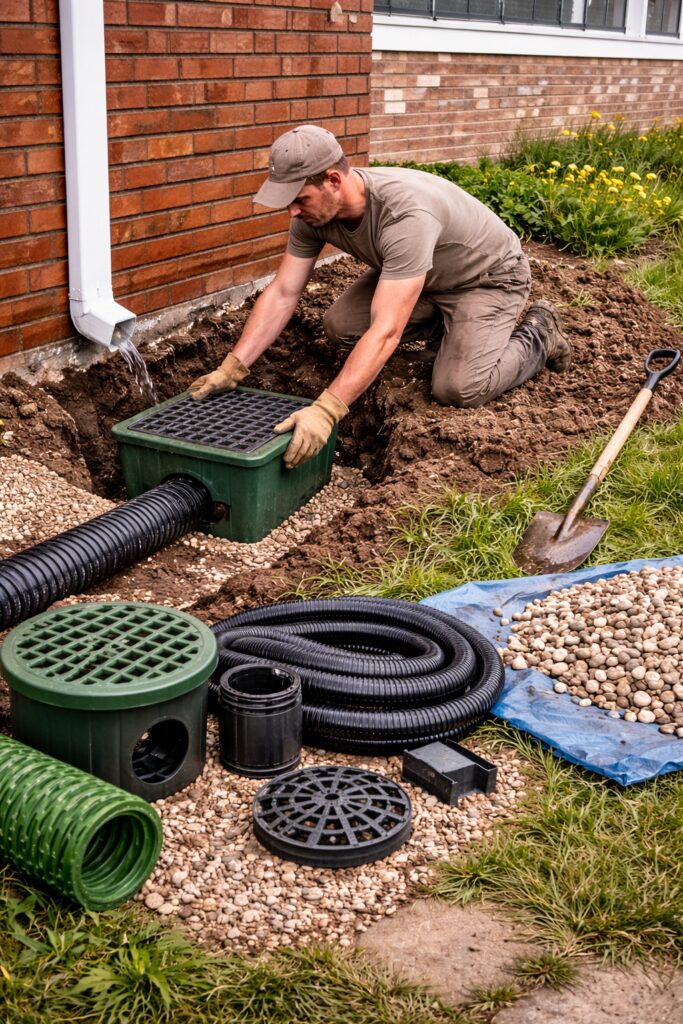
When I decided to install catch basins and grates around my foundation, I took the following steps to ensure that the installation was done correctly:
Step 1: Assess the Area
The first step in installing catch basins is to assess where the water tends to accumulate around your home. I noticed that water would pool in certain areas, especially near the downspouts.
These were the areas where I focused on placing the catch basins.
Step 2: Plan the Layout
Once I identified the areas where water collected, I mapped out the best places to install the basins and grates. It’s important to place them in areas where water naturally flows, so they can catch and redirect the water effectively.
Step 3: Digging the Trenches
Next, I had to dig trenches to install the basins and connect them to the drainage system. While this can be a bit labor-intensive, the process was straightforward, and I made sure the trenches were sloped properly to ensure that water would flow away from the foundation.
Step 4: Install the Catch Basins and Grates
After digging the trenches, I placed the catch basins into the holes and connected them to the drainage pipes. I then installed the grates over the basins, ensuring they were securely fastened and properly aligned.
Step 5: Test the System
Once the catch basins and grates were in place, I tested the system by running water through it to ensure that it flowed smoothly and away from the foundation.
This step was crucial to make sure the system would work as expected during heavy rainfall.
Keeping Your System Working Effectively
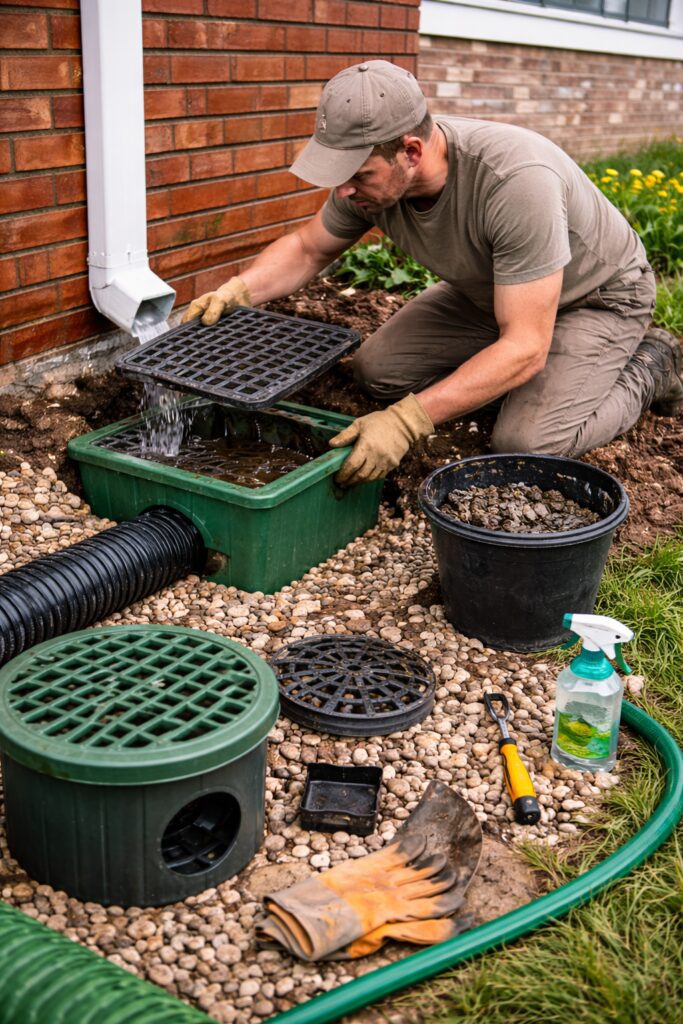
To keep your catch basins and grates working properly, regular maintenance is essential. Here are some tips based on my experience:
- Clean the grates regularly: Over time, leaves, dirt, and other debris can accumulate on the grates. I made it a habit to clean them every few weeks to ensure the water flows freely.
- Inspect the basins: I also regularly checked the catch basins for any debris that may have entered and cleaned them out as needed. Keeping the basins clean ensures they continue to collect water efficiently.
- Check the drainage pipes: It’s essential to inspect the drainage pipes periodically for any clogs or damage. If the pipes become blocked, they won’t be able to redirect water away from your foundation, so I made sure to clear any blockages promptly.
Protecting Your Home’s Foundation with Simple Solutions
Excess water around your home’s foundation can lead to serious damage if left unaddressed. Installing catch basins and grates is an effective and relatively simple solution to this problem.
By collecting and redirecting water away from your foundation, you can prevent cracks, flooding, and soil erosion.
From my experience, these systems have been a game-changer in protecting my home’s foundation. They require minimal maintenance, and once installed, they continue to work effectively year-round.
If you’re noticing water around your foundation, I highly recommend considering this solution to safeguard your home and prevent costly damage in the future.


