I did not need a garden bed to grow potatoes; just a cheap laundry basket, a paper bag, and some soil.
I line the basket, add a layer of soil, plant the potatoes, then keep topping it up as the stems grow. The basket is light, easy to move, and works well on a patio, balcony, or any small corner.
What makes this method so useful is its simplicity. There is no heavy digging, no expensive container, and harvesting is much easier than searching through a full garden bed.
Why I Like Growing Potatoes in Baskets?
The laundry basket was never meant for potatoes, but it turned out to be one of the most practical containers I could use.
It fits neatly beside a fence, on a deck, or in any sunny corner without taking over the whole space.
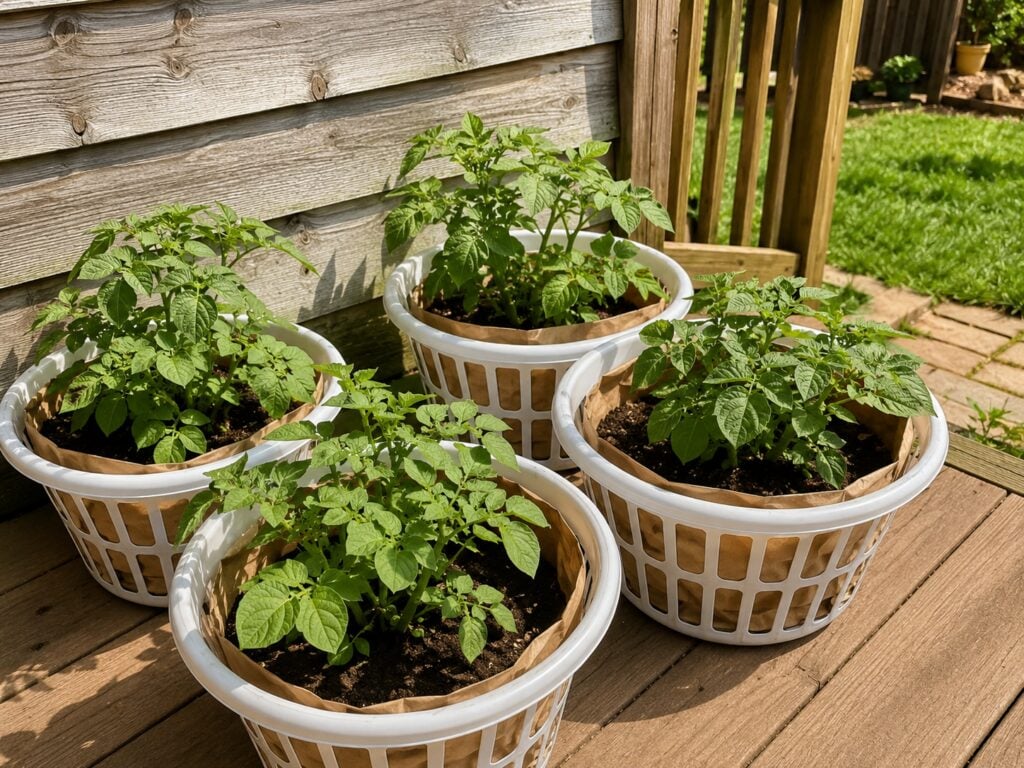
The basket is deep enough for the plants to develop, while the holes along the sides help excess water escape. That matters because potatoes do not grow well in constantly soggy soil.
The paper bag liner keeps the soil from spilling out but still allows some airflow. It is simple, inexpensive, and much easier to move than a heavy planter.
Best of all, I do not need to spend money on special grow bags. For a small garden, a limited budget, or a first attempt at growing food, this setup feels practical rather than complicated.
What I Use for This Setup?
Before any soil goes into the basket, I lay everything out first: a sturdy laundry basket, paper bags, loose potting mix, seed potatoes, water, and a little compost if I have it.
The basket needs to be strong because wet soil becomes surprisingly heavy.
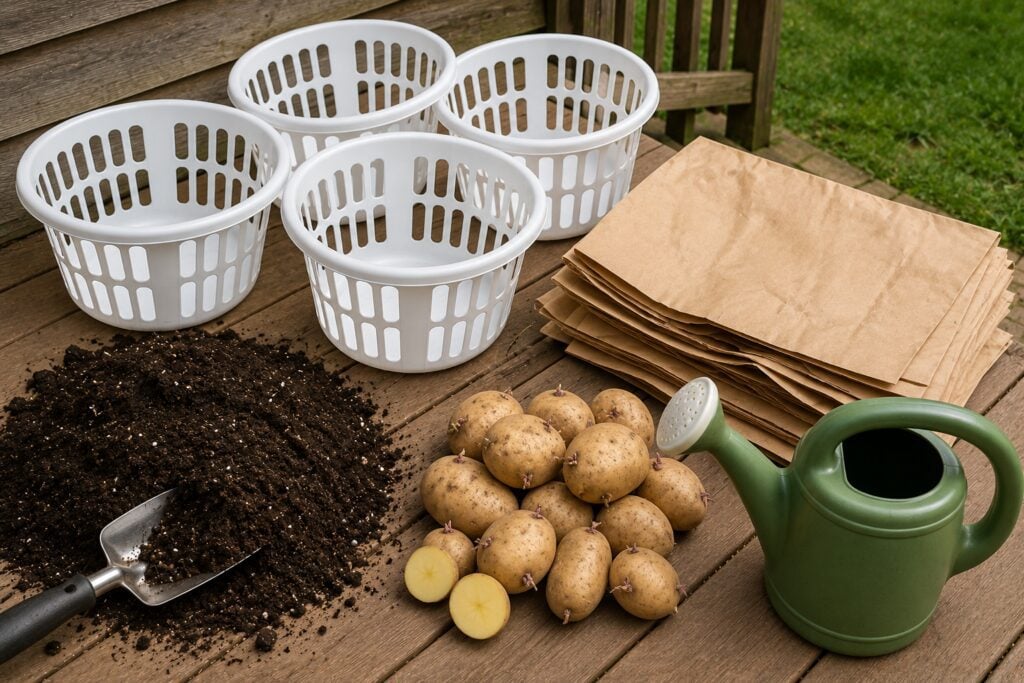
I shape the paper bags inside to stop soil from spilling through the holes while still allowing airflow. The paper will soften over time, but the basket provides the real support.
For planting, I prefer seed potatoes rather than using whatever is left in the kitchen. If they are large, I cut them into smaller pieces and make sure each one has at least one or two healthy eyes.
A few simple materials and a little preparation make the whole process much easier.
How I Prepare the Basket?
The basket only works well if the bottom is set up properly, so I start by shaping the paper bag inside and pressing it gently against the sides.
It does not need to look perfect. The liner only needs to cover the holes well enough to keep the soil from spilling out.
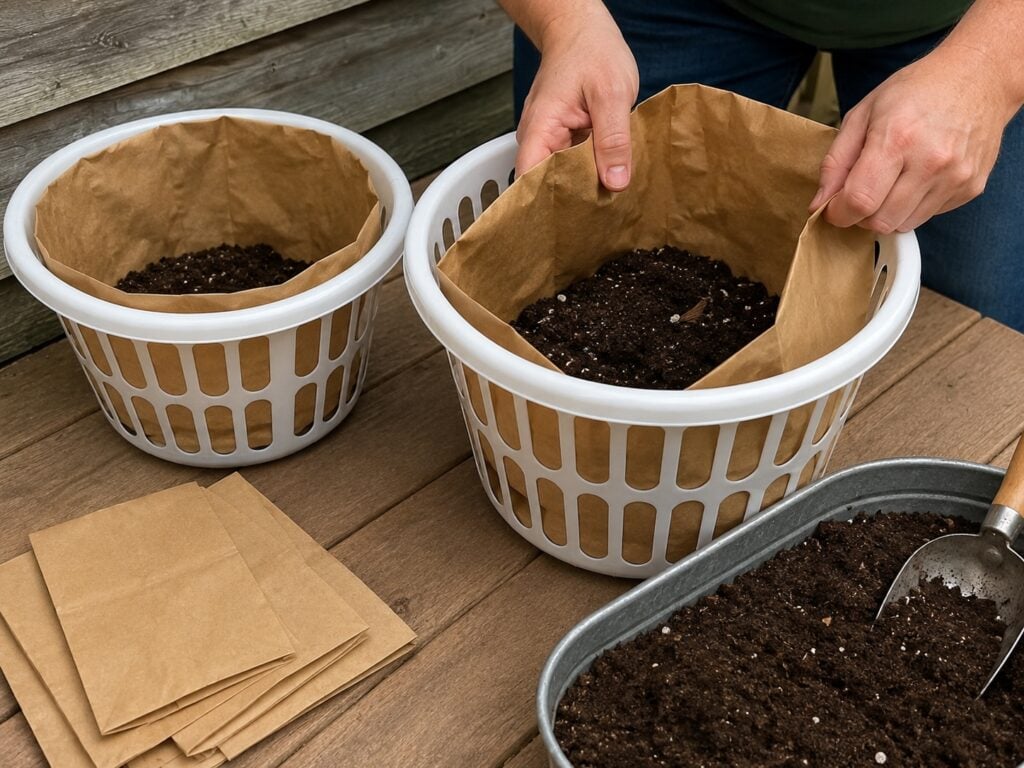
I fold the extra paper inward so it sits neatly without removing too much.
Next, I fill the basket only about one quarter full. Potatoes need room for more soil later, so starting with a low layer is important.
I also keep the soil loose and crumbly rather than packing it down. If it feels heavy, I mix in compost or lighter potting mix. The softer the soil, the easier it is for the potatoes to develop underground.
How I Plant the Potatoes?
Spacing matters more than squeezing in an extra potato.
I spread a few seed potatoes across the soil, leaving enough room between them so they are not fighting for space and nutrients. Smaller basket, fewer potatoes. Simple as that.
When possible, I place the eyes facing upward, cover everything with a few inches of loose soil, and press only lightly. The soil should hold them in place, not feel packed down.
Then I water just enough to moisten the basket. The drainage holes help, but I still avoid soaking it. Potatoes grow better with steady moisture than with soggy soil.
Adding Soil as the Plants Grow
This is where the basket starts to work differently from an ordinary pot.
As the shoots grow taller, I add more soil around the stems, covering the lower section while leaving the top leaves exposed. This hilling step keeps developing potatoes away from sunlight, which can turn them green and unsafe to eat.
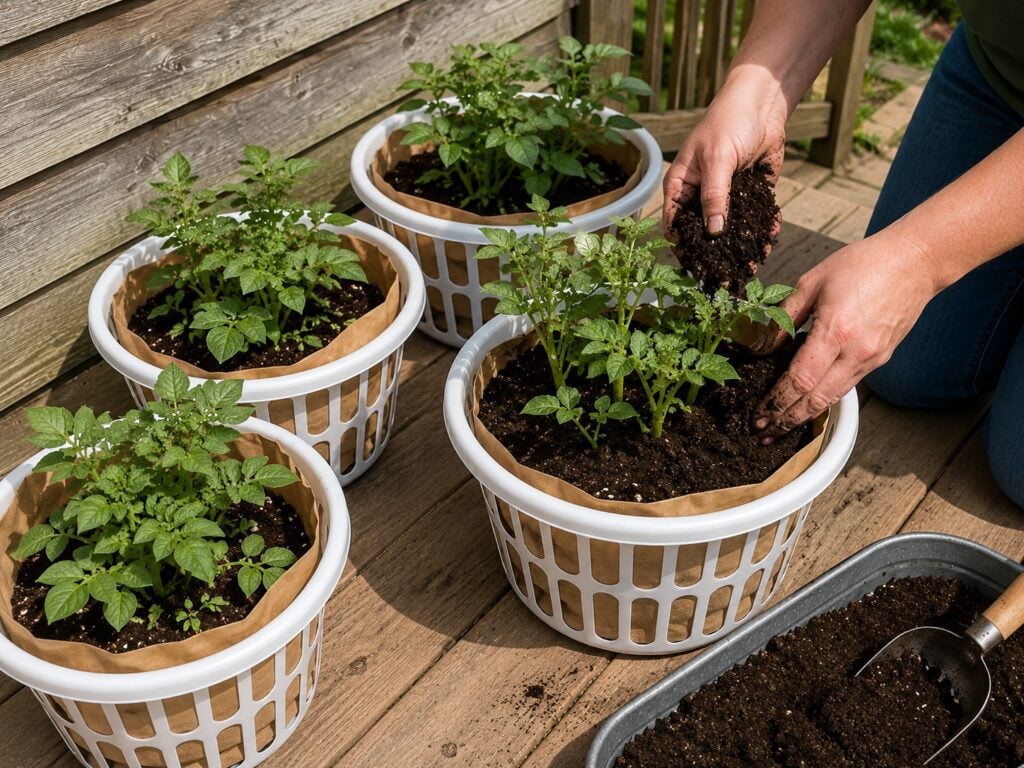
I repeat the process little by little until the basket is almost full. It is simple, but it keeps me involved. A quick check, another layer of soil, and the plants are ready to keep growing.
Watering and Sunlight Tips
The basket can look fine on top while drying out quickly underneath, so I check the soil instead of guessing.
I press a finger into the top layer and water only when it feels dry below the surface. The goal is steady moisture, not soggy soil.
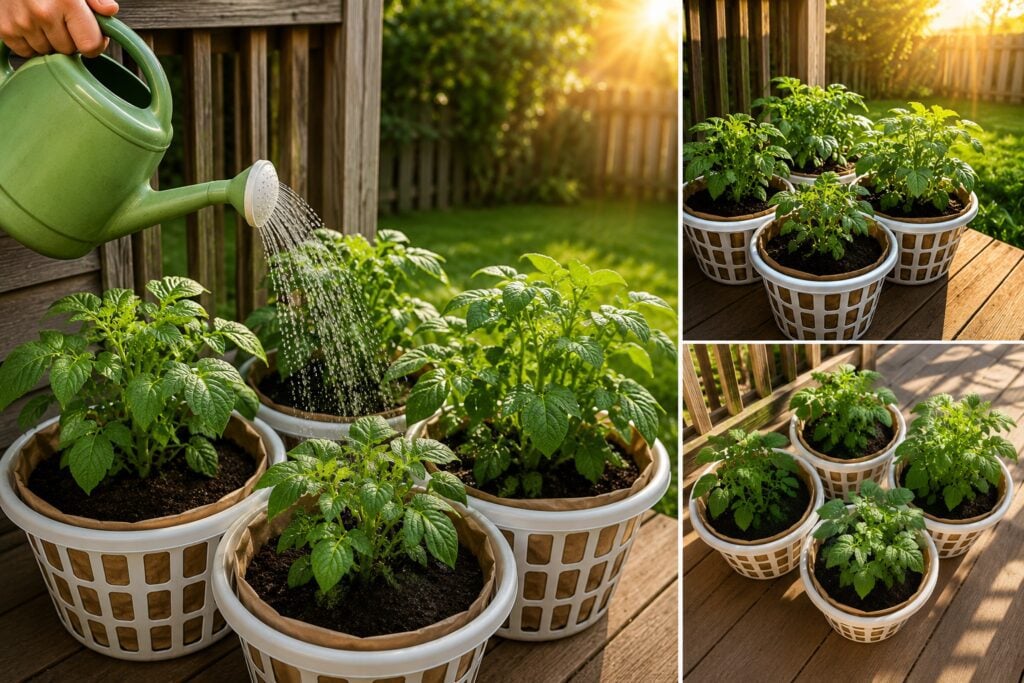
I keep the baskets in a sunny spot where the plants get several hours of direct light, but I watch them more closely during hot weather because containers dry faster than garden beds.
I also keep the baskets off standing water. A deck, patio, or slightly raised surface allows air to move around the sides and bottom, helping the roots stay healthier.
What to Watch For While They Grow?
Most potato problems show up in the leaves before they affect the harvest.
I check the baskets every few days for early yellowing, drooping, or insect damage. Before watering, I always test the soil first because wilted leaves can mean either too little water or too much.
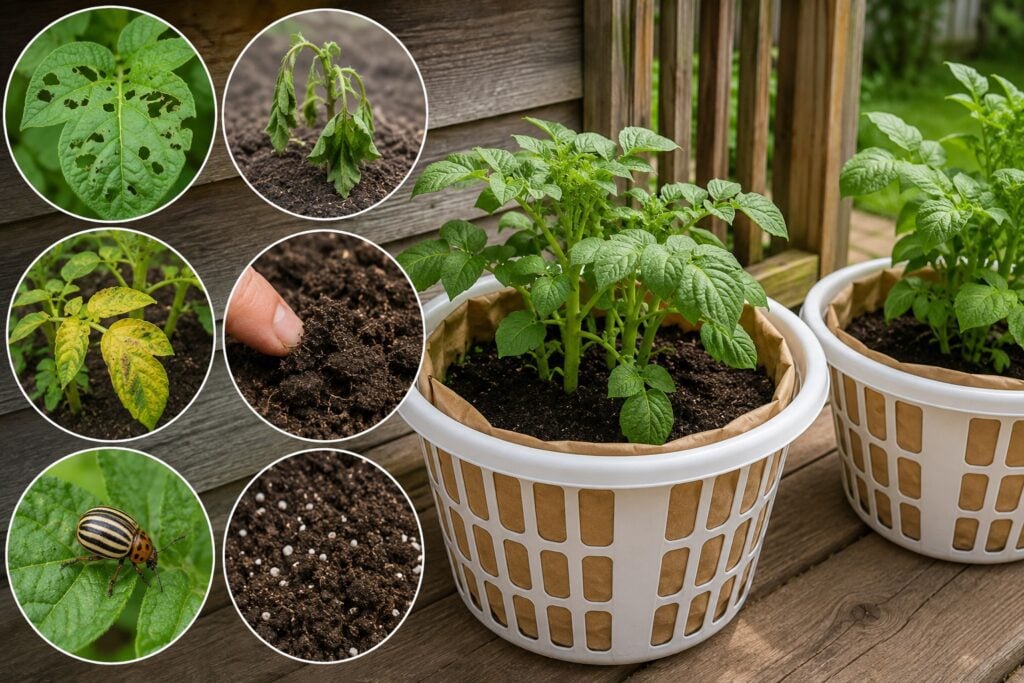
I also look underneath the leaves, where pests often hide.
If I find any, I remove them by hand or use a gentle garden-safe treatment.
Later in the season, yellowing is not always bad news. When the whole plant naturally fades and dies back, it usually means the potatoes below are nearly ready to harvest.
When and How I Harvest
The best part of growing potatoes in a basket comes when I finally tip it over.
For small new potatoes, I can harvest after the plant flowers. For larger ones, I wait until the leaves yellow and the stems begin to collapse. A few days before harvesting, I reduce watering so the soil is easier to handle.
Then I gently empty the basket or pull the soil apart by hand. Because everything is contained, the potatoes are easy to find without digging through a garden bed.
It is simple, tidy, and surprisingly satisfying—one basket, one harvest, and no potatoes left hiding underground.
My Best Tips for Better Results
A good potato harvest often comes down to a few quiet decisions made at the beginning.
I use loose soil, leave enough space between seed potatoes, and resist the urge to overwater. I also start with a low layer of soil and build it up gradually, because filling the basket all at once defeats the purpose of the method.
One lesson I learned quickly: place the basket in its final sunny spot before filling it. Once the soil is wet, it becomes much heavier than it looks.
Most of the growth happens where I cannot see it, so patience matters. The leaves may get all the attention, but the real harvest is forming underneath.