Some rooms do not need more furniture. They need greenery from above.
Indoor hanging plants bring empty corners, shelves, and windows to life without using precious floor space. Their trailing leaves add softness, movement, and a calm, natural feeling that ordinary potted plants cannot always create.
I love them because they are both beautiful and practical. Whether cascading, sculptural, or softly shaped, they make even a small room feel fresher, fuller, and more stylish.
Why I Love Indoor Hanging Plants?
A single hanging plant can turn a forgotten corner into part of the room’s design.
By drawing the eye upward, trailing greenery adds depth, softens hard furniture lines, and makes a space feel fuller without creating clutter. But beauty alone is not enough.
I always choose the spot first, then the plant. Light, humidity, and realistic care matter more than how good it looks in the shop.
1. String of Pearls
String of Pearls is one of the most eye catching indoor hanging plants because it looks so different from ordinary houseplants. Its long trailing stems are covered with small round leaves that look like green beads.
When it grows well, it can hang down beautifully and become a real statement piece.
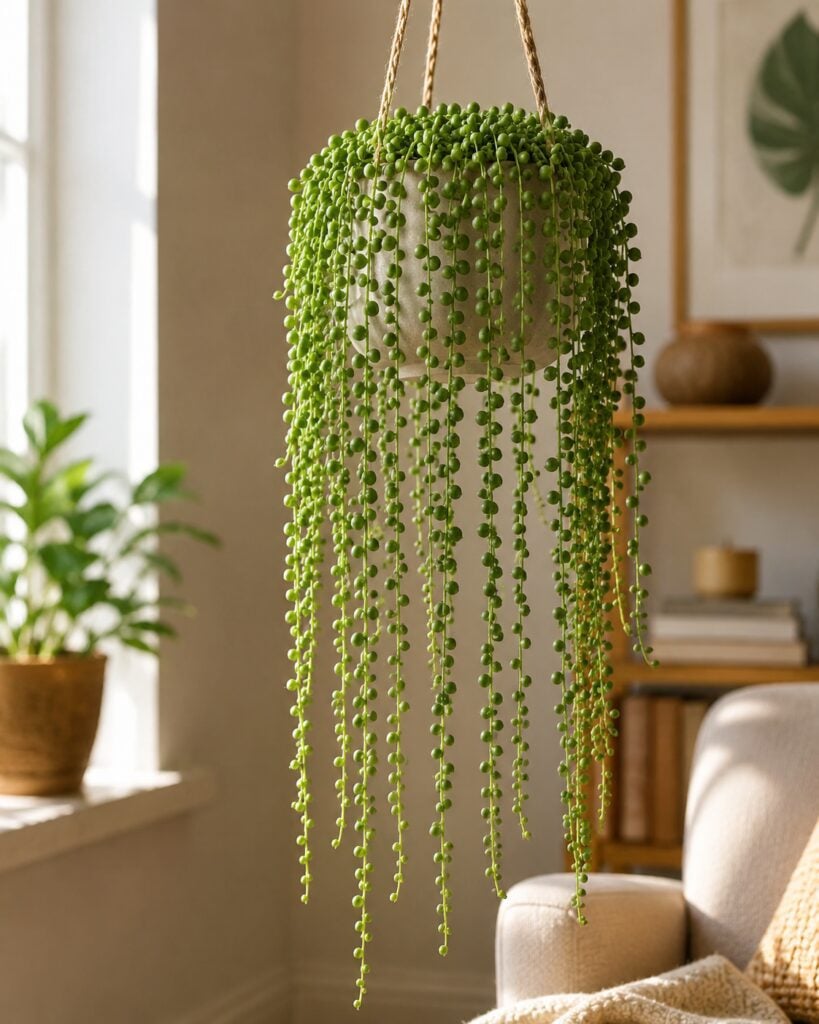
I like String of Pearls in a bright spot near a window, especially where the stems can fall freely. It looks amazing in a simple hanging pot because the plant itself already has so much detail.
The round leaves store water, so I do not water it too often. In fact, overwatering is one of the biggest mistakes I have seen with this plant.
For best results, I let the soil dry out before watering again. I also make sure the pot has drainage because this plant does not like sitting in wet soil. If the pearls start to shrink or look dull, I check whether it needs water or better light.
String of Pearls is beautiful, but I would keep it away from curious pets and small children.
It is best placed high enough to be admired safely.
2. Peperomia Hope
Peperomia Hope is a charming indoor hanging plant that feels soft, neat, and easy to love. It has small round leaves that grow along trailing stems, giving it a gentle and playful look.
Compared to String of Pearls, it feels fuller and more relaxed.
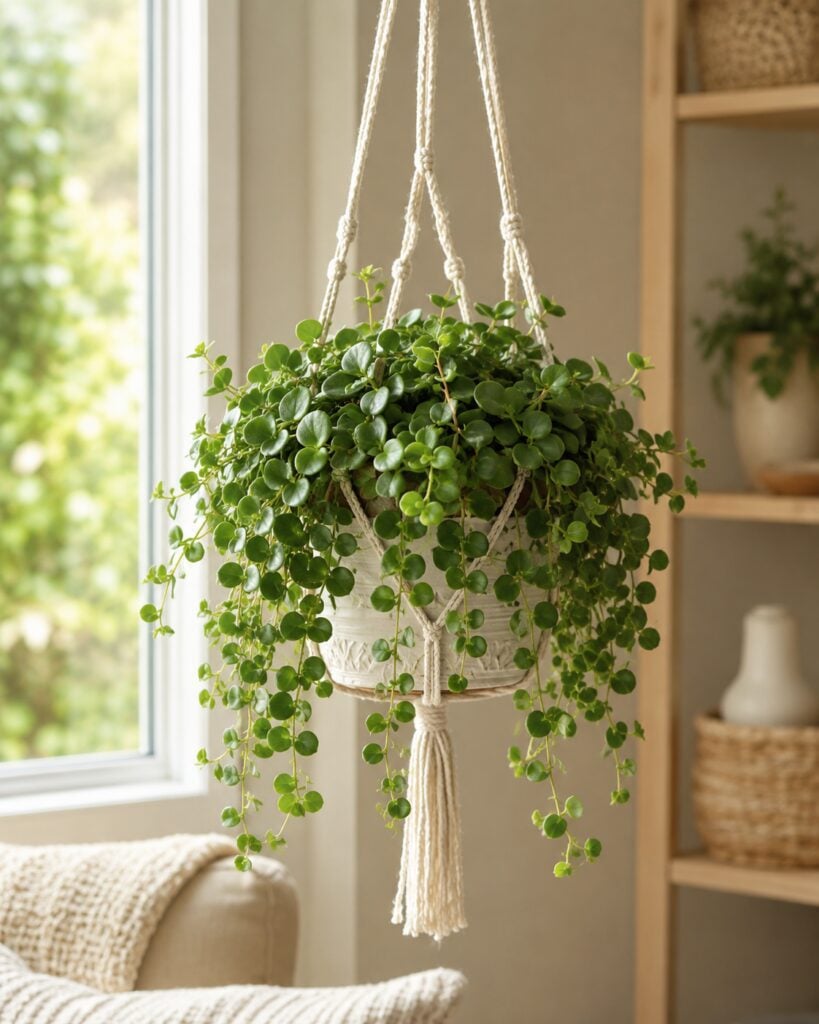
I enjoy Peperomia Hope because it does not demand too much. It can handle normal indoor conditions as long as it gets bright, indirect light. I usually avoid placing it in harsh direct sun because the leaves can become stressed.
A spot near a bright window with filtered light works well.
When watering Peperomia Hope, I prefer to let the top part of the soil dry first. The leaves are slightly thick, which means the plant can hold some moisture.
Too much water can cause root problems, so I water carefully instead of following a strict schedule.
This plant is a good choice if I want a hanging plant that looks cute without becoming too wild. It is also great for shelves, small baskets, and cosy corners.
3. Marble Pothos
Marble Pothos is one of the easiest and most rewarding hanging plants I have grown indoors. Its green and creamy white leaves bring brightness into a room, and the vines can trail beautifully from a hanging basket or high shelf.
What I love most about Marble Pothos is how forgiving it is. It can adapt to different indoor spaces better than many other plants.
It prefers bright, indirect light, but it can also tolerate lower light.
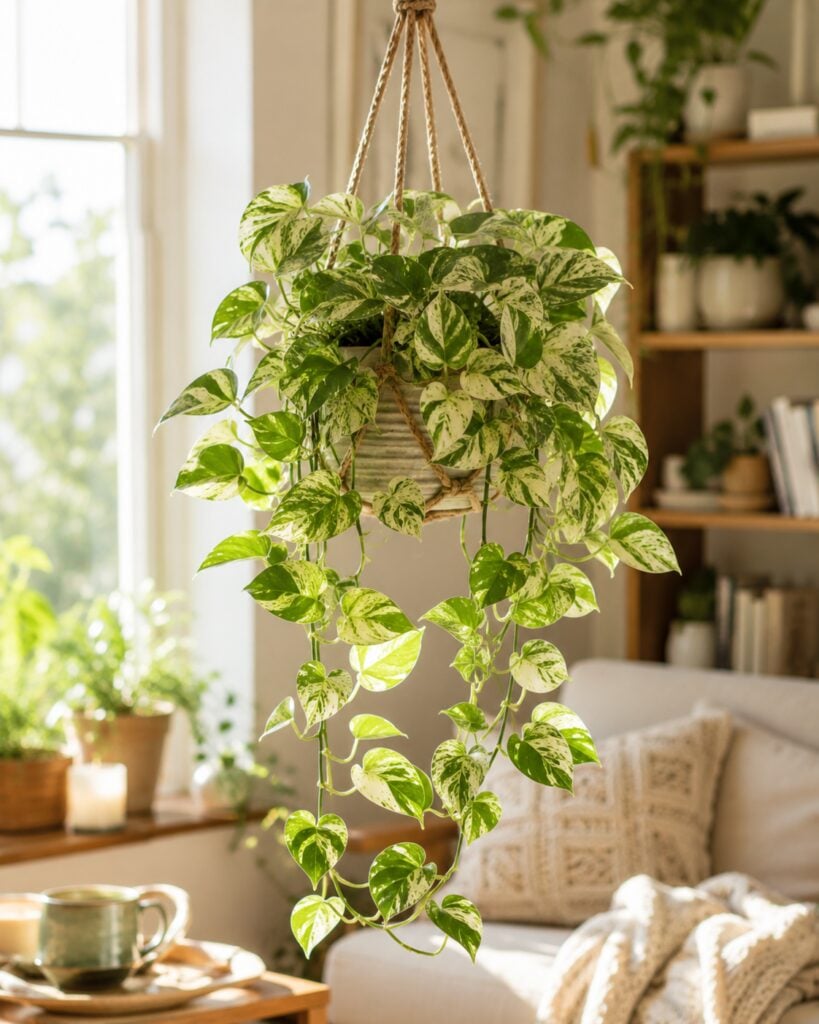
However, I have noticed that the white marbling looks stronger when the plant gets better light.
I water Marble Pothos when the soil feels dry on top. If the leaves start to droop, it usually tells me it is thirsty. Once watered, it often perks back up. That makes it easy to understand, even for beginners.
This is the plant I would recommend to someone who wants a beautiful trailing plant without too much stress. It grows well, looks elegant, and can be trimmed easily if the vines become too long.
4. Bird’s Nest Fern
Bird’s Nest Fern is a wonderful choice when I want a hanging plant with a fresh, tropical feel. Instead of long trailing vines, it grows in a beautiful rosette shape with wavy green leaves.
It looks soft, lush, and very natural.
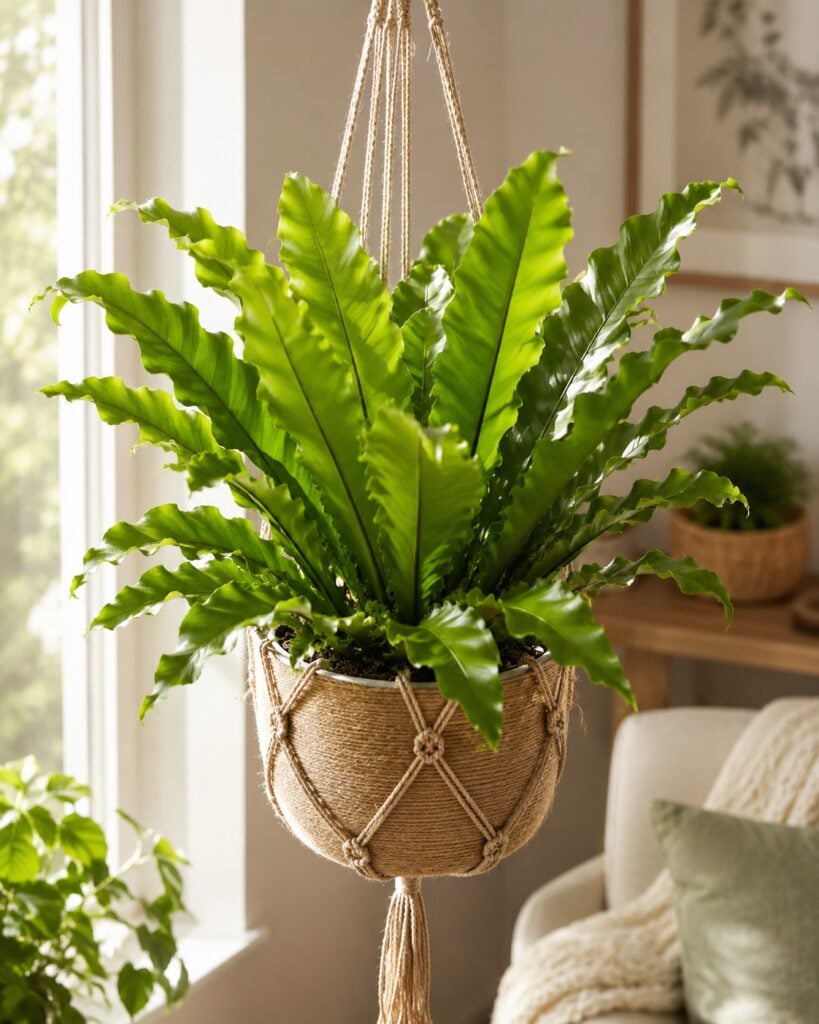
This plant is different from many other hanging plants because it enjoys more humidity. I like placing it in a bathroom with natural light or a bright room where the air is not too dry.
It does best in indirect light, not strong direct sun.
When I water Bird’s Nest Fern, I try to keep the soil lightly moist but not soaked. I also avoid pouring water directly into the centre of the plant because water can sit there and cause problems.
I water around the soil instead.
Bird’s Nest Fern is perfect if I want a hanging plant that adds fullness without long vines. It gives the room a soft green look and feels especially nice in calm, relaxing spaces.
5. Orchids
Orchids are elegant indoor hanging plants that bring flowers, color, and beauty into the home. Many people think orchids are difficult, but I have found that they become easier once I understand what they actually need.
I like hanging orchids because they look graceful, especially when their flower stems curve naturally. They do well in bright, indirect light and appreciate good airflow.
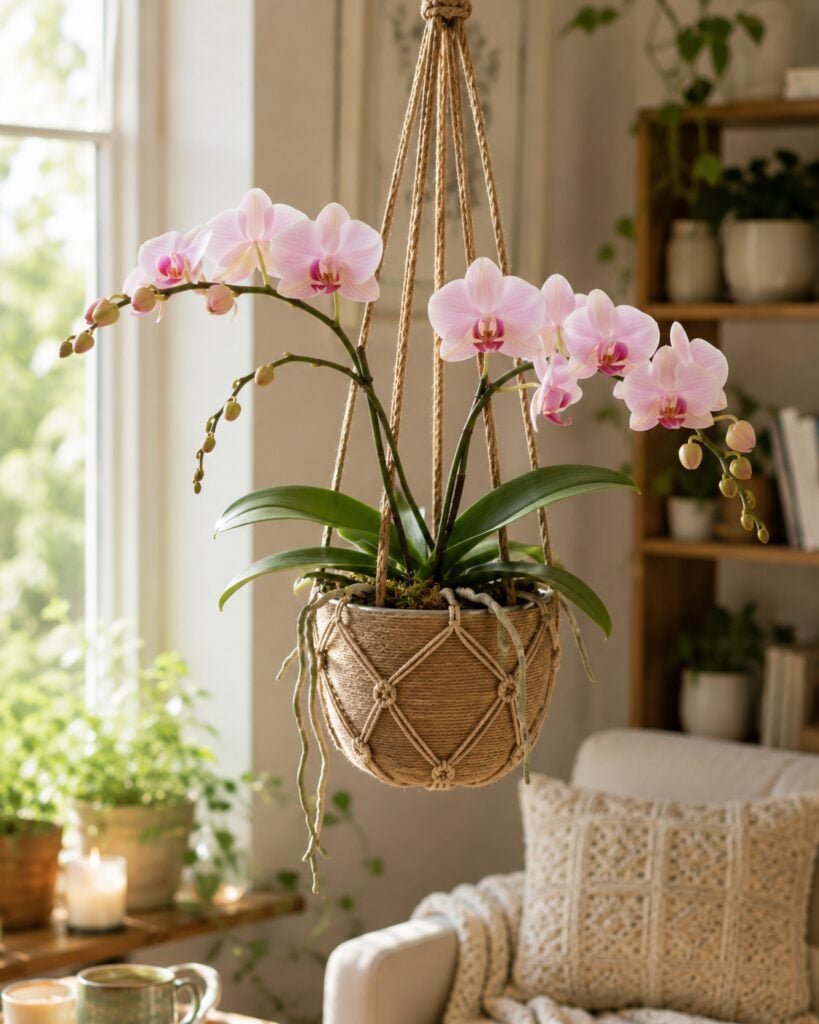
I avoid placing them in dark corners because they need enough light to bloom well.
The most important thing I have learned with orchids is not to treat them like ordinary houseplants. Many orchids grow in bark mix instead of regular soil. Their roots need air, so I never let them sit in water for too long.
When they bloom, orchids can make a room feel instantly more special.
Even when they are not flowering, the leaves and roots still bring a natural, sculptural beauty. They are perfect for someone who enjoys a plant with a little elegance and patience.
6. Tillandsia
Tillandsia, also known as air plant, is one of the most unique indoor hanging plants because it does not need soil. I love using Tillandsia in hanging glass holders, small baskets, or simple wire displays. It feels light, modern, and creative.
Because Tillandsia absorbs moisture through its leaves, I care for it differently from normal plants.
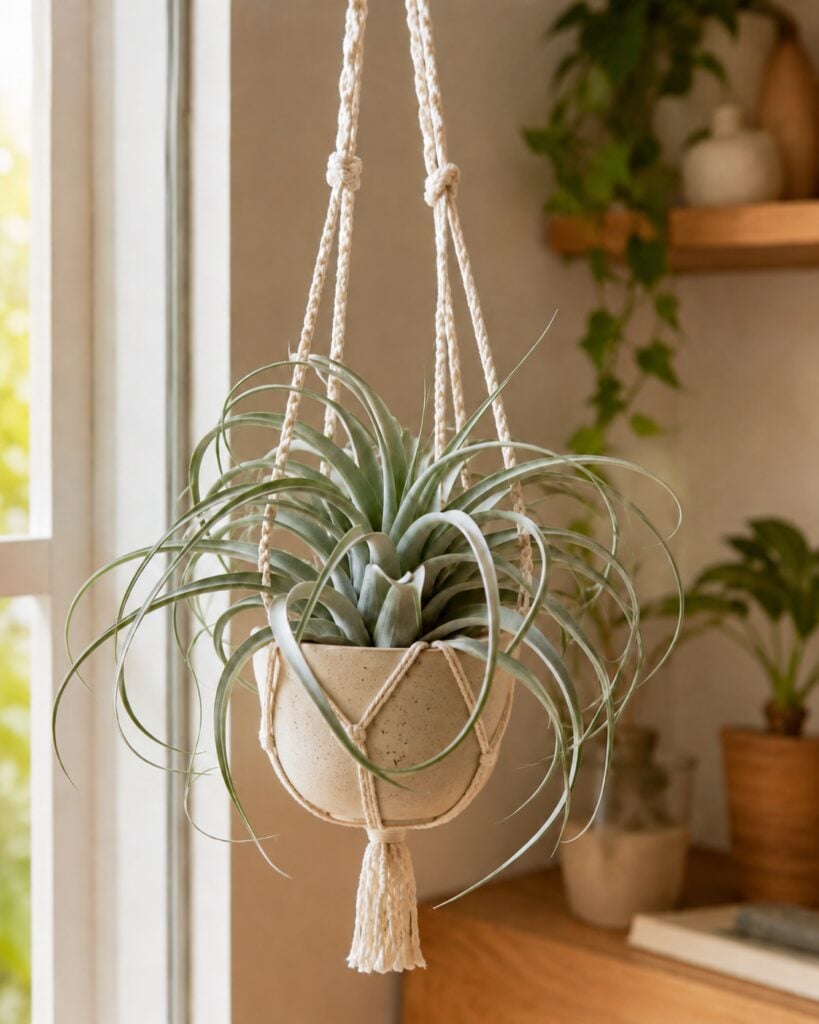
I usually soak it in water for a short time, then let it dry completely before placing it back. Good airflow is important because the plant should not stay wet for too long.
Tillandsia enjoys bright, indirect light.
I avoid dark corners because it can slowly weaken there. I also avoid harsh direct sun unless the plant is used to it.
This plant is perfect when I want greenery in a small space. It does not need a pot of soil, so it is very flexible. I like it for minimal homes, small apartments, or creative hanging displays.
7. Staghorn Fern
Staghorn Fern is one of the most artistic indoor hanging plants because it looks like living wall décor. Its leaves grow in a shape that reminds me of antlers, which makes it stand out from softer trailing plants.
I like Staghorn Fern mounted on wood or placed in a hanging basket. It gives the room a natural forest feeling.
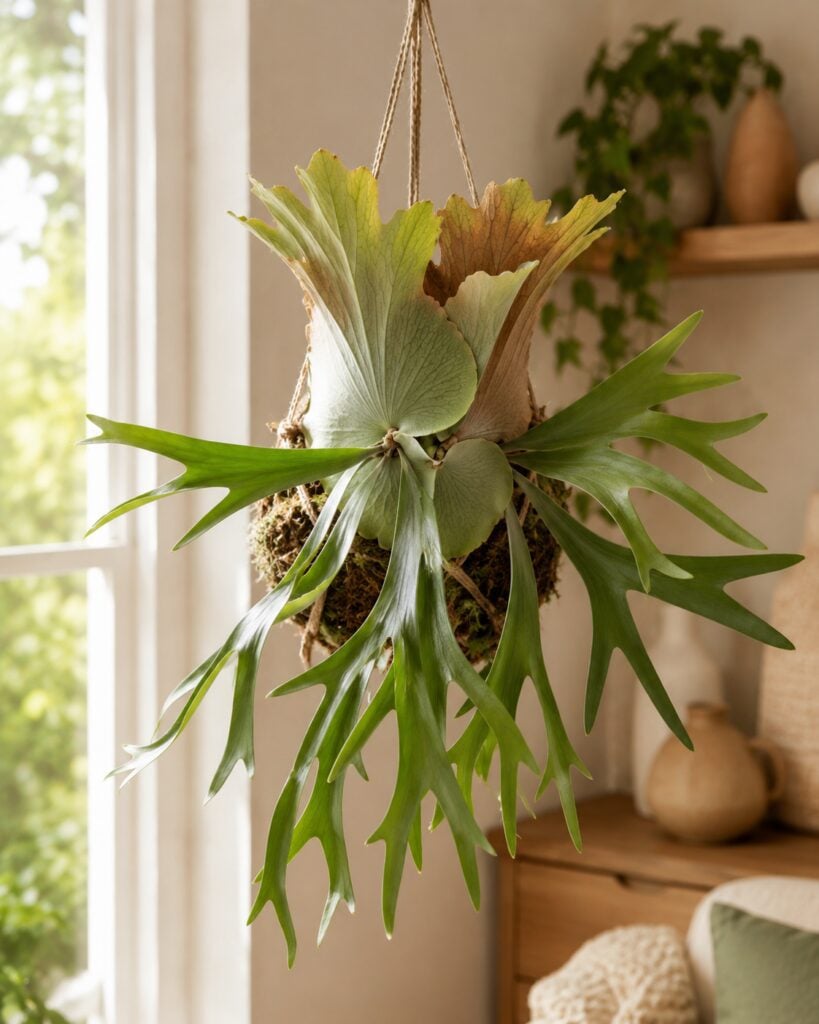
This plant enjoys bright, indirect light and appreciates humidity. It can be a little more unusual to care for, but that is part of its charm.
When I water a Staghorn Fern, I pay attention to how it is mounted. If it is on wood, I usually soak or mist the root area depending on how dry it feels. I also make sure it has time to dry slightly between waterings.
This is not the first plant I would choose for someone who forgets to water often, but it is a beautiful choice for plant lovers who want something different and dramatic.
8. Scindapsus Pictus
Scindapsus Pictus is a stunning trailing plant with heart shaped leaves covered in silvery patterns. I love it because it looks elegant without being too difficult to care for.
The silver markings catch the light beautifully and make the plant feel more decorative.
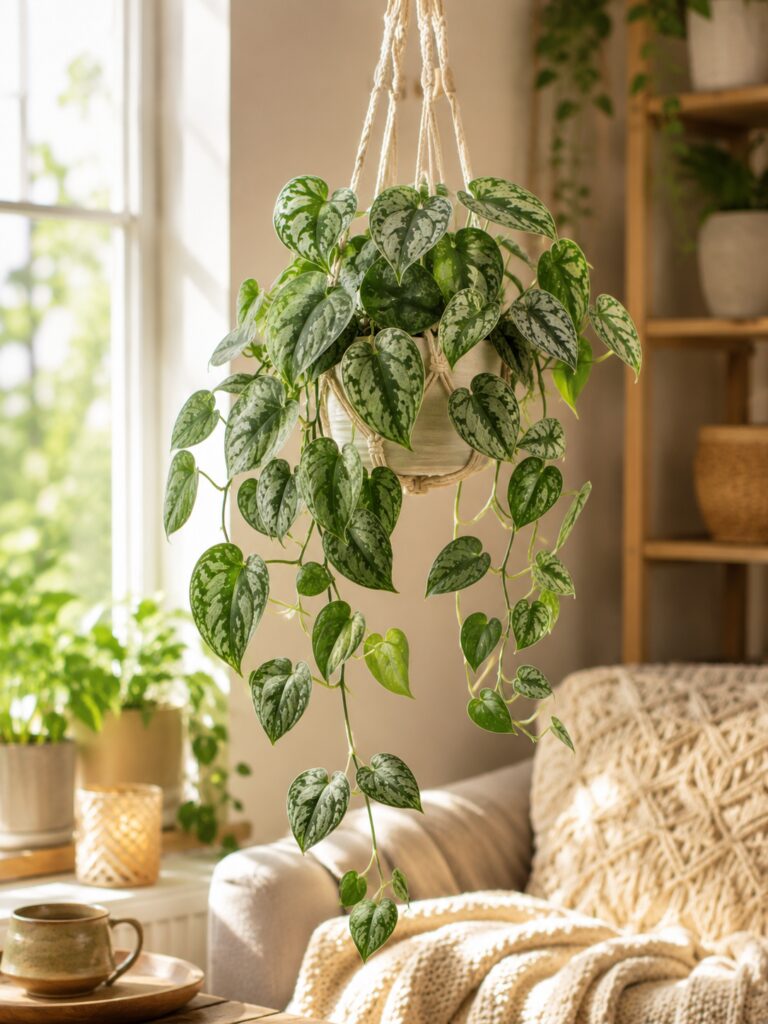
This plant grows well in bright, indirect light, although it can tolerate medium light too. I have noticed that brighter indirect light helps the leaf patterns look stronger.
Like many trailing plants, it does not like being overwatered, so I let the soil dry a little before watering.
Scindapsus Pictus looks beautiful in hanging baskets, on high shelves, or trailing down a plant stand. It has a calm, classy look that works well in bedrooms, living rooms, and home offices.
If I wanted a hanging plant that feels stylish but still easy to manage, this would be one of my top choices.
My Simple Care Tips for Hanging Plants
Caring for indoor hanging plants becomes much easier when I match the plant to the right spot. I always check the light first. A plant that loves bright light will struggle in a dark corner, while a fern may suffer in harsh direct sun.
I also make sure hanging pots have drainage or a safe way to remove extra water.
Watering can be tricky when plants are hanging, so I prefer to take them down when possible and let extra water drain before hanging them back.
Another tip I use is rotating the plant every few weeks. This helps all sides get light and keeps the growth more even.
For trailing plants, I also trim long stems when they look messy. Trimming can make the plant grow fuller over time.