I still remember the first time I saw green beans hanging from strings inside an old wooden shed. At first, I thought they were decorations or maybe herbs drying for cooking.
But after spending time with people who lived closer to the land, I realized those hanging beans represented something much bigger. They represented survival, wisdom, and a way of life that wasted almost nothing.
Today, many people throw away vegetables once they start looking soft or imperfect. But older generations had a completely different mindset. They understood that food was valuable, especially before refrigerators, freezers, and supermarkets became common.
Every harvest mattered. Every bean mattered.
One of the most fascinating techniques I learned was the traditional method of air drying green beans on strings. It looks simple, but behind that simplicity is centuries of practical knowledge that helped families survive harsh winters without relying on canning or modern preservation systems.
Why People Started Drying Green Beans?
I used to think food preservation was mainly about convenience. But after learning more about traditional farming communities, I realized it was actually about survival.
In mountain regions and remote rural areas, winters could be long and brutal. Fresh vegetables disappeared for months. If families failed to preserve enough food during harvest season, hunger became a real problem.
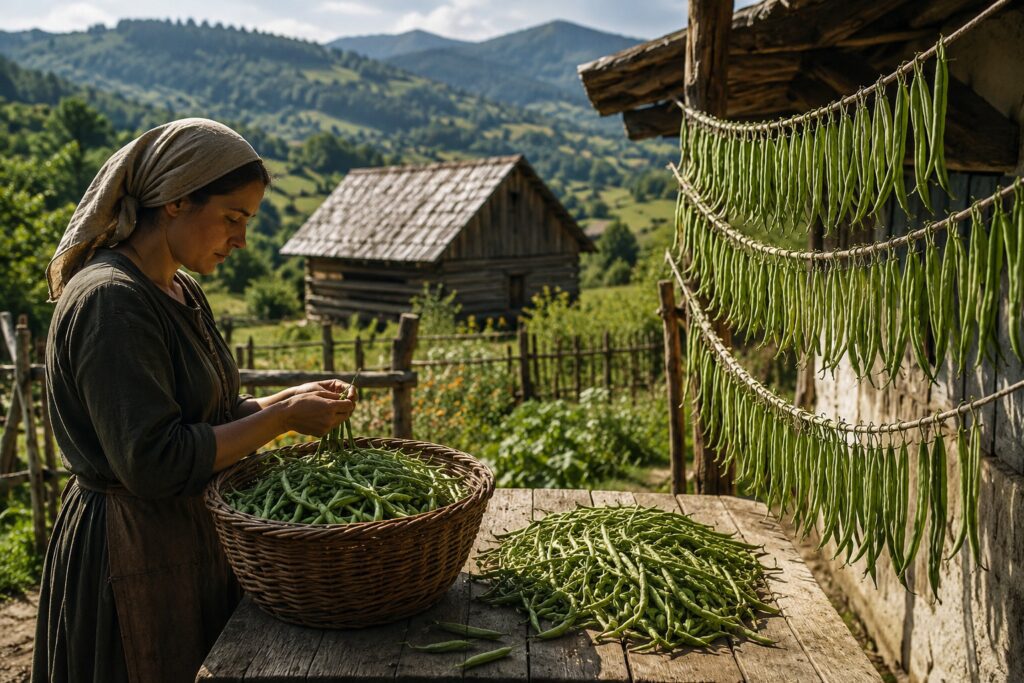
Green beans were often abundant during warmer months, sometimes producing more than families could eat fresh. Instead of letting the extra harvest rot, people found ways to store it naturally.
Drying became one of the easiest and most reliable solutions.
What amazed me most was how little equipment they needed. No electricity. No expensive tools. No complicated systems. Just fresh beans, strong thread, airflow, and patience.
That simplicity is honestly what makes this method so powerful even today.
The Traditional Method of Stringing Green Beans
The process itself is surprisingly calming and almost meditative. I tried it myself after learning from someone who had grown up seeing their grandparents do it every year.
First, fresh green beans are washed and cleaned carefully. Any damaged or rotten beans are removed immediately because one bad bean can affect the others during drying.
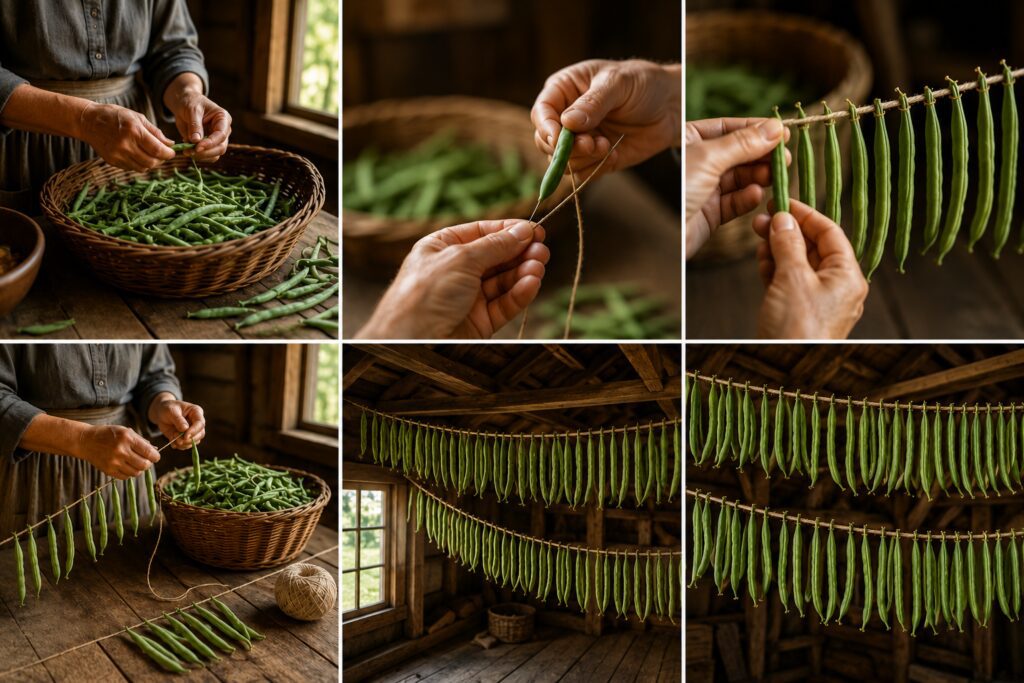
After that, the beans are trimmed slightly, but usually kept whole. Using a needle and sturdy thread, each bean is pierced carefully and added onto long strings, almost like making vegetable necklaces.
The strings are then hung inside a dry area with good airflow.
Traditionally, this was often done inside attics, cabins, porches, barns, or wooden kitchens where warm air naturally circulated.
As days pass, the beans slowly lose moisture and begin shrinking. Their bright green color changes into darker earthy tones. Eventually, they become fully dried and lightweight enough for long term storage.
What I love about this method is how visually beautiful it looks. Rows of hanging beans create this rustic atmosphere that feels connected to history and self reliance.
Why Air Drying Worked So Well?
At first, I wondered why drying was considered such a reliable preservation method. After researching and trying it myself, the answer became obvious.
Bacteria, mold, and spoilage organisms need moisture to grow. By removing most of the water content from the beans, people dramatically slowed the decay process.
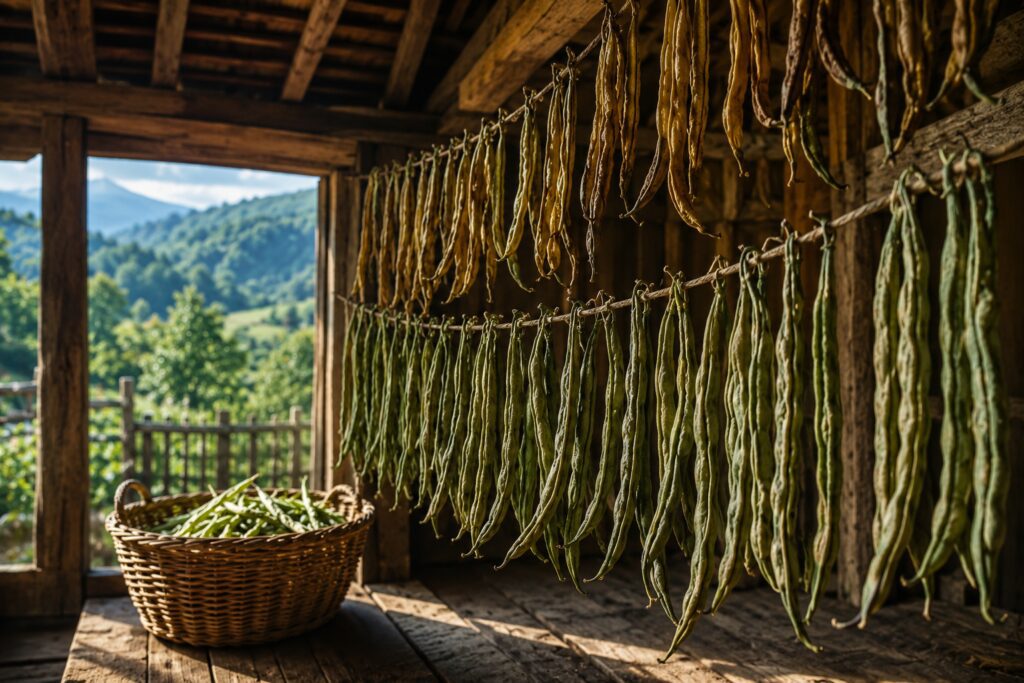
This meant dried beans could last through winter without refrigeration.
Unlike modern preservation methods that often depend on electricity or sealed machines, air drying used natural environmental conditions. Cool airflow and low humidity did most of the work.
Another advantage was storage efficiency. Fresh vegetables take up space and spoil quickly, but dried beans become compact and lightweight. Families could store large quantities in cloth bags, jars, or wooden containers.
For people living in isolated areas, this mattered enormously.
The Flavor Changes After Drying
One thing nobody told me before I tried dried green beans was how different the flavor becomes. Fresh green beans taste crisp, juicy, and bright. Dried green beans develop a deeper, earthier, almost smoky flavor after preservation.
When rehydrated in soups or stews, they absorb flavors beautifully. The texture also changes into something softer and heartier.
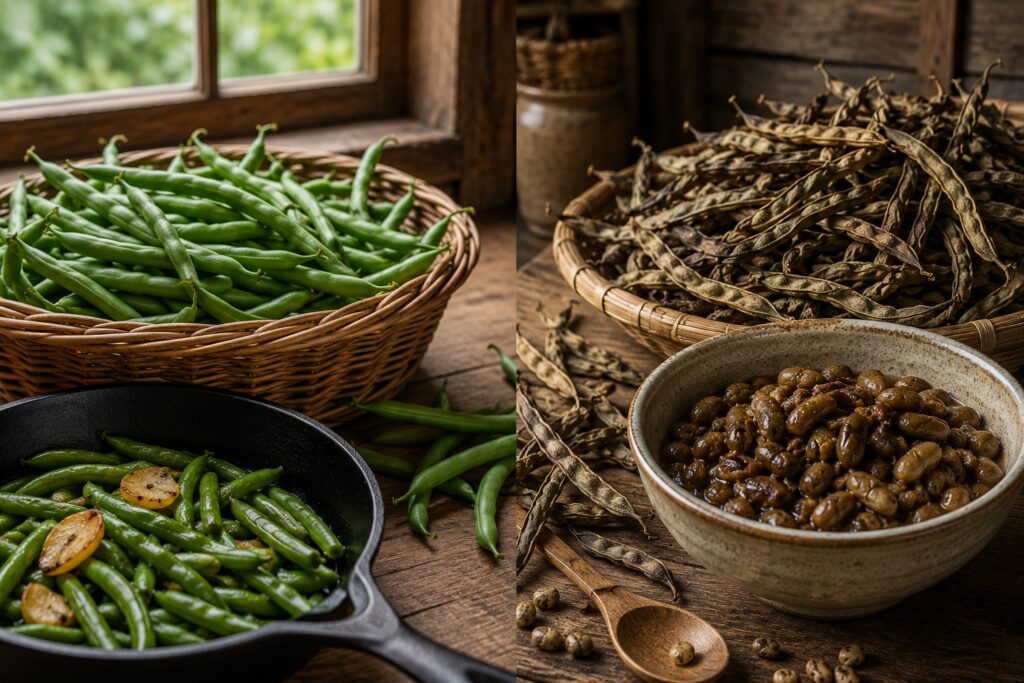
I honestly understand why older generations loved using them in winter meals. They feel comforting and filling in a way fresh vegetables sometimes do not.
Traditional families often added dried beans into slow cooked dishes with potatoes, onions, herbs, and smoked meats.
These meals were simple but incredibly satisfying after cold days of physical work.
What Modern Society Can Learn From This?
I think one reason this preservation method fascinates people today is because it highlights how disconnected many of us have become from food itself.
We are used to supermarkets solving every problem instantly. If vegetables spoil, we simply buy more. If food prices rise, we complain but still expect abundance.
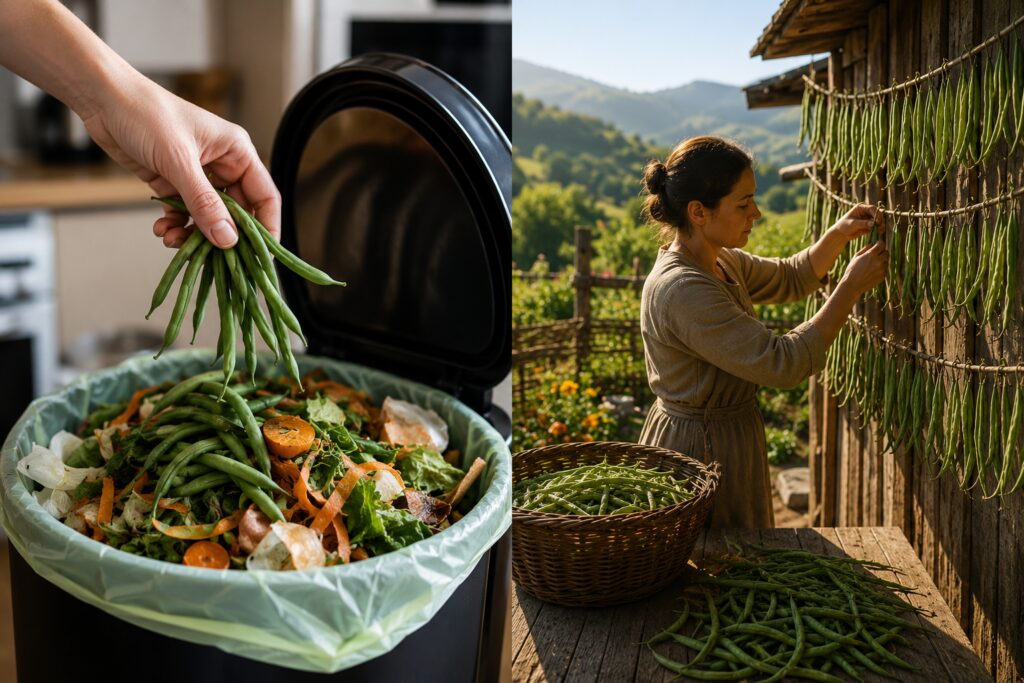
But older generations lived differently. They respected food because they understood the labor behind growing it.
Seeing a pile of wasted green beans beside carefully preserved hanging beans creates a powerful contrast. One side represents excess and waste. The other represents preparation and survival.
That lesson feels incredibly relevant today.
Food waste has become a massive global issue. Tons of edible produce are thrown away every year simply because it looks imperfect or because people buy more than they need.
Traditional preservation methods remind us that sustainability often starts with changing our mindset.
My Experience Trying This at Home
The first time I attempted drying green beans myself, I honestly expected failure.
I thought the beans would mold, smell strange, or simply rot before drying properly. But after researching humidity levels and choosing a well ventilated area, the process actually worked surprisingly well.
The hardest part was patience.
Modern life conditions us to expect immediate results. Drying beans naturally takes time. Watching them slowly transform over several weeks forced me to slow down mentally too.
What surprised me most was how satisfying the process felt.
Instead of wasting extra produce, I felt like I was preserving effort, energy, and value.
There is also something deeply rewarding about preparing food with your own hands using methods that humans have trusted for generations.
It made me appreciate food differently afterward.
The Difference Between Drying and Canning
Many people assume canning completely replaced drying methods, but both techniques have advantages.
Canning preserves moisture and texture better, which is why canned vegetables often resemble fresh ones more closely. However, canning requires jars, lids, sterilization, heat processing, and careful safety procedures.
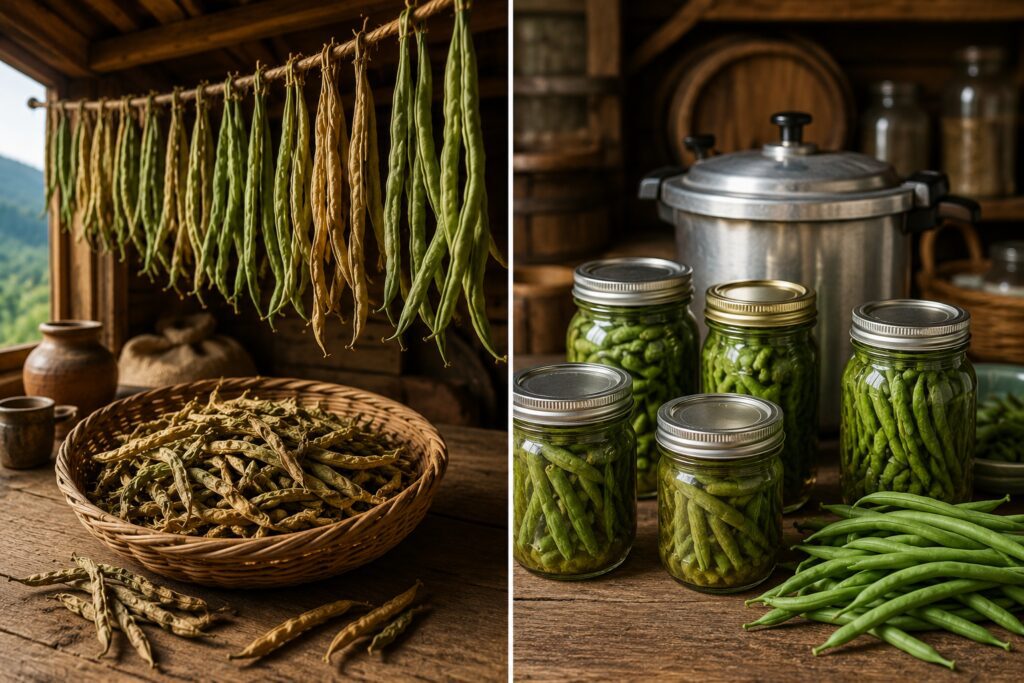
Drying is much simpler.
You do not need expensive equipment, pressure canners, or large kitchens. Drying also reduces storage weight dramatically, making it practical for transport and long winters.
Historically, many families actually used both methods depending on climate, available resources, and the types of food being preserved.
In humid regions, drying could be harder. In colder mountain areas with good airflow, drying became extremely effective.
Why This Method Is Becoming Popular Again?
Over the last few years, I have noticed more people becoming interested in traditional preservation methods again.
Part of this comes from rising food prices and concerns about sustainability. Another reason is that many people are craving slower, more intentional lifestyles.
Gardening, homesteading, and food preservation offer something modern life often lacks. They create a direct connection between effort and reward.
There is also growing awareness about emergency preparedness. People are realizing how dependent modern systems are on electricity, transportation, and supply chains.
Learning simple preservation skills provides confidence.
Even if someone never fully relies on dried vegetables for survival, understanding these methods builds resilience and appreciation for older knowledge.
Common Mistakes Beginners Make
When I first researched air drying green beans, I noticed several mistakes beginners commonly make. One major mistake is using damaged or overripe beans. Preservation always works best with fresh, healthy produce.
Another issue is poor airflow. If beans are packed too closely together or hung in humid rooms, moisture gets trapped and mold can develop.
Patience is also important. Some people store the beans before they are completely dry, which shortens shelf life significantly.
The beans should feel leathery and dry, not soft or damp.
Finally, storage matters. Even perfectly dried beans can absorb moisture if stored improperly afterward. Airtight containers or dry cloth bags work best in cool areas.
Why These Old Skills Still Matter?
I truly believe traditional food preservation methods are about more than just storing vegetables.
- They teach patience.
- They teach gratitude.
- They teach resourcefulness.
Most importantly, they remind us that survival once depended on observation, preparation, and respecting nature’s cycles.
When I look at hanging strings of dried green beans now, I no longer see old fashioned food storage. I see generations of people adapting creatively to difficult environments using the resources available to them.
That knowledge deserves respect.
And honestly, in a world where so much gets wasted so easily, maybe these older methods still have something important to teach all of us today.