The first time I looked closely at broadleaf plantain, I realized I had been stepping on one of the most useful plants in my yard without even knowing it.
For years, I saw this plant growing between cracks in the path, along the edge of the garden, and in dry compacted soil. Like many people, I thought it was just another stubborn weed.
That contrast is what makes this plant so interesting. Broadleaf plantain, also known as Plantago major, is not related to the banana-like plantain fruit.
It is a low-growing leafy herb that has been used traditionally in many parts of the world for skin support, minor wounds, inflammation, and irritation.
What Broadleaf Plantain Looks Like?
Before I use any plant, I make sure I know exactly what it is.
Broadleaf plantain usually grows close to the ground in a rosette shape. Its leaves are wide, oval, and slightly ribbed, with strong veins running from the base toward the tip. These veins are one of the easiest ways I recognize it.
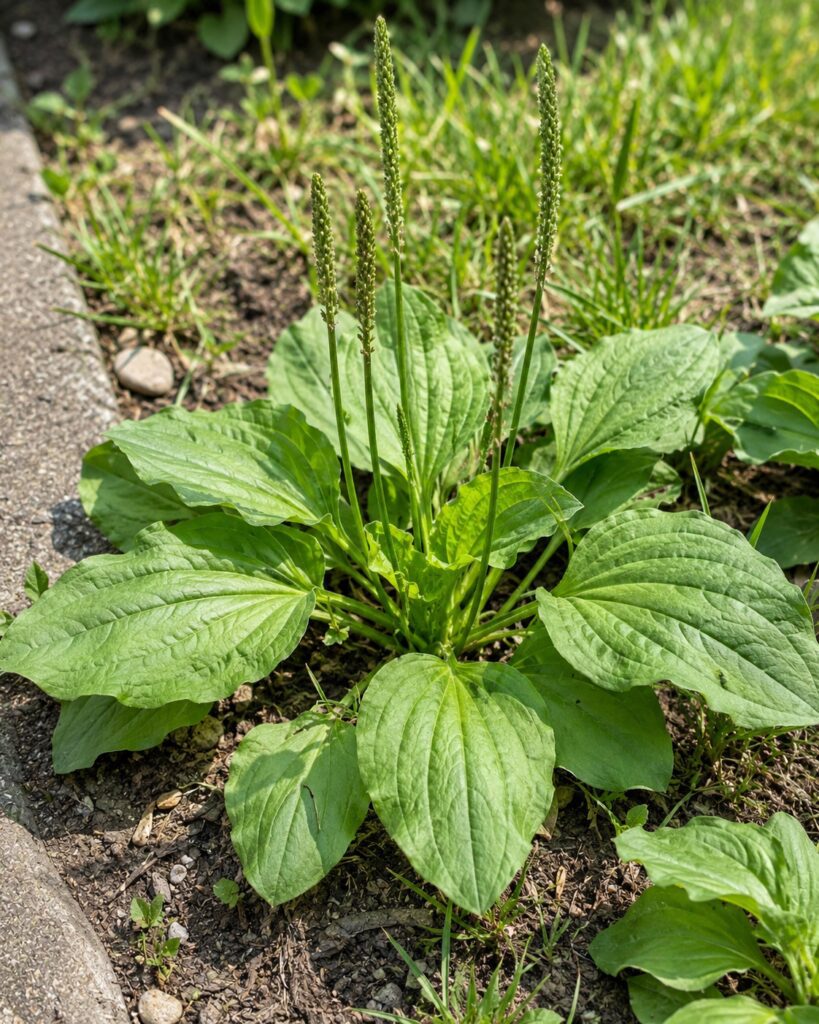
When I pull a leaf apart gently, the veins can look almost stringy.
The plant often sends up tall, narrow flower spikes from the center. These spikes are not showy like garden flowers, but they are part of what makes the plant easy to identify.
It commonly grows in lawns, footpaths, garden beds, and compacted soil.
I always remind myself that proper identification matters. Some plants can look similar to beginners, and I never use a wild plant on my skin or in food unless I am confident about what it is.
If I am unsure, I compare it with several reliable plant identification sources or ask someone experienced.
Why People Think It Is Just a Weed
I understand why many people call broadleaf plantain a weed.
It grows in places where people often do not want plants to grow. It appears in lawns, cracks, driveways, and neglected corners. It also survives in compacted soil, which makes it look like a plant that only belongs in rough or forgotten spaces.
But I have learned that “weed” is often just a word we use for a plant growing where we did not invite it. Broadleaf plantain may not look elegant, but usefulness is not always beautiful at first glance. Some of the most practical plants in a garden are the ones we overlook.
When I stopped seeing it as an unwanted invader, I started seeing it as a sign of resilience. It grows where other softer plants struggle. It handles foot traffic, poor soil, and dry patches. That alone made me respect it more.
The Traditional Medicinal Value of Broadleaf Plantain
The reason broadleaf plantain gets so much attention is because of its long history in traditional herbal use.
Traditionally, the leaves have been used for minor wounds, skin inflammation, bites, and irritation. A review on Plantago major notes that its leaves have been used for wound healing for centuries in many parts of the world.
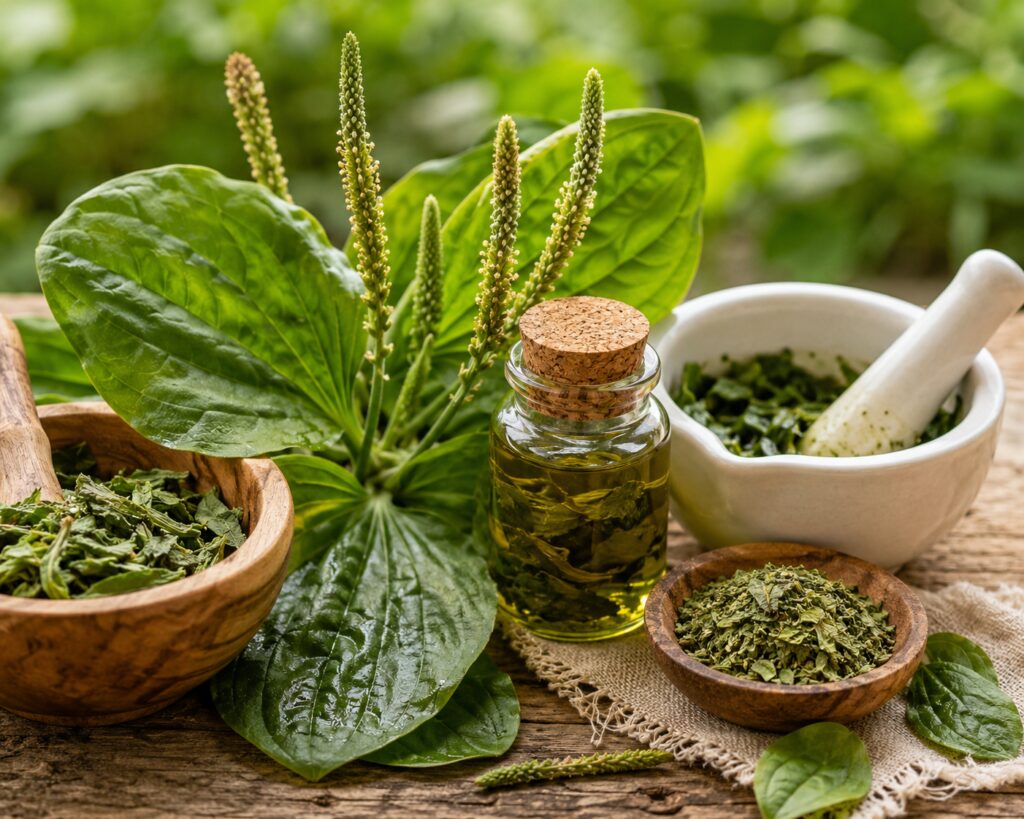
The same review describes several biologically active compounds in the plant, including flavonoids and polysaccharides.
Other scientific reviews also discuss anti-inflammatory, antimicrobial, and wound-healing properties linked to Plantago major extracts. This does not mean every backyard leaf will work like a pharmaceutical treatment.
It means the plant has real historical use and growing scientific interest.
From my own garden experience, I see broadleaf plantain as a simple plant for minor, surface-level situations. For anything deep, infected, painful, spreading, allergic, or serious, I would not rely on a leaf.
I would clean the area properly and seek medical care.
How I Use Crushed Leaves for Minor Bites and Irritation?
When I use broadleaf plantain, I keep the process simple and clean. First, I pick a healthy leaf from an area I know has not been sprayed with pesticides, herbicides, pet waste, or roadside pollution.
This is very important.
A plant growing beside a busy road or chemical-treated lawn is not something I want to put on my skin.
Then I rinse the leaf well with clean water. After that, I crush or bruise it until the leaf becomes moist and releases its green juice. Some people chew it to make a quick poultice, but I prefer crushing it with clean fingers or a small mortar because it feels more hygienic.
For a minor bite or sting, I gently place the crushed leaf over the irritated area for a short time. I do not press hard.
I simply let the moist leaf sit against the skin.
Traditionally, this is done to soothe discomfort and reduce irritation.
I also watch my skin carefully. If the area becomes more red, itchy, swollen, or painful, I stop using it. Natural does not always mean safe for every person. Skin reactions can happen.
Why Clean Harvesting Matters?
One thing I have learned is that the quality of the plant matters as much as the plant itself.
I never harvest broadleaf plantain from places where dogs frequently walk, near roadsides, beside dirty drains, or in lawns treated with weed killer. Because the leaf touches the ground closely, it can collect dust, bacteria, chemicals, or animal waste.
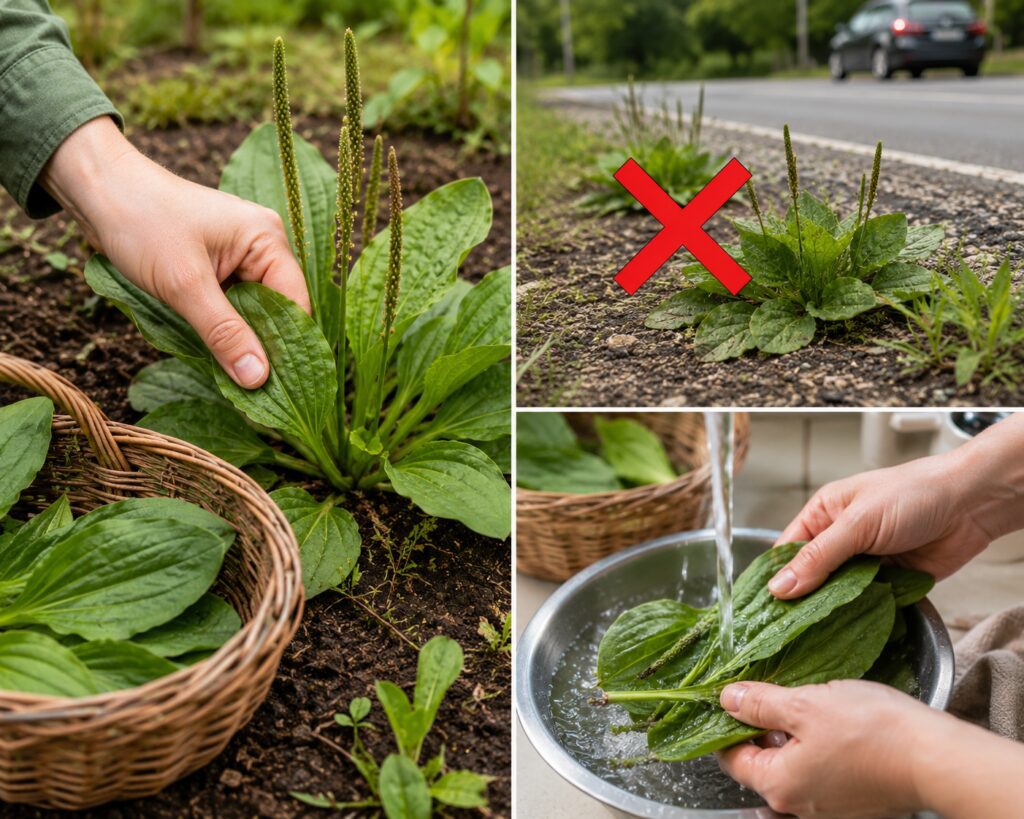
My favorite place to harvest is from a clean part of my own garden where I know the soil history. If I want to use it more often, I let a few plants grow in a controlled corner. That way, I know exactly where they came from.
I also avoid old, damaged, yellowing, moldy, or insect-eaten leaves.
Fresh green leaves are better.
After harvesting, I rinse them properly and use them soon. I do not leave crushed leaves sitting around for hours.
When working with skin, cleanliness is not optional. A dirty leaf on broken skin can create more problems than benefits.
Can Broadleaf Plantain Help With Wounds?
This is where I try to be careful and balanced.
Broadleaf plantain has been studied for wound-related uses, and some research suggests extracts or prepared formulations may support wound healing.
For example, one clinical study discussed Plantago major ointment in second-degree burn wound treatment and described it as having wound-healing, analgesic, and antimicrobial properties in that setting.
There are also studies involving plantain combined with aloe vera, showing wound-healing effects in research settings.
However, I do not take that to mean I should casually put backyard leaves on a serious wound.
For small scratches or minor skin irritation, I may use broadleaf plantain as a traditional support after washing the area. But for deep cuts, burns, infected wounds, punctures, animal bites, diabetic wounds, or wounds that do not heal, I would get medical help.
Herbal traditions can be useful, but they should not replace proper care when the situation is serious.
Using Broadleaf Plantain in the Garden
I like keeping some broadleaf plantain in my garden because it supports a more natural way of living.
Instead of removing every plant that was not intentionally planted, I now leave a few useful wild plants in safe areas. Broadleaf plantain can grow near garden borders, around wild patches, or beside herbs.

I do not let it take over the whole lawn, but I also do not panic when I see it.
It also teaches me to observe the garden more closely. Some plants are useful for pollinators. Some improve soil cover. Some offer traditional remedies. Some are edible.
The more I learn, the less I see the garden as a place that must be perfectly controlled.
That said, I still manage it. If it grows where I walk often, I remove it. If it competes with vegetables or flowers, I thin it out. The goal is balance, not neglect.
Common Mistakes I Avoid
The biggest mistake is assuming every broad green leaf is broadleaf plantain. I always identify the plant carefully. I look for the rosette shape, broad oval leaves, strong parallel veins, and flower spikes.
If something feels uncertain, I do not use it.
Another mistake is using leaves from contaminated areas. This is especially risky if the plant is growing beside roads, public sidewalks, sprayed lawns, or places where animals urinate.
I also avoid treating serious medical issues with garden plants. If a sting causes breathing trouble, facial swelling, dizziness, or widespread reaction, that is an emergency.
If a wound becomes hot, swollen, full of pus, or increasingly painful, that needs medical attention.
Another mistake is ignoring allergies. Even gentle plants can bother sensitive skin. When trying it for the first time, I use a small amount and watch carefully.
How I Make a Simple Plantain Poultice?
When I want to make a quick poultice, I keep it very basic.
I pick two or three clean leaves, rinse them, pat them dry, and crush them until they become juicy. Then I place the crushed leaves on the affected area and hold them there with clean gauze or a cloth for a short period.
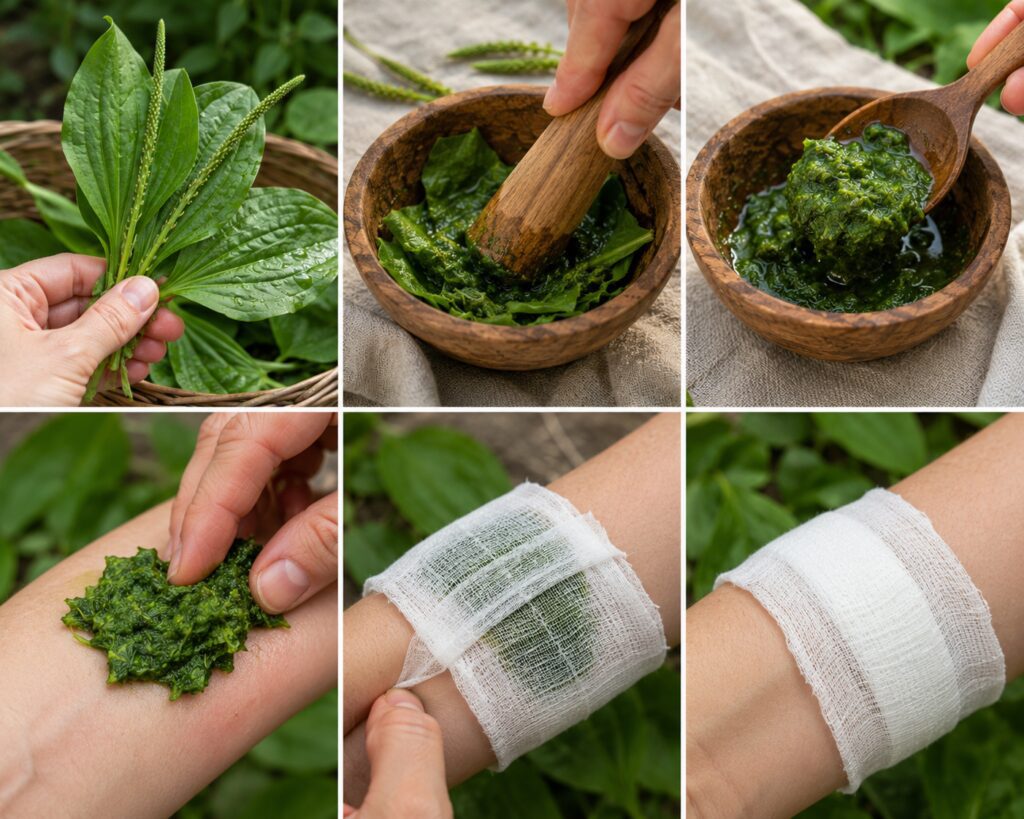
I do not make it complicated. I do not mix random oils, powders, or strong herbs into it.
Simple is safer.
If I want to store plantain for later, I prefer drying clean leaves for tea or making a proper infused preparation with guidance from a reliable herbal source.
For fresh skin use, though, I like the directness of a crushed leaf. It connects me to the old practical wisdom of gardens. But again, I only use it for minor issues and never as a replacement for medical treatment.
Why I Respect This Plant Now?
Broadleaf plantain changed the way I look at weeds.
Before, I saw weeds as signs of a messy garden. Now, I see some of them as signs that nature is offering something useful. Broadleaf plantain is not glamorous, but it is practical.
It grows quietly, survives difficult conditions, and has a long history of traditional use.
The image captures that shift perfectly. On one side, the plant is dismissed. On the other side, it is valued. I think that is the lesson. Sometimes the difference between a weed and a useful herb is knowledge.
I still pull it out when it grows in the wrong place. But when I find it in a clean, safe corner of the garden, I let it stay.
It has earned its place.
Final Thoughts
Broadleaf plantain is a simple plant with a surprisingly rich story. It is easy to overlook because it grows low, spreads quietly, and appears in places we often consider neglected.
But once I learned about its traditional uses, its recognizable leaves, and its potential skin-supporting qualities, I stopped treating it like a useless weed.
For me, the best way to use broadleaf plantain is with respect, caution, and common sense. I identify it correctly, harvest it cleanly, use it only for minor issues, and never depend on it for serious medical problems.
The next time I see broadleaf plantain growing in my garden, I do not immediately reach for a tool to remove it.
I pause first.
Because sometimes, the most useful plant in the yard is the one we have been walking past for years.