As someone who loves cooking, having fresh herbs on hand is a game changer. The fragrance, the flavor, and the satisfaction of harvesting something you’ve grown yourself elevate any dish.
But, let’s face it, not everyone has a large backyard or ample space for a traditional garden. That’s where a vertical herb garden comes in.
1. Why Choose a Vertical Herb Garden?
Vertical gardens are becoming increasingly popular, especially for people living in apartments or homes with limited outdoor space.
The idea of growing herbs on a wall or structure rather than in the ground might seem unconventional at first, but it’s an incredibly efficient and space-saving way to garden.
For those of us without access to a yard, it’s a perfect solution to growing fresh herbs, and it’s easier than you think.
The vertical design allows you to maximize space by utilizing walls or fences. Whether you’re using wall-mounted crates or a custom shelving unit, a vertical herb garden can fit in almost any corner or balcony of your home.
Not only does this method conserve space, but it also gives your plants better exposure to sunlight, making it easier to manage their growing conditions.
2. Choosing the Right Herbs for Your Vertical Garden
When selecting herbs for your vertical garden, it’s important to consider their light and water needs. Some herbs prefer full sunlight, while others can tolerate partial shade.
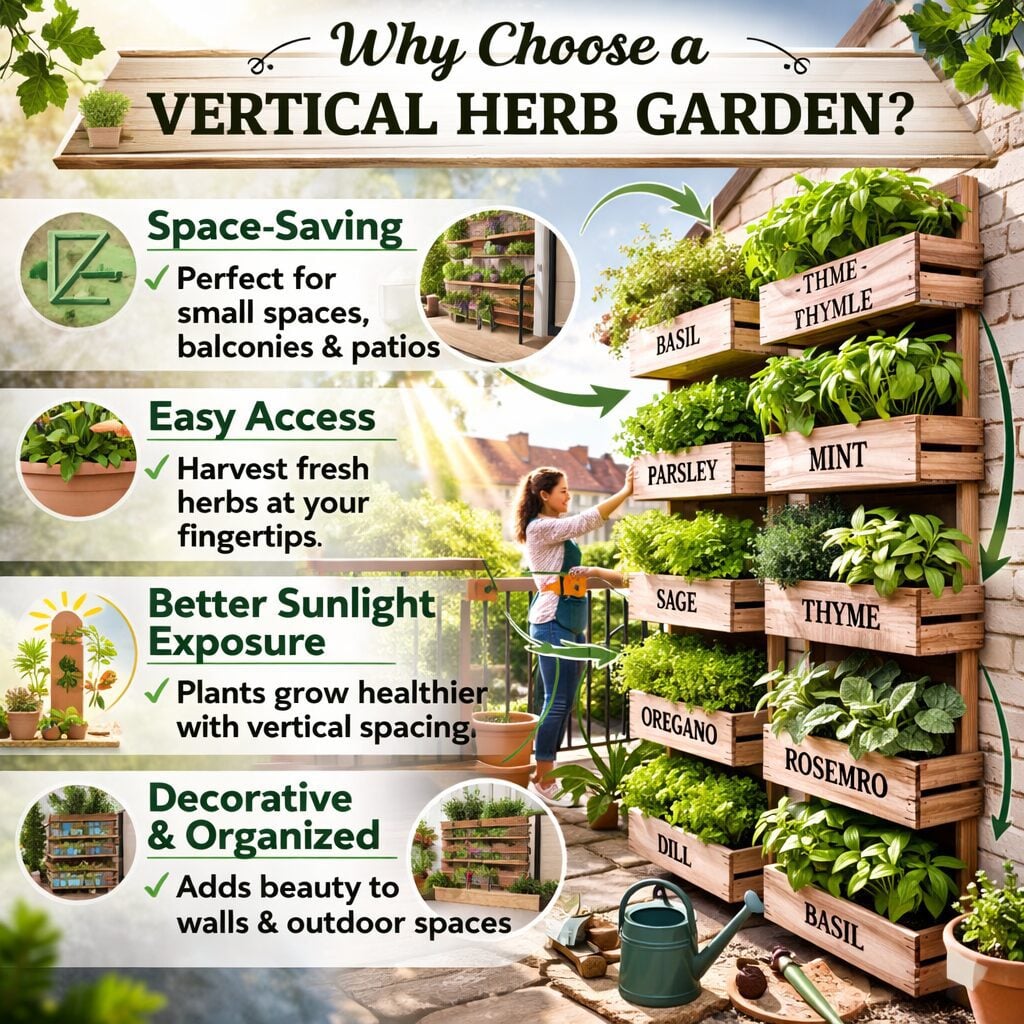
In the photo I uploaded, you can see a variety of herbs, each offering unique flavors and uses for your kitchen.

Here are some great choices to start with:
- Basil: A must-have for making fresh pesto or adding to salads and pasta. Basil needs full sunlight and well-drained soil, making it an excellent candidate for a vertical garden.
- Mint: Known for its refreshing flavor, mint is great for teas, salads, or desserts. Mint is easy to grow but can spread quickly, so using a vertical garden system keeps it contained.
- Parsley: A versatile herb used in a wide variety of dishes, from soups to garnishes. Parsley thrives in partial shade, making it an excellent choice for vertical gardens in shaded areas.
- Thyme: This herb is perfect for adding depth to meat dishes and soups. It grows well in full sun and needs a little extra care when it comes to watering.
Other herbs to consider include rosemary, oregano, sage, and dill—all of which thrive in containers or vertical gardens.
3. Selecting the Right Container for Your Vertical Garden

The beauty of a vertical garden lies in its versatility when it comes to containers. From wooden crates to pocket planters, the possibilities are endless.
For my vertical herb garden, I’ve chosen wooden crates, as seen in the image you uploaded. The rustic aesthetic not only fits with most outdoor décor but also allows for ample drainage.
Here are some popular container options for vertical gardens:
- Wooden crates: These are stylish and functional, providing enough space for roots to spread while keeping the plants secure.
- Wall-mounted pots: These can be hung directly on a wall or fence, creating a cascading effect as the plants grow.
- Hanging baskets: These work well for trailing herbs like mint, which benefit from some extra space to sprawl.
Make sure that whatever container you choose has proper drainage to prevent water from pooling at the bottom, which can cause root rot.
A simple trick is to drill a few holes in the bottom of wooden crates or containers.
4. Assembling and Installing Your Vertical Herb Garden

Now that you’ve selected your herbs and containers, it’s time to assemble and install your vertical garden.
Here’s how to do it:
- Choose the perfect spot: Select a spot that gets adequate sunlight. Herbs like basil and rosemary prefer full sun, while parsley and mint can tolerate partial shade.
- Mounting the containers: Depending on your space, mount your wooden crates or pots onto a fence, wall, or structure that’s sturdy enough to support the weight. If you’re using wall-mounted pots, consider a vertical garden system with a built-in irrigation system for convenience.
- Planting the herbs: Fill each container with good-quality potting mix and plant your herbs. Make sure to give each herb enough space to grow without overcrowding. For faster-growing herbs like basil, space them about 6-8 inches apart.
- Watering and maintenance: Regular watering is essential, especially in a vertical garden where plants might dry out faster. Be sure to water the top plants first and let the water filter down through the lower containers. I recommend using a gentle watering can or a drip irrigation system to avoid over-watering.
5. Caring for Your Vertical Herb Garden

Once your vertical herb garden is set up, it’s important to keep an eye on its maintenance.
Here are some tips to ensure your herbs thrive:
- Watering: Herbs generally like to be watered thoroughly but prefer to dry out between waterings. Don’t let the soil stay soggy. Keep an eye on the moisture level and water when needed.
- Pruning: Regularly prune your herbs to encourage healthy growth and prevent them from getting too leggy. Harvest the leaves often to keep the plants bushy.
- Fertilizing: Feed your herbs with a balanced, slow-release fertilizer to keep them healthy. Organic fertilizers like compost tea work well for this purpose.
- Pest control: Check for pests regularly, as they can easily spread in small spaces. Use natural pest control methods, such as neem oil or soapy water, to protect your plants.
6. The Benefits of Growing Your Own Herbs
There’s no denying the many benefits of having a vertical herb garden. For me, it’s not just about the herbs themselves but the satisfaction of growing and harvesting something fresh and healthy.

Here are some reasons why I love my vertical herb garden:
- Fresh herbs at your fingertips: There’s nothing like the convenience of stepping outside and picking fresh herbs for cooking.
- Saves money: Buying fresh herbs from the store can add up, especially when you only need a small amount. Growing your own herbs is a cost-effective solution.
- Health benefits: Growing herbs at home means you can control what goes into them, avoiding pesticides and chemicals often found in store-bought options.
- Aesthetic appeal: Vertical gardens add beauty and greenery to any space, making them a perfect choice for small patios or urban environments.
A Fresh and Flavorful Garden Awaits
Creating a vertical herb garden is one of the most rewarding gardening projects I’ve undertaken. Not only does it provide fresh herbs year-round, but it’s also an attractive and space-efficient solution for small spaces.
With a little planning and care, you can enjoy home-grown herbs that elevate your cooking and brighten your outdoor area.