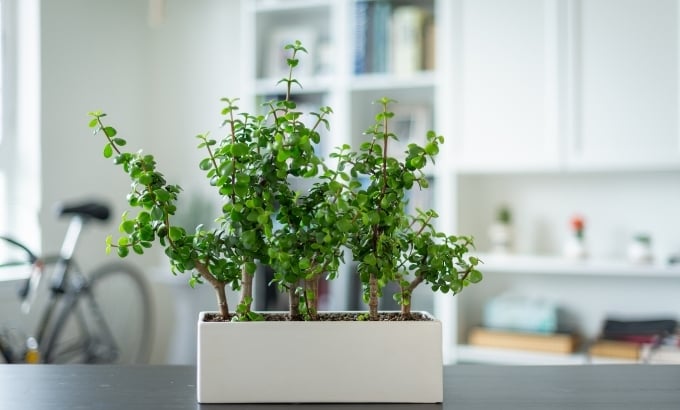
I have always been drawn to trailing plants that add drama and texture to indoor gardens. String succulents are particularly fascinating because of their cascading growth, quirky leaf shapes, and low-maintenance appeal.
Over the years, I’ve collected several varieties, and I’ve learned how each type thrives under specific conditions
1. String of Hearts
The first plant that captivated me was the classic String of Hearts. Its tiny heart-shaped leaves drape beautifully over the edge of pots, making it perfect for hanging baskets.
The leaves often feature subtle variegation, creating a visually appealing trail of greens and silvers.
String of Hearts is a delicate and elegant trailing succulent known for its tiny, heart-shaped leaves that cascade gracefully over the edges of pots or hanging baskets.

Its leaves often feature subtle variegation in shades of green and silver, adding a romantic and charming visual appeal to any indoor space.
In my experience, this plant thrives in bright, indirect light and requires minimal watering, making it perfect for both beginners and experienced plant enthusiasts.
Its slow, cascading growth creates a natural, whimsical effect, bringing texture, movement, and a touch of sophistication to home décor.
Care Tips
I keep my String of Hearts in bright, indirect light. Too much direct sunlight can scorch the leaves, while too little light makes it leggy. I water lightly, letting the soil dry out completely between watering sessions, and I trim any unhealthy stems to encourage fuller growth.
Why I Love It?
There’s something magical about seeing these delicate vines cascade gracefully. Their charming, small leaves bring a romantic touch to any space.
2. Variegated String of Hearts (V. String of Hearts)
I also fell in love with the variegated version, which adds pops of cream, pink, and green to my collection. The leaves appear more sculptural, almost like tiny works of art along each stem.
Variegated String of Hearts (V. String of Hearts) is a stunning variation of the classic String of Hearts, featuring delicate heart-shaped leaves with a mix of green, cream, and pink hues.
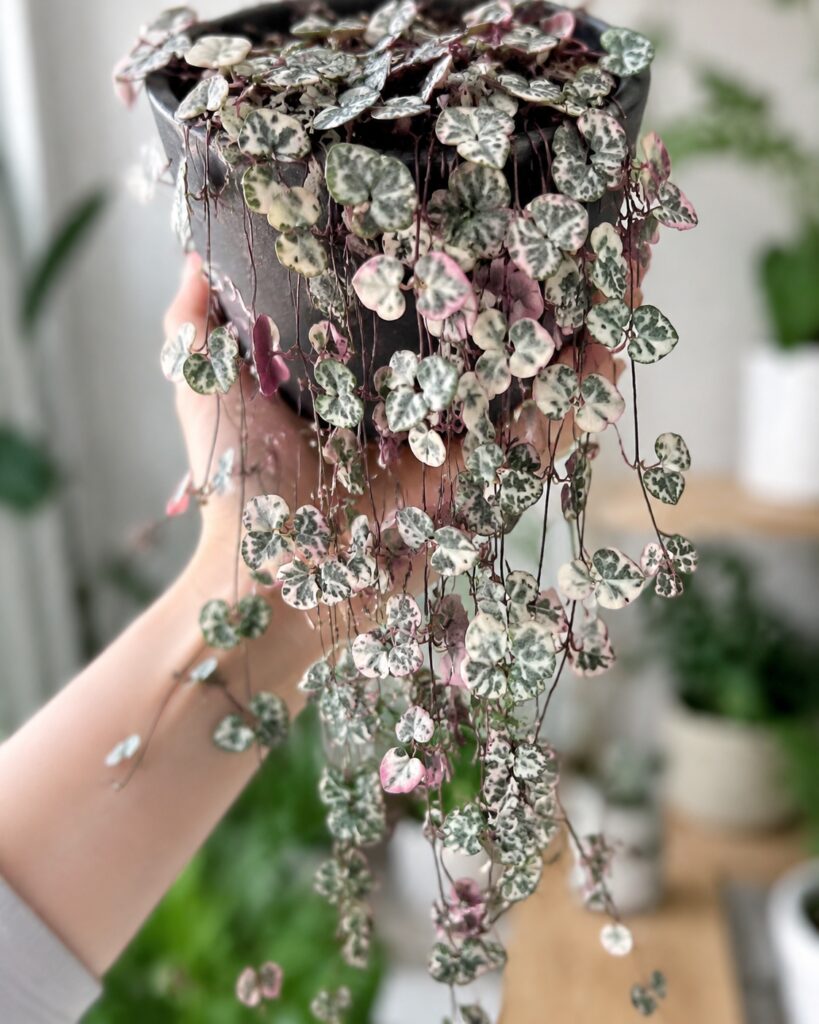
Its unique variegation creates a lively, eye-catching pattern along its trailing vines, making it a favorite for hanging baskets or decorative pots. From my experience, it thrives in bright, indirect light and needs minimal watering, with soil allowed to dry between sessions.
This plant not only adds visual interest but also introduces a whimsical, elegant charm to indoor spaces, making it perfect for both modern and cozy home décor.
Care Tips
V. String of Hearts requires slightly brighter light than the non-variegated type to maintain its color patterns. I rotate the pot occasionally to ensure all sides receive light, and I keep the soil slightly more consistent in moisture without overwatering.
Why I Love It?
The subtle pink accents make this succulent perfect for adding depth and color variation to my trailing plant arrangements.
3. Silver Glory
Silver Glory is my go-to for minimalist indoor designs. Its round, silvery-green leaves are larger and spaced more sparsely along the stem, creating a clean, contemporary look.
Silver Glory is a modern, minimalist string succulent with round, silvery-green leaves that grow along slender trailing stems, creating a sleek and understated aesthetic.
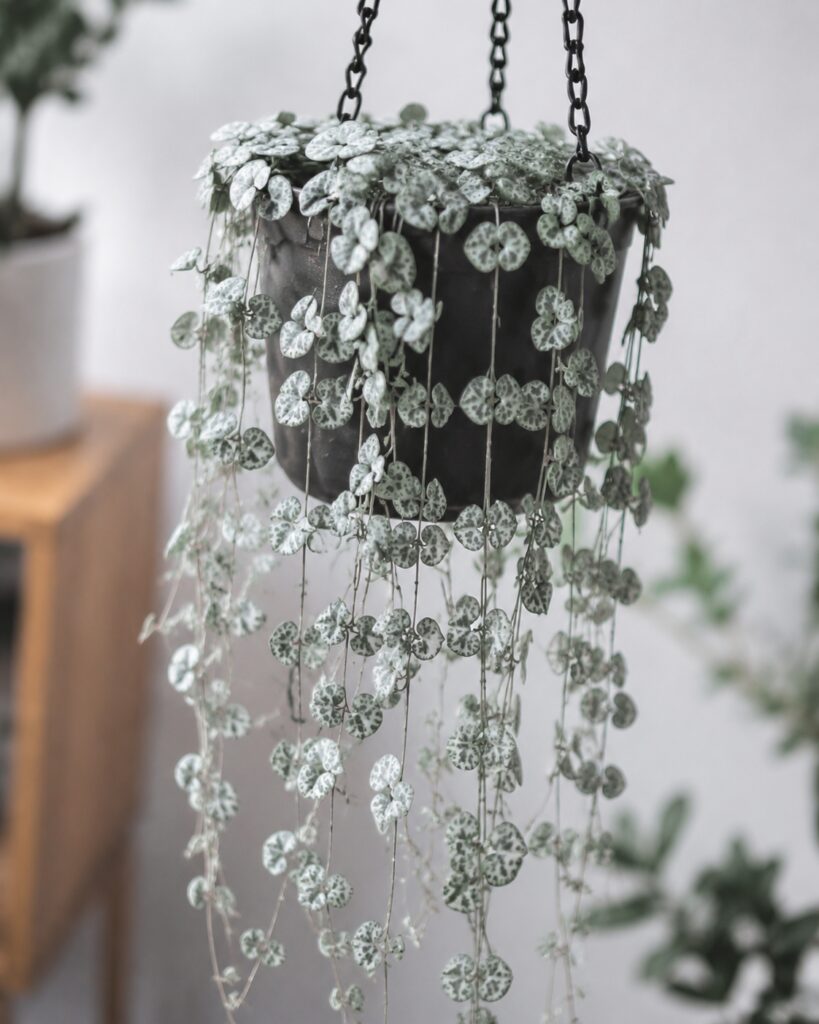
Its subtle metallic sheen adds a touch of elegance to indoor spaces, making it perfect for contemporary décor. In my experience, Silver Glory thrives in bright, indirect light and requires careful, infrequent watering, allowing the soil to dry between sessions.
This plant’s clean lines and cascading habit make it an ideal choice for hanging planters or decorative pots, bringing a refined, calm presence to any room.
Care Tips
This plant thrives in bright, indirect light, and it tolerates slightly cooler temperatures than other string succulents. I water moderately and ensure the soil has excellent drainage to prevent root rot.
Why I Love It?
Silver Glory adds a calm and sophisticated vibe to any room. Its sleek look complements modern decor beautifully.
4. String of Turtles
Next on my list is the String of Turtles. These tiny, patterned leaves resemble turtle shells and provide a playful element to my collection. I love how they weave along their stems, forming dense, intricate trails.
String of Turtles is a charming and quirky string succulent characterized by its tiny, patterned leaves that resemble turtle shells.
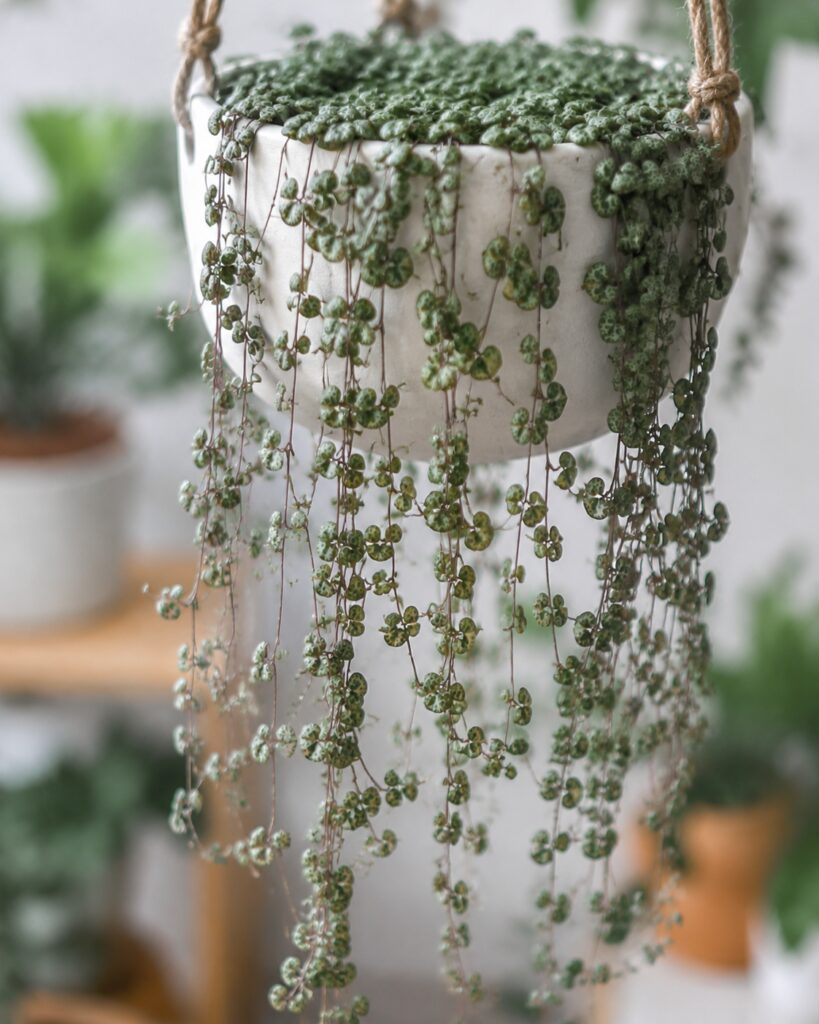
Its compact, trailing stems make it a playful addition to hanging baskets or small pots, adding texture and visual interest to any indoor garden.
From my experience, this plant thrives in bright, indirect light and prefers well-draining soil, with careful watering to avoid over-saturation.
The unique leaf shapes and dense trailing growth make String of Turtles a delightful, eye-catching plant that brings personality and a whimsical touch to home décor.
Care Tips
I place my String of Turtles in bright but indirect sunlight. It’s important not to overwater, as this plant is susceptible to rot. The small, patterned leaves make it easy to spot any problems early.
Why I Love It?
It’s one of the quirkiest string succulents I own, and its texture contrasts beautifully with smoother-leaved trailing plants.
5. String of Dolphins
The String of Dolphins is another favorite. Its leaves mimic little leaping dolphins along the stem. This playful appearance makes it a conversation starter among visitors.
String of Dolphins is a playful and whimsical string succulent that captivates with its tiny, dolphin-shaped leaves leaping along the trailing stems.
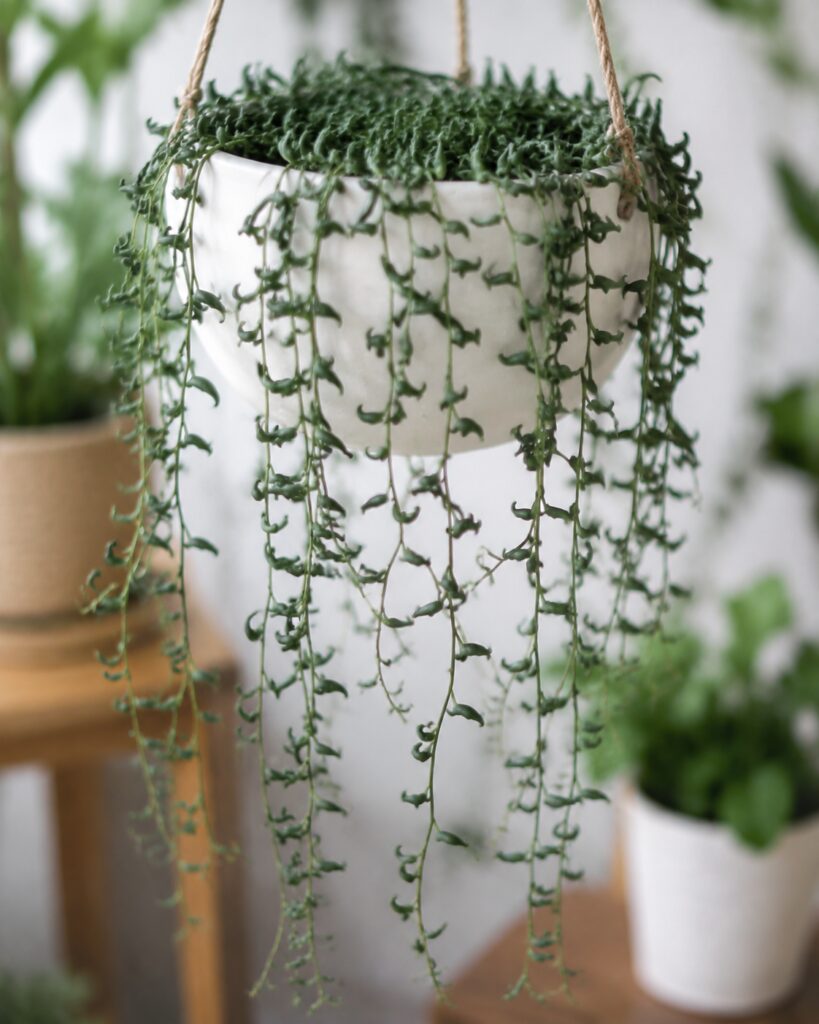
Its unique form creates a sense of movement and fun, making it an engaging addition to hanging baskets or decorative pots.
In my experience, this plant thrives in bright, indirect light and benefits from well-draining soil, with careful watering to prevent root rot.
The charming, animated appearance of the leaves adds a lively and cheerful touch to any indoor garden, making it a favorite for both plant enthusiasts and beginners alike.
Care Tips
I keep mine in bright, indirect sunlight. Watering is done sparingly, letting the soil dry out completely between waterings. Occasional pruning helps maintain a dense and flowing trail.
Why I Love It?
It’s whimsical and fun, making it feel like a miniature ocean scene cascading from my hanging pot.
6. Ruby Necklace
Ruby Necklace adds a pop of color with its rich, reddish stems and green leaves. The contrast makes it stand out among other string succulents in my collection.
Ruby Necklace is a striking string succulent known for its vibrant red stems and glossy green leaves, which create a dramatic contrast that brightens any indoor space.
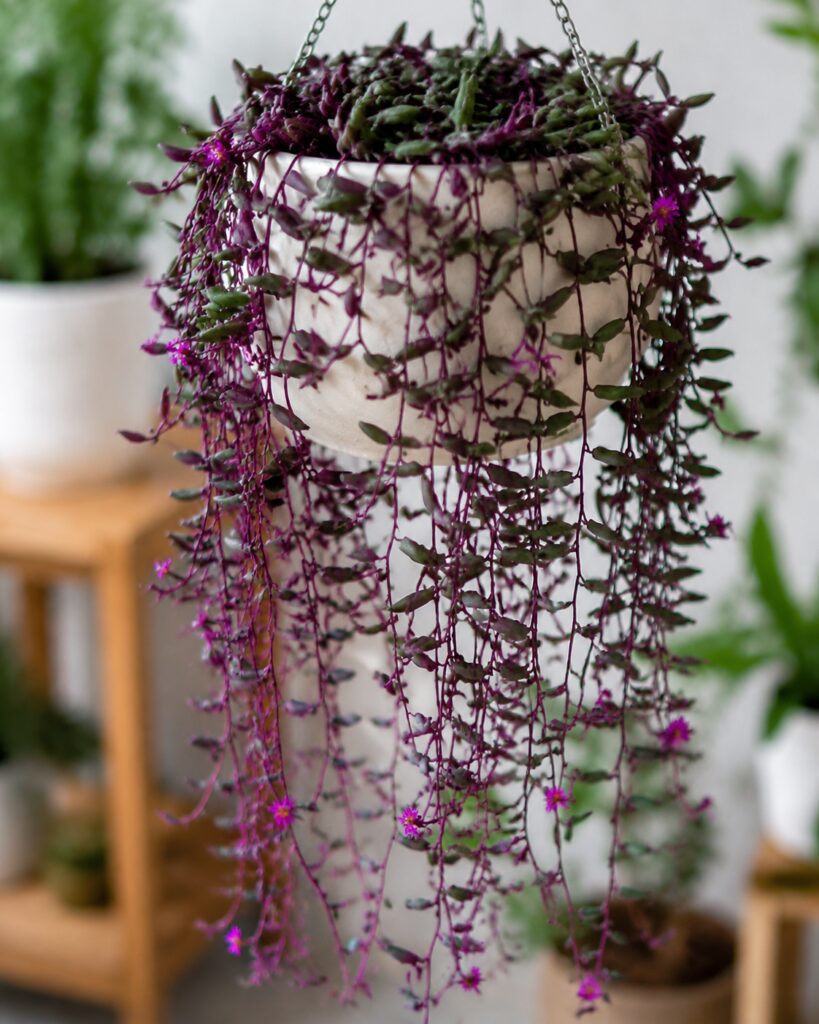
Its trailing vines cascade elegantly from pots or hanging baskets, adding both color and texture to a plant display. From my experience, Ruby Necklace thrives in bright, indirect light and well-draining soil, with careful watering to prevent over-saturation.
This plant’s bold coloration and flowing habit make it a standout choice for adding visual interest and a lively, energetic vibe to home décor.
Care Tips
This plant prefers bright, indirect sunlight to keep its vibrant red stems. I water moderately, ensuring the soil dries between waterings, and I rotate the pot to allow even growth.
Why I Love It?
The color contrast adds vibrancy, making it perfect for brightening up darker corners or complementing other green plants.
7. String of Bananas
String of Bananas is one of my more unusual finds. Its long, curved leaves resemble tiny bananas, giving a sleek, tropical feel to any arrangement. String of Bananas is a sleek and elegant trailing succulent, easily recognized by its long, curved leaves that resemble miniature bananas.
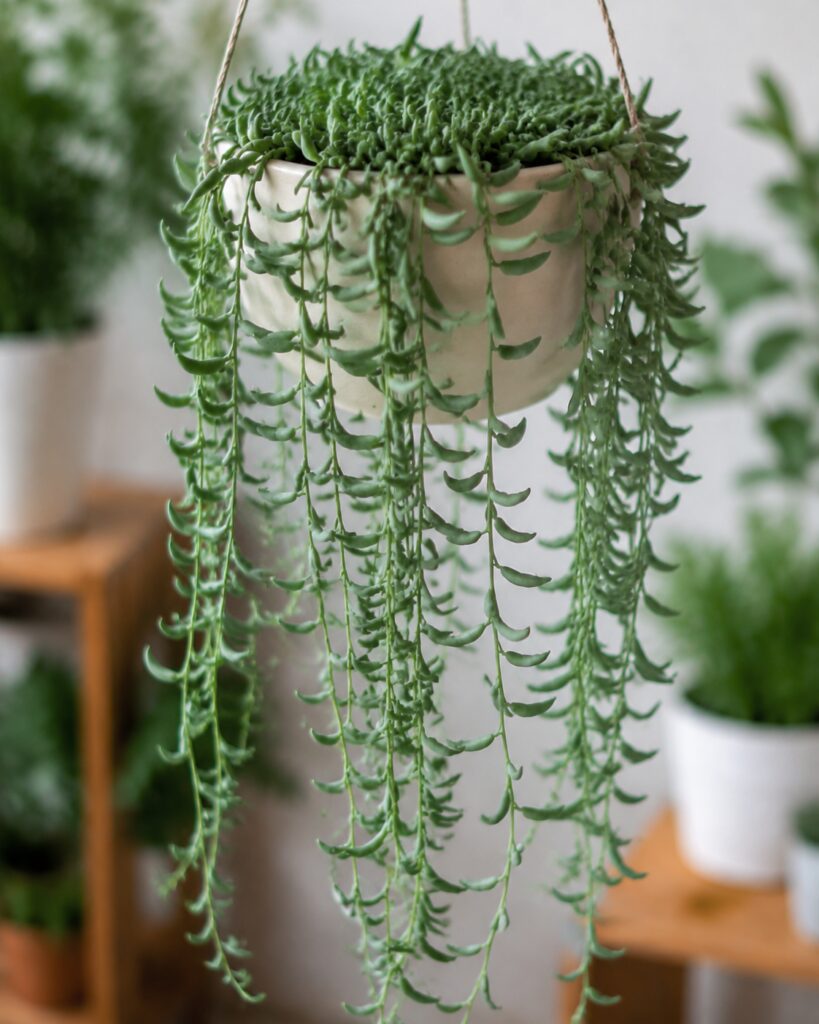
Its unique shape creates a graceful, flowing effect when draped over hanging baskets or pots, adding a tropical and sophisticated touch to any indoor garden.
In my experience, this plant thrives in bright, indirect light and requires well-draining soil, with careful watering to allow the soil to dry between sessions.
Its unusual, elongated leaves make String of Bananas a striking and modern addition to any plant collection, blending both playfulness and elegance.
Care Tips
I keep this succulent in bright, indirect sunlight. Watering is done sparingly, and the plant responds well to occasional pruning for fuller, more dramatic cascades.
Why I Love It?
Its unusual leaf shape adds a playful, tropical vibe, making it one of the more striking string succulents in my collection.
8. String of Pearls
String of Pearls is a classic and one of my first string succulents. Its round, bead-like leaves form cascading strands that resemble tiny pearls. This plant is a classic trailing succulent celebrated for its unique, bead-like leaves that resemble delicate strings of pearls.
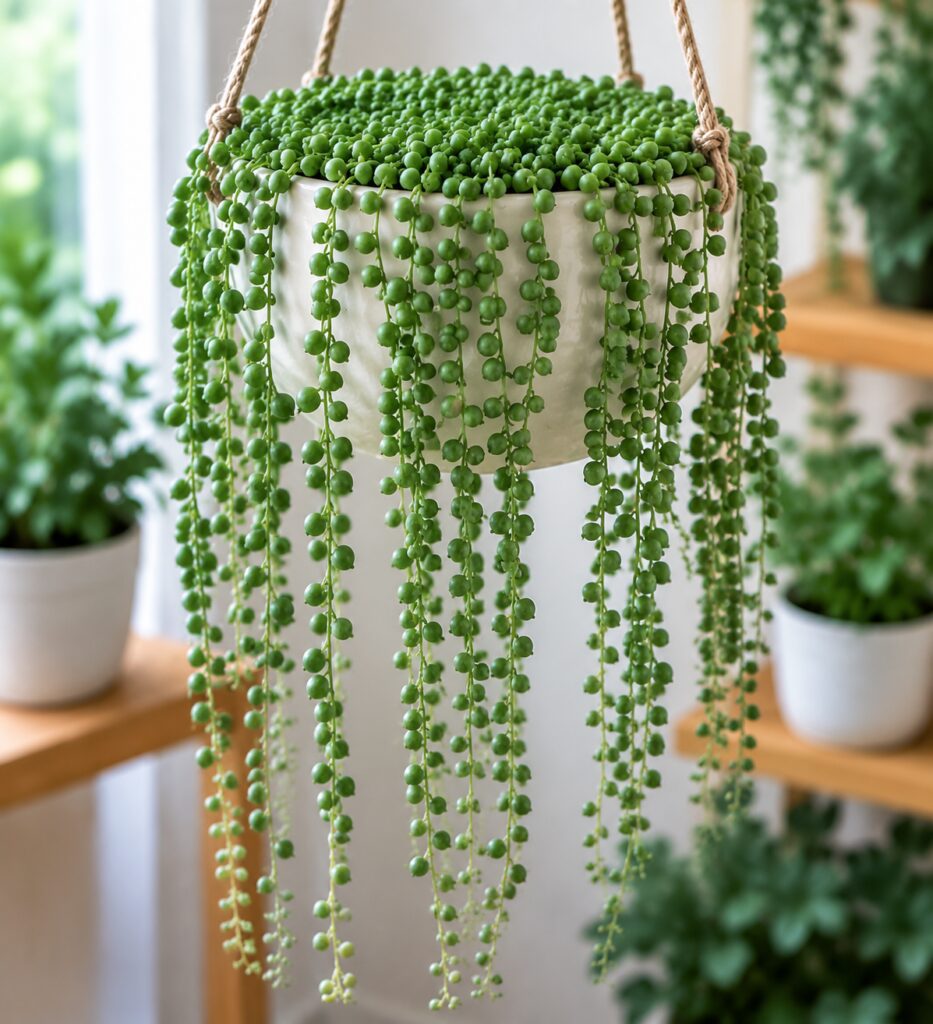
Its cascading vines create an elegant, flowing effect, making it a favorite for hanging planters and decorative pots.
From my experience, this plant thrives in bright, indirect light and requires well-draining soil, with careful, infrequent watering to prevent the tiny leaves from shriveling or rotting.
Its distinctive appearance adds sophistication and charm to any indoor garden, offering a timeless beauty that complements both modern and traditional décor.
Care Tips
I place mine in bright, indirect light and water lightly when the soil is completely dry. It’s important not to overwater, as the pearls are prone to splitting or rotting if kept too wet.
Why I Love It?
Its delicate beads create a refined, elegant trailing effect. It’s one of the most visually satisfying string succulents to observe and care for.
9. Variegated String of Pearls (V. String of Pearls)
Finally, the variegated version adds cream or silvery patterns to the pearls, making it even more eye-catching. It brings variety and depth to my hanging garden setups.
Variegated String of Pearls (V. String of Pearls) is a striking variation of the classic String of Pearls, featuring delicate bead-like leaves with subtle cream, white, or silvery patterns along the trailing vines.
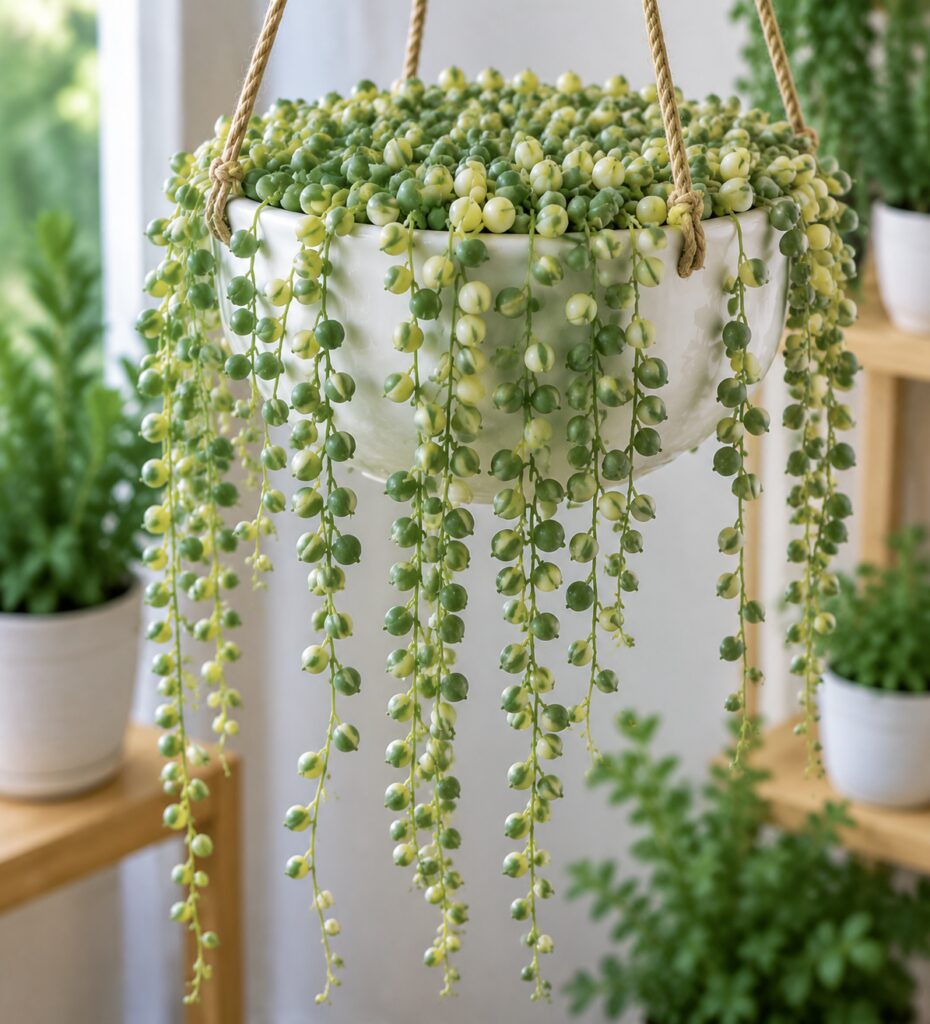
This variegation adds depth and visual interest, making it a standout in hanging baskets or decorative pots. From my experience, it thrives in bright, indirect light and well-draining soil, with careful watering to avoid over-saturation.
Its cascading, patterned foliage brings a unique, elegant charm to any indoor garden, combining the timeless beauty of pearls with a modern twist.
Care Tips
Variegated pearls need slightly brighter light than the non-variegated type to maintain their color patterns. Water sparingly and prune occasional stems to promote a fuller trail.
Why I Love It?
The subtle color variation adds a unique texture, and it pairs beautifully with other trailing succulents in mixed pots or hanging planters.
Tips for Growing String Succulents
From my years of experience, I’ve learned several principles that make caring for string succulents much easier:
- Light Matters: Bright, indirect light keeps leaves colorful and healthy. Direct sun can burn the leaves.
- Water Sparingly: These plants store water in their leaves and are susceptible to root rot if overwatered.
- Use Well-Draining Soil: A cactus or succulent mix ensures roots do not sit in water.
- Rotate Regularly: Turning pots ensures even light exposure and trailing growth.
- Prune Occasionally: Removing damaged stems encourages fuller, more vibrant growth.
Following these tips has allowed me to maintain a thriving collection of string succulents with minimal effort and maximum visual impact.
Embrace Cascading Greenery
String succulents are some of the most fascinating and versatile plants for indoor gardening. From the delicate hearts to whimsical dolphins and elegant pearls, each variety brings a unique personality to your space.
By understanding their light, watering, and soil needs, I’ve been able to create a cascading indoor garden that adds texture, drama, and elegance to my home.
Whether you’re a beginner or an experienced plant parent, string succulents are a beautiful and low-maintenance way to elevate your greenery game.